Bolognia 5e·Dermatoloji Çalışma Paneli
Ch 11

Liken Planus ve Likenoid Dermatozlar

Vol 1 · sayfa 189 · §3
📖 Özet🃏 Flashcard Quiz🖼 Atlas
Fig. 11.4 Lichen planus. A Violaceous papules and plaques with white scale and Wickham striae on the dorsal foot. B Note the flat-topped (lichenoid) nature of the violaceous papules on the penis. C–E While violaceous is the most common color, lesions can vary in color from pink to dark purple– black. B, Courtesy Louis A. Fragola, Jr, MD; C, Courtesy Julie V. Schaffer, MD; D, Courtesy Jeffrey M. Cohen, MD; E, Courtesy Kalman Watsky, MD
Fig.11.4 As.264
Fig. 11.4 Lichen planus. A Violaceous papules and plaques with white scale and Wickham striae on the dorsal foot. B Note the flat-topped (lichenoid) nature of the violaceous papules on the penis. C–E While violaceous is the most common color, lesions can vary in color from pink to dark purple– black. B, Courtesy Louis A. Fragola, Jr, MD; C, Courtesy Julie V. Schaffer, MD; D, Courtesy Jeffrey M. Cohen, MD; E, Courtesy Kalman Watsky, MD
Fig.11.4 Bs.264
Fig. 11.4 Lichen planus. A Violaceous papules and plaques with white scale and Wickham striae on the dorsal foot. B Note the flat-topped (lichenoid) nature of the violaceous papules on the penis. C–E While violaceous is the most common color, lesions can vary in color from pink to dark purple– black. B, Courtesy Louis A. Fragola, Jr, MD; C, Courtesy Julie V. Schaffer, MD; D, Courtesy Jeffrey M. Cohen, MD; E, Courtesy Kalman Watsky, MD
Fig.11.4 Cs.264
Fig. 11.5 Lichen planus with postinflammatory hyperpigmentation. A The clinical diagnosis is based upon the presence of violaceous plaques with scale, Wickham striae (uppermost lesion), and postinflammatory hyperpigmentation. B The most notable finding is postinflammatory hyperpigmentation, but the distribution on the flexor wrists and the presence of Wickham striae in the upper lesion on the right arm point to the diagnosis. A, Courtesy Frank Samarin, MD
Fig.11.5 As.264
Fig. 11.5 Lichen planus with postinflammatory hyperpigmentation. A The clinical diagnosis is based upon the presence of violaceous plaques with scale, Wickham striae (uppermost lesion), and postinflammatory hyperpigmentation. B The most notable finding is postinflammatory hyperpigmentation, but the distribution on the flexor wrists and the presence of Wickham striae in the upper lesion on the right arm point to the diagnosis. A, Courtesy Frank Samarin, MD
Fig.11.5 Bs.264
Fig. 11.6 Koebnerization of lichen planus into the site of the excision of the saphenous vein. Lesions also appeared where Steri-Strips™ had been applied.
Fig.11.6s.265
Fig. 11.7 Annular lichen planus. A On the penis, the lesions have a figurate outline with a thin pale violet border and central hyperpigmentation. B On the trunk, the lesions have a thin hyperpigmented rim. A, Courtesy Frank Samarin, MD
Fig.11.7s.265
Fig. 11.8 Exanthematous lichen planus. Papulosquamous lesions on the back.
Fig.11.8s.265
Fig. 11.9 Unusual variants of lichen planus. A Atrophic lichen planus of the lower extremities. B Bullous lichen planus on the shin. C Lichen planus pemphigoides in a patient with anti-BP180 autoantibodies.
Fig.11.9 As.266
Fig. 11.9 Unusual variants of lichen planus. A Atrophic lichen planus of the lower extremities. B Bullous lichen planus on the shin. C Lichen planus pemphigoides in a patient with anti-BP180 autoantibodies.
Fig.11.9 Bs.266
Fig. 11.10 Hypertrophic lichen planus. A On the shins, very thick discrete plaques with dyspigmentation are admixed with smaller linear plaques and areas of postinflammatory hyperpigmentation. B On the dorsal digits, thin violaceous plaques in addition to thick keratotic plaques that favor the knuckles. Courtesy Joyce Rico, MD
Fig.11.10s.266
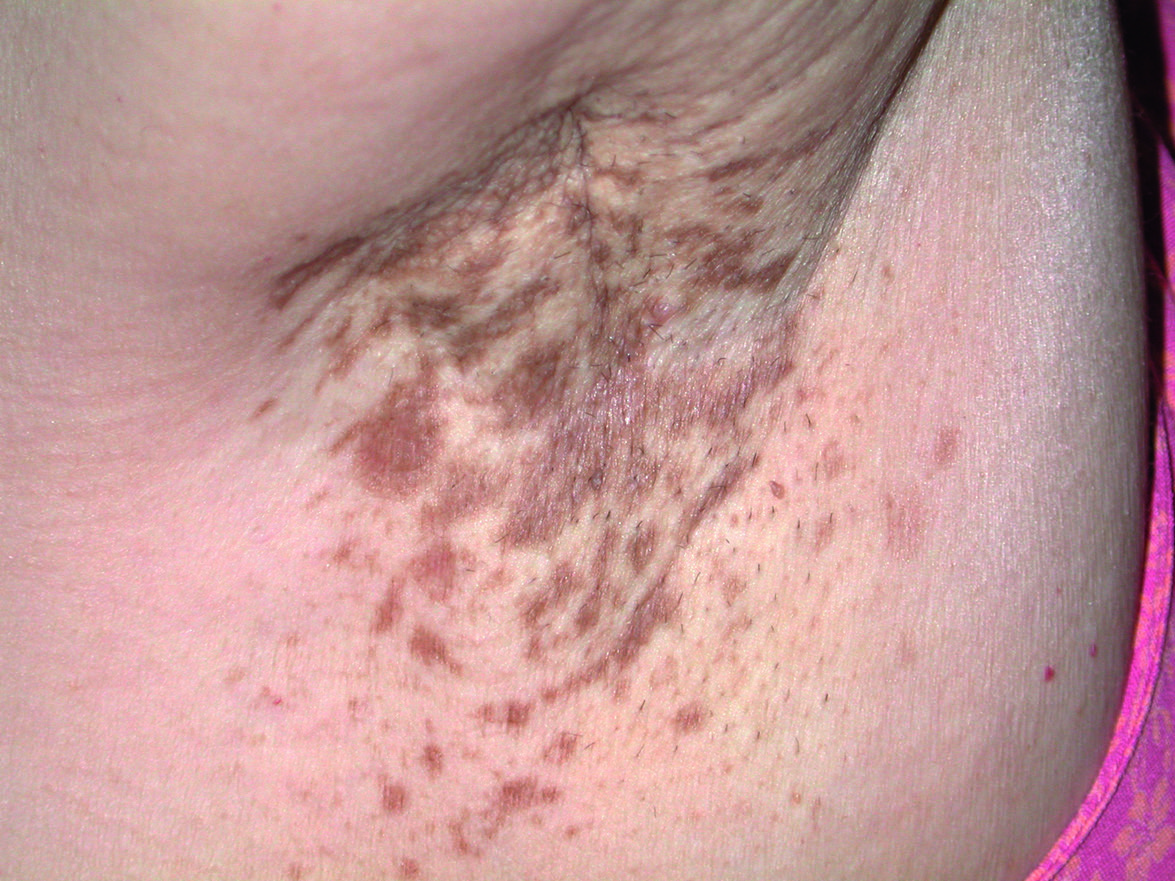
Fig. 11.11 Inverse lichen planus. Oval thin violaceous plaques in the axilla. Postinflammatory hyperpigmentation is also present. Courtesy Jeffrey P. Callen, MD
Fig.11.11 As.266
and antecubital fossae (Fig. 11.11). Occasionally, there are LP lesions elsewhere on the body. Hyperpigmentation is usually present as well and it may be the sole manifestation, leading to overlap with LP pigmentosus.
Fig.11.11 Bs.266
Fig. 11.12 Lichen planus pigmentosus – intertriginous variant. The initial clinical presentation was that of multiple hyperpigmented macules and patches within the axillary vaults.
Fig.11.12s.267
Fig. 11.13 Lichen planopilaris. A Keratotic spines surrounded by a violaceous rim in the linear variant. B Multiple clusters of follicular keratotic plugs on the leg admixed with small violaceous papules, some of which are folliculocentric. C Cicatricial alopecia with “end-stage” changes centrally, but perifollicular inflammation at the margins.
Fig.11.13 As.267
Fig. 11.13 Lichen planopilaris. A Keratotic spines surrounded by a violaceous rim in the linear variant. B Multiple clusters of follicular keratotic plugs on the leg admixed with small violaceous papules, some of which are folliculocentric. C Cicatricial alopecia with “end-stage” changes centrally, but perifollicular inflammation at the margins.
Fig.11.13 Bs.267
Fig. 11.14 Linear lichen planus. Coalescence of violaceous lesions with Wickham striae along the lines of Blaschko on an extremity. Note the postinflammatory hyperpigmentation proximally. Courtesy Joyce Rico, MD.
Fig.11.14s.268
Fig. 11.15 Nail lichen planus. A Thinning of the nail plate with lateral loss. B Longitudinal fissuring of shortened nail plates. C Violaceous discoloration of the periungual area with pterygium formation.
Fig.11.15s.268
Fig. 11.16 Oral lichen planus. A White lacy pattern and an erosion on the buccal mucosa, the most common location for the reticular form. Note the ring configuration with short radiating spines. B Erosions on the lateral aspect of the tongue in addition to lacy white plaques and scarring. B, Courtesy Louis A. Fragola, Jr, MD.
Fig.11.16 As.268
Fig. 11.16 Oral lichen planus. A White lacy pattern and an erosion on the buccal mucosa, the most common location for the reticular form. Note the ring configuration with short radiating spines. B Erosions on the lateral aspect of the tongue in addition to lacy white plaques and scarring. B, Courtesy Louis A. Fragola, Jr, MD.
Fig.11.16 Bs.268
Fig. 11.17 Lichenoid drug eruption. A Photodistributed lichenoid eruption due to hydrochlorothiazide (note sparing under watchband). B Lichenoid dermatitis secondary to anti-PD-1 antibody therapy for non-small cell lung cancer that is characterized by pink–violet papules and plaques with white scale and crusts on the back. B, Courtesy Jonathan S. Leventhal, MD.
Fig.11.17 As.269
Fig. 11.17 Lichenoid drug eruption. A Photodistributed lichenoid eruption due to hydrochlorothiazide (note sparing under watchband). B Lichenoid dermatitis secondary to anti-PD-1 antibody therapy for non-small cell lung cancer that is characterized by pink–violet papules and plaques with white scale and crusts on the back. B, Courtesy Jonathan S. Leventhal, MD.
Fig.11.17 Bs.269
Fig. 11.19 Lichen striatus. A Linear streak on the leg that follows the lines of Blaschko. It is composed of numerous small, tan (hypopigmented), flat-topped papules. B Three linear streaks on the lower extremity composed of multiple pink papules, some of which are flat-topped with scale. The primary differential diagnosis would be blaschkitis. A, Courtesy Antonio Torrello, MD.
Fig.11.19s.273
Fig. 11.21 Lichen nitidus. A Numerous tiny flat-topped papules on the hand. B A close-up view shows the shiny surface. C Numerous pink lesions on penis. C, Courtesy Kiran Motaparthi, MD.
Fig.11.21 As.275
Fig. 11.21 Lichen nitidus. A Numerous tiny flat-topped papules on the hand. B A close-up view shows the shiny surface. C Numerous pink lesions on penis. C, Courtesy Kiran Motaparthi, MD.
Fig.11.21 Bs.275
Fig. 11.21 Lichen nitidus. A Numerous tiny flat-topped papules on the hand. B A close-up view shows the shiny surface. C Numerous pink lesions on penis. C, Courtesy Kiran Motaparthi, MD.
Fig.11.21 Cs.275
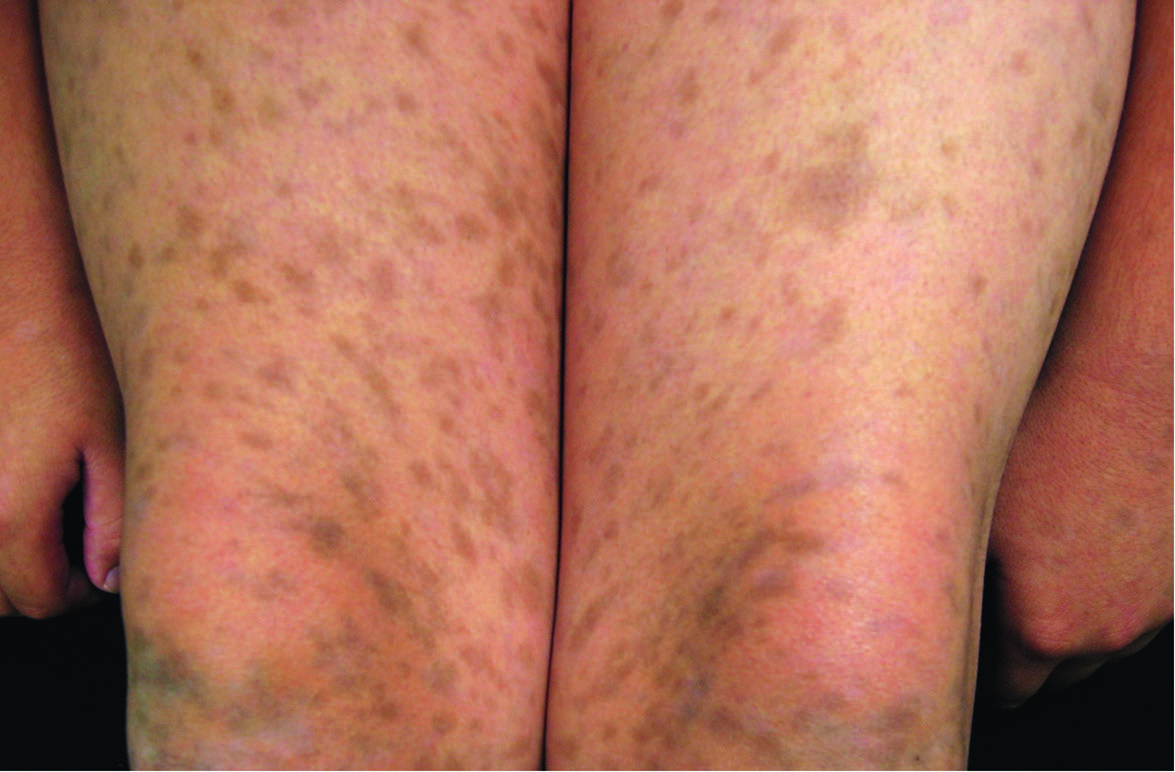
Fig. 11.23 Erythema dyschromicum perstans. Numerous oval to polygonal, gray–brown macules and patches on the lower extremities. Courtesy Wake Forest University.
Fig.11.23s.276
Fig. 11.24 Keratosis lichenoides chronica. A Linear and stellate keratotic plaques. B Symmetrical distribution of linear and reticulated keratotic plaques admixed with small, violaceous lichenoid papules. C Crusted psoriasiform scaling plaques on the face. B, Courtesy Kathryn Schwarzenberger, MD; C, Courtesy Jiro Arata, MD.
Fig.11.24 As.277
Fig. 11.24 Keratosis lichenoides chronica. A Linear and stellate keratotic plaques. B Symmetrical distribution of linear and reticulated keratotic plaques admixed with small, violaceous lichenoid papules. C Crusted psoriasiform scaling plaques on the face. B, Courtesy Kathryn Schwarzenberger, MD; C, Courtesy Jiro Arata, MD.
Fig.11.24 Bs.277
Fig. 11.24 Keratosis lichenoides chronica. A Linear and stellate keratotic plaques. B Symmetrical distribution of linear and reticulated keratotic plaques admixed with small, violaceous lichenoid papules. C Crusted psoriasiform scaling plaques on the face. B, Courtesy Kathryn Schwarzenberger, MD; C, Courtesy Jiro Arata, MD.
Fig.11.24 Cs.277
Fig. 11.24 Keratosis lichenoides chronica. A Linear and stellate keratotic plaques. B Symmetrical distribution of linear and reticulated keratotic plaques admixed with small, violaceous lichenoid papules. C Crusted psoriasiform scaling plaques on the face. B, Courtesy Kathryn Schwarzenberger, MD; C, Courtesy Jiro Arata, MD.
Fig.11.24 Ds.277