Bolognia 5e·Dermatoloji Çalışma Paneli
Ch 14

Allerjik Kontakt Dermatit

Vol 1 · sayfa 246 · §3
📖 Özet🃏 Flashcard Quiz🖼 Atlas
Fig. 14.1 Allergic contact dermatitis (ACD). A This erythematous plaque with vesiculation developed in a 14-month-old boy following the application of neomycin ointment. B Erythematous streaks with linear vesicles caused by ACD to poison ivy. A, Courtesy Anthony J. Mancini, MD; B, Courtesy Joyce Rico, MD.
Fig.14.1 As.328
Fig. 14.1 Allergic contact dermatitis (ACD). A This erythematous plaque with vesiculation developed in a 14-month-old boy following the application of neomycin ointment. B Erythematous streaks with linear vesicles caused by ACD to poison ivy. A, Courtesy Anthony J. Mancini, MD; B, Courtesy Joyce Rico, MD.
Fig.14.1 Bs.328
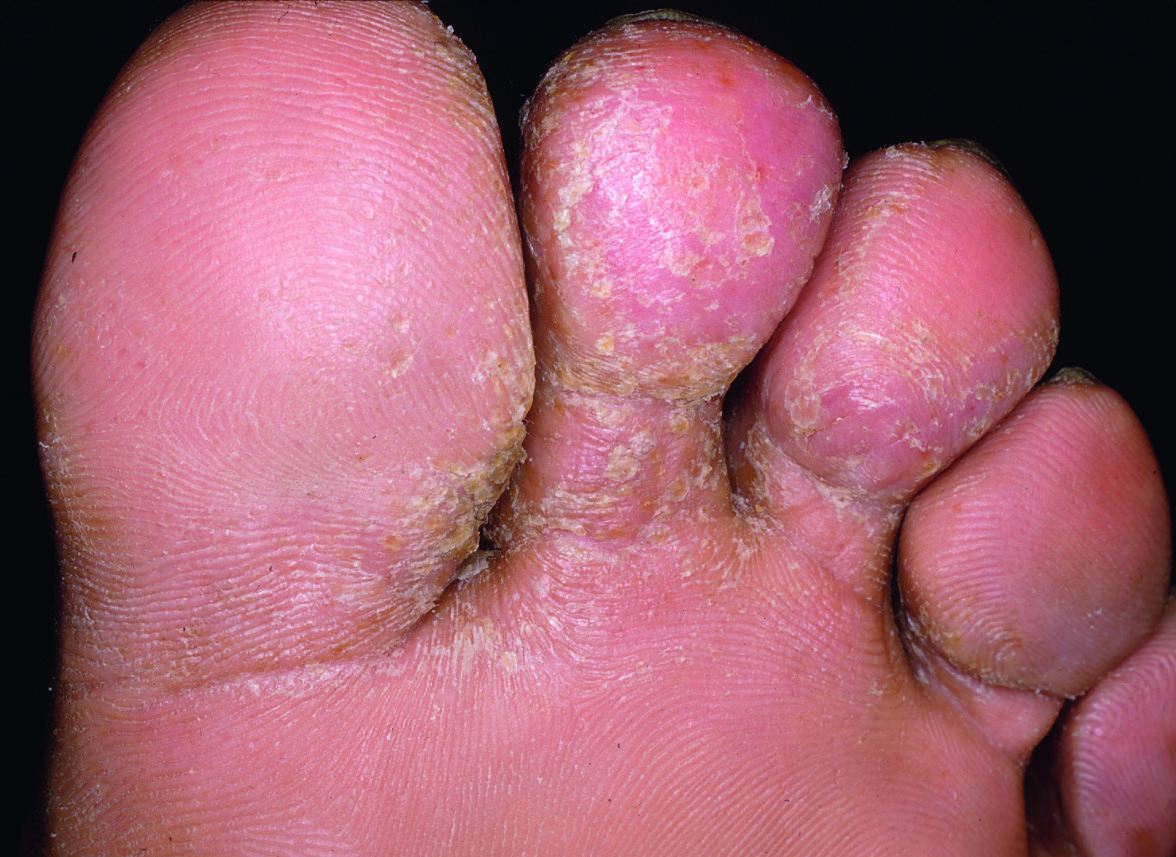
Fig. 14.2 Chronic allergic contact dermatitis (ACD). Chronic foot dermatitis due to ACD to rubber (mercaptobenzothiazole). Courtesy Louis A. Fragola, Jr, MD.
Fig.14.2s.329
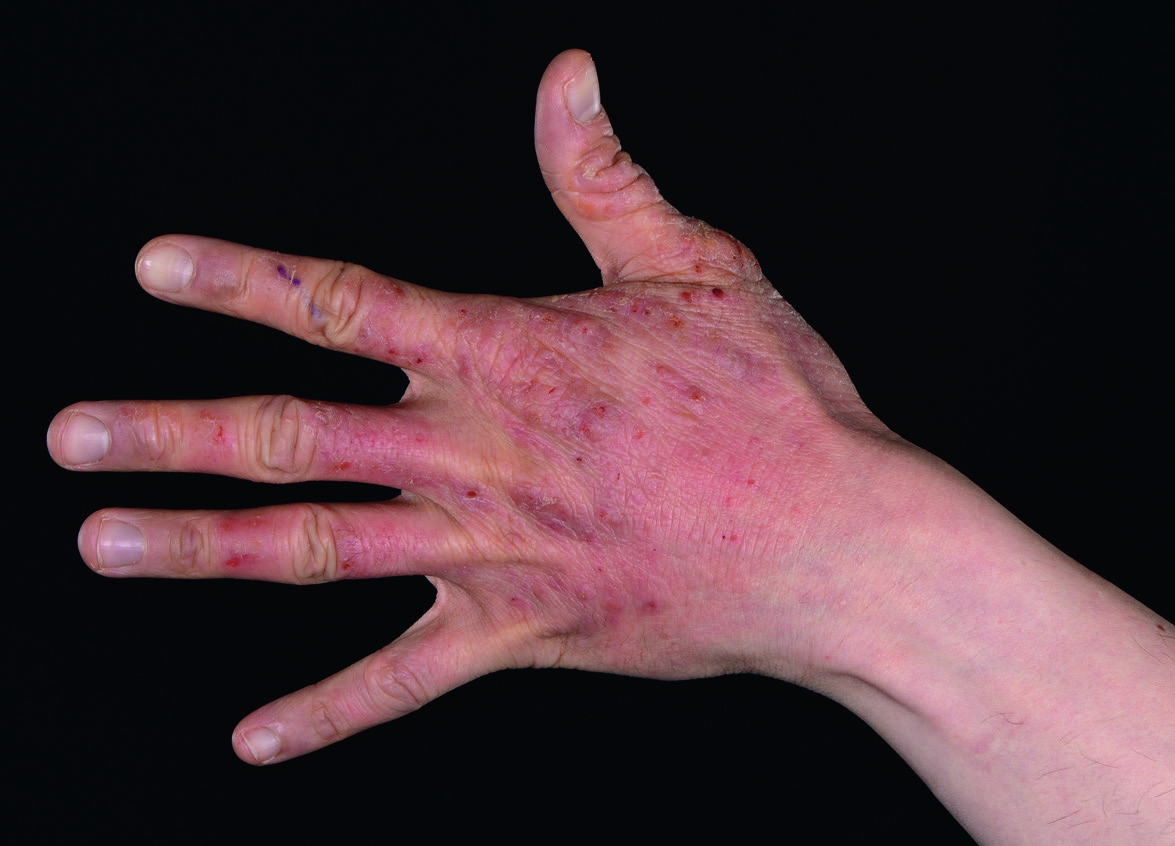
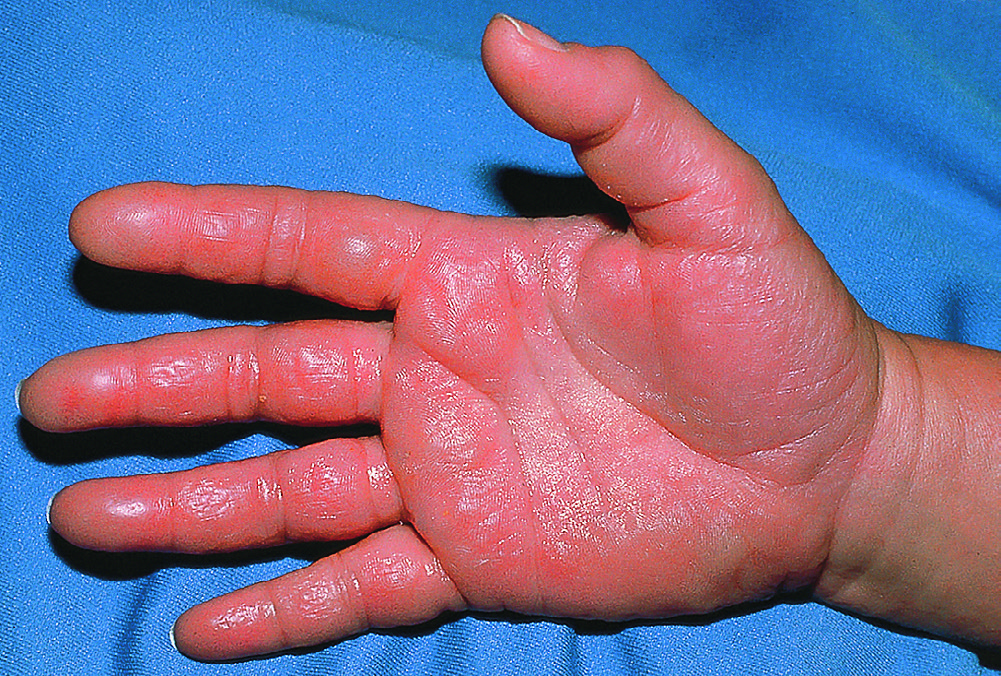
Fig. 14.3 Persistent hand dermatitis due to chronic allergic contact derma- titis. The allergen was epoxy resin.
Fig.14.3s.329
Fig. 14.4 Allergic contact dermatitis to shoes – acute versus chronic. A Extremely pruritic erythematous papules and papulovesicles appeared within days of wearing new sneakers; note the distribution pattern. B Pebbled and lichenified plaques with both hypo- and hyperpigmentation. The patient had a positive patch test to potassium dichromate. Courtesy Louis A. Fragola, Jr, MD.
Fig.14.4 As.329
Fig. 14.4 Allergic contact dermatitis to shoes – acute versus chronic. A Extremely pruritic erythematous papules and papulovesicles appeared within days of wearing new sneakers; note the distribution pattern. B Pebbled and lichenified plaques with both hypo- and hyperpigmentation. The patient had a positive patch test to potassium dichromate. Courtesy Louis A. Fragola, Jr, MD.
Fig.14.4 Bs.329
Fig. 14.5 Acute ­vesiculobullous allergic contact dermatitis (ACD). A The allergen was neomycin from a topical antibiotic ointment. B The allergen was urushiol in poison ivy; this distribution pattern is seen in patients who wear gloves. A, Courtesy Jonathan Chan, MD.
Fig.14.5 As.330
Fig. 14.5 Acute ­vesiculobullous allergic contact dermatitis (ACD). A The allergen was neomycin from a topical antibiotic ointment. B The allergen was urushiol in poison ivy; this distribution pattern is seen in patients who wear gloves. A, Courtesy Jonathan Chan, MD.
Fig.14.5 Bs.330
Fig. 14.6 Acute allergic contact dermatitis with a prominent component of edema. A Periorbital edema, in addition to crusted and weeping plaques, due to poison ivy. B Allergic contact dermatitis to methylisothiazolinone in a wet wipe used to remove make-up. A, Courtesy Jean L. Bolognia, MD.
Fig.14.6 As.330
Fig. 14.6 Acute allergic contact dermatitis with a prominent component of edema. A Periorbital edema, in addition to crusted and weeping plaques, due to poison ivy. B Allergic contact dermatitis to methylisothiazolinone in a wet wipe used to remove make-up. A, Courtesy Jean L. Bolognia, MD.
Fig.14.6 Bs.330
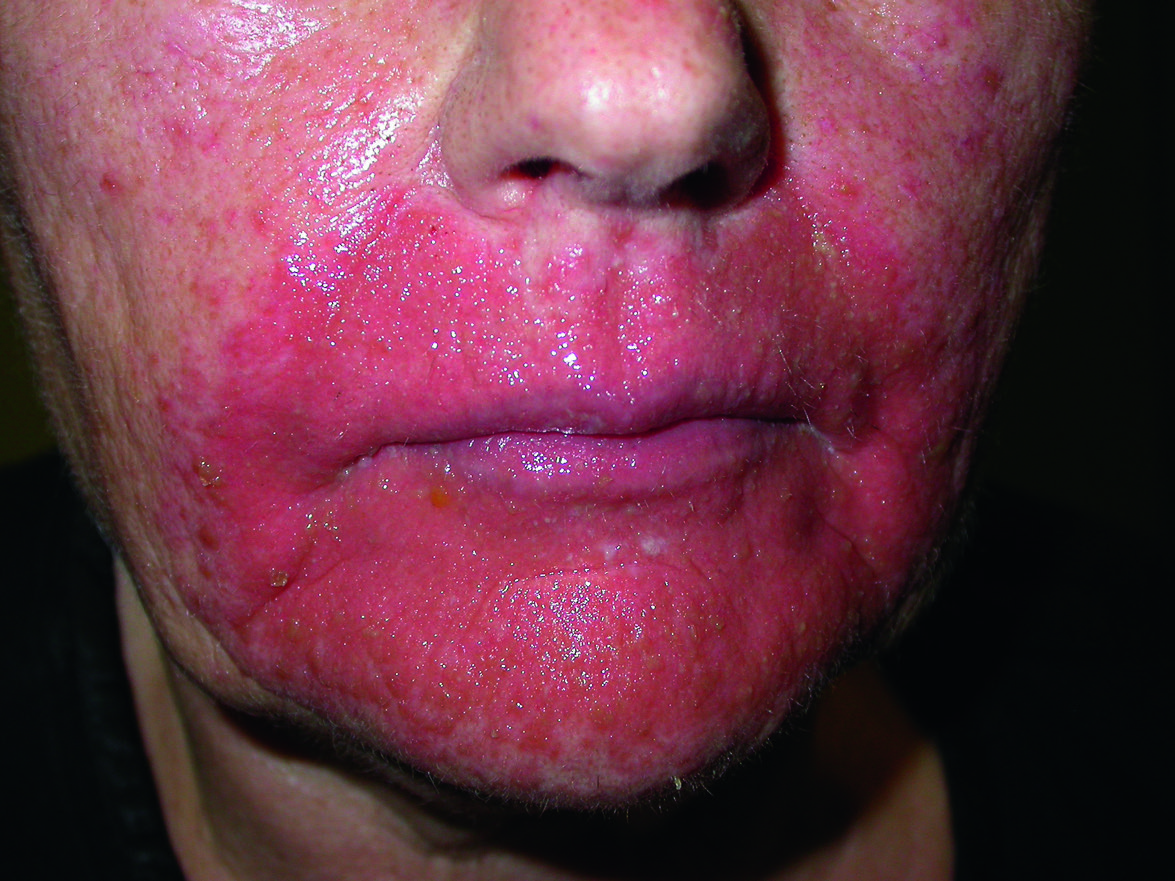
Fig. 14.7 Allergic contact dermatitis due to aloe-containing cream. The degree of involvement on the upper and lower lips is similar, as opposed to actinic cheilitis. In the latter scale is predominantly on the lower vermilion lip.
Fig.14.7s.330
Fig. 14.8 Persistent hand dermatitis due to chronic allergic contact ­dermatitis. A In this machine operator, the allergen was black rubber. B The allergen was methylisothiazolinone in sanitary wet wipes.
Fig.14.8 As.330
Fig. 14.8 Persistent hand dermatitis due to chronic allergic contact ­dermatitis. A In this machine operator, the allergen was black rubber. B The allergen was methylisothiazolinone in sanitary wet wipes.
Fig.14.8 Bs.330
Fig. 14.10 Allergic contact dermatitis due to cashew nut shell oil. This represented an occupational exposure.
Fig.14.10 As.332
Fig. 14.10 Allergic contact dermatitis due to cashew nut shell oil. This represented an occupational exposure.
Fig.14.10 Bs.332
Fig. 14.12 Placement of allergens to the patient’s back utilizing allergEAZE® chambers.
Fig.14.12s.336
Fig. 14.14 Patch test reactions. A +/− to + reaction. B, C + reaction. D ++ reaction. E +++ reaction. F Erythematous papules at the edge of the Finn chamber ­application site (rim or edge effect). G Pustular irritant reaction at the site of the application of a metalworking fluid. The adjacent skin impression of a chamber reflects good adherence. H Three different patch test reactions: +/− to quaternium-15, + to formaldehyde, and ++ to nickel.
Fig.14.14s.337
Fig. 14.15 Allergic contact dermatitis to fragrance found in cologne. A Patient at the time of diagnosis. B Patient after avoidance of fragrances and his cologne.
Fig.14.15 As.338
Fig. 14.15 Allergic contact dermatitis to fragrance found in cologne. A Patient at the time of diagnosis. B Patient after avoidance of fragrances and his cologne.
Fig.14.15 Bs.338
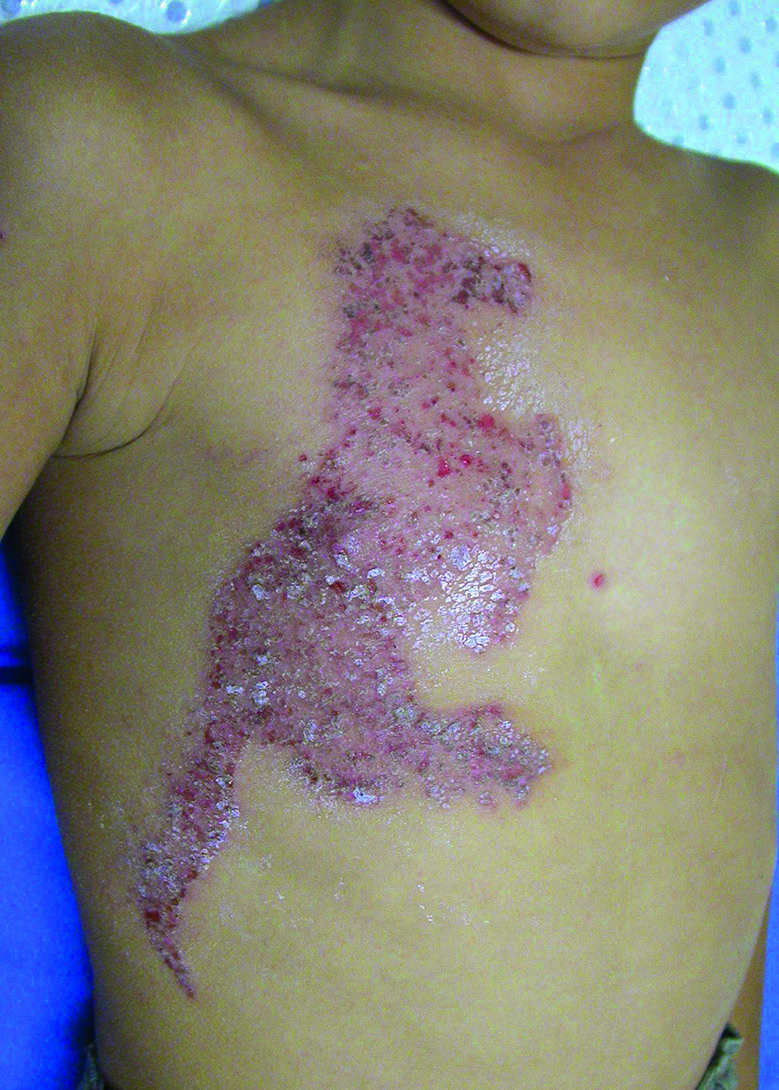
Fig. 14.17 Allergic contact dermatitis to p-phenylenediamine in a temporary tattoo.
Fig.14.17s.343
Fig. 14.19 Systemic contact dermatitis. This patient, who was previously sensi- tized to ethylenediamine, received intravenous aminophylline.
Fig.14.19s.345
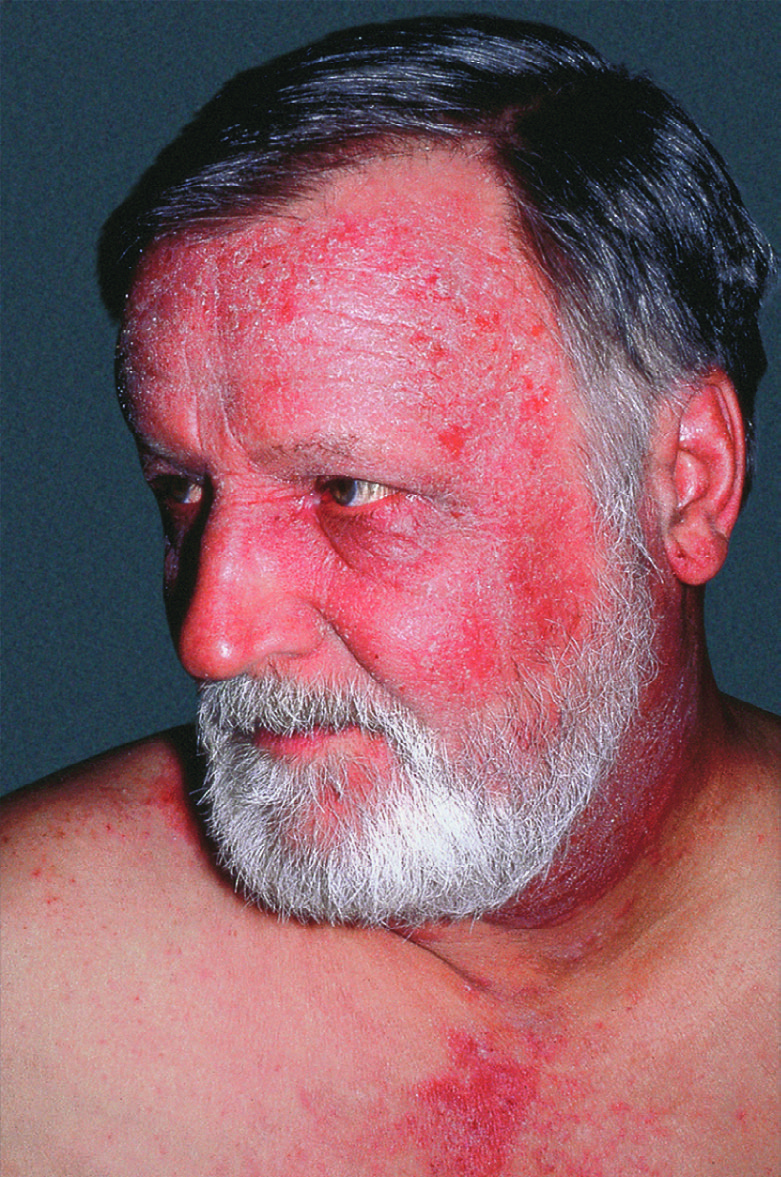
Fig. 14.21 Airborne contact dermatitis. A, B The allergen was an epoxy resin. Note the involvement of the eyelids. C The detected allergens were decyl glucoside, fragrance, thiuram, and carba mix.
Fig.14.21 As.346
Fig. 14.21 Airborne contact dermatitis. A, B The allergen was an epoxy resin. Note the involvement of the eyelids. C The detected allergens were decyl glucoside, fragrance, thiuram, and carba mix.
Fig.14.21 Bs.346
Fig. 14.21 Airborne contact dermatitis. A, B The allergen was an epoxy resin. Note the involvement of the eyelids. C The detected allergens were decyl glucoside, fragrance, thiuram, and carba mix.
Fig.14.21 Cs.346