Bolognia 5e·Dermatoloji Çalışma Paneli
Ch 42

Dermatomiyozit

Vol 1 · sayfa 689 · §7
📖 Özet🃏 Flashcard Quiz🖼 Atlas
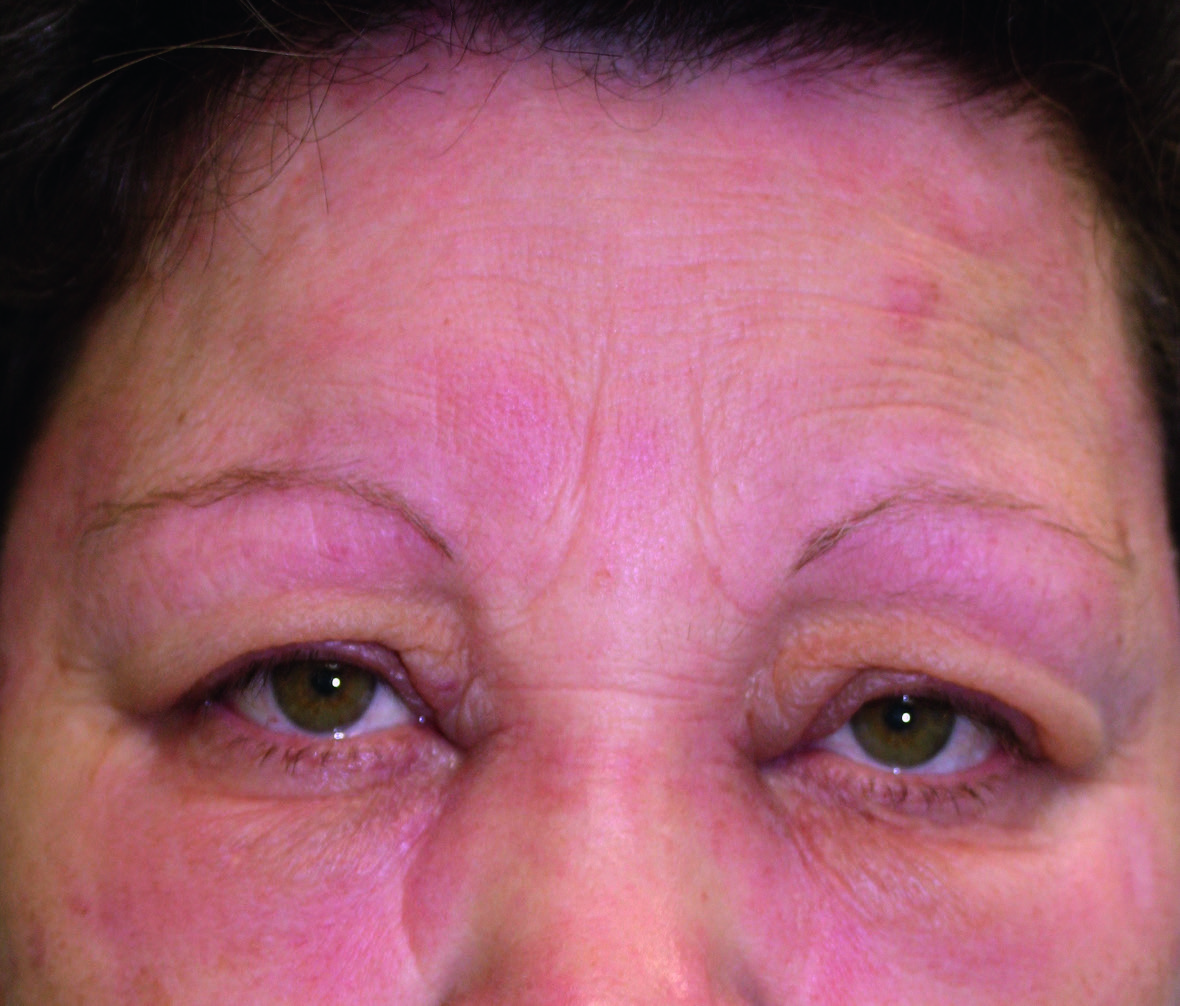
Fig. 42.2 Dermatomyositis – eyelid edema and heliotrope sign. A Inflammation of the upper eyelid can be more subtle in darkly pigmented skin; note involvement of the lateral nasal root and the cheeks. The eyebrow alopecia is due to chemotherapy. B The characteristic pink–violet color is seen with involvement of the hairline, lower forehead, upper eyelids, and cheeks; the edema is striking, especially of the upper eyelids and nasal root. C Heliotrope with marked lower eyelid edema. B, Courtesy Jean L. Bolognia, MD; C, Courtesy Kalman Watsky, MD.
Fig.42.2 As.865
Fig. 42.2 Dermatomyositis – eyelid edema and heliotrope sign. A Inflammation of the upper eyelid can be more subtle in darkly pigmented skin; note involvement of the lateral nasal root and the cheeks. The eyebrow alopecia is due to chemotherapy. B The characteristic pink–violet color is seen with involvement of the hairline, lower forehead, upper eyelids, and cheeks; the edema is striking, especially of the upper eyelids and nasal root. C Heliotrope with marked lower eyelid edema. B, Courtesy Jean L. Bolognia, MD; C, Courtesy Kalman Watsky, MD.
Fig.42.2 Bs.865
Fig. 42.3 Dermatomyositis – marked facial involvement. Note the violaceous hue. Misdiagnoses include psoriasis, contact dermatitis, and if there is significant facial involvement as in this patient, acute cutaneous lupus erythematosus.
Fig.42.3s.865
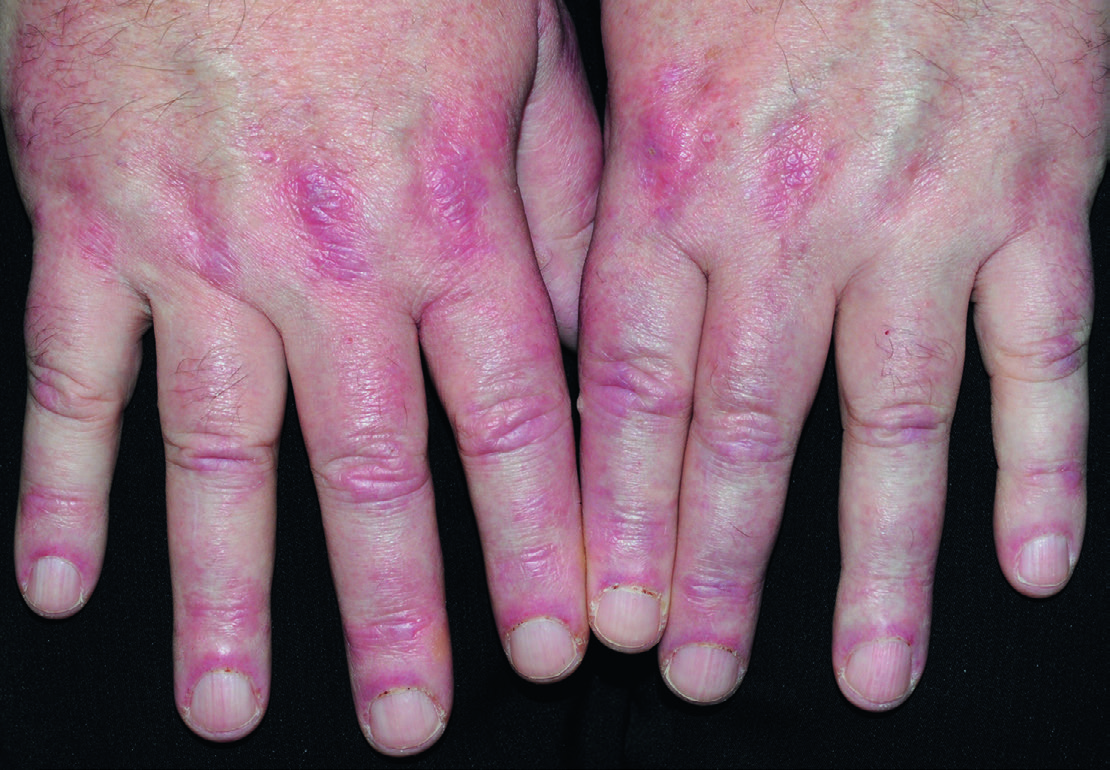
Fig. 42.4 Dermatomyositis – Gottron papules. A Only a few Gottron papules are present, but there is definite accentuation of the pink–violet inflammation over the metacarpophalangeal (MCP) joints and proximal and distal interphalangeal (PIP, DIP) joints as well as the proximal nail folds. Note the ragged cuticles. B The flat-topped (lichenoid) papules overlying the DIP, PIP, and MCP joints (knuckles) are subtle and were misdiagnosed as verrucae vulgares in this child. C More obvious disease in which the multiple pink–violet lichenoid papules are coalescing and there is some involvement of the interphalangeal skin. A, Courtesy Kalman Watsky, MD; B, Courtesy Julie V. Schaffer, MD.
Fig.42.4 As.866
Fig. 42.4 Dermatomyositis – Gottron papules. A Only a few Gottron papules are present, but there is definite accentuation of the pink–violet inflammation over the metacarpophalangeal (MCP) joints and proximal and distal interphalangeal (PIP, DIP) joints as well as the proximal nail folds. Note the ragged cuticles. B The flat-topped (lichenoid) papules overlying the DIP, PIP, and MCP joints (knuckles) are subtle and were misdiagnosed as verrucae vulgares in this child. C More obvious disease in which the multiple pink–violet lichenoid papules are coalescing and there is some involvement of the interphalangeal skin. A, Courtesy Kalman Watsky, MD; B, Courtesy Julie V. Schaffer, MD.
Fig.42.4 Bs.866
Fig. 42.4 Dermatomyositis – Gottron papules. A Only a few Gottron papules are present, but there is definite accentuation of the pink–violet inflammation over the metacarpophalangeal (MCP) joints and proximal and distal interphalangeal (PIP, DIP) joints as well as the proximal nail folds. Note the ragged cuticles. B The flat-topped (lichenoid) papules overlying the DIP, PIP, and MCP joints (knuckles) are subtle and were misdiagnosed as verrucae vulgares in this child. C More obvious disease in which the multiple pink–violet lichenoid papules are coalescing and there is some involvement of the interphalangeal skin. A, Courtesy Kalman Watsky, MD; B, Courtesy Julie V. Schaffer, MD.
Fig.42.4 Cs.866
Fig. 42.4 Dermatomyositis – Gottron papules. A Only a few Gottron papules are present, but there is definite accentuation of the pink–violet inflammation over the metacarpophalangeal (MCP) joints and proximal and distal interphalangeal (PIP, DIP) joints as well as the proximal nail folds. Note the ragged cuticles. B The flat-topped (lichenoid) papules overlying the DIP, PIP, and MCP joints (knuckles) are subtle and were misdiagnosed as verrucae vulgares in this child. C More obvious disease in which the multiple pink–violet lichenoid papules are coalescing and there is some involvement of the interphalangeal skin. A, Courtesy Kalman Watsky, MD; B, Courtesy Julie V. Schaffer, MD.
Fig.42.4 Ds.866
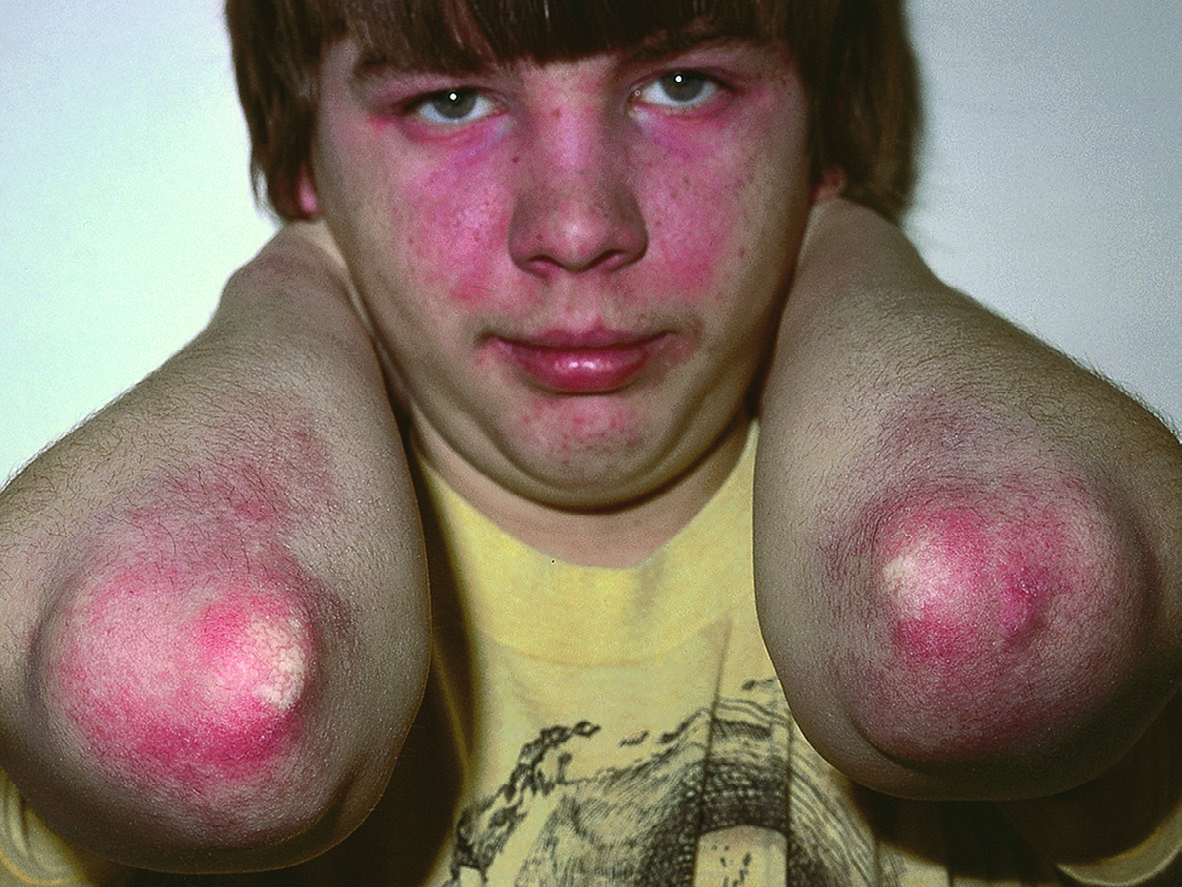
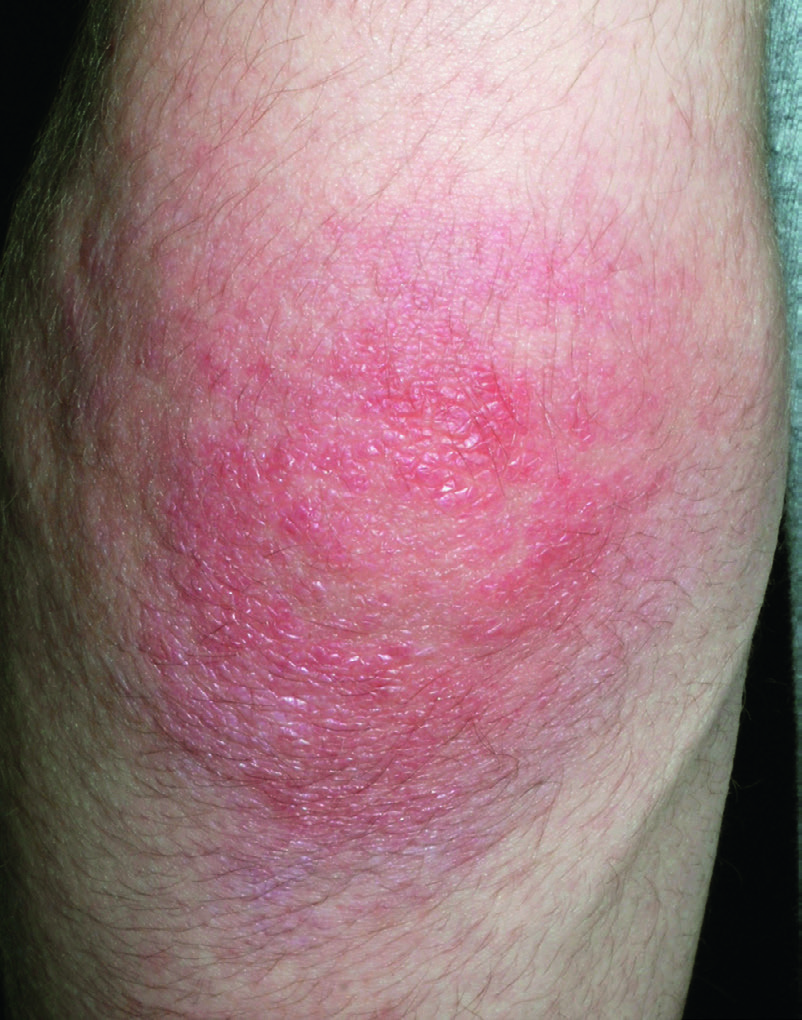
Fig. 42.5 Dermatomyositis – Gottron sign. Pink–violet papules (A) and thin pink plaques (B) of the elbows and knee (C). Some of the papules on the elbow are flat- topped (lichenoid) and others have white scale. The presence of plaques on the elbows and knees can lead to the misdiagnosis of psoriasis. B,C, Courtesy Julie V. Schaffer, MD.
Fig.42.5 As.866
Fig. 42.5 Dermatomyositis – Gottron sign. Pink–violet papules (A) and thin pink plaques (B) of the elbows and knee (C). Some of the papules on the elbow are flat- topped (lichenoid) and others have white scale. The presence of plaques on the elbows and knees can lead to the misdiagnosis of psoriasis. B,C, Courtesy Julie V. Schaffer, MD.
Fig.42.5 Bs.866
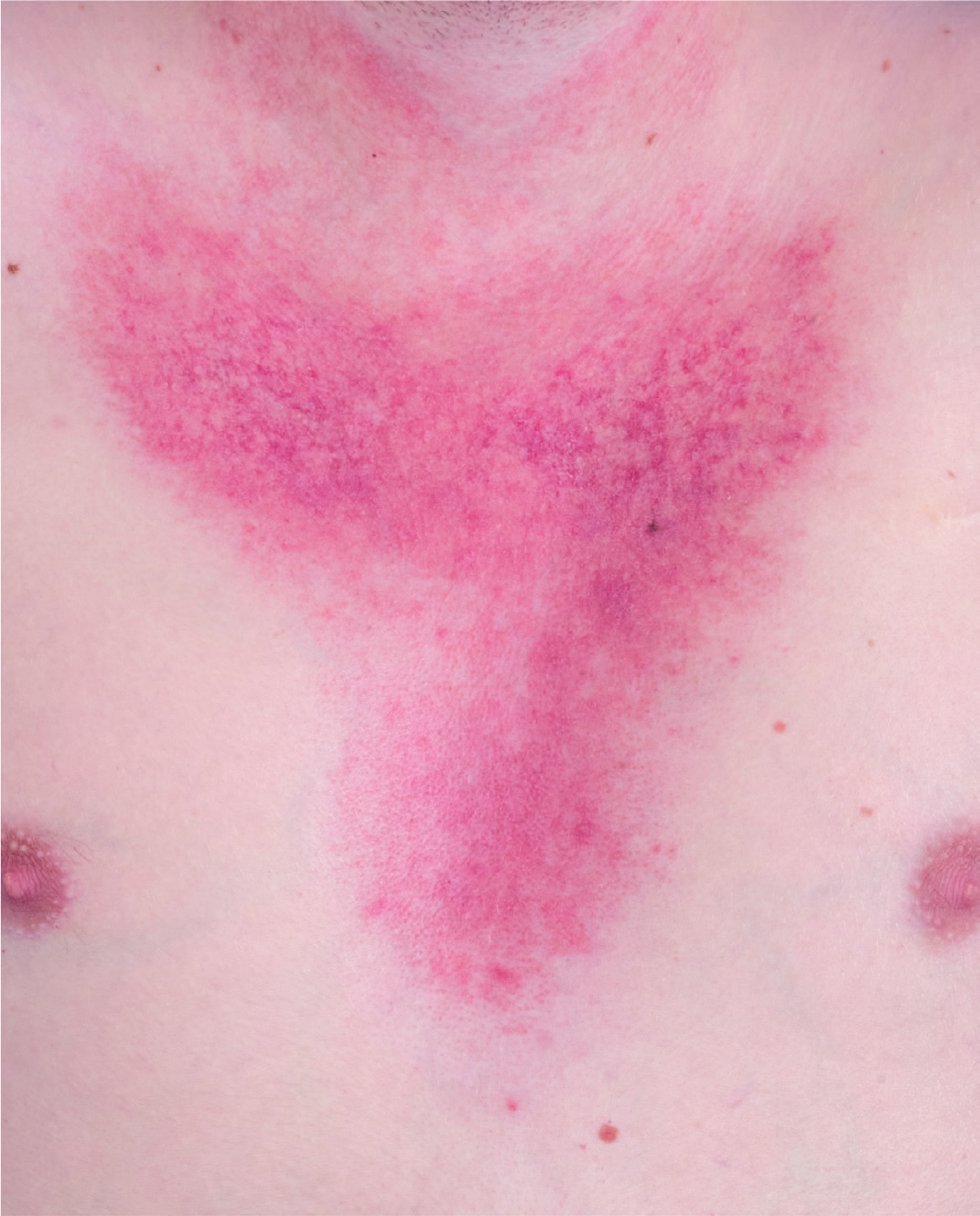
Fig. 42.6 Dermatomyositis – poikiloderma and holster sign. A Photodistributed poikiloderma is very characteristic of dermatomyositis and often involves the upper chest (V-neck sign). In this patient with skin phototype I, the color is pink– red. B Broken-up pink–violet plaque on the upper lateral thigh (holster sign). C Holster sign with a pink–brown color in a patient with more darkly pigmented skin. A, Courtesy Edward Cowen, MD; B, Courtesy Jonathan Leventhal, MD; C, Courtesy Sara Perkins, MD.
Fig.42.6 As.867
Fig. 42.6 Dermatomyositis – poikiloderma and holster sign. A Photodistributed poikiloderma is very characteristic of dermatomyositis and often involves the upper chest (V-neck sign). In this patient with skin phototype I, the color is pink– red. B Broken-up pink–violet plaque on the upper lateral thigh (holster sign). C Holster sign with a pink–brown color in a patient with more darkly pigmented skin. A, Courtesy Edward Cowen, MD; B, Courtesy Jonathan Leventhal, MD; C, Courtesy Sara Perkins, MD.
Fig.42.6 Bs.867
Fig. 42.6 Dermatomyositis – poikiloderma and holster sign. A Photodistributed poikiloderma is very characteristic of dermatomyositis and often involves the upper chest (V-neck sign). In this patient with skin phototype I, the color is pink– red. B Broken-up pink–violet plaque on the upper lateral thigh (holster sign). C Holster sign with a pink–brown color in a patient with more darkly pigmented skin. A, Courtesy Edward Cowen, MD; B, Courtesy Jonathan Leventhal, MD; C, Courtesy Sara Perkins, MD.
Fig.42.6 Cs.867
Fig. 42.6 Dermatomyositis – poikiloderma and holster sign. A Photodistributed poikiloderma is very characteristic of dermatomyositis and often involves the upper chest (V-neck sign). In this patient with skin phototype I, the color is pink– red. B Broken-up pink–violet plaque on the upper lateral thigh (holster sign). C Holster sign with a pink–brown color in a patient with more darkly pigmented skin. A, Courtesy Edward Cowen, MD; B, Courtesy Jonathan Leventhal, MD; C, Courtesy Sara Perkins, MD.
Fig.42.6 Ds.867
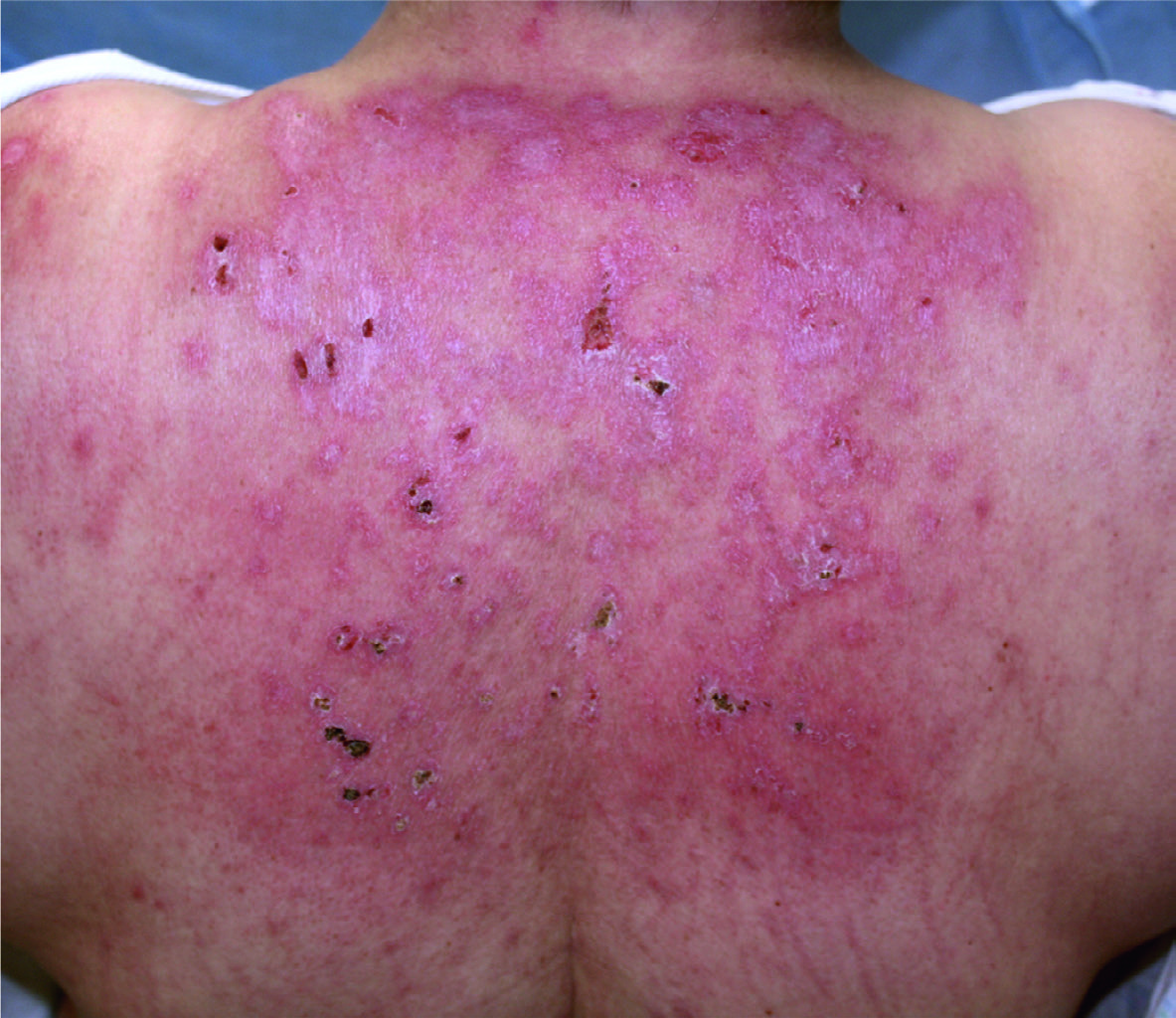
Fig. 42.7 Dermatomyositis – involvement of the upper back. The pink–violet plaques, some with associated scale, were very pruritic, as evidenced by multiple excoriations. Linear streaks of erythema are also seen. Courtesy Jean L. Bolognia, MD.
Fig.42.7s.867
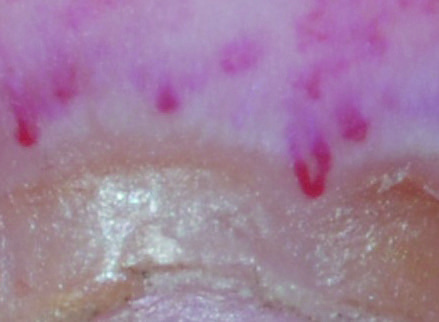
Fig. 42.8 Dermatomyositis – cuticular dystrophy and nail-fold telangiectasias. The cuticles are “ragged” and within the proximal nail fold, dilated capillary loops alternate with vessel dropout (inset). Atrophy, telangiectasias, and hypopigmentation are present on the fingers. Courtesy Julie V. Schaffer, MD.
Fig.42.8s.867
dermatomyositis) (Fig. 42.9)
Fig.42.9s.869
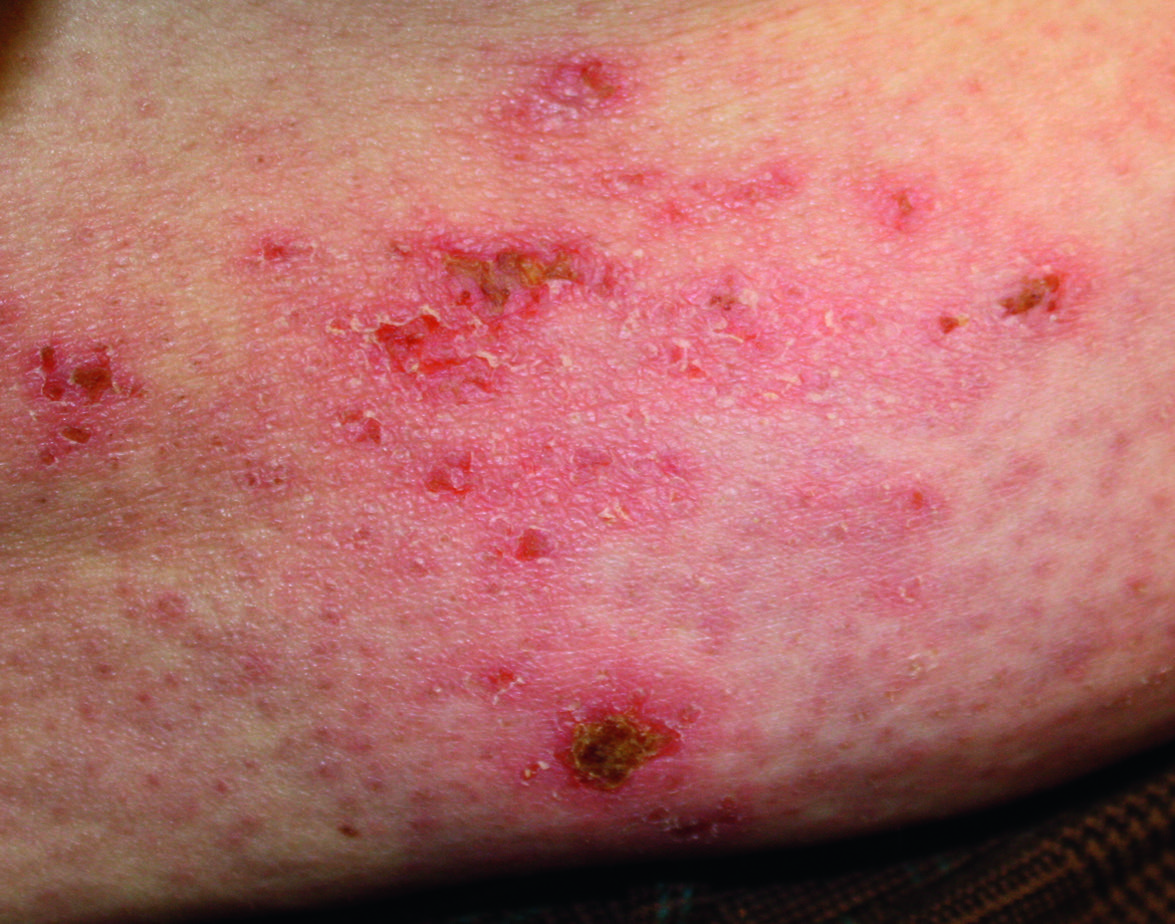
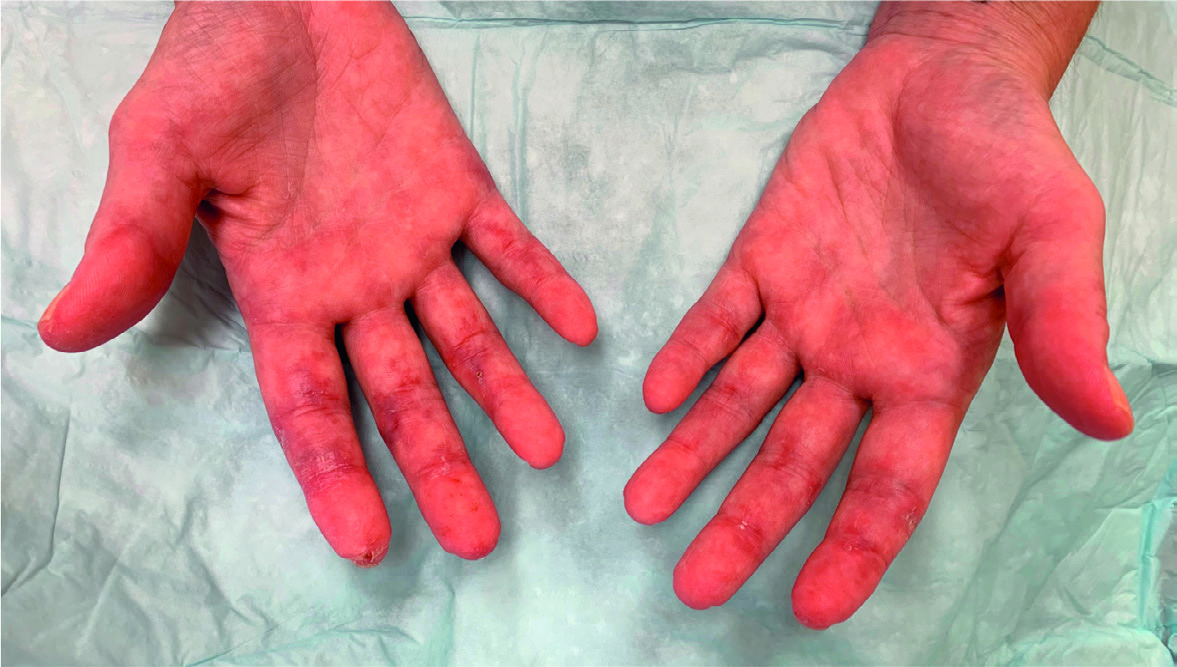
Fig. 42.10 Dermatomyositis – less common presentations. A Flagellate erythema of the posterior trunk. B Cutaneous erosions and ulcerations can also occur. C Hyperkeratosis and mild erythema of the lateral and palmar surfaces of the fingers in a patient with “mechanic’s hands”.
Fig.42.10 As.868
Fig. 42.10 Dermatomyositis – less common presentations. A Flagellate erythema of the posterior trunk. B Cutaneous erosions and ulcerations can also occur. C Hyperkeratosis and mild erythema of the lateral and palmar surfaces of the fingers in a patient with “mechanic’s hands”.
Fig.42.10 Bs.868
(Fig. 42.11C) Hyperkeratotic palmar papules “Mechanic’s hands” (Fig. 42.10C) Exfoliative erythroderma Cutaneous eruption that mimics
Fig.42.11Cs.869
Fig. 42.11 Three patients with anti-MDA5 dermatomyositis. A, B Vasculopathic ulcerations favor the elbows, dorsal hands, and periungual region; they can be associated with Gottron sign and Gottron papules. C Painful violaceous macules and papules with an irregular outline that favor the digital creases.
Fig.42.11s.869
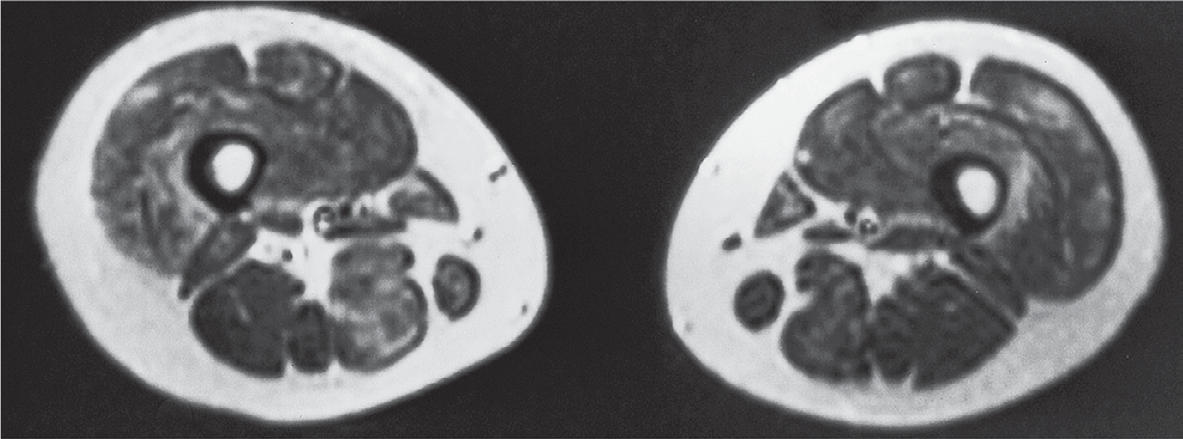
Fig. 42.14 T2-weighted MR images of the proximal thigh in a patient with dermatomyositis. Note the increased signal intensity, primarily in the extensor muscles (white color, arrows). The increased signal correlates with inflammation.
Fig.42.14s.871