Bolognia 5e·Dermatoloji Çalışma Paneli
Ch 84

İnfestasyonlar

Vol 2 · sayfa 1519 · §12
📖 Özet🃏 Flashcard Quiz🖼 Atlas
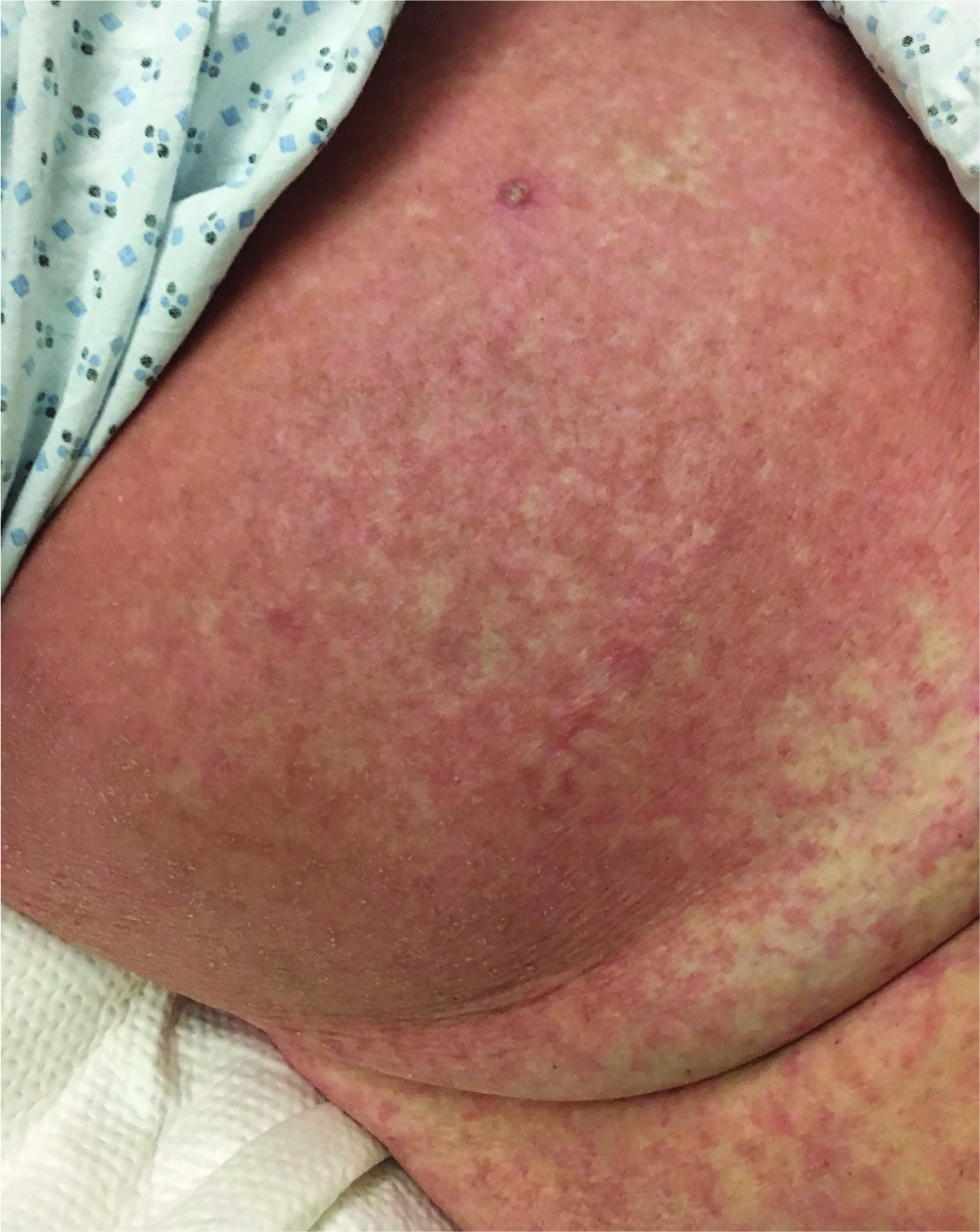
Fig. 84.4 Crusted scabies. Scabies incognito presenting as an asymptomatic hyperkeratotic “rash” on the hand in a patient with impaired sensory function (A) and on the abdomen of a hospitalized man (B). A, Courtesy Joyce Rico, MD; B, Courtesy Kalman Watsky, MD.
Fig.84.4s.1841
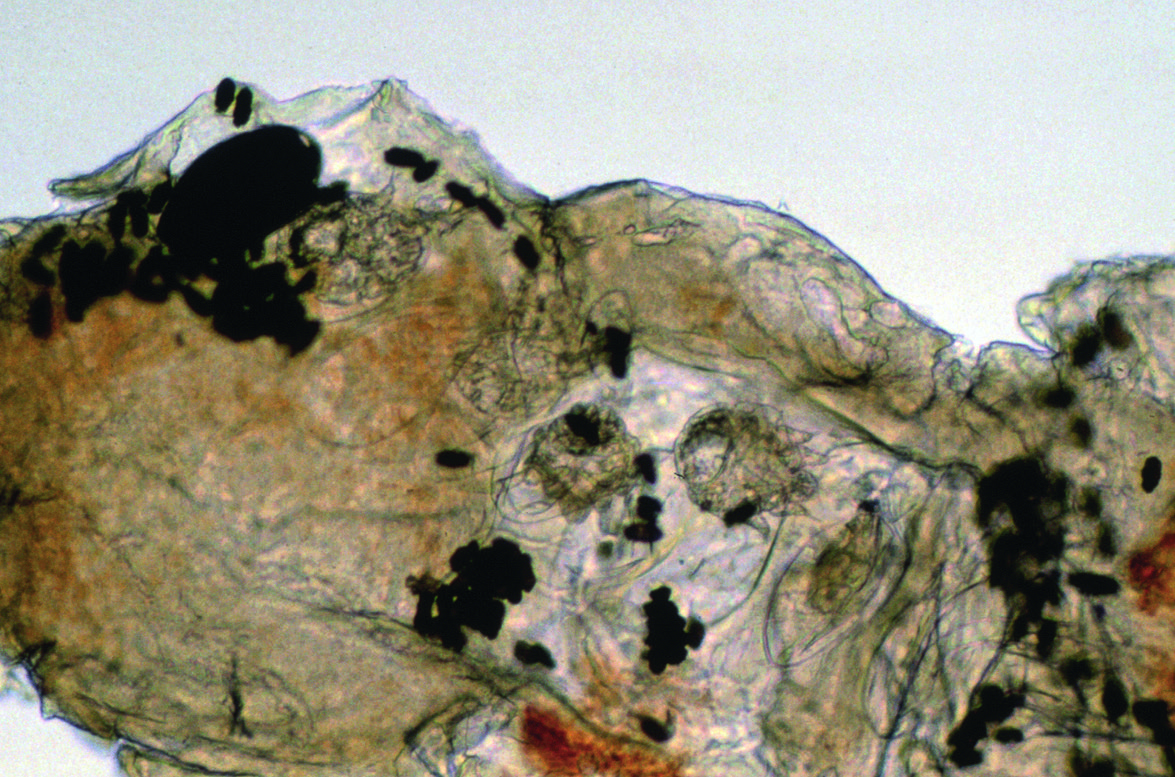
Fig. 84.5 Microscopy of a skin scraping from a patient with scabies. Four mites, eggs, and scybala are present. The mites blend in with the background scale, making them difficult to see.
Fig.84.5s.1841
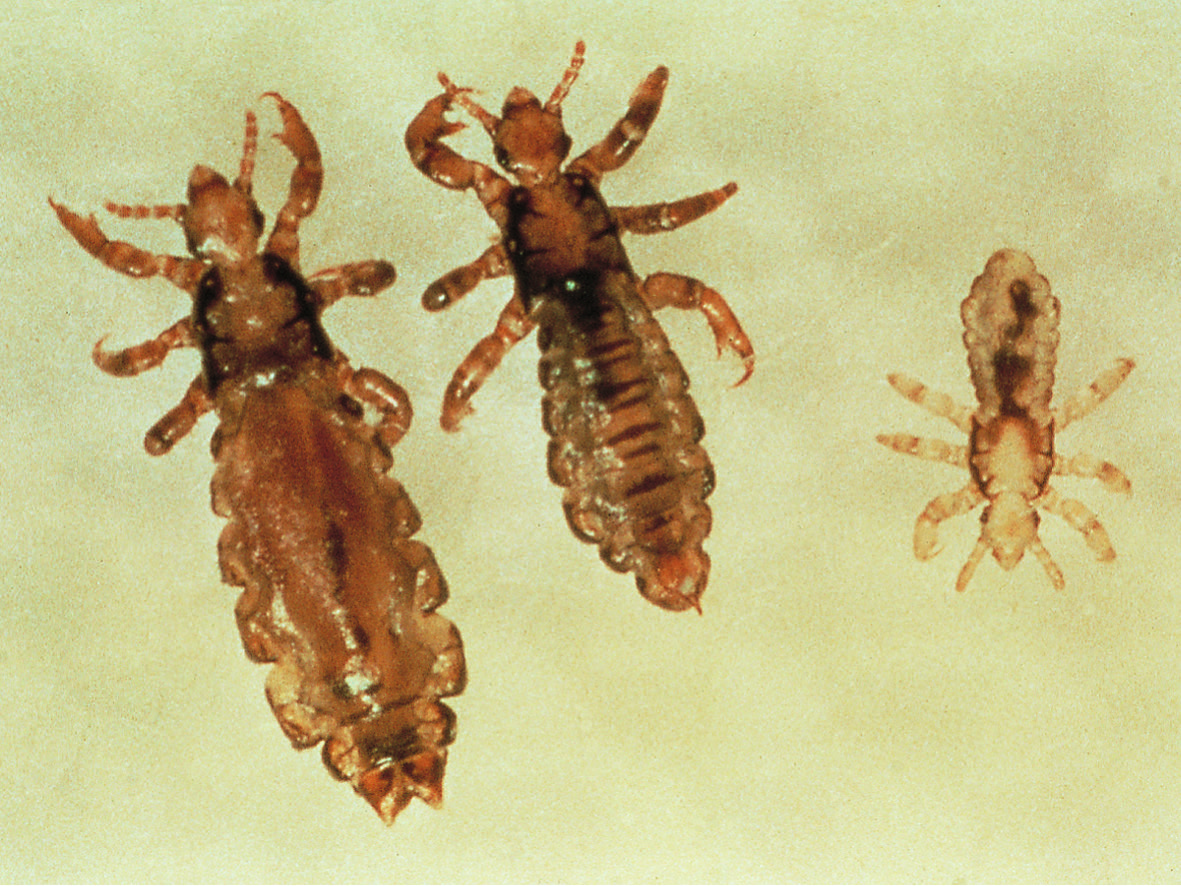
Fig. 84.7 Head louse family. From left to right: female, male, and nymph. With permission from Taplin D, Meinking TL. Infestations. In: Schachner LA, Hansen RC (eds). Pediatric Dermatology, 4th edn. Edinburgh: Mosby, 2011:1141–80.
Fig.84.7s.1843
Fig. 84.9 Head lice. A The head louse egg or nit is 0.8 mm in length. B Head lice nits on hair. With permission from Taplin D, Meinking TL. Infestations. In: Schachner LA, Hansen RC (eds). Pediatric Dermatology, 4th edn. Edinburgh: Mosby, 2011:1141–80.
Fig.84.9 As.1844
Fig. 84.9 Head lice. A The head louse egg or nit is 0.8 mm in length. B Head lice nits on hair. With permission from Taplin D, Meinking TL. Infestations. In: Schachner LA, Hansen RC (eds). Pediatric Dermatology, 4th edn. Edinburgh: Mosby, 2011:1141–80.
Fig.84.9 Bs.1844
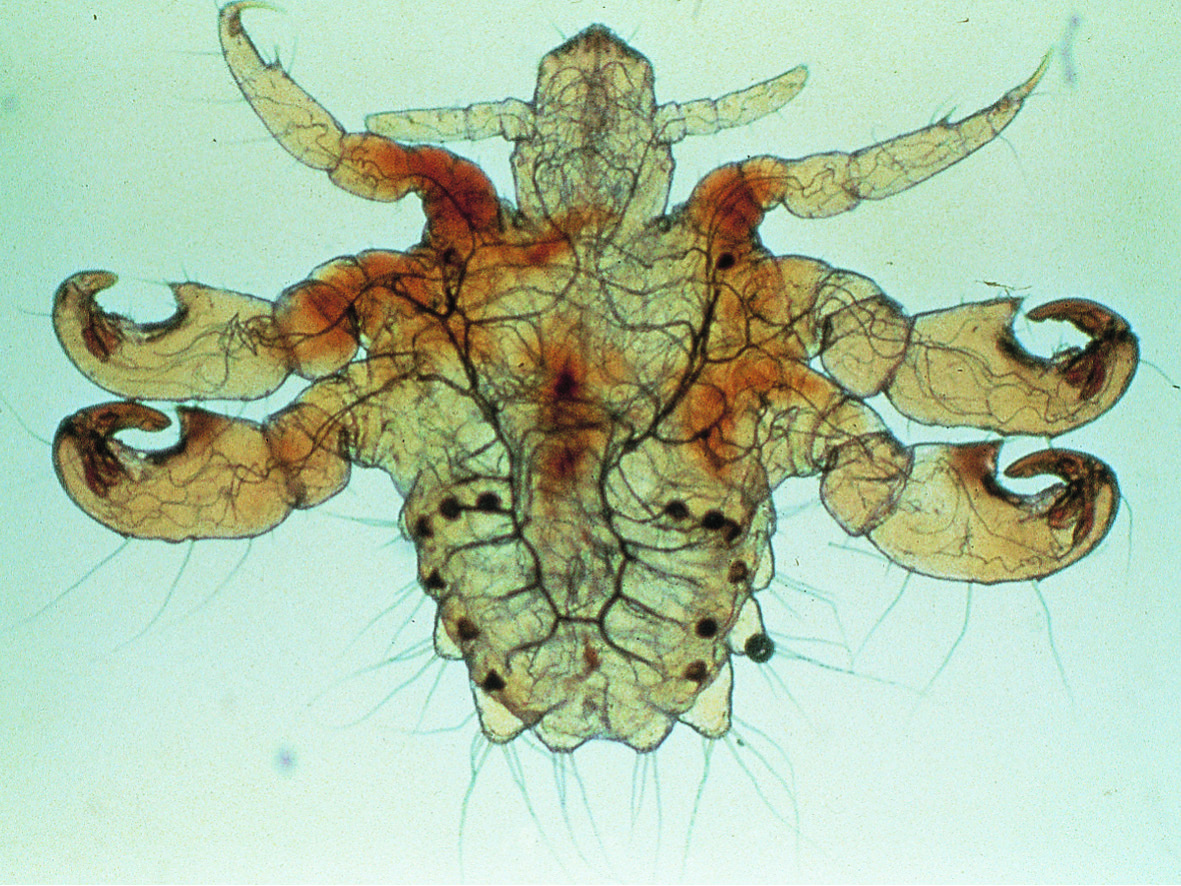
Fig. 84.10 Adult crab louse. Respiratory spiracles and circulatory system are easily seen (45×). Courtesy Tony Burns, MD.
Fig.84.10s.1847
Fig. 84.11 Crab lice. A Both adult crab lice and nits are evident on pubic hairs. B Crab lice nits and feces on the eyelashes. A, Courtesy Louis A. Fragola, Jr, MD; B, With permission from Taplin D, Meinking TL. Infestations. In: Schachner LA, Hansen RC (eds). Pediatric Dermatology, 4th edn. Edinburgh: Mosby, 2011:1141–80.
Fig.84.11 As.1847
Fig. 84.11 Crab lice. A Both adult crab lice and nits are evident on pubic hairs. B Crab lice nits and feces on the eyelashes. A, Courtesy Louis A. Fragola, Jr, MD; B, With permission from Taplin D, Meinking TL. Infestations. In: Schachner LA, Hansen RC (eds). Pediatric Dermatology, 4th edn. Edinburgh: Mosby, 2011:1141–80.
Fig.84.11 Bs.1847
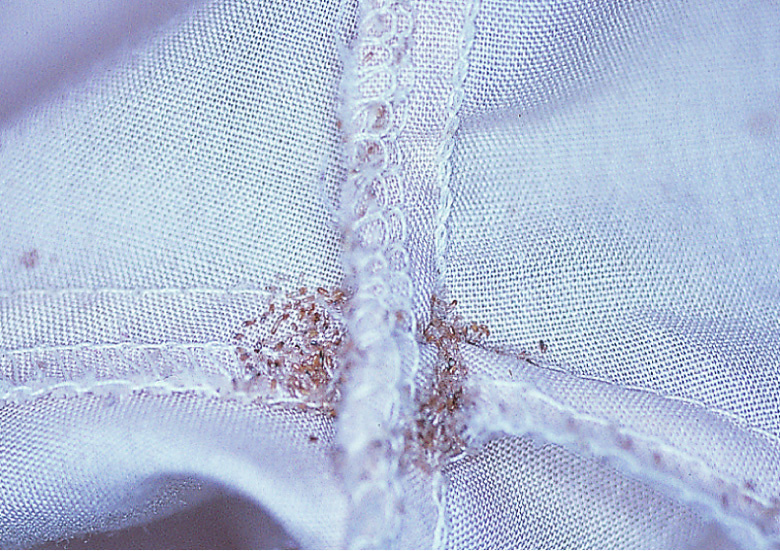
Fig. 84.12 Body lice eggs in the seams of clothing.
Fig.84.12s.1848
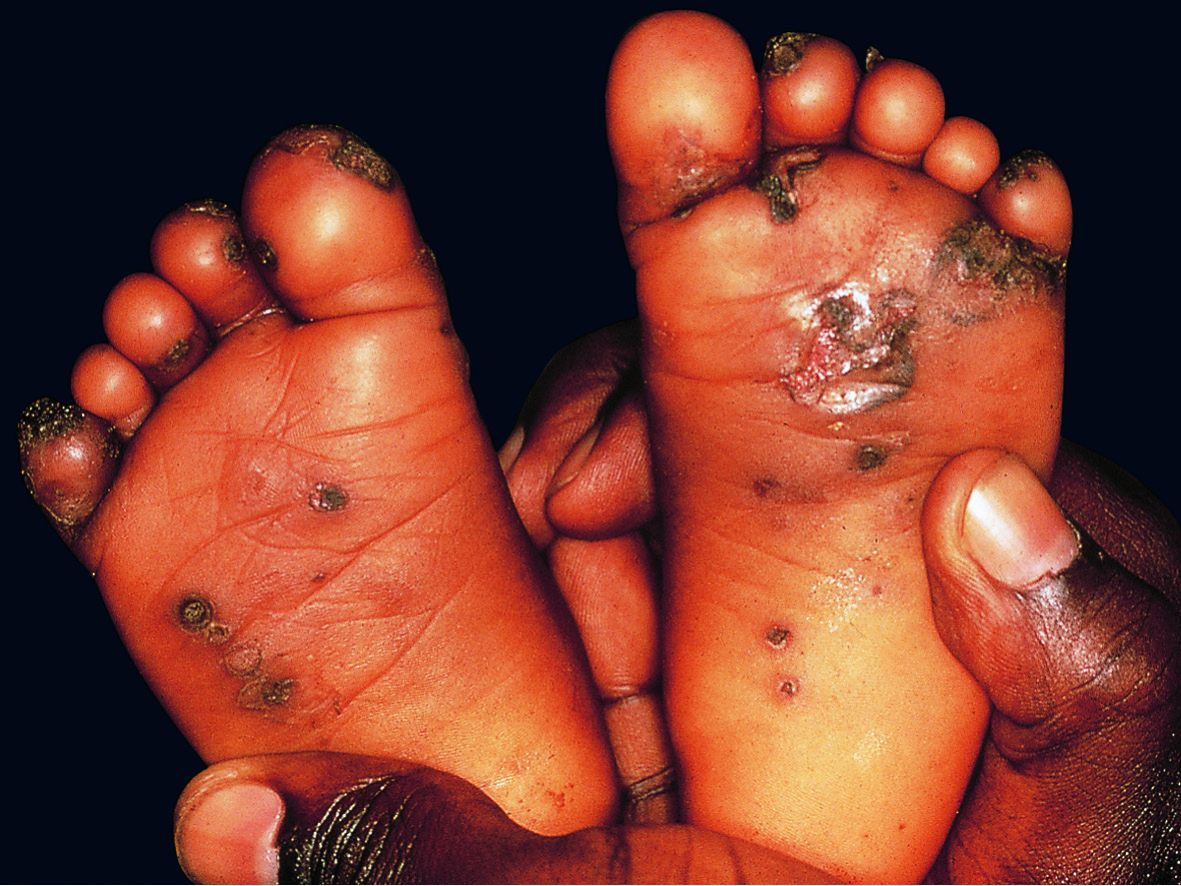
Fig. 84.13 Tungiasis in a child.
Fig.84.13s.1849
Fig. 84.14 Life cycle of Dermatobia hominis in cutaneous myiasis.
Fig.84.14 As.1850
Fig. 84.14 Life cycle of Dermatobia hominis in cutaneous myiasis.
Fig.84.14 Bs.1850
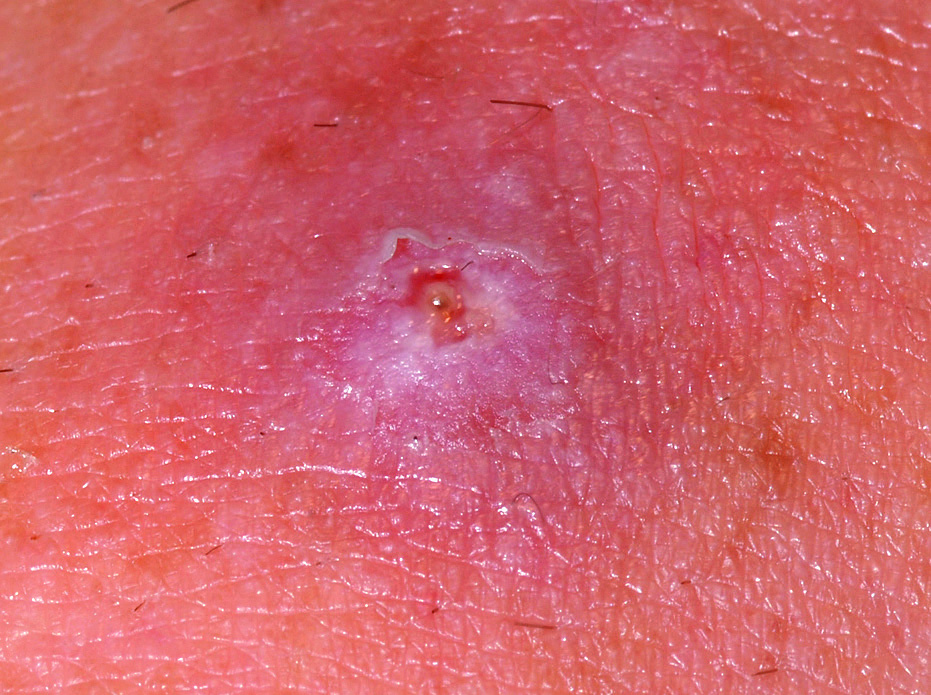
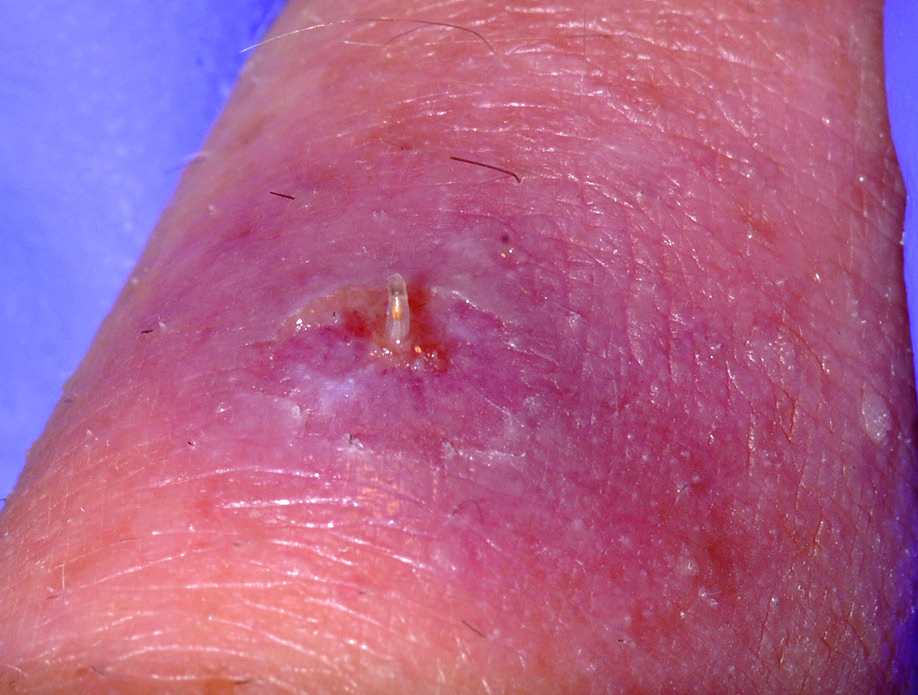
Fig. 84.15 Cutaneous myiasis. A–C Furuncular myiasis on the forearm presenting as a papulo- nodule with a central punctum (A) through which the larva’s posterior end, which contains respiratory spiracles, may protrude (B). Note the characteristic appearance of the extracted botfly larva, with parallel rows of dark spines and hooks (C). D Wound myiasis in an amputation stump. A–C, Courtesy Edward W. Cowen, MD; D, Courtesy Louis A. Fragola, Jr, MD.
Fig.84.15s.1850