Bolognia 5e·Dermatoloji Çalışma Paneli
Ch 82

Cinsel Yolla Bulaşan Enfeksiyonlar

Vol 2 · sayfa 1461 · §12
📖 Özet🃏 Flashcard Quiz🖼 Atlas
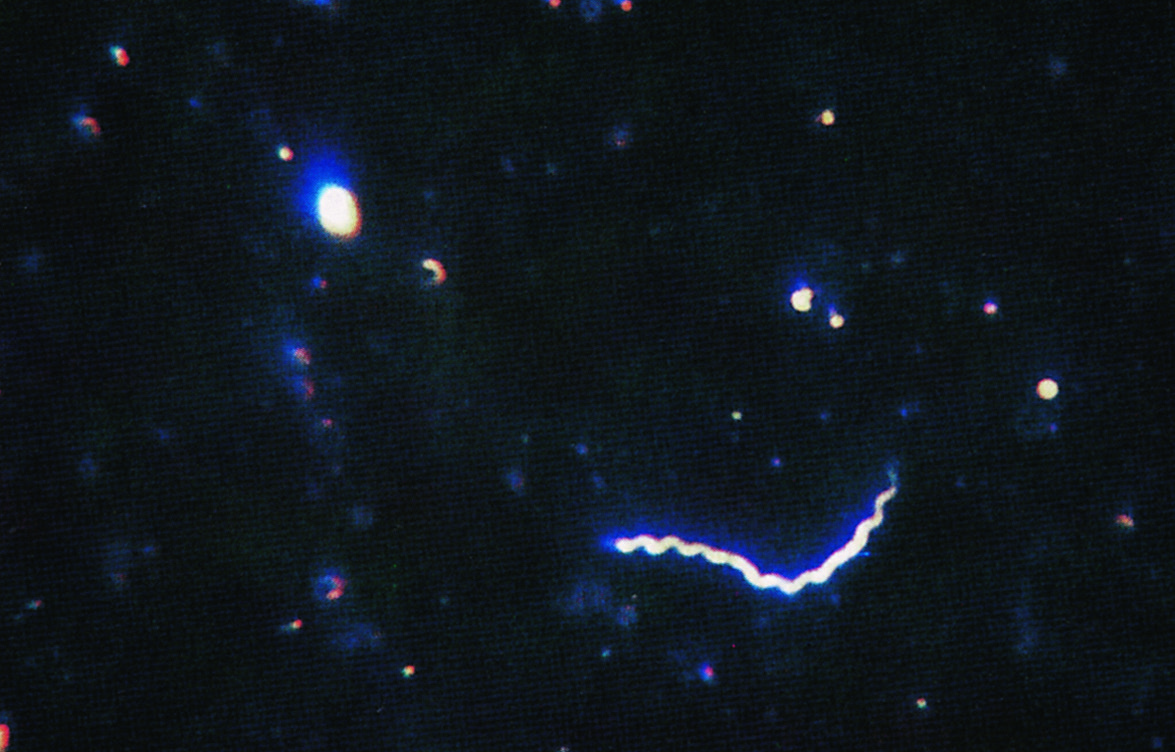
Fig. 82.3 Positive darkfield examination. Treponemes are recognized by their characteristic corkscrew shape, and deliberate forward and backward movement with rotation about the longitudinal axis. From Morse SA, et al. Atlas of Sexually Transmitted Diseases and AIDS, 3rd edn. London: Mosby, 2003.
Fig.82.3s.1776
or rectal areas (see Fig. 82.5D), seen more commonly in MSM. The mechanism of spontaneous healing without treatment is not well understood and seems to depend on local immunity.
Fig.82.5Ds.1777
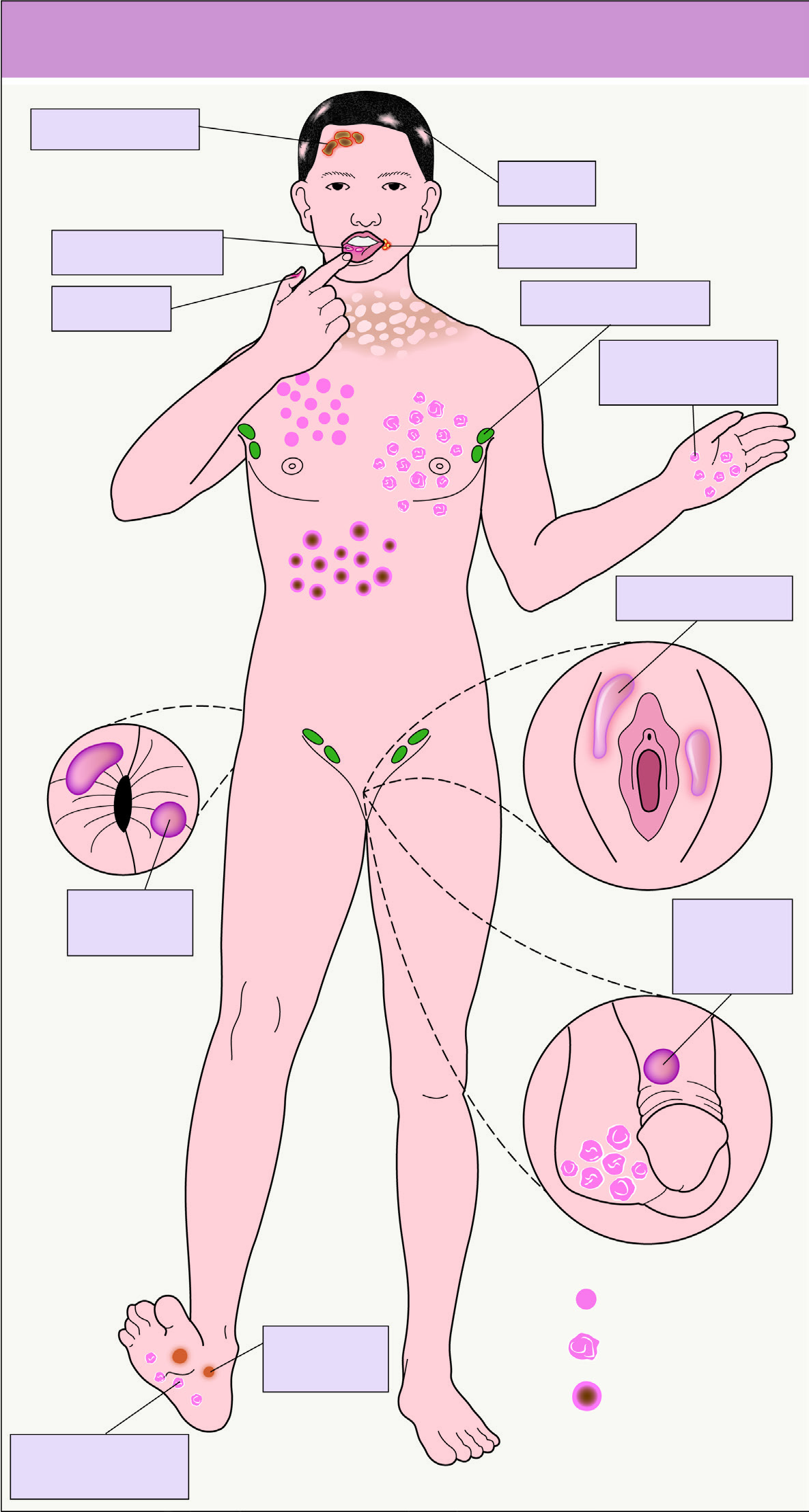
Fig. 82.6 Clinical manifestations of syphilis. Adapted from Fritsch P, Zangerle R, Stary A. Venerologie. In: Fritsch P (ed). Dermatologie und Venerologie. Berlin: Springer, 2004:865–86.
Fig.82.6s.1777
Fig. 82.7 Cutaneous features of secondary syphilis. Additional symptoms include low-grade fever, malaise, sore throat, myalgias, bone pain, and headaches.
Fig.82.7s.1778
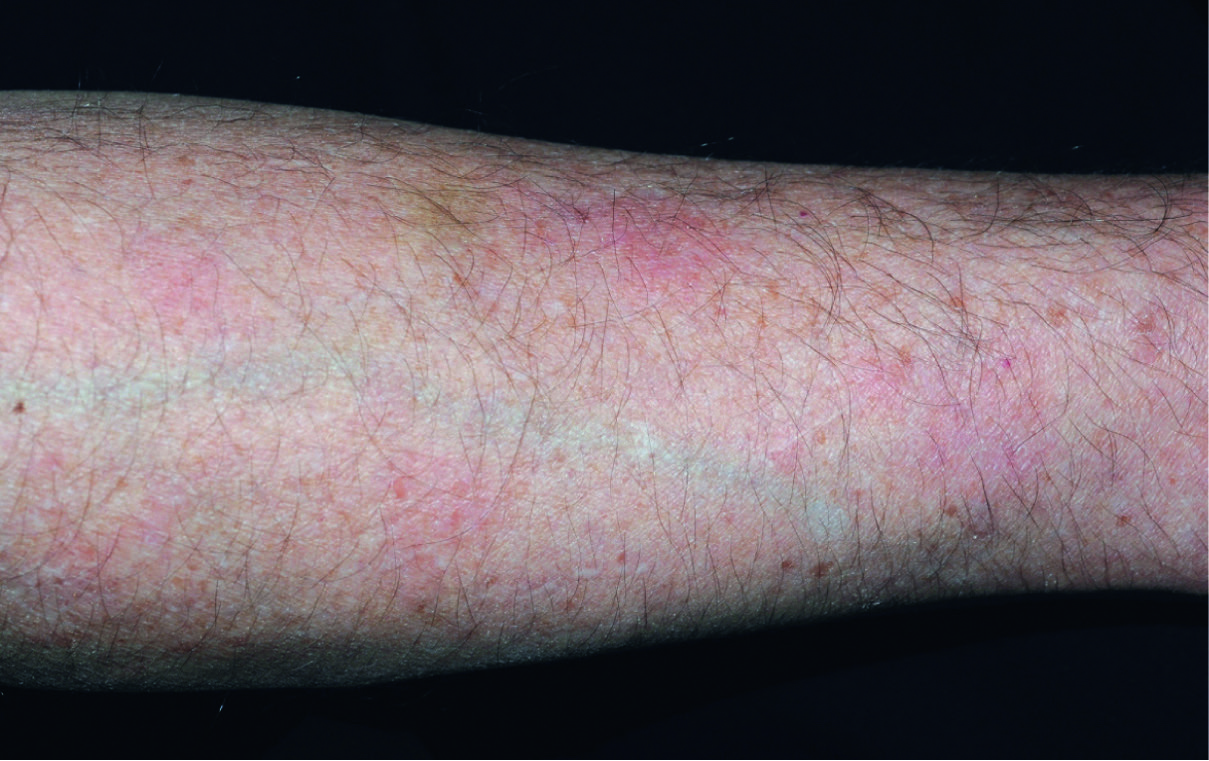
Fig. 82.8 Secondary syphilis. Widespread exanthem of pink papules (A), subtle minimally inflamed lesions localized to the arms in an HIV-positive man (B), and generalized papulosquamous lesions (C). Genital lesions can resemble psoriasis (D) while lesions on the palms and soles (E, F) often have a collarette of scale. B,D, Courtesy Kalman Watsky, MD.
Fig.82.8s.1779
Fig. 82.9 Orogenital lesions of secondary syphilis. Oral lesions can vary from small superficial ulcers (A) to mucous patches (B). Occasionally, leukokeratosis or nodules are seen. Condylomata lata in the vulvar (C) and anal (D) areas may be misdiagnosed as HPV infection (i. e. condylomata acuminata).
Fig.82.9 As.1779
Fig. 82.9 Orogenital lesions of secondary syphilis. Oral lesions can vary from small superficial ulcers (A) to mucous patches (B). Occasionally, leukokeratosis or nodules are seen. Condylomata lata in the vulvar (C) and anal (D) areas may be misdiagnosed as HPV infection (i. e. condylomata acuminata).
Fig.82.9 Bs.1779
Fig. 82.9 Orogenital lesions of secondary syphilis. Oral lesions can vary from small superficial ulcers (A) to mucous patches (B). Occasionally, leukokeratosis or nodules are seen. Condylomata lata in the vulvar (C) and anal (D) areas may be misdiagnosed as HPV infection (i. e. condylomata acuminata).
Fig.82.9 Cs.1779
Fig. 82.10 Less common manifestations of secondary syphilis. A Annular and polycyclic plaques with central hyperpigmen- tation on the forehead. B Split papule at the oral commissure. C, D Two elderly patients with granulomatous lesions, varying from numerous, monomorphic, dull pink papules to papulonodules and plaques of varying sizes. E Necrotic lesion with scale-crust in a patient with AIDS. F “Malignant” syphilis with multiple necrotic, ulcerated and crusted lesions associated with severe consti- tutional symptoms. C, Courtesy Department of Dermatology, Medical University of Graz; E, Courtesy Judit Stenn, MD.
Fig.82.10 As.1780
Fig. 82.10 Less common manifestations of secondary syphilis. A Annular and polycyclic plaques with central hyperpigmen- tation on the forehead. B Split papule at the oral commissure. C, D Two elderly patients with granulomatous lesions, varying from numerous, monomorphic, dull pink papules to papulonodules and plaques of varying sizes. E Necrotic lesion with scale-crust in a patient with AIDS. F “Malignant” syphilis with multiple necrotic, ulcerated and crusted lesions associated with severe consti- tutional symptoms. C, Courtesy Department of Dermatology, Medical University of Graz; E, Courtesy Judit Stenn, MD.
Fig.82.10 Bs.1780
Fig. 82.10 Less common manifestations of secondary syphilis. A Annular and polycyclic plaques with central hyperpigmen- tation on the forehead. B Split papule at the oral commissure. C, D Two elderly patients with granulomatous lesions, varying from numerous, monomorphic, dull pink papules to papulonodules and plaques of varying sizes. E Necrotic lesion with scale-crust in a patient with AIDS. F “Malignant” syphilis with multiple necrotic, ulcerated and crusted lesions associated with severe consti- tutional symptoms. C, Courtesy Department of Dermatology, Medical University of Graz; E, Courtesy Judit Stenn, MD.
Fig.82.10 Cs.1780
Fig. 82.12 Cutaneous gummas of tertiary syphilis. Arciform, erythematous eroded plaques with central scarring.
Fig.82.12s.1781
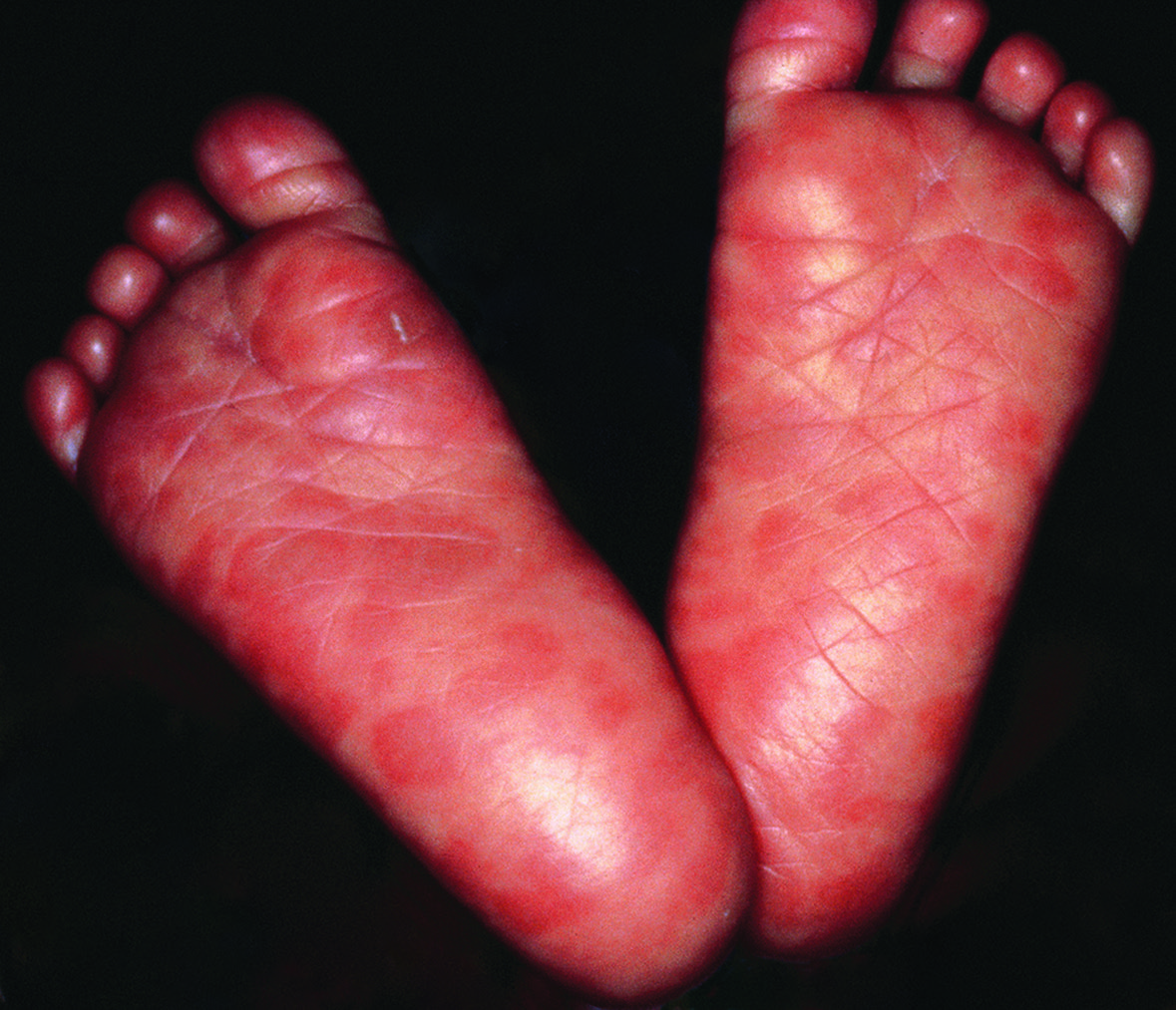
Fig. 82.14 Congenital syphilis. Red–brown plaques on the plantar surface.
Fig.82.14s.1783
Fig. 82.17 Gonococcal urethritis with a purulent urethral discharge.
Fig.82.17s.1788
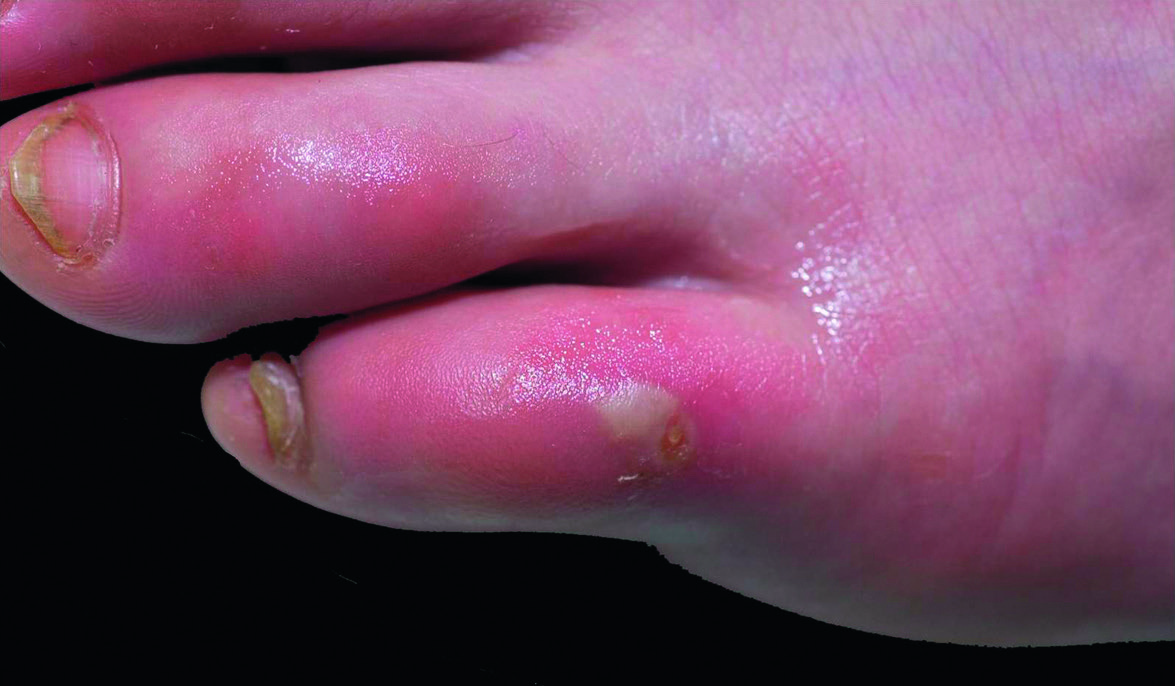
Fig. 82.18 Gonococcemia (arthritis–dermatosis syndrome). Pustule with surrounding erythema on the toe.
Fig.82.18s.1788
Fig. 82.20 Gonococci in Gram-stained (A) and methylene blue-stained (B) smears of urethral discharge. Neutrophils containing Gram-negative or methylene blue-positive diplococci, consistent with Neisseria gonorrhoeae, are evident. B, Courtesy Harald Moi, MD.
Fig.82.20s.1790
Fig. 82.22 Gram-stained smear in chancroid. This smear of exudate from a genital ulcer shows the characteristic chaining pattern of Haemophilus ducreyi
Fig.82.22s.1792
Fig. 82.23 Chancroid. A Well-demarcated painful ulcers on the penis. B Multiple purulent ulcers with undermined borders. C Unilateral lymphadenitis with overlying erythema. B, Courtesy Joyce Rico, MD.
Fig.82.23 As.1792
Fig. 82.23 Chancroid. A Well-demarcated painful ulcers on the penis. B Multiple purulent ulcers with undermined borders. C Unilateral lymphadenitis with overlying erythema. B, Courtesy Joyce Rico, MD.
Fig.82.23 Bs.1792
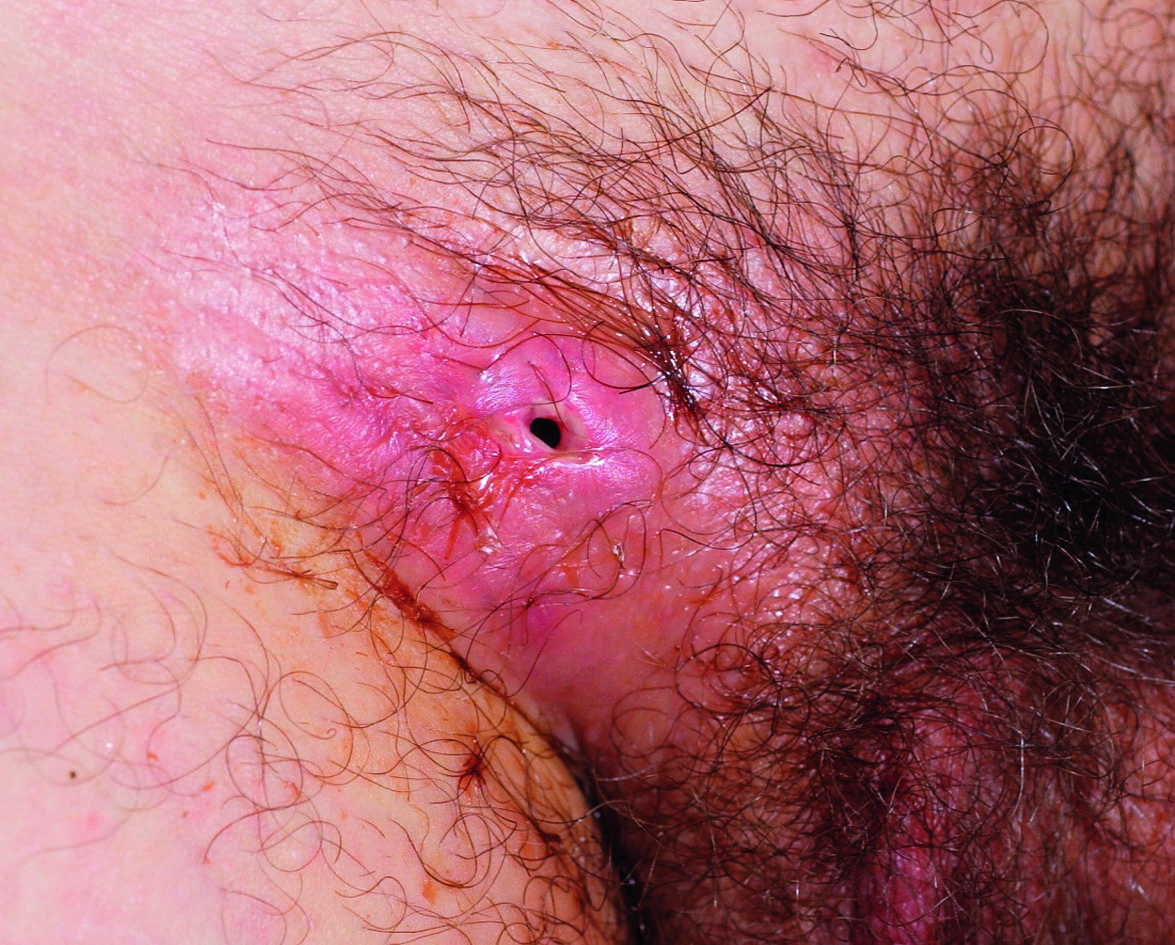
Fig. 82.24 Lymphogranuloma venereum. Inguinal bubo that has ruptured and drained.
Fig.82.24s.1794
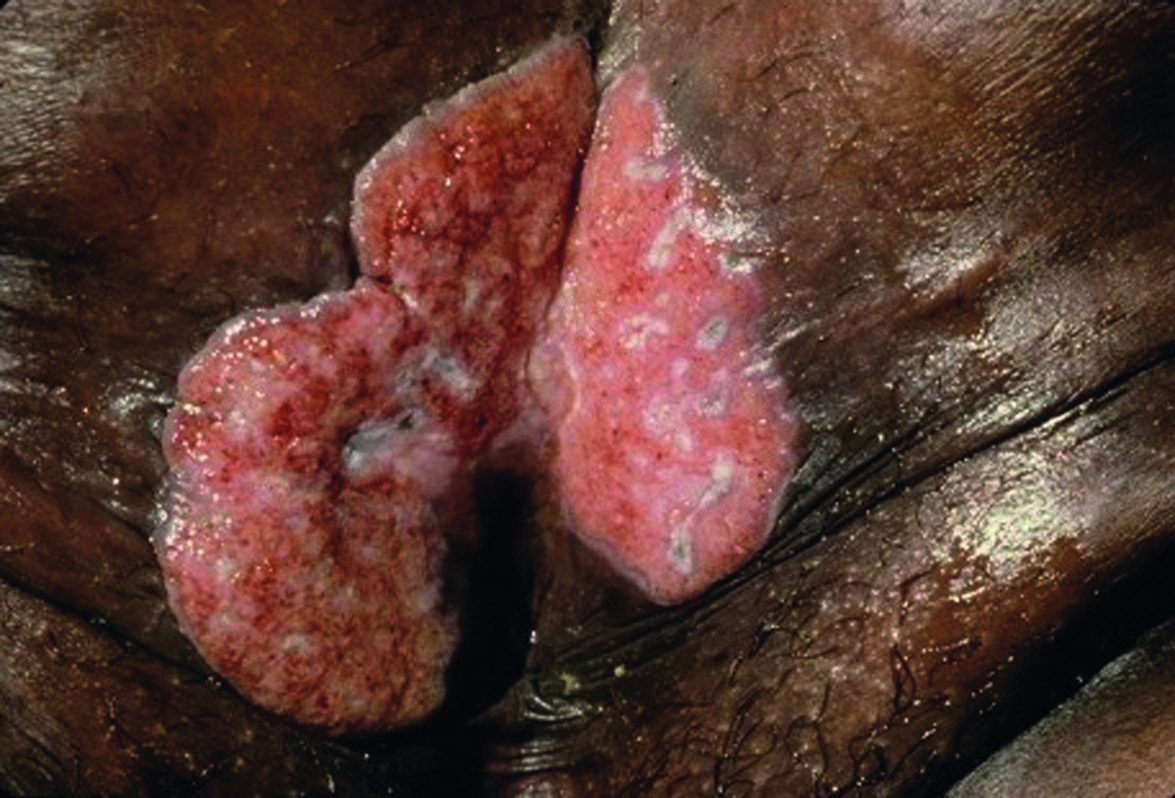
Fig. 82.26 Donovanosis (granuloma inguinale). Large ulcers with a character- istic “beefy” appearance. Courtesy Joyce Rico, MD.
Fig.82.26s.1795