Bolognia 5e·Dermatoloji Çalışma Paneli
Ch 93

Non-infeksiyöz Granülomalar

Vol 2 · sayfa 1660 · §14
📖 Özet🃏 Flashcard Quiz🖼 Atlas
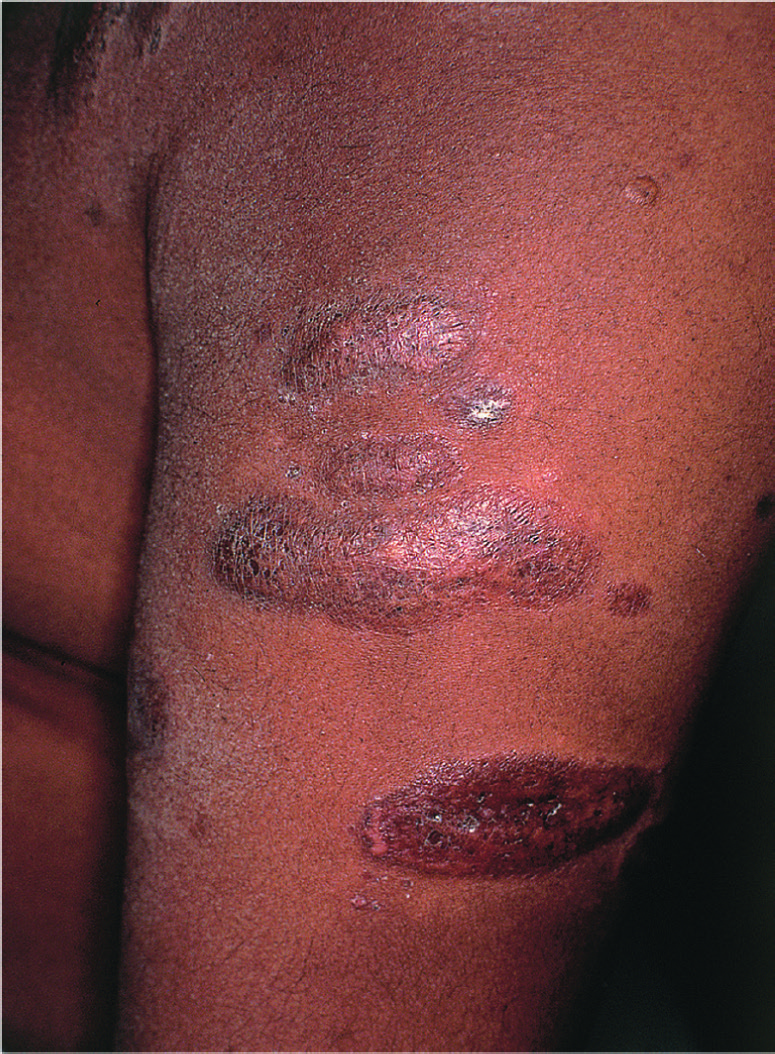
Fig. 93.2 Cutaneous sarcoidosis – papules and plaques. A Cutaneous sarcoidosis usually consists of papules and plaques with a typical reddish-brown to violet–brown color. B, C Papular lesions often favor the nose, lips, and perioral region. D Hyperpigmented plaques, some of which have scale. E Papules of cutaneous sarcoidosis arising within a tattoo; the differential diagnosis includes foreign body reaction. B, Courtesy Jonathan Leventhal, MD.
Fig.93.2 As.2005
Fig. 93.2 Cutaneous sarcoidosis – papules and plaques. A Cutaneous sarcoidosis usually consists of papules and plaques with a typical reddish-brown to violet–brown color. B, C Papular lesions often favor the nose, lips, and perioral region. D Hyperpigmented plaques, some of which have scale. E Papules of cutaneous sarcoidosis arising within a tattoo; the differential diagnosis includes foreign body reaction. B, Courtesy Jonathan Leventhal, MD.
Fig.93.2 Bs.2005
Fig. 93.2 Cutaneous sarcoidosis – papules and plaques. A Cutaneous sarcoidosis usually consists of papules and plaques with a typical reddish-brown to violet–brown color. B, C Papular lesions often favor the nose, lips, and perioral region. D Hyperpigmented plaques, some of which have scale. E Papules of cutaneous sarcoidosis arising within a tattoo; the differential diagnosis includes foreign body reaction. B, Courtesy Jonathan Leventhal, MD.
Fig.93.2 Cs.2005
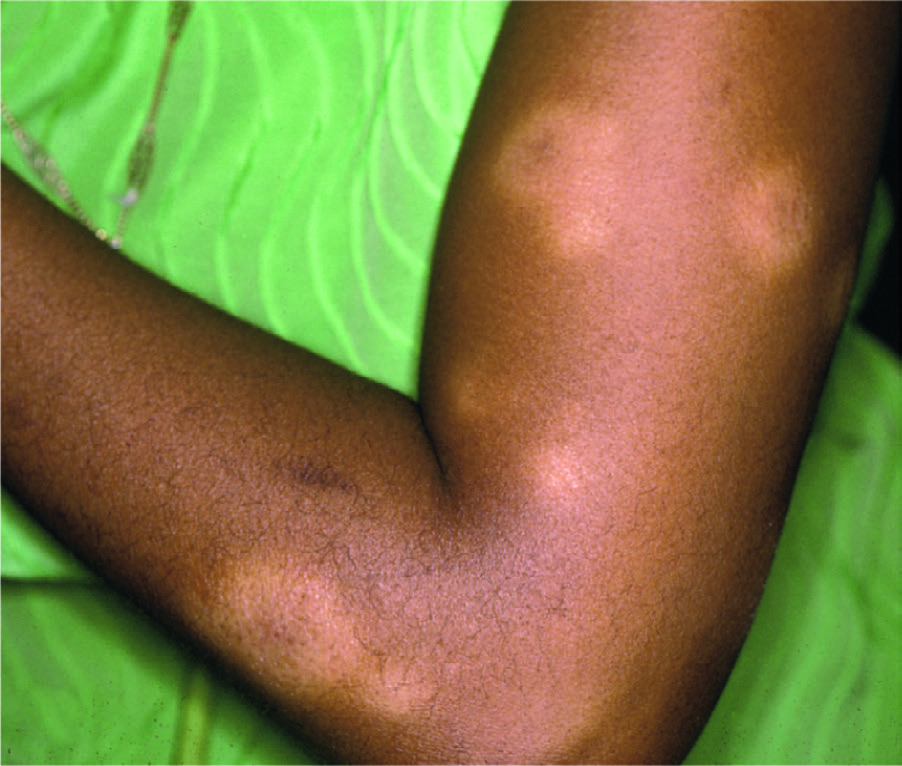
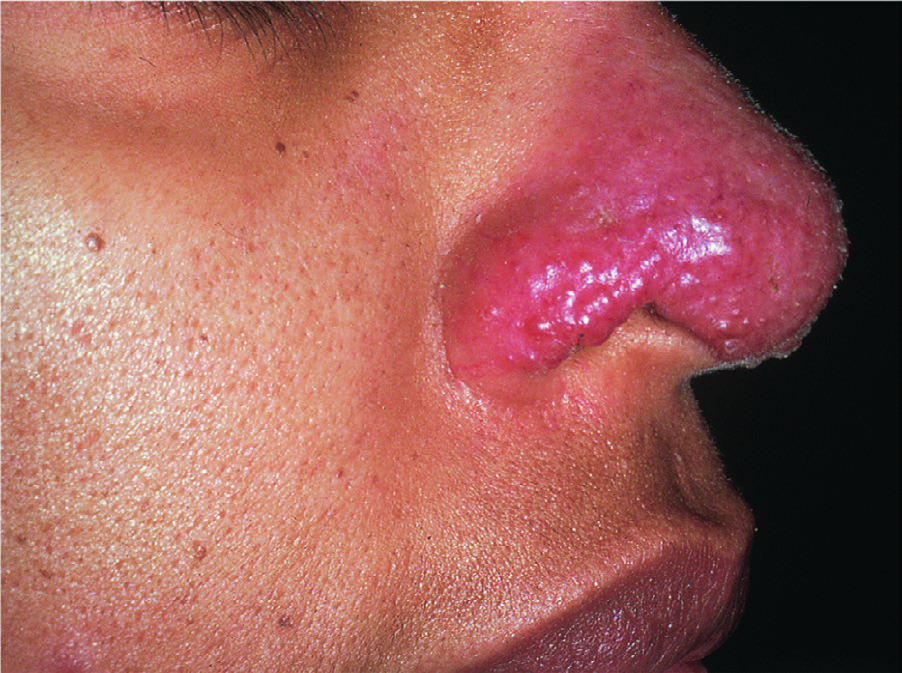
Fig. 93.3 Cutaneous sarcoidosis – clinical variants. A The hypopigmented variant is more noticeable in individuals with darkly pigmented skin. B Ichthyosiform presentation with obvious scale. C Coalescing violaceous papules on the nose in lupus pernio; note the notching of the nasal rim. A, Courtesy Louis A. Fragola, Jr, MD; B, Courtesy Jean L. Bolognia, MD.
Fig.93.3 As.2006
Fig. 93.3 Cutaneous sarcoidosis – clinical variants. A The hypopigmented variant is more noticeable in individuals with darkly pigmented skin. B Ichthyosiform presentation with obvious scale. C Coalescing violaceous papules on the nose in lupus pernio; note the notching of the nasal rim. A, Courtesy Louis A. Fragola, Jr, MD; B, Courtesy Jean L. Bolognia, MD.
Fig.93.3 Bs.2006
Fig. 93.3 Cutaneous sarcoidosis – clinical variants. A The hypopigmented variant is more noticeable in individuals with darkly pigmented skin. B Ichthyosiform presentation with obvious scale. C Coalescing violaceous papules on the nose in lupus pernio; note the notching of the nasal rim. A, Courtesy Louis A. Fragola, Jr, MD; B, Courtesy Jean L. Bolognia, MD.
Fig.93.3 Cs.2006
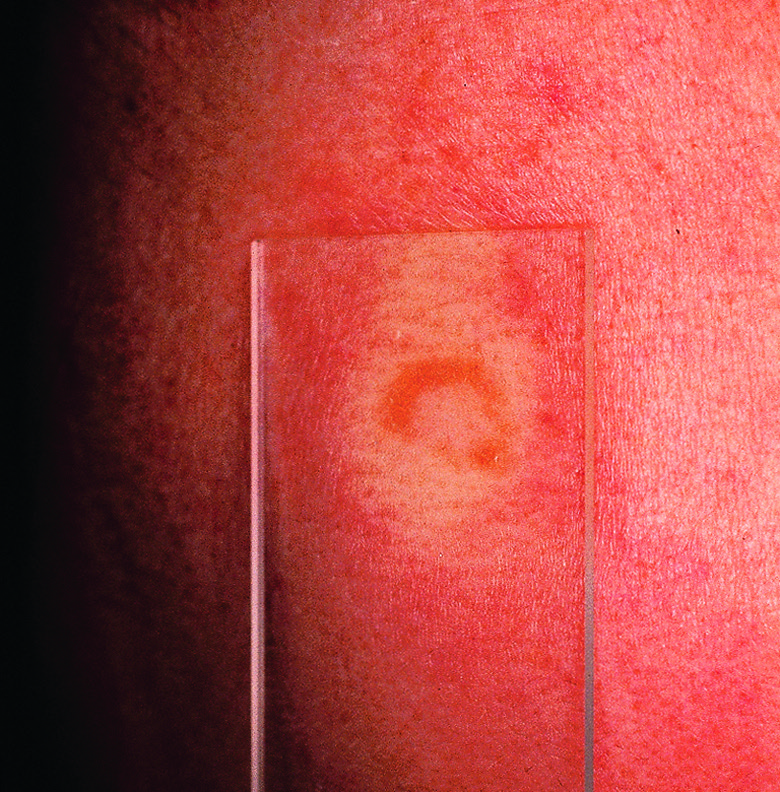
Fig. 93.4 Cutaneous sarcoidosis – diascopy. With diascopy, a yellow– brown, “apple jelly” color is seen.
Fig.93.4s.2006
Fig. 93.5 Erythema nodosum in a patient with sarcoidosis. These patients often have hilar lymphadenopathy. Löfgren syndrome consists of erythema nodosum, hilar lymphadenopathy, fever, and arthritis. Courtesy Louis A. Fragola, Jr, MD.
Fig.93.5s.2006
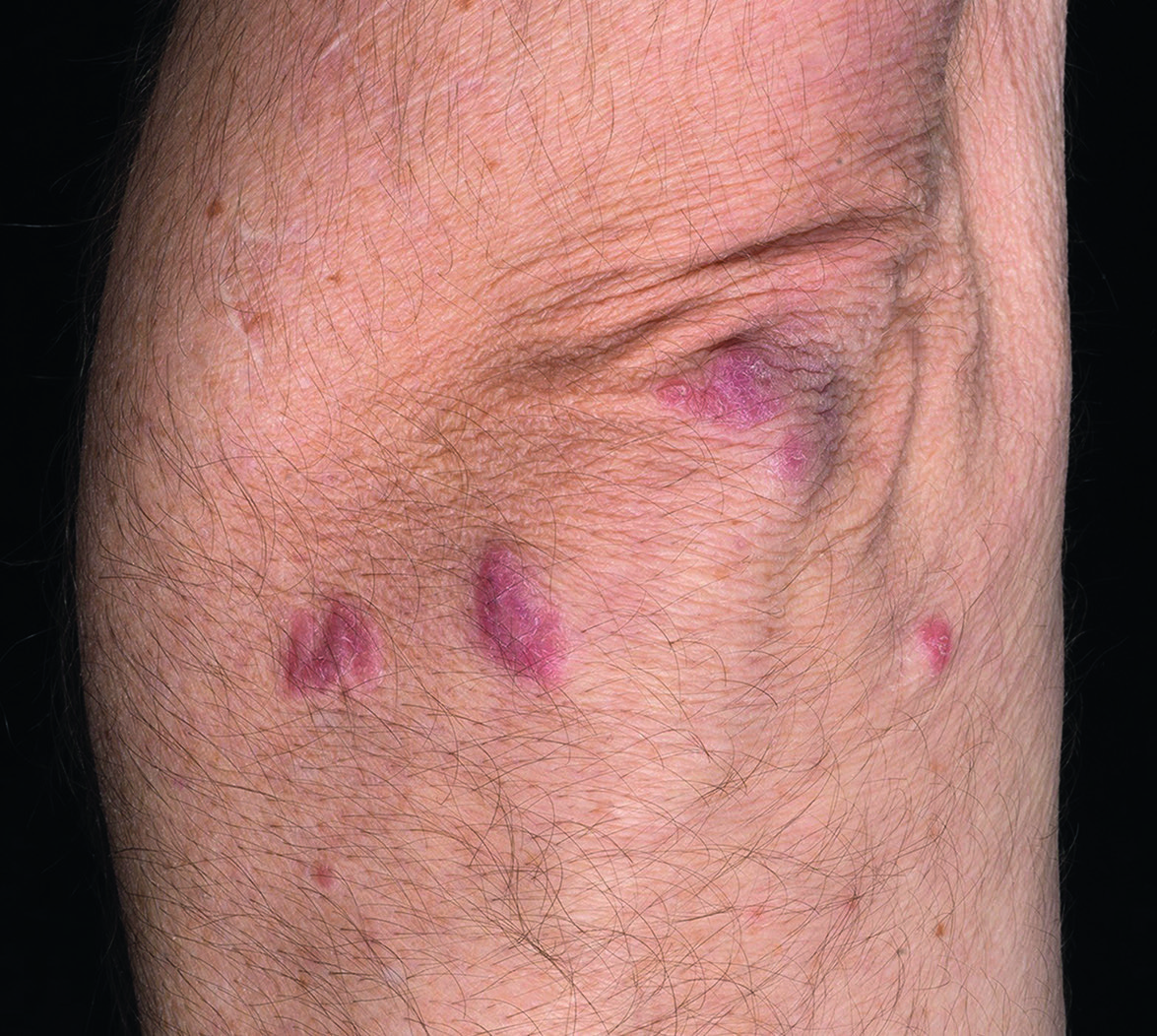
Fig. 93.8 Immune checkpoint inhibitor-induced cutaneous sarcoidosis. The patient had received both ipilimumab and nivolumab. A search for internal involvement, e.g. lung, lymph nodes, is warranted. Courtesy Department of Dermatology, Medical University of Graz.
Fig.93.8s.2008
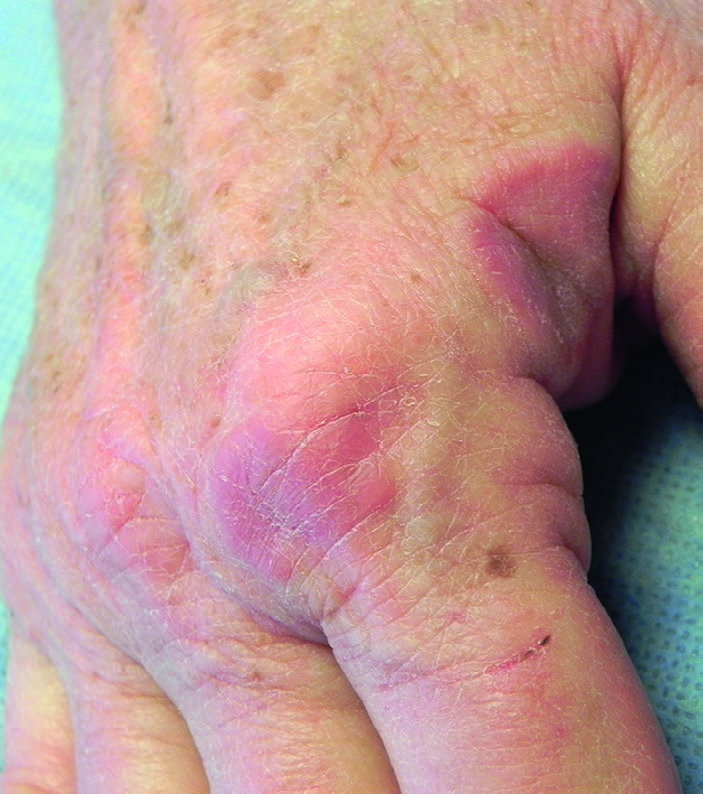
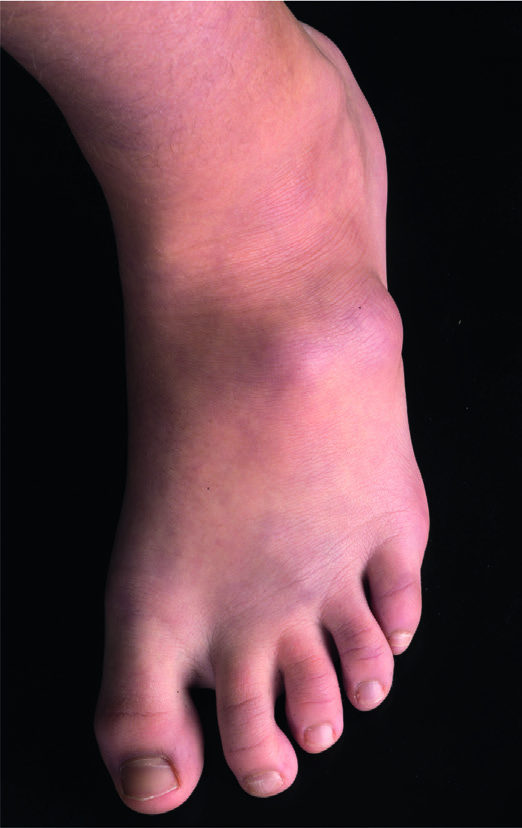
Fig. 93.9 Granuloma annulare – clinical features. A–D Annular pink to pink–brown plaques. The dorsal aspects of the hands and feet are a common location. Lesions can be skin-colored as well as pink (C). Grouped discrete papules may also be seen, with a more subtle annular or arciform configuration (A,C). C, Courtesy Julie V. Schaffer, MD; D, Courtesy Kalman Watsky, MD.
Fig.93.9 As.2011
Fig. 93.9 Granuloma annulare – clinical features. A–D Annular pink to pink–brown plaques. The dorsal aspects of the hands and feet are a common location. Lesions can be skin-colored as well as pink (C). Grouped discrete papules may also be seen, with a more subtle annular or arciform configuration (A,C). C, Courtesy Julie V. Schaffer, MD; D, Courtesy Kalman Watsky, MD.
Fig.93.9 Bs.2011
Fig. 93.9 Granuloma annulare – clinical features. A–D Annular pink to pink–brown plaques. The dorsal aspects of the hands and feet are a common location. Lesions can be skin-colored as well as pink (C). Grouped discrete papules may also be seen, with a more subtle annular or arciform configuration (A,C). C, Courtesy Julie V. Schaffer, MD; D, Courtesy Kalman Watsky, MD.
Fig.93.9 Cs.2011
Fig. 93.9 Granuloma annulare – clinical features. A–D Annular pink to pink–brown plaques. The dorsal aspects of the hands and feet are a common location. Lesions can be skin-colored as well as pink (C). Grouped discrete papules may also be seen, with a more subtle annular or arciform configuration (A,C). C, Courtesy Julie V. Schaffer, MD; D, Courtesy Kalman Watsky, MD.
Fig.93.9 Ds.2011
Fig. 93.10 Granuloma annulare (GA) – less common variants. A Perforating GA: papules characteristically have a central keratotic plug. B Micropapular GA: several of the lesions have a central dell. C Generalized/disseminated GA: discrete red–brown papules, many of which are in clusters. D Papular and nodular GA: the skin-colored nodules may be confused with rheumatoid nodules. E Skin-colored nodules of subcutaneous GA. A, Courtesy Ronald P. Rapini, MD; B, Courtesy Joyce Rico, MD; C, Courtesy Luis Requena, MD; D, Courtesy Kalman Watsky, MD; E, Courtesy Department of Dermatology, Medical University of Graz.
Fig.93.10 As.2012
Fig. 93.10 Granuloma annulare (GA) – less common variants. A Perforating GA: papules characteristically have a central keratotic plug. B Micropapular GA: several of the lesions have a central dell. C Generalized/disseminated GA: discrete red–brown papules, many of which are in clusters. D Papular and nodular GA: the skin-colored nodules may be confused with rheumatoid nodules. E Skin-colored nodules of subcutaneous GA. A, Courtesy Ronald P. Rapini, MD; B, Courtesy Joyce Rico, MD; C, Courtesy Luis Requena, MD; D, Courtesy Kalman Watsky, MD; E, Courtesy Department of Dermatology, Medical University of Graz.
Fig.93.10 Bs.2012
Fig. 93.10 Granuloma annulare (GA) – less common variants. A Perforating GA: papules characteristically have a central keratotic plug. B Micropapular GA: several of the lesions have a central dell. C Generalized/disseminated GA: discrete red–brown papules, many of which are in clusters. D Papular and nodular GA: the skin-colored nodules may be confused with rheumatoid nodules. E Skin-colored nodules of subcutaneous GA. A, Courtesy Ronald P. Rapini, MD; B, Courtesy Joyce Rico, MD; C, Courtesy Luis Requena, MD; D, Courtesy Kalman Watsky, MD; E, Courtesy Department of Dermatology, Medical University of Graz.
Fig.93.10 Cs.2012
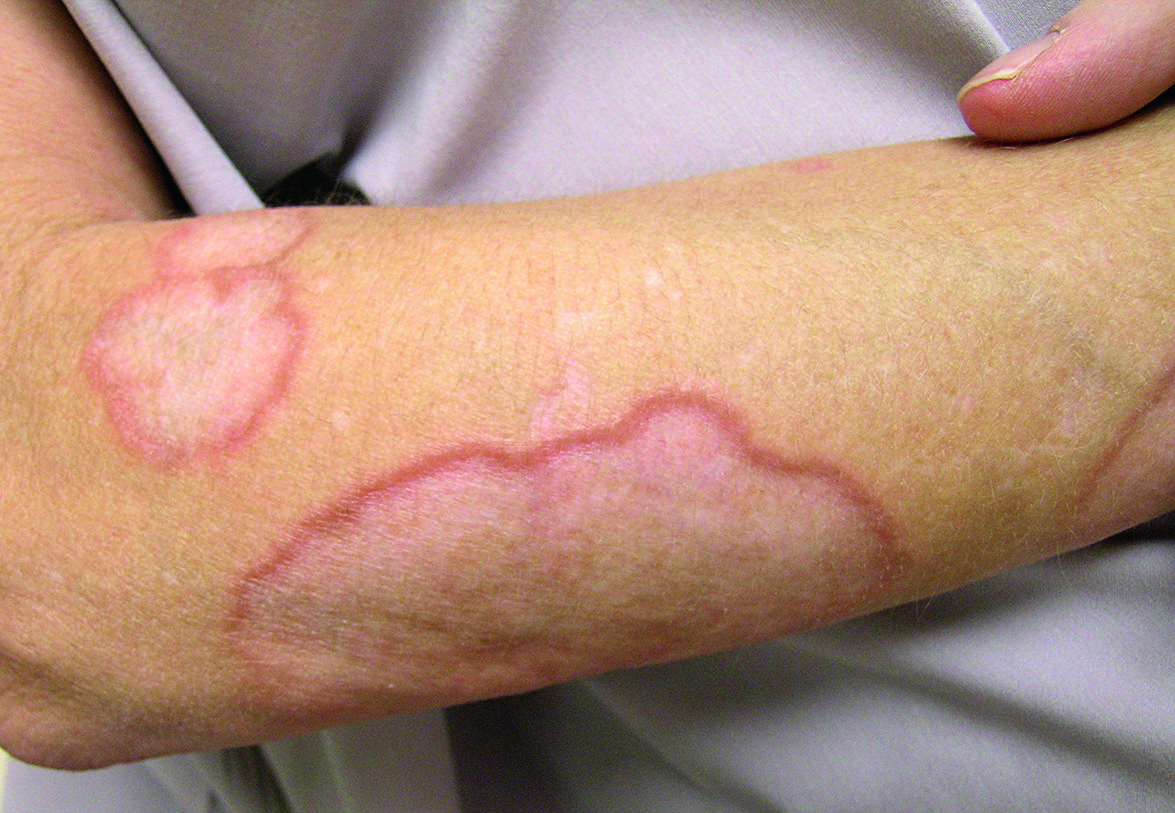
Fig. 93.11 Annular elastolytic giant cell granuloma – clinical features. A, B The inflammatory border resembles granuloma annulare but the central portion is hypopigmented and/or atrophic. A biopsy specimen that includes the areas outlined would contain the three characteristic histologic zones: absence of elastic fibers, granulomatous inflammation, and normal skin. Longitudinal sectioning of the surgical specimen is preferred. B, Courtesy Department of Dermatology, Medical University of Graz.
Fig.93.11 As.2013
Fig. 93.11 Annular elastolytic giant cell granuloma – clinical features. A, B The inflammatory border resembles granuloma annulare but the central portion is hypopigmented and/or atrophic. A biopsy specimen that includes the areas outlined would contain the three characteristic histologic zones: absence of elastic fibers, granulomatous inflammation, and normal skin. Longitudinal sectioning of the surgical specimen is preferred. B, Courtesy Department of Dermatology, Medical University of Graz.
Fig.93.11 Bs.2013
Fig. 93.12 Granuloma annulare – interstitial or infiltrative pattern. Infiltration of histiocytes between the dermal collagen fibers, with scant mucin. Courtesy Lorenzo Cerroni, MD.
Fig.93.12s.2013
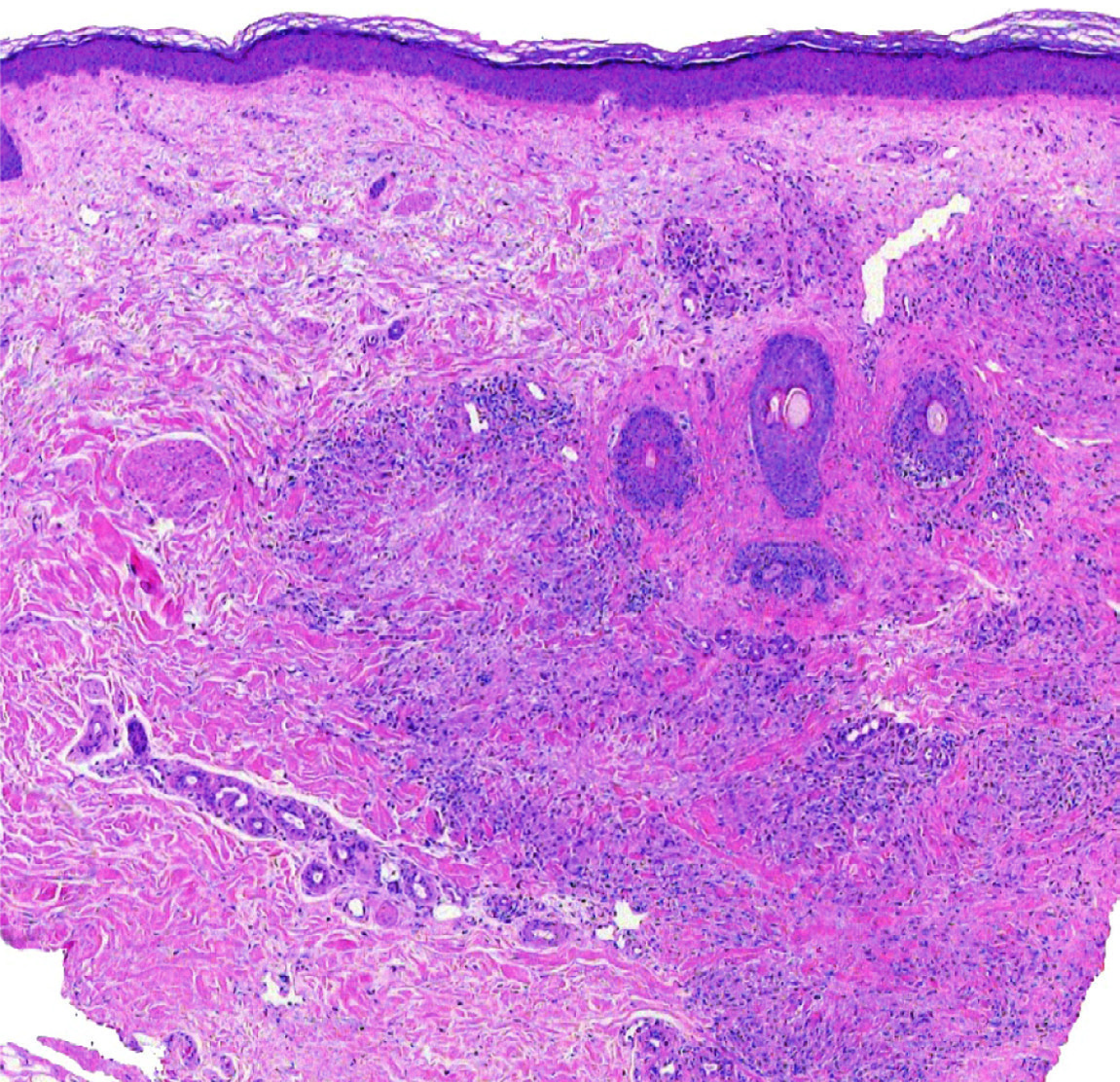
Fig. 93.13 Granuloma annulare – palisading granuloma pattern. A Multiple palisaded granulomas within the dermis. Degenerative collagen and mucin deposition are present in the central portion of the granulomas. B A palisaded granuloma with epithelioid histiocytes surrounding an anuclear dermis charac- terized by altered collagen and pallor due to deposition of acid mucopolysac- charides/glycosaminoglycans (mucin). Courtesy Lorenzo Cerroni, MD.
Fig.93.13 As.2013
Fig. 93.13 Granuloma annulare – palisading granuloma pattern. A Multiple palisaded granulomas within the dermis. Degenerative collagen and mucin deposition are present in the central portion of the granulomas. B A palisaded granuloma with epithelioid histiocytes surrounding an anuclear dermis charac- terized by altered collagen and pallor due to deposition of acid mucopolysac- charides/glycosaminoglycans (mucin). Courtesy Lorenzo Cerroni, MD.
Fig.93.13 Bs.2013
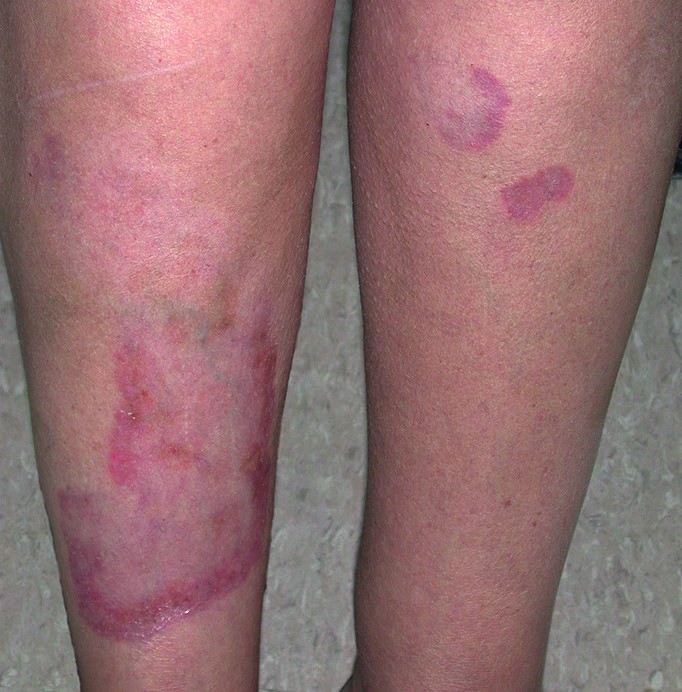
Fig. 93.15 Necrobiosis lipoidica – range of clinical features. A Annular and arciform pink–brown plaques on the shins with central atrophy. B Pink plaques on the shin with telangiectasias and peripheral hyperpigmentation; centrally there is atrophy. C Single yellow plaque with prominent telangiectasias and a dull pink rim. D Pink–yellow plaques with a brown rim on the shins; centrally there is atrophy, focal scarring, and telangiectasias. B, Courtesy Jeffrey Cohen, MD; C, Courtesy Aisha Sethi, MD.
Fig.93.15 As.2016
Fig. 93.15 Necrobiosis lipoidica – range of clinical features. A Annular and arciform pink–brown plaques on the shins with central atrophy. B Pink plaques on the shin with telangiectasias and peripheral hyperpigmentation; centrally there is atrophy. C Single yellow plaque with prominent telangiectasias and a dull pink rim. D Pink–yellow plaques with a brown rim on the shins; centrally there is atrophy, focal scarring, and telangiectasias. B, Courtesy Jeffrey Cohen, MD; C, Courtesy Aisha Sethi, MD.
Fig.93.15 Bs.2016
Fig. 93.15 Necrobiosis lipoidica – range of clinical features. A Annular and arciform pink–brown plaques on the shins with central atrophy. B Pink plaques on the shin with telangiectasias and peripheral hyperpigmentation; centrally there is atrophy. C Single yellow plaque with prominent telangiectasias and a dull pink rim. D Pink–yellow plaques with a brown rim on the shins; centrally there is atrophy, focal scarring, and telangiectasias. B, Courtesy Jeffrey Cohen, MD; C, Courtesy Aisha Sethi, MD.
Fig.93.15 Cs.2016
Fig. 93.15 Necrobiosis lipoidica – range of clinical features. A Annular and arciform pink–brown plaques on the shins with central atrophy. B Pink plaques on the shin with telangiectasias and peripheral hyperpigmentation; centrally there is atrophy. C Single yellow plaque with prominent telangiectasias and a dull pink rim. D Pink–yellow plaques with a brown rim on the shins; centrally there is atrophy, focal scarring, and telangiectasias. B, Courtesy Jeffrey Cohen, MD; C, Courtesy Aisha Sethi, MD.
Fig.93.15 Ds.2016
Fig. 93.15 Necrobiosis lipoidica – range of clinical features. A Annular and arciform pink–brown plaques on the shins with central atrophy. B Pink plaques on the shin with telangiectasias and peripheral hyperpigmentation; centrally there is atrophy. C Single yellow plaque with prominent telangiectasias and a dull pink rim. D Pink–yellow plaques with a brown rim on the shins; centrally there is atrophy, focal scarring, and telangiectasias. B, Courtesy Jeffrey Cohen, MD; C, Courtesy Aisha Sethi, MD.
Fig.93.15 Es.2016
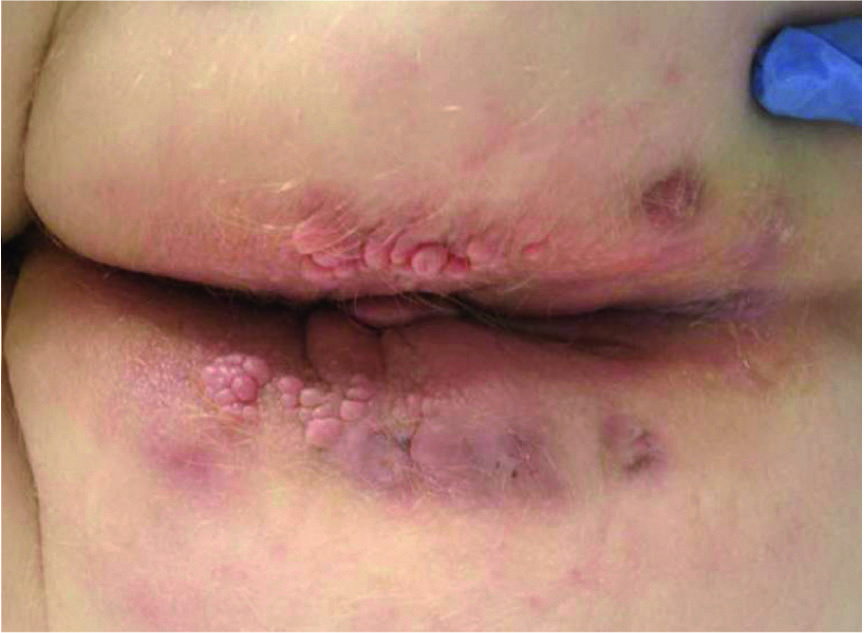
Fig. 93.17 Mucocutaneous Crohn disease. A Vulvar and perianal erythema and induration. Note the marked asymmetric vulvar swelling and perianal erosions. B Marked lymphedema of the prepuce with lymphedema and induration of the scrotum. C Inflammation and lymphedema leading to twisting of the penis along its long axis, referred to as a “saxophone penis”. D Perianal tags and indurated plaques. E Firm erythematous plaques of the mons pubis and labia majora and minora. There are also draining sinuses. F Symmetric erythematous plaques, lymphedema, and a “skin tag”; note the marked swelling of the labia minora. G Intraoral ulcer that resembles a major aphthous ulcer. H Ulcerated erythematous plaque of the mandible with draining sinuses. I Asymmetric enlargement of the lower vermilion lip due to granulomatous inflammation. A, Courtesy Julie V. Schaffer, MD; C, E, H, Courtesy Luis Requena, MD; D, Courtesy Mary Stone, MD; F, I, Courtesy Jeffrey P. Callen, MD, and Courtney R. Schadt, MD.
Fig.93.17 As.2017
Fig. 93.17 Mucocutaneous Crohn disease. A Vulvar and perianal erythema and induration. Note the marked asymmetric vulvar swelling and perianal erosions. B Marked lymphedema of the prepuce with lymphedema and induration of the scrotum. C Inflammation and lymphedema leading to twisting of the penis along its long axis, referred to as a “saxophone penis”. D Perianal tags and indurated plaques. E Firm erythematous plaques of the mons pubis and labia majora and minora. There are also draining sinuses. F Symmetric erythematous plaques, lymphedema, and a “skin tag”; note the marked swelling of the labia minora. G Intraoral ulcer that resembles a major aphthous ulcer. H Ulcerated erythematous plaque of the mandible with draining sinuses. I Asymmetric enlargement of the lower vermilion lip due to granulomatous inflammation. A, Courtesy Julie V. Schaffer, MD; C, E, H, Courtesy Luis Requena, MD; D, Courtesy Mary Stone, MD; F, I, Courtesy Jeffrey P. Callen, MD, and Courtney R. Schadt, MD.
Fig.93.17 Bs.2017
Fig. 93.17 Mucocutaneous Crohn disease. A Vulvar and perianal erythema and induration. Note the marked asymmetric vulvar swelling and perianal erosions. B Marked lymphedema of the prepuce with lymphedema and induration of the scrotum. C Inflammation and lymphedema leading to twisting of the penis along its long axis, referred to as a “saxophone penis”. D Perianal tags and indurated plaques. E Firm erythematous plaques of the mons pubis and labia majora and minora. There are also draining sinuses. F Symmetric erythematous plaques, lymphedema, and a “skin tag”; note the marked swelling of the labia minora. G Intraoral ulcer that resembles a major aphthous ulcer. H Ulcerated erythematous plaque of the mandible with draining sinuses. I Asymmetric enlargement of the lower vermilion lip due to granulomatous inflammation. A, Courtesy Julie V. Schaffer, MD; C, E, H, Courtesy Luis Requena, MD; D, Courtesy Mary Stone, MD; F, I, Courtesy Jeffrey P. Callen, MD, and Courtney R. Schadt, MD.
Fig.93.17 Cs.2017
Fig. 93.17 Mucocutaneous Crohn disease. A Vulvar and perianal erythema and induration. Note the marked asymmetric vulvar swelling and perianal erosions. B Marked lymphedema of the prepuce with lymphedema and induration of the scrotum. C Inflammation and lymphedema leading to twisting of the penis along its long axis, referred to as a “saxophone penis”. D Perianal tags and indurated plaques. E Firm erythematous plaques of the mons pubis and labia majora and minora. There are also draining sinuses. F Symmetric erythematous plaques, lymphedema, and a “skin tag”; note the marked swelling of the labia minora. G Intraoral ulcer that resembles a major aphthous ulcer. H Ulcerated erythematous plaque of the mandible with draining sinuses. I Asymmetric enlargement of the lower vermilion lip due to granulomatous inflammation. A, Courtesy Julie V. Schaffer, MD; C, E, H, Courtesy Luis Requena, MD; D, Courtesy Mary Stone, MD; F, I, Courtesy Jeffrey P. Callen, MD, and Courtney R. Schadt, MD.
Fig.93.17 Ds.2017
Fig. 93.17 Mucocutaneous Crohn disease. A Vulvar and perianal erythema and induration. Note the marked asymmetric vulvar swelling and perianal erosions. B Marked lymphedema of the prepuce with lymphedema and induration of the scrotum. C Inflammation and lymphedema leading to twisting of the penis along its long axis, referred to as a “saxophone penis”. D Perianal tags and indurated plaques. E Firm erythematous plaques of the mons pubis and labia majora and minora. There are also draining sinuses. F Symmetric erythematous plaques, lymphedema, and a “skin tag”; note the marked swelling of the labia minora. G Intraoral ulcer that resembles a major aphthous ulcer. H Ulcerated erythematous plaque of the mandible with draining sinuses. I Asymmetric enlargement of the lower vermilion lip due to granulomatous inflammation. A, Courtesy Julie V. Schaffer, MD; C, E, H, Courtesy Luis Requena, MD; D, Courtesy Mary Stone, MD; F, I, Courtesy Jeffrey P. Callen, MD, and Courtney R. Schadt, MD.
Fig.93.17 Es.2017
Fig. 93.17 Mucocutaneous Crohn disease. A Vulvar and perianal erythema and induration. Note the marked asymmetric vulvar swelling and perianal erosions. B Marked lymphedema of the prepuce with lymphedema and induration of the scrotum. C Inflammation and lymphedema leading to twisting of the penis along its long axis, referred to as a “saxophone penis”. D Perianal tags and indurated plaques. E Firm erythematous plaques of the mons pubis and labia majora and minora. There are also draining sinuses. F Symmetric erythematous plaques, lymphedema, and a “skin tag”; note the marked swelling of the labia minora. G Intraoral ulcer that resembles a major aphthous ulcer. H Ulcerated erythematous plaque of the mandible with draining sinuses. I Asymmetric enlargement of the lower vermilion lip due to granulomatous inflammation. A, Courtesy Julie V. Schaffer, MD; C, E, H, Courtesy Luis Requena, MD; D, Courtesy Mary Stone, MD; F, I, Courtesy Jeffrey P. Callen, MD, and Courtney R. Schadt, MD.
Fig.93.17 Fs.2017
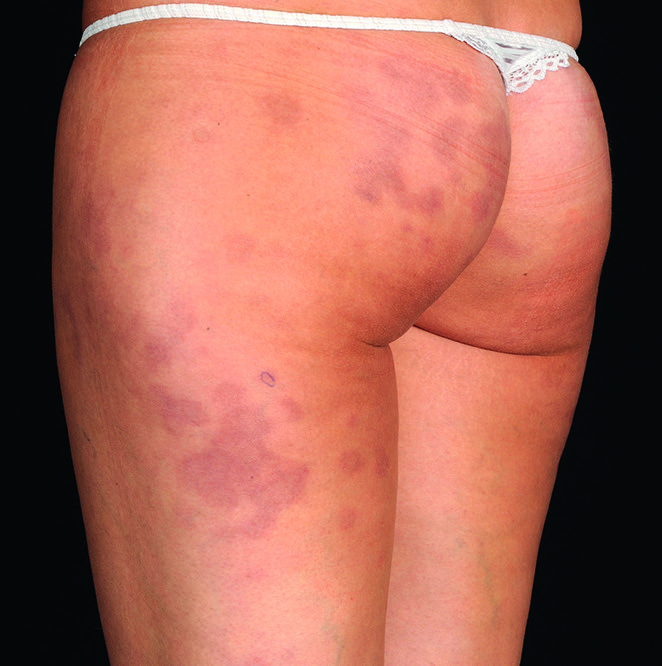
Fig. 93.18 Reactive granulomatous dermatitis, encompassing IGD and PNDG – clinical features. A Multiple violet–brown plaques, some of which are annular, on the lower extremities of a young woman with mixed connective tissue disease. B Firm, linear subcutaneous cord along the axillary line (arrows) in a patient with rheumatoid arthritis. C Violaceous plaques on the back in a patient with Hodgkin lymphoma. A, Courtesy Lorenzo Cerroni, MD; B, Courtesy Kathryn Schwarzenberger, MD; C, Courtesy Department of Dermatology, Medical University of Graz.
Fig.93.18 As.2019
Fig. 93.18 Reactive granulomatous dermatitis, encompassing IGD and PNDG – clinical features. A Multiple violet–brown plaques, some of which are annular, on the lower extremities of a young woman with mixed connective tissue disease. B Firm, linear subcutaneous cord along the axillary line (arrows) in a patient with rheumatoid arthritis. C Violaceous plaques on the back in a patient with Hodgkin lymphoma. A, Courtesy Lorenzo Cerroni, MD; B, Courtesy Kathryn Schwarzenberger, MD; C, Courtesy Department of Dermatology, Medical University of Graz.
Fig.93.18 Bs.2019
Fig. 93.18 Reactive granulomatous dermatitis, encompassing IGD and PNDG – clinical features. A Multiple violet–brown plaques, some of which are annular, on the lower extremities of a young woman with mixed connective tissue disease. B Firm, linear subcutaneous cord along the axillary line (arrows) in a patient with rheumatoid arthritis. C Violaceous plaques on the back in a patient with Hodgkin lymphoma. A, Courtesy Lorenzo Cerroni, MD; B, Courtesy Kathryn Schwarzenberger, MD; C, Courtesy Department of Dermatology, Medical University of Graz.
Fig.93.18 Cs.2019