Bolognia 5e·Dermatoloji Çalışma Paneli
Ch 20

Eritema Multiforme / SJS / TEN

Vol 1 · sayfa 339 · §4
📖 Özet🃏 Flashcard Quiz🖼 Atlas
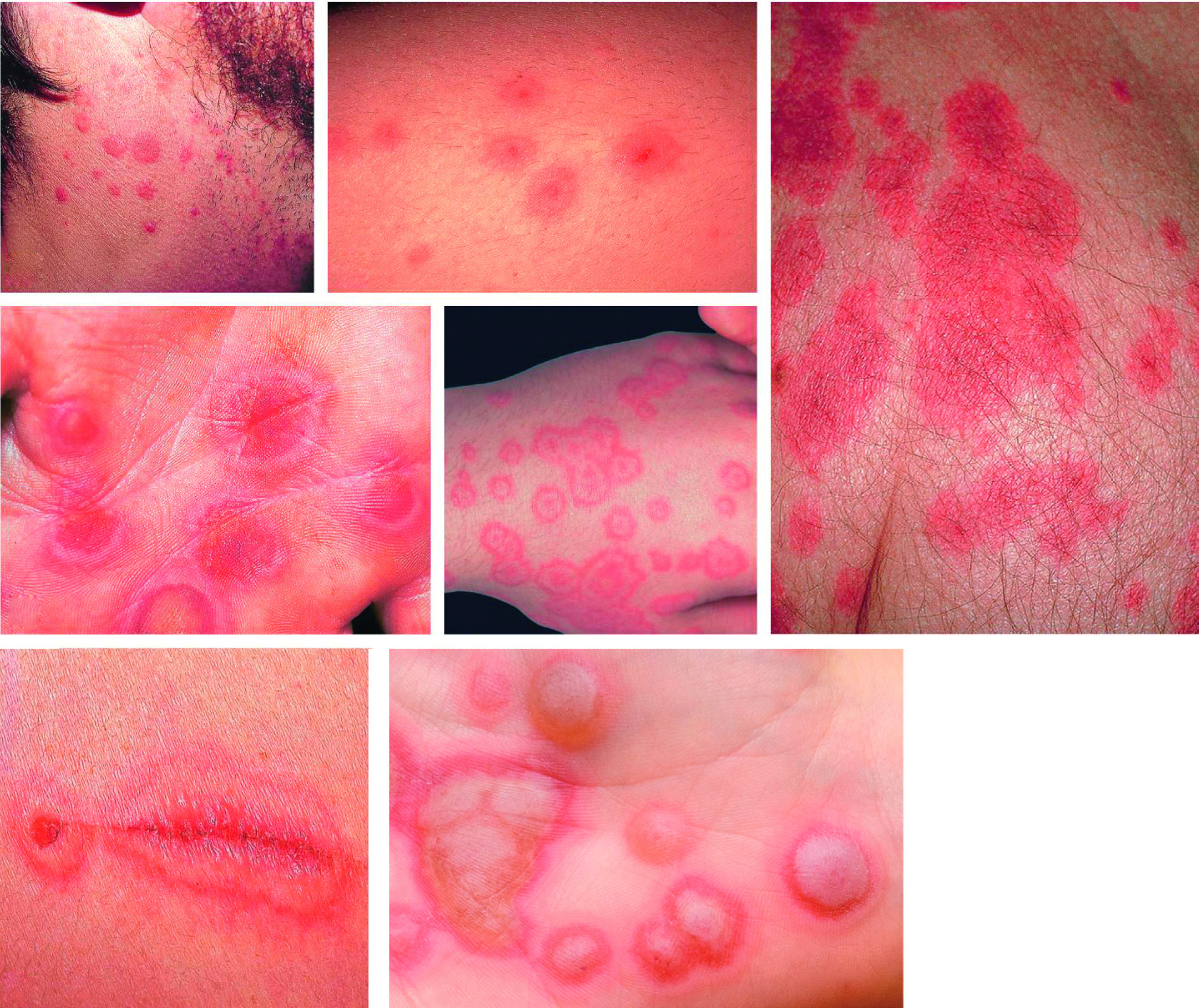
Elementary skin lesions (Fig. 20.1) The characteristic elementary skin lesion of EM is the typical target lesion. The latter measures <3 cm in diameter, has a regular round shape and a well-defined border, and consists of at least three distinct zones, e.g. two concentric rings of color change surrounding a central circular zone that has evidence of damage to the epidermis in the form of bulla formation or crust2. Frequently, this central circular zone has a dusky appearance and over time, the lesion may resemble a “bull’s eye”.
Fig.20.1s.438
Fig. 20.2 Multiple lesions of erythema multiforme (EM) on the trunk. The dusky or crusted centers within the papules help to differentiate EM from a morbilliform drug eruption.
Fig.20.2s.439
Fig. 20.3 Mucosal involvement in erythema multiforme major. A Typical target lesions are seen as well as serous crusting of the vermilion lips and eyelid margin. At the margin of the serous crusting of the lip, there are two zones of color with a polycyclic outline. B Erosions and hemorrhagic crusting of the lips in a child with the acro-mucosal variant associated with Mycoplasma pneumoniae infection, also referred to as MIRM (Mycoplasma pneumoniae-induced rash and mucositis) or RIME (reactive infectious mucocutaneous eruption). B, Courtesy Julie V. Schaffer, MD.
Fig.20.3 As.439
Fig. 20.3 Mucosal involvement in erythema multiforme major. A Typical target lesions are seen as well as serous crusting of the vermilion lips and eyelid margin. At the margin of the serous crusting of the lip, there are two zones of color with a polycyclic outline. B Erosions and hemorrhagic crusting of the lips in a child with the acro-mucosal variant associated with Mycoplasma pneumoniae infection, also referred to as MIRM (Mycoplasma pneumoniae-induced rash and mucositis) or RIME (reactive infectious mucocutaneous eruption). B, Courtesy Julie V. Schaffer, MD.
Fig.20.3 Bs.439
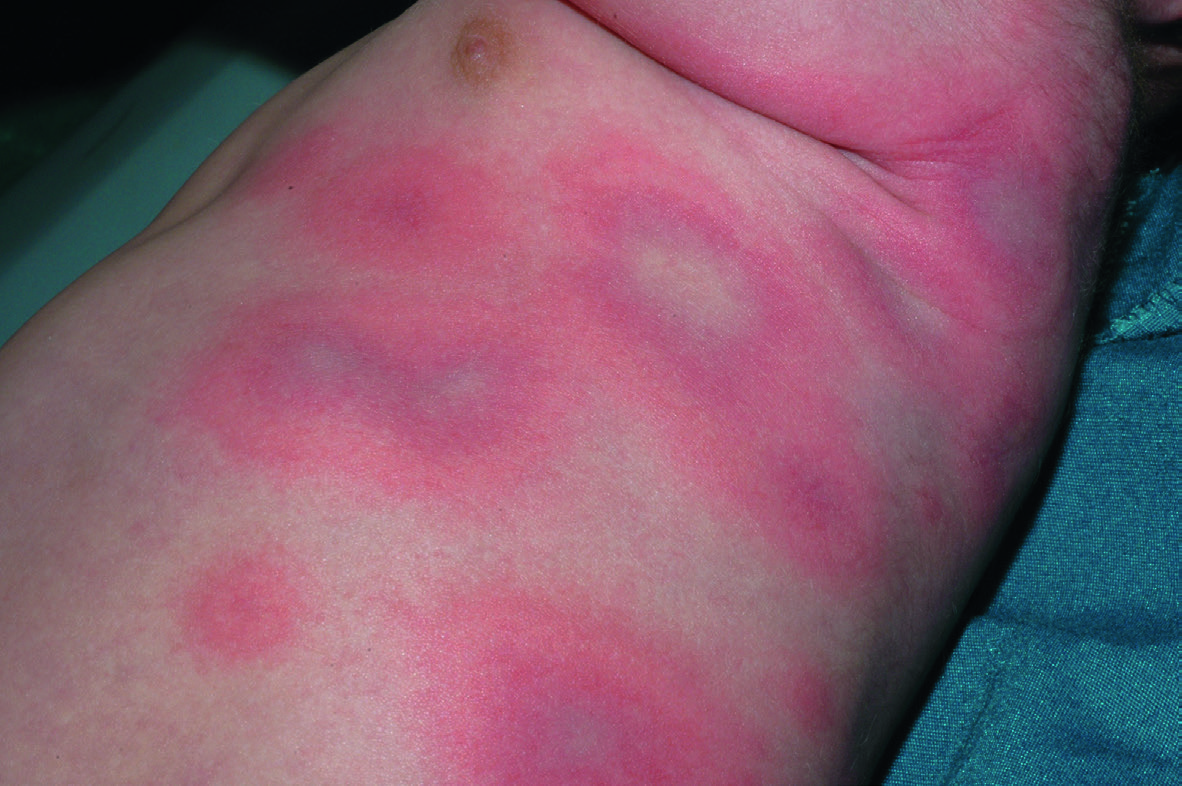
Fig. 20.5 Acute annular urticaria (urticaria multiforme) in an infant misdiagnosed as erythema multiforme. These migratory, annular plaques are markedly edematous. Some of the lesions have an erythematous or dusky center while others have central clearing with two shades of peripheral rings. There are no crusts or blisters. The term “urticaria multiforme” has been used to describe these skin findings, which are often preceded by a viral or bacterial infection and accompanied by angioedema of the face, hands, and/or feet. Courtesy Julie V. Schaffer, MD.
Fig.20.5 As.440
Fig. 20.5 Acute annular urticaria (urticaria multiforme) in an infant misdiagnosed as erythema multiforme. These migratory, annular plaques are markedly edematous. Some of the lesions have an erythematous or dusky center while others have central clearing with two shades of peripheral rings. There are no crusts or blisters. The term “urticaria multiforme” has been used to describe these skin findings, which are often preceded by a viral or bacterial infection and accompanied by angioedema of the face, hands, and/or feet. Courtesy Julie V. Schaffer, MD.
Fig.20.5 Bs.440
Fig. 20.5 Acute annular urticaria (urticaria multiforme) in an infant misdiagnosed as erythema multiforme. These migratory, annular plaques are markedly edematous. Some of the lesions have an erythematous or dusky center while others have central clearing with two shades of peripheral rings. There are no crusts or blisters. The term “urticaria multiforme” has been used to describe these skin findings, which are often preceded by a viral or bacterial infection and accompanied by angioedema of the face, hands, and/or feet. Courtesy Julie V. Schaffer, MD.
Fig.20.5 Cs.440
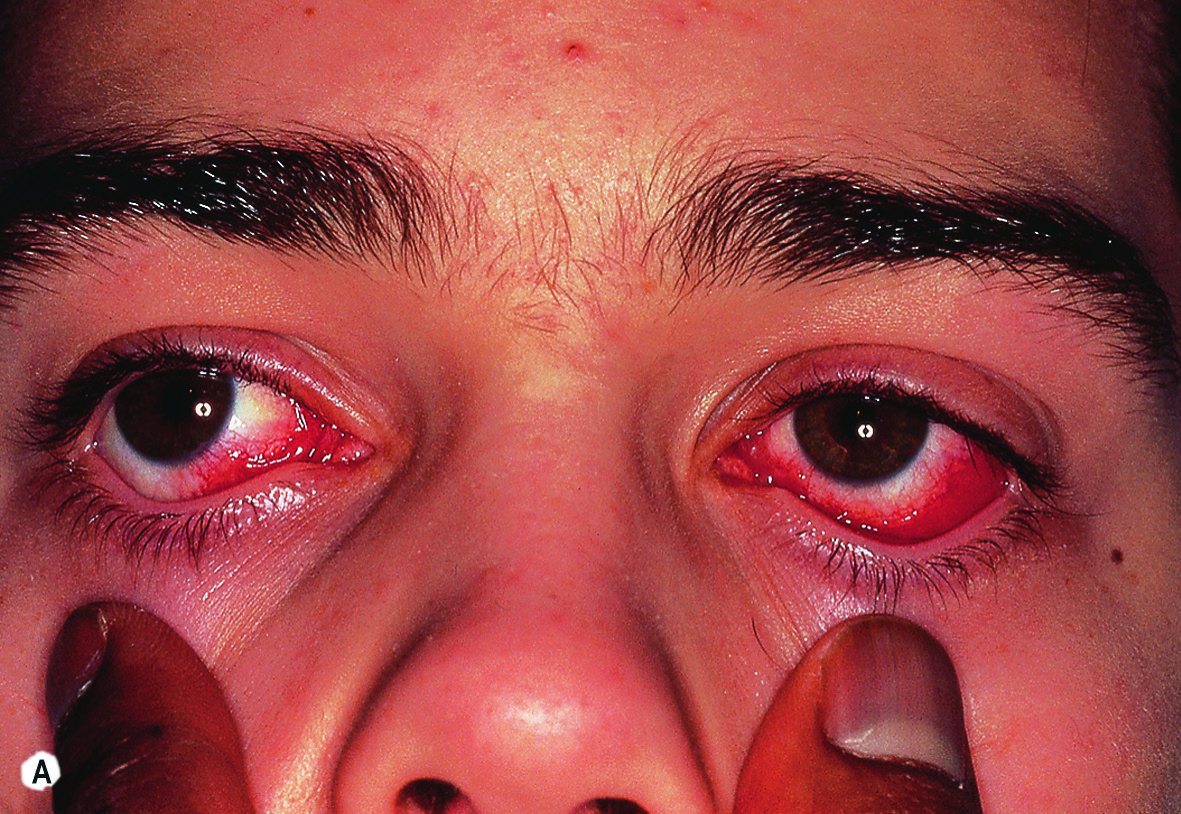
Fig. 20.7 Mucosal involvement in Stevens– Johnson syndrome. A Erythema and conjunctival erosions. B Erosions of the genital mucosa.
Fig.20.7 As.445
Fig. 20.7 Mucosal involvement in Stevens– Johnson syndrome. A Erythema and conjunctival erosions. B Erosions of the genital mucosa.
Fig.20.7 Bs.445
Fig. 20.8 Cutaneous features of toxic epidermal necrolysis (TEN). Characteristic dusky red color of the early macular eruption in TEN. Lesions with this color often progress to full-blown necrolytic lesions with dermal–epidermal detachment.
Fig.20.8s.445
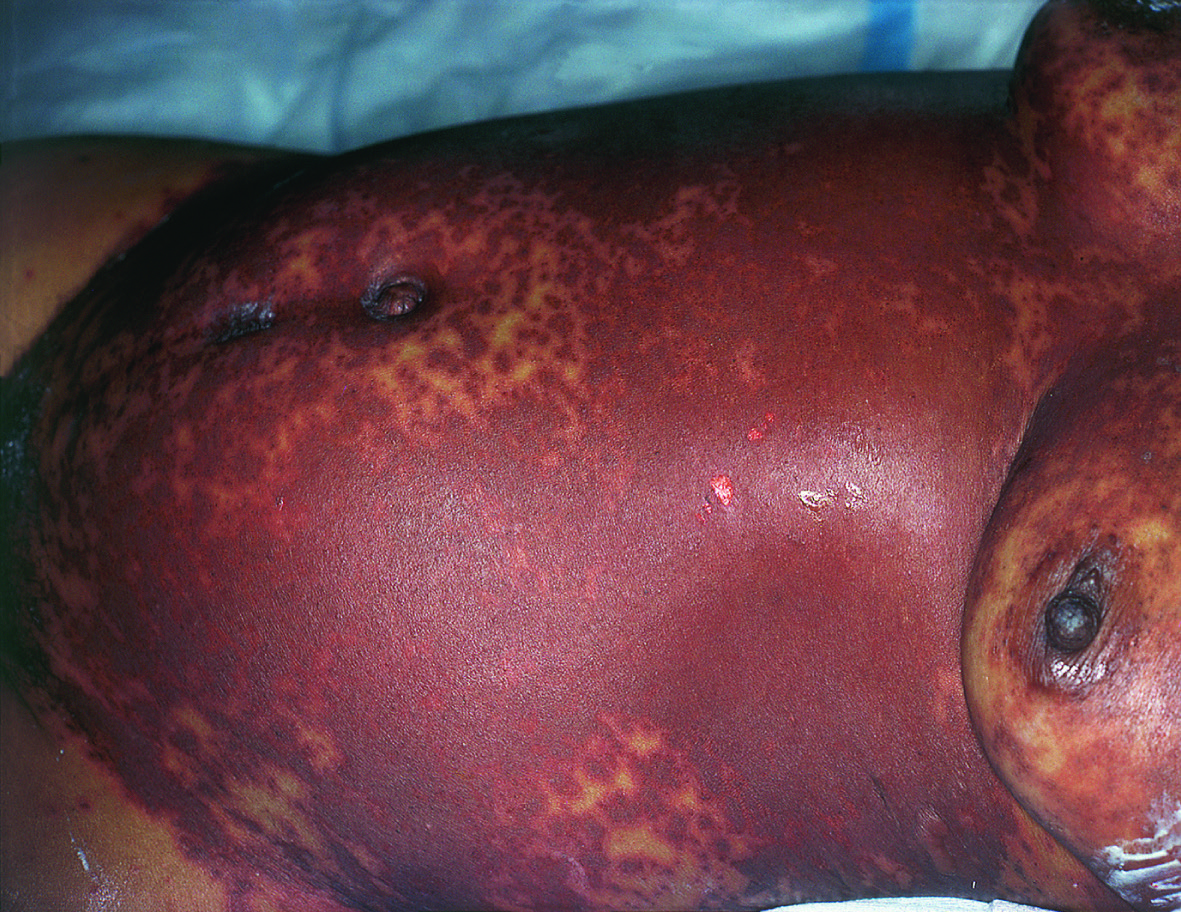
Fig. 20.9 Clinical features of toxic epidermal necrolysis (TEN). A Detachment of large sheets of necrolytic epidermis (>30% body surface area), leading to extensive areas of denuded skin. A few intact bullae are still present. B Extensive symmetric hemorrhagic crusting of the face with areas of denudation. C Epidermal detachment of palmar skin. D Note the rolled and folded sheets of detached epidermis at the edge of denuded skin in addition to widespread erythema and intact bullae. D, Courtesy Luis Requena, MD.
Fig.20.9 As.446
Fig. 20.9 Clinical features of toxic epidermal necrolysis (TEN). A Detachment of large sheets of necrolytic epidermis (>30% body surface area), leading to extensive areas of denuded skin. A few intact bullae are still present. B Extensive symmetric hemorrhagic crusting of the face with areas of denudation. C Epidermal detachment of palmar skin. D Note the rolled and folded sheets of detached epidermis at the edge of denuded skin in addition to widespread erythema and intact bullae. D, Courtesy Luis Requena, MD.
Fig.20.9 Bs.446
Fig. 20.9 Clinical features of toxic epidermal necrolysis (TEN). A Detachment of large sheets of necrolytic epidermis (>30% body surface area), leading to extensive areas of denuded skin. A few intact bullae are still present. B Extensive symmetric hemorrhagic crusting of the face with areas of denudation. C Epidermal detachment of palmar skin. D Note the rolled and folded sheets of detached epidermis at the edge of denuded skin in addition to widespread erythema and intact bullae. D, Courtesy Luis Requena, MD.
Fig.20.9 Cs.446
Fig. 20.12 Sequelae of toxic epidermal necrolysis. A Symblepharon, erosion of lower lateral eyelid margin and sparse eyelashes; the patient also had entropion with an ingrowth of eyelashes and pebble-like scarring of facial skin. B Larger irregular areas of hypopigmented scarring. C Nail dystrophy consisting of longitudinal ridging and fissuring, fragility, and distal notching.
Fig.20.12 As.447
Fig. 20.12 Sequelae of toxic epidermal necrolysis. A Symblepharon, erosion of lower lateral eyelid margin and sparse eyelashes; the patient also had entropion with an ingrowth of eyelashes and pebble-like scarring of facial skin. B Larger irregular areas of hypopigmented scarring. C Nail dystrophy consisting of longitudinal ridging and fissuring, fragility, and distal notching.
Fig.20.12 Bs.447
Fig. 20.12 Sequelae of toxic epidermal necrolysis. A Symblepharon, erosion of lower lateral eyelid margin and sparse eyelashes; the patient also had entropion with an ingrowth of eyelashes and pebble-like scarring of facial skin. B Larger irregular areas of hypopigmented scarring. C Nail dystrophy consisting of longitudinal ridging and fissuring, fragility, and distal notching.
Fig.20.12 Cs.447
Fig. 20.14 Early Stevens–Johnson syndrome. A In this child, there are individual erythematous lesions on the lower face, but coalescence on the cheeks. The two fresh bullae on the cheek are still intact. B This patient was originally diagnosed as a severe morbilliform drug eruption to penicillin, but then areas of epidermal detachment due to friction developed. A, Courtesy Julie V. Schaffer, MD.
Fig.20.14 As.448
Fig. 20.14 Early Stevens–Johnson syndrome. A In this child, there are individual erythematous lesions on the lower face, but coalescence on the cheeks. The two fresh bullae on the cheek are still intact. B This patient was originally diagnosed as a severe morbilliform drug eruption to penicillin, but then areas of epidermal detachment due to friction developed. A, Courtesy Julie V. Schaffer, MD.
Fig.20.14 Bs.448