Bolognia 5e·Dermatoloji Çalışma Paneli
Ch 21

İlaç Reaksiyonları

Vol 1 · sayfa 355 · §4
📖 Özet🃏 Flashcard Quiz🖼 Atlas
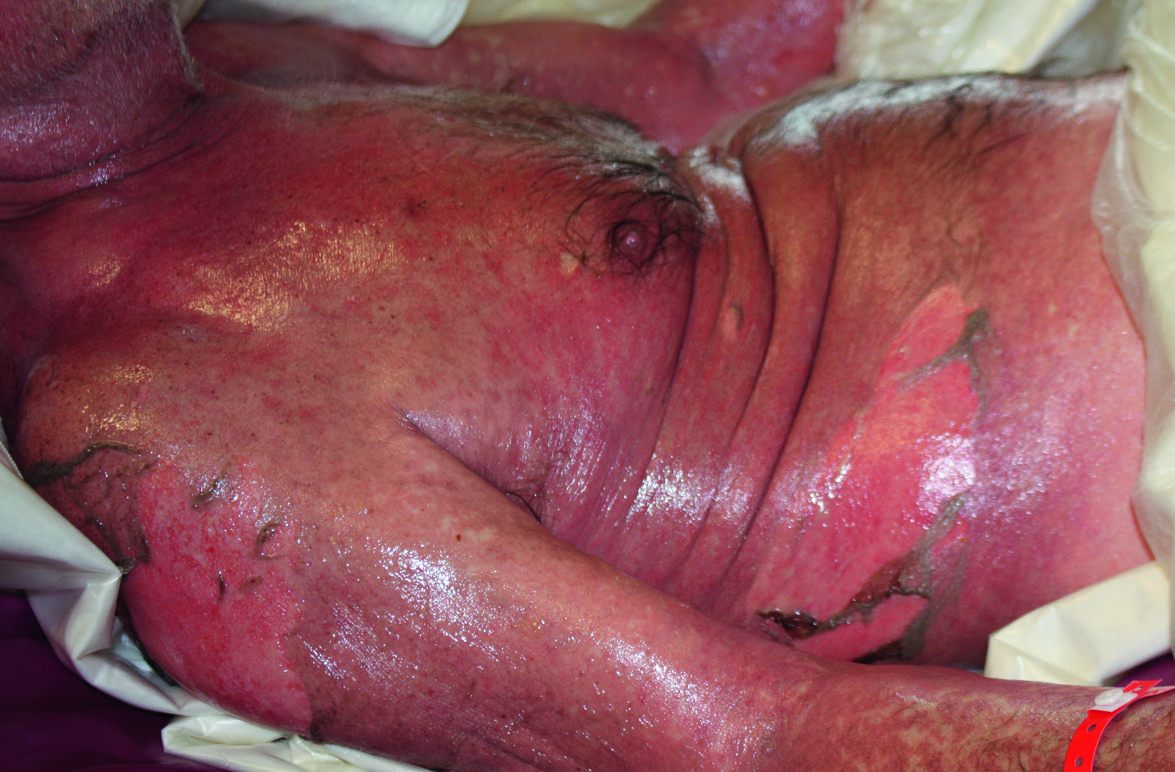
Fig. 21.1 Methotrexate toxicity. Increased serum levels of methotrexate secondary to decreased renal excretion can lead to epidermal necrosis. A Large erosions and areas of epidermal necrosis with a shellac-like appearance in a patient with rheumatoid arthritis. B Epidermal necrosis limited to psoriatic plaques. A, Courtesy Kalman Watsky, MD.
Fig.21.1 As.457
Fig. 21.1 Methotrexate toxicity. Increased serum levels of methotrexate secondary to decreased renal excretion can lead to epidermal necrosis. A Large erosions and areas of epidermal necrosis with a shellac-like appearance in a patient with rheumatoid arthritis. B Epidermal necrosis limited to psoriatic plaques. A, Courtesy Kalman Watsky, MD.
Fig.21.1 Bs.457
Fig. 21.2 Urticaria secondary to penicillin. Several of the lesions have a figurate appearance.
Fig.21.2s.460
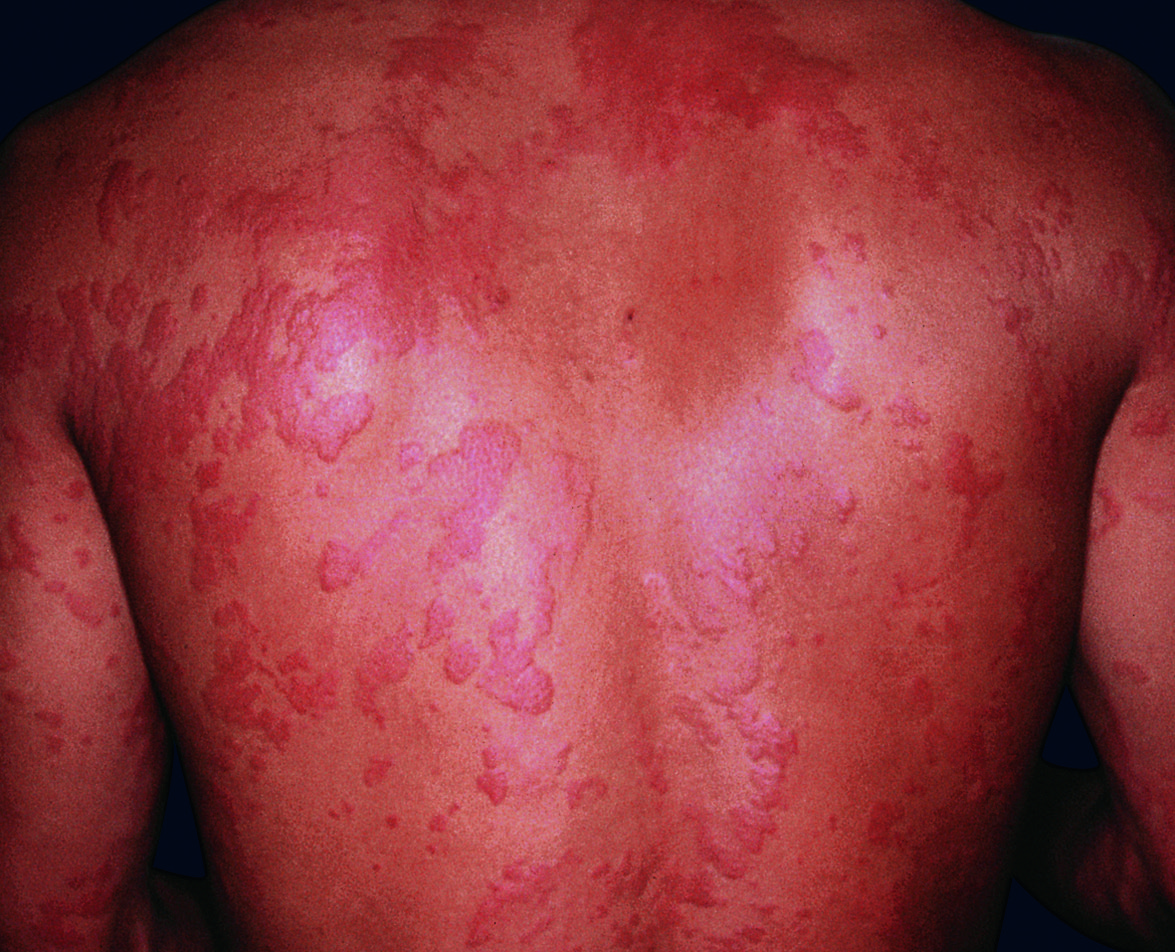
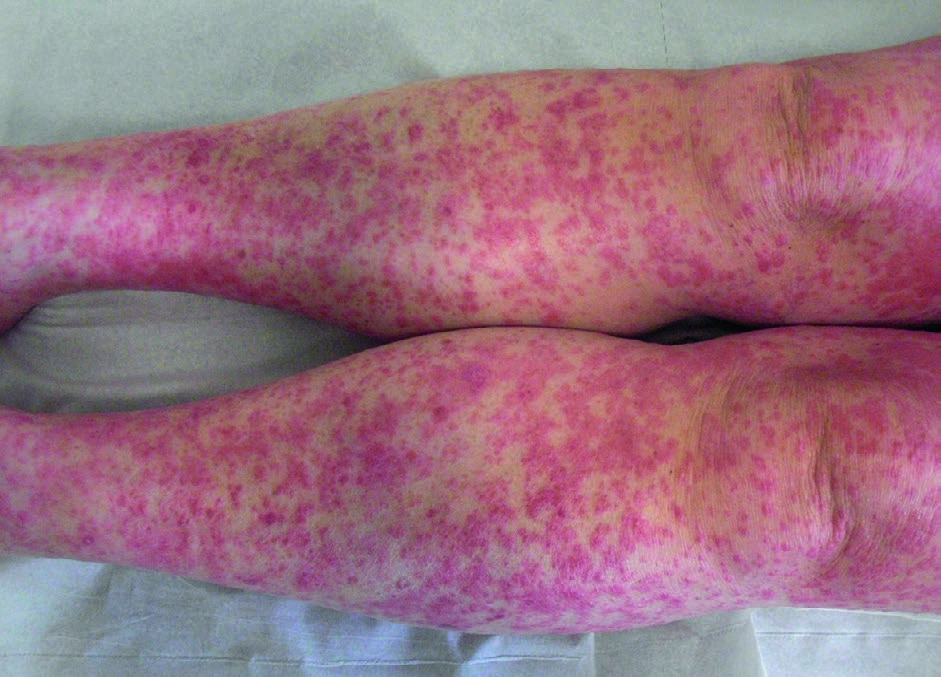
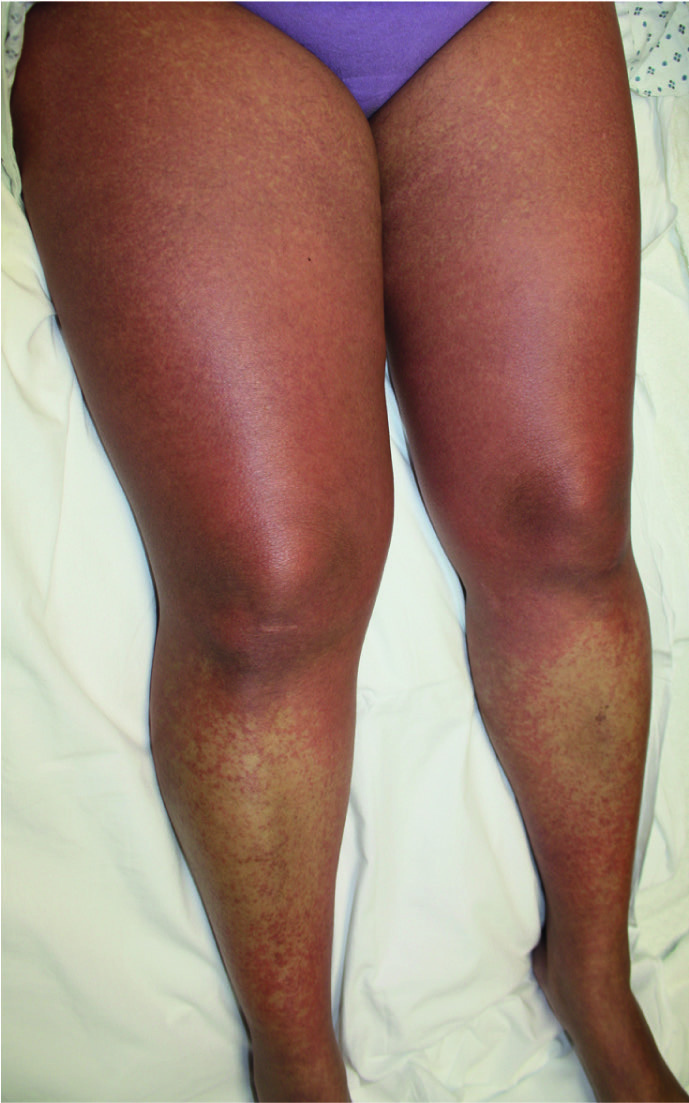
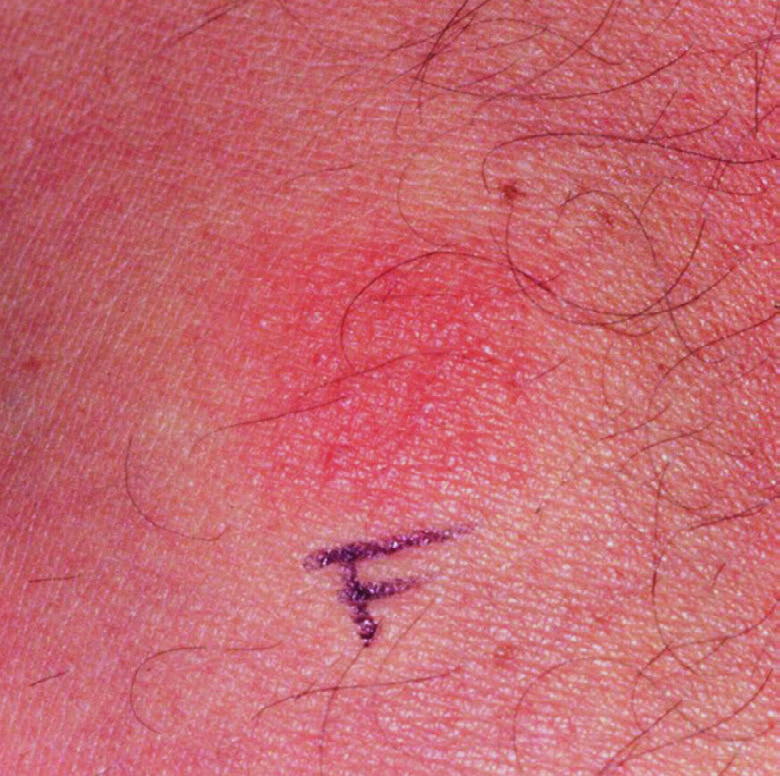
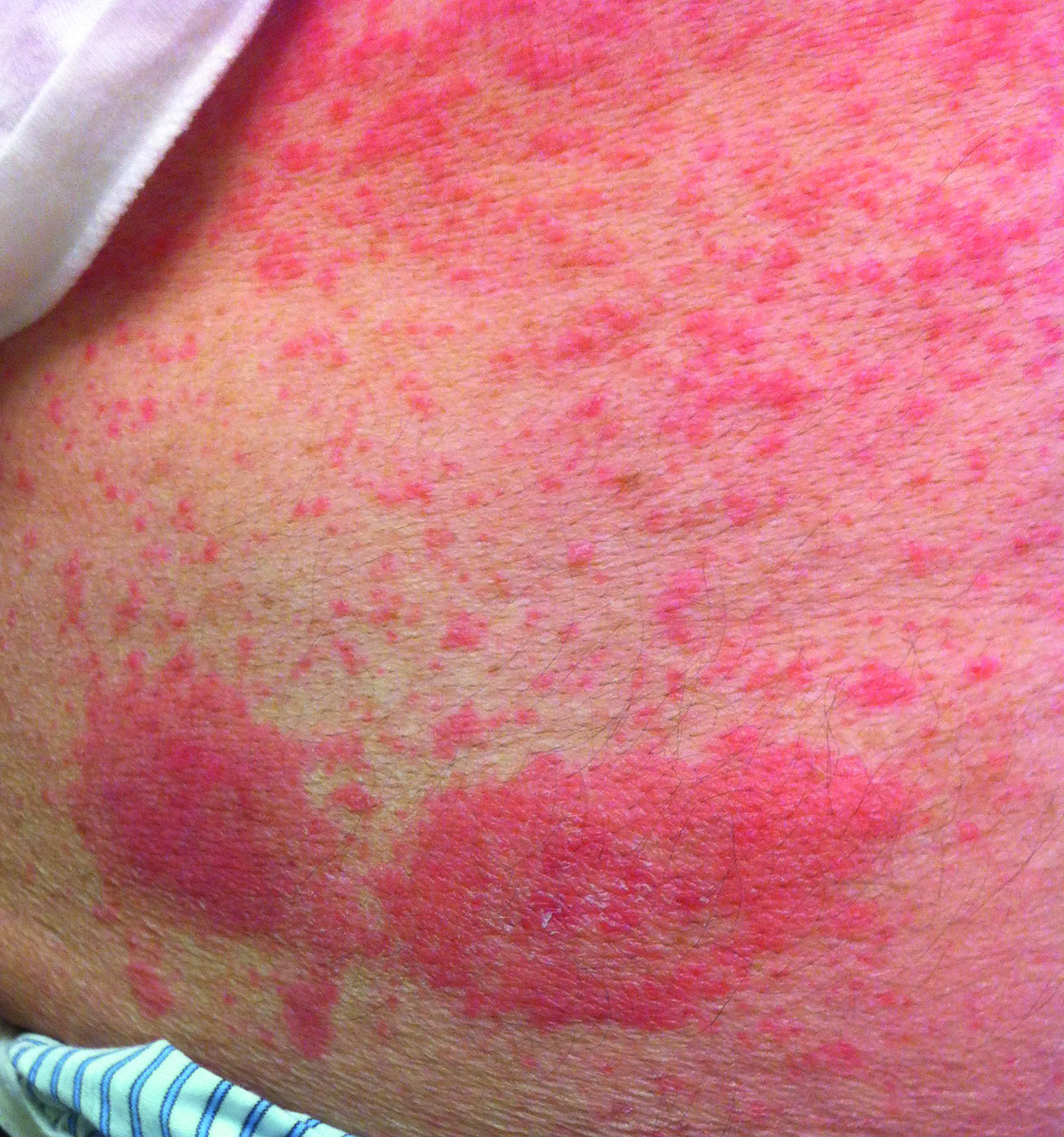
Fig. 21.3 Morbilliform (exanthematous) drug eruptions. A Erythematous papules and urticarial lesions with confluence on the midback induced by amoxicillin. B Due to dependency, lesions on the distal lower extremities can become petechial or purpuric. C Pink papules and annular lesions on the forehead due to phenobarbital. A, B, Courtesy Laurence Valeyrie-Allanore, MD.
Fig.21.3 As.461
Fig. 21.3 Morbilliform (exanthematous) drug eruptions. A Erythematous papules and urticarial lesions with confluence on the midback induced by amoxicillin. B Due to dependency, lesions on the distal lower extremities can become petechial or purpuric. C Pink papules and annular lesions on the forehead due to phenobarbital. A, B, Courtesy Laurence Valeyrie-Allanore, MD.
Fig.21.3 Bs.461
Fig. 21.5 Drug reaction with eosinophilia and systemic symptoms (DRESS) due to carbamazepine. A Exanthematous eruption with confluence on the thighs. B Edema and vesiculation on the forearm. Courtesy Alicia Little, MD.
Fig.21.5 As.463
Fig. 21.5 Drug reaction with eosinophilia and systemic symptoms (DRESS) due to carbamazepine. A Exanthematous eruption with confluence on the thighs. B Edema and vesiculation on the forearm. Courtesy Alicia Little, MD.
Fig.21.5 Bs.463
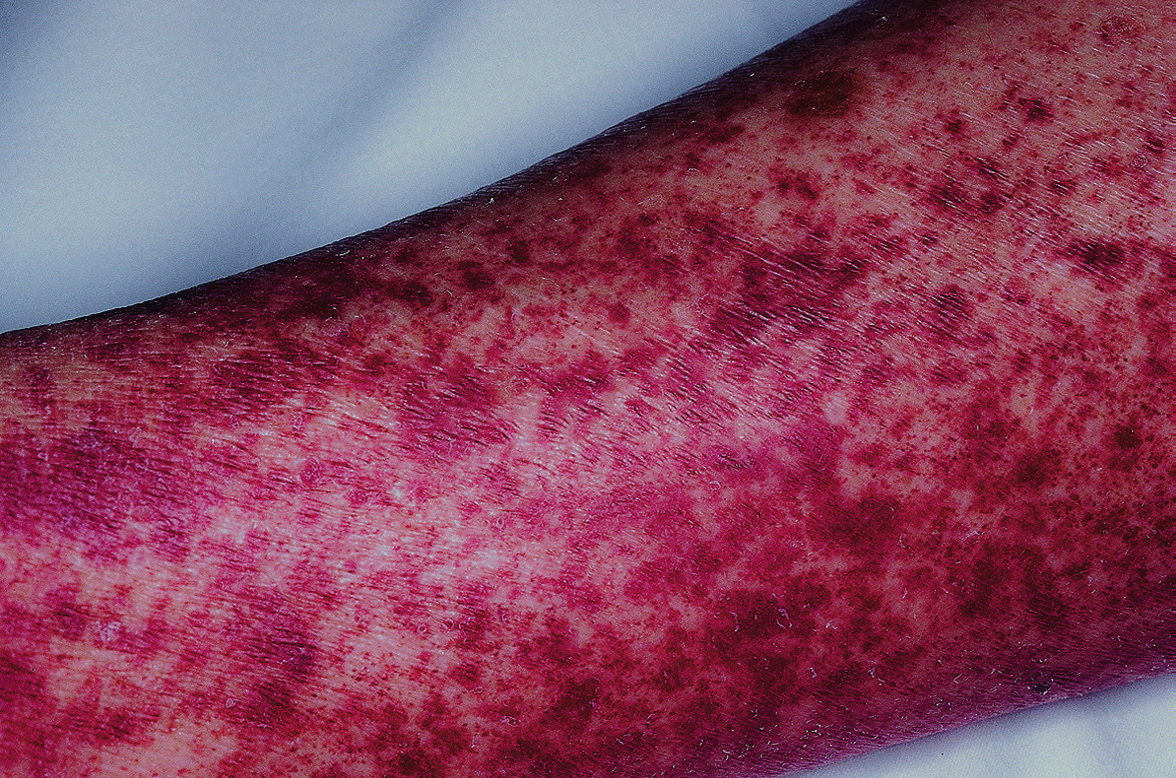
Fig. 21.6 Serum sickness due to antithymocyte globulin. The purpuric lesions are due to small vessel vasculitis in this patient with aplastic anemia. Courtesy Jean L. Bolognia, MD.
Fig.21.6s.464
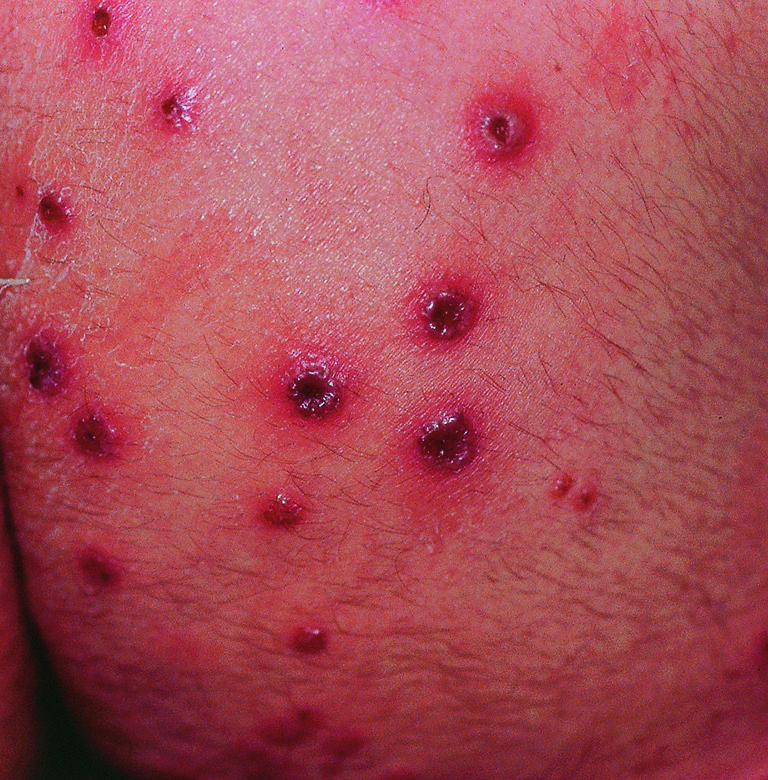
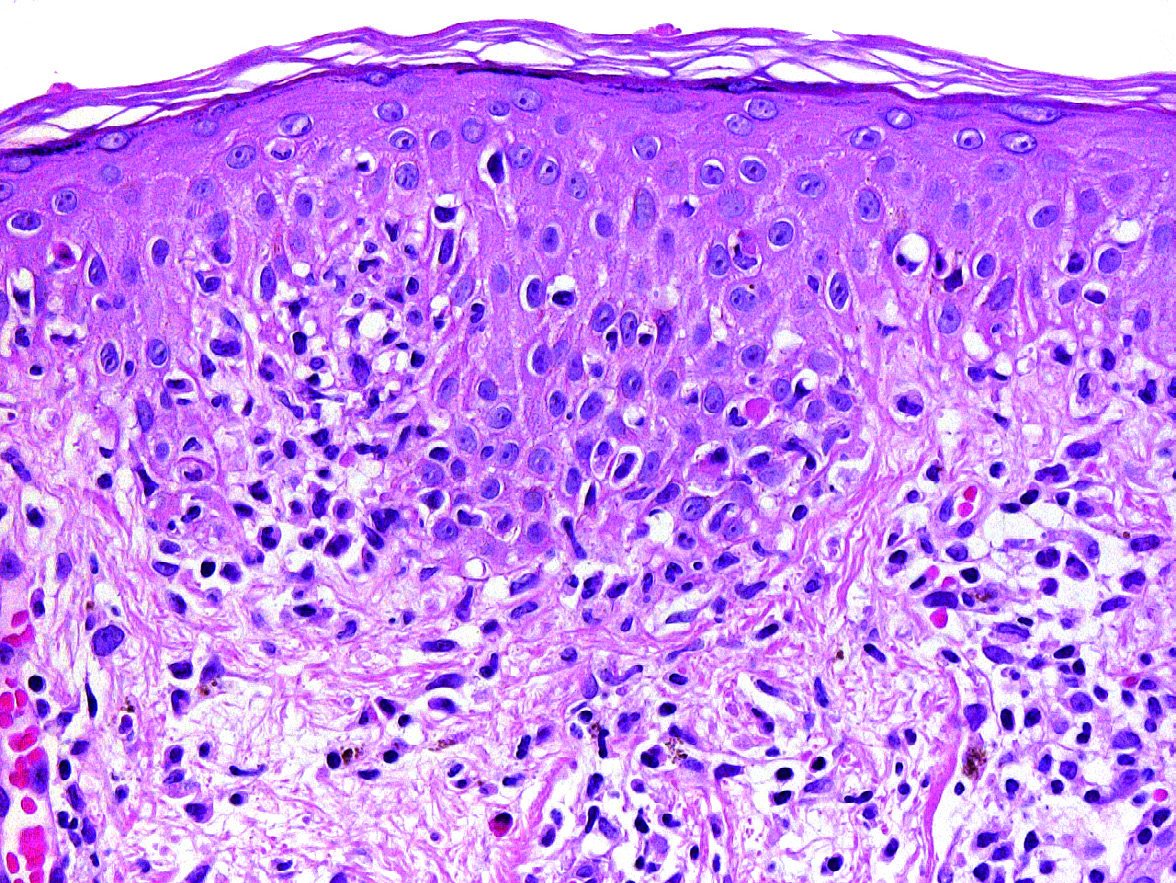
Fig. 21.7 Acute generalized exanthematous pustulosis (AGEP). A Positive patch test result 4 days following the application of 0.75% metronidazole in a patient with a previous pustular drug eruption to that medication. B Diffuse erythema of the buttock with multiple small sterile pustules due to a cepha- losporin. C Numerous sterile pustules with superficial epidermal detachment in areas where the pustules have become confluent in a patient receiving amoxicillin. D Subcorneal pustule composed of neutrophils as well as scattered neutrophils within the epidermis (inset). A, Courtesy Kalman Watsky, MD; C, Courtesy Laurence Valeyrie-Allanore, MD; D, Courtesy Lorenzo Cerroni, MD.
Fig.21.7 As.465
Fig. 21.7 Acute generalized exanthematous pustulosis (AGEP). A Positive patch test result 4 days following the application of 0.75% metronidazole in a patient with a previous pustular drug eruption to that medication. B Diffuse erythema of the buttock with multiple small sterile pustules due to a cepha- losporin. C Numerous sterile pustules with superficial epidermal detachment in areas where the pustules have become confluent in a patient receiving amoxicillin. D Subcorneal pustule composed of neutrophils as well as scattered neutrophils within the epidermis (inset). A, Courtesy Kalman Watsky, MD; C, Courtesy Laurence Valeyrie-Allanore, MD; D, Courtesy Lorenzo Cerroni, MD.
Fig.21.7 Bs.465
Fig. 21.8 Iododerma. Edematous erythematous vesiculopustules on the buttocks with central crusts.
Fig.21.8s.466
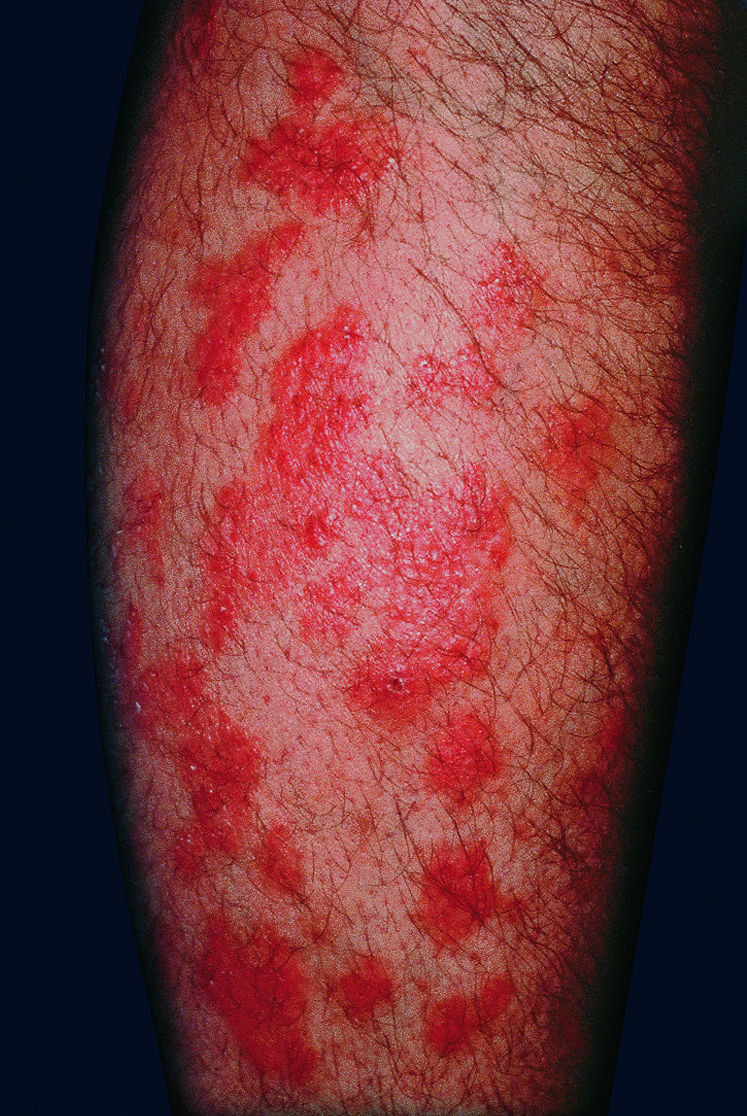
Fig. 21.9 Neutrophilic eccrine hidradenitis. Erythematous plaques on the leg, which may be confused with Sweet syndrome. Courtesy Laurence Valeyrie-Allanore, MD and Jean Revuz, MD.
Fig.21.9s.467
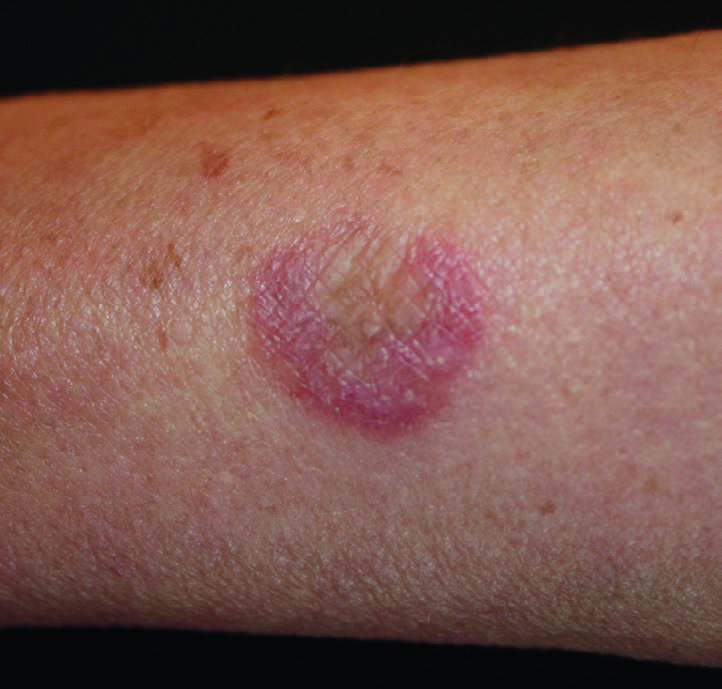
Fig. 21.10 Fixed drug eruptions. A An oval, well-demarcated red–brown plaque with a more erythematous border. B Multiple round violet-colored lesions with central bullae. C Erosive lesion of the penis due to epidermal detachment; this clinical presentation is sometimes misdiagnosed as recurrent HSV infection. D, E Generalized bullous FDE with involvement of the genitalia and intertriginous zones; erosions are seen following rupture of the bullae. Because of its more widespread distribution, this variant can be confused with TEN. F In the mouth, mucosal detachment leads to erosions. G As the inflammation resolves, the lesion acquires a brown hue. H Once inflammation is completely resolved, circular or oval areas of hyperpigmentation are commonly seen. Responsible drugs were phenolphthalein (A), acetaminophen (B), ciprofloxacin (C), naproxen (D), pseudoephedrine (E), allopurinol (F), metronidazole (G), and trimethoprim–sulfamethoxazole (H). B, Courtesy Jeffrey P. Callen, MD, and Tyler Geers, MD; C, F, G, Courtesy Kalman Watsky, MD; D, Courtesy Sara Perkins, MD; E, Courtesy Edward W. Cowen, MD; H, Courtesy Mary Stone, MD.
Fig.21.10 As.468
Fig. 21.10 Fixed drug eruptions. A An oval, well-demarcated red–brown plaque with a more erythematous border. B Multiple round violet-colored lesions with central bullae. C Erosive lesion of the penis due to epidermal detachment; this clinical presentation is sometimes misdiagnosed as recurrent HSV infection. D, E Generalized bullous FDE with involvement of the genitalia and intertriginous zones; erosions are seen following rupture of the bullae. Because of its more widespread distribution, this variant can be confused with TEN. F In the mouth, mucosal detachment leads to erosions. G As the inflammation resolves, the lesion acquires a brown hue. H Once inflammation is completely resolved, circular or oval areas of hyperpigmentation are commonly seen. Responsible drugs were phenolphthalein (A), acetaminophen (B), ciprofloxacin (C), naproxen (D), pseudoephedrine (E), allopurinol (F), metronidazole (G), and trimethoprim–sulfamethoxazole (H). B, Courtesy Jeffrey P. Callen, MD, and Tyler Geers, MD; C, F, G, Courtesy Kalman Watsky, MD; D, Courtesy Sara Perkins, MD; E, Courtesy Edward W. Cowen, MD; H, Courtesy Mary Stone, MD.
Fig.21.10 Bs.468
Fig. 21.10 Fixed drug eruptions. A An oval, well-demarcated red–brown plaque with a more erythematous border. B Multiple round violet-colored lesions with central bullae. C Erosive lesion of the penis due to epidermal detachment; this clinical presentation is sometimes misdiagnosed as recurrent HSV infection. D, E Generalized bullous FDE with involvement of the genitalia and intertriginous zones; erosions are seen following rupture of the bullae. Because of its more widespread distribution, this variant can be confused with TEN. F In the mouth, mucosal detachment leads to erosions. G As the inflammation resolves, the lesion acquires a brown hue. H Once inflammation is completely resolved, circular or oval areas of hyperpigmentation are commonly seen. Responsible drugs were phenolphthalein (A), acetaminophen (B), ciprofloxacin (C), naproxen (D), pseudoephedrine (E), allopurinol (F), metronidazole (G), and trimethoprim–sulfamethoxazole (H). B, Courtesy Jeffrey P. Callen, MD, and Tyler Geers, MD; C, F, G, Courtesy Kalman Watsky, MD; D, Courtesy Sara Perkins, MD; E, Courtesy Edward W. Cowen, MD; H, Courtesy Mary Stone, MD.
Fig.21.10 Cs.468
Fig. 21.10 Fixed drug eruptions. A An oval, well-demarcated red–brown plaque with a more erythematous border. B Multiple round violet-colored lesions with central bullae. C Erosive lesion of the penis due to epidermal detachment; this clinical presentation is sometimes misdiagnosed as recurrent HSV infection. D, E Generalized bullous FDE with involvement of the genitalia and intertriginous zones; erosions are seen following rupture of the bullae. Because of its more widespread distribution, this variant can be confused with TEN. F In the mouth, mucosal detachment leads to erosions. G As the inflammation resolves, the lesion acquires a brown hue. H Once inflammation is completely resolved, circular or oval areas of hyperpigmentation are commonly seen. Responsible drugs were phenolphthalein (A), acetaminophen (B), ciprofloxacin (C), naproxen (D), pseudoephedrine (E), allopurinol (F), metronidazole (G), and trimethoprim–sulfamethoxazole (H). B, Courtesy Jeffrey P. Callen, MD, and Tyler Geers, MD; C, F, G, Courtesy Kalman Watsky, MD; D, Courtesy Sara Perkins, MD; E, Courtesy Edward W. Cowen, MD; H, Courtesy Mary Stone, MD.
Fig.21.10 Ds.468
Fig. 21.10 Fixed drug eruptions. A An oval, well-demarcated red–brown plaque with a more erythematous border. B Multiple round violet-colored lesions with central bullae. C Erosive lesion of the penis due to epidermal detachment; this clinical presentation is sometimes misdiagnosed as recurrent HSV infection. D, E Generalized bullous FDE with involvement of the genitalia and intertriginous zones; erosions are seen following rupture of the bullae. Because of its more widespread distribution, this variant can be confused with TEN. F In the mouth, mucosal detachment leads to erosions. G As the inflammation resolves, the lesion acquires a brown hue. H Once inflammation is completely resolved, circular or oval areas of hyperpigmentation are commonly seen. Responsible drugs were phenolphthalein (A), acetaminophen (B), ciprofloxacin (C), naproxen (D), pseudoephedrine (E), allopurinol (F), metronidazole (G), and trimethoprim–sulfamethoxazole (H). B, Courtesy Jeffrey P. Callen, MD, and Tyler Geers, MD; C, F, G, Courtesy Kalman Watsky, MD; D, Courtesy Sara Perkins, MD; E, Courtesy Edward W. Cowen, MD; H, Courtesy Mary Stone, MD.
Fig.21.10 Es.468
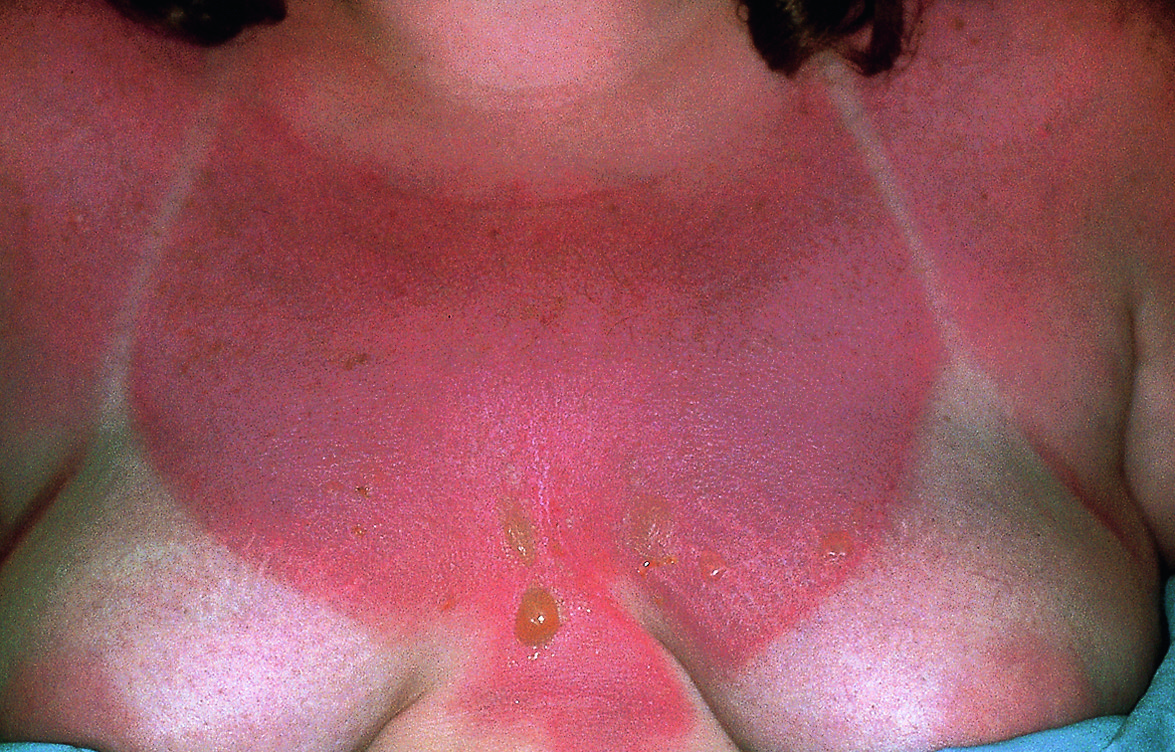
Fig. 21.12 Phototoxic reaction in a patient receiving methotrexate. The erythema and bullae are obviously limited to sun-exposed sites and resemble an exaggerated sunburn. Patients on methotrexate can also experience a “sunburn-recall” phenomenon.
Fig.21.12 As.469
Fig. 21.12 Phototoxic reaction in a patient receiving methotrexate. The erythema and bullae are obviously limited to sun-exposed sites and resemble an exaggerated sunburn. Patients on methotrexate can also experience a “sunburn-recall” phenomenon.
Fig.21.12 Bs.469
Fig. 21.13 Photolichenoid drug eruption due to hydrochlorothiazide. The lesions favored the extensor surfaces of the forearms.
Fig.21.13 As.469
Fig. 21.13 Photolichenoid drug eruption due to hydrochlorothiazide. The lesions favored the extensor surfaces of the forearms.
Fig.21.13 Bs.469
Fig. 21.16 Cutaneous side effects and complications of chemothera- peutic agents. A Horizontal melanonychia due to 5-fluorouracil. B Inflammation surrounding a seborrheic keratosis in a patient receiving paclitaxel. C Toxic erythema of chemotherapy (TEC) due to cytarabine, with obvious painful acral erythema involving the plantar surface. D TEC, also referred to as hand–foot syndrome when localized, due to capecitabine; diffuse glazed erythema and mild hyperkeratosis of palmoplantar skin. E Raynaud phenomenon and digital necrosis due to systemic bleomycin. F Multiple linear (flagellate) erythematous urticarial plaques in a patient receiving systemic bleomycin for Hodgkin lymphoma. G Chemical cellulitis due to extravasation of enfortumab vedotin (anti-Nectin-4 antibody attached to monomethyl auristatin, a cytotoxic microtubule inhibitor). A–C, Courtesy Jean L. Bolognia, MD; D, F, Courtesy Kalman Watsky, MD; G, Courtesy Katherine Given, MD.
Fig.21.16 As.473
Fig. 21.16 Cutaneous side effects and complications of chemothera- peutic agents. A Horizontal melanonychia due to 5-fluorouracil. B Inflammation surrounding a seborrheic keratosis in a patient receiving paclitaxel. C Toxic erythema of chemotherapy (TEC) due to cytarabine, with obvious painful acral erythema involving the plantar surface. D TEC, also referred to as hand–foot syndrome when localized, due to capecitabine; diffuse glazed erythema and mild hyperkeratosis of palmoplantar skin. E Raynaud phenomenon and digital necrosis due to systemic bleomycin. F Multiple linear (flagellate) erythematous urticarial plaques in a patient receiving systemic bleomycin for Hodgkin lymphoma. G Chemical cellulitis due to extravasation of enfortumab vedotin (anti-Nectin-4 antibody attached to monomethyl auristatin, a cytotoxic microtubule inhibitor). A–C, Courtesy Jean L. Bolognia, MD; D, F, Courtesy Kalman Watsky, MD; G, Courtesy Katherine Given, MD.
Fig.21.16 Bs.473
Fig. 21.16 Cutaneous side effects and complications of chemothera- peutic agents. A Horizontal melanonychia due to 5-fluorouracil. B Inflammation surrounding a seborrheic keratosis in a patient receiving paclitaxel. C Toxic erythema of chemotherapy (TEC) due to cytarabine, with obvious painful acral erythema involving the plantar surface. D TEC, also referred to as hand–foot syndrome when localized, due to capecitabine; diffuse glazed erythema and mild hyperkeratosis of palmoplantar skin. E Raynaud phenomenon and digital necrosis due to systemic bleomycin. F Multiple linear (flagellate) erythematous urticarial plaques in a patient receiving systemic bleomycin for Hodgkin lymphoma. G Chemical cellulitis due to extravasation of enfortumab vedotin (anti-Nectin-4 antibody attached to monomethyl auristatin, a cytotoxic microtubule inhibitor). A–C, Courtesy Jean L. Bolognia, MD; D, F, Courtesy Kalman Watsky, MD; G, Courtesy Katherine Given, MD.
Fig.21.16 Cs.473
Fig. 21.16 Cutaneous side effects and complications of chemothera- peutic agents. A Horizontal melanonychia due to 5-fluorouracil. B Inflammation surrounding a seborrheic keratosis in a patient receiving paclitaxel. C Toxic erythema of chemotherapy (TEC) due to cytarabine, with obvious painful acral erythema involving the plantar surface. D TEC, also referred to as hand–foot syndrome when localized, due to capecitabine; diffuse glazed erythema and mild hyperkeratosis of palmoplantar skin. E Raynaud phenomenon and digital necrosis due to systemic bleomycin. F Multiple linear (flagellate) erythematous urticarial plaques in a patient receiving systemic bleomycin for Hodgkin lymphoma. G Chemical cellulitis due to extravasation of enfortumab vedotin (anti-Nectin-4 antibody attached to monomethyl auristatin, a cytotoxic microtubule inhibitor). A–C, Courtesy Jean L. Bolognia, MD; D, F, Courtesy Kalman Watsky, MD; G, Courtesy Katherine Given, MD.
Fig.21.16 Ds.473
Fig. 21.16 Cutaneous side effects and complications of chemothera- peutic agents. A Horizontal melanonychia due to 5-fluorouracil. B Inflammation surrounding a seborrheic keratosis in a patient receiving paclitaxel. C Toxic erythema of chemotherapy (TEC) due to cytarabine, with obvious painful acral erythema involving the plantar surface. D TEC, also referred to as hand–foot syndrome when localized, due to capecitabine; diffuse glazed erythema and mild hyperkeratosis of palmoplantar skin. E Raynaud phenomenon and digital necrosis due to systemic bleomycin. F Multiple linear (flagellate) erythematous urticarial plaques in a patient receiving systemic bleomycin for Hodgkin lymphoma. G Chemical cellulitis due to extravasation of enfortumab vedotin (anti-Nectin-4 antibody attached to monomethyl auristatin, a cytotoxic microtubule inhibitor). A–C, Courtesy Jean L. Bolognia, MD; D, F, Courtesy Kalman Watsky, MD; G, Courtesy Katherine Given, MD.
Fig.21.16 Es.473
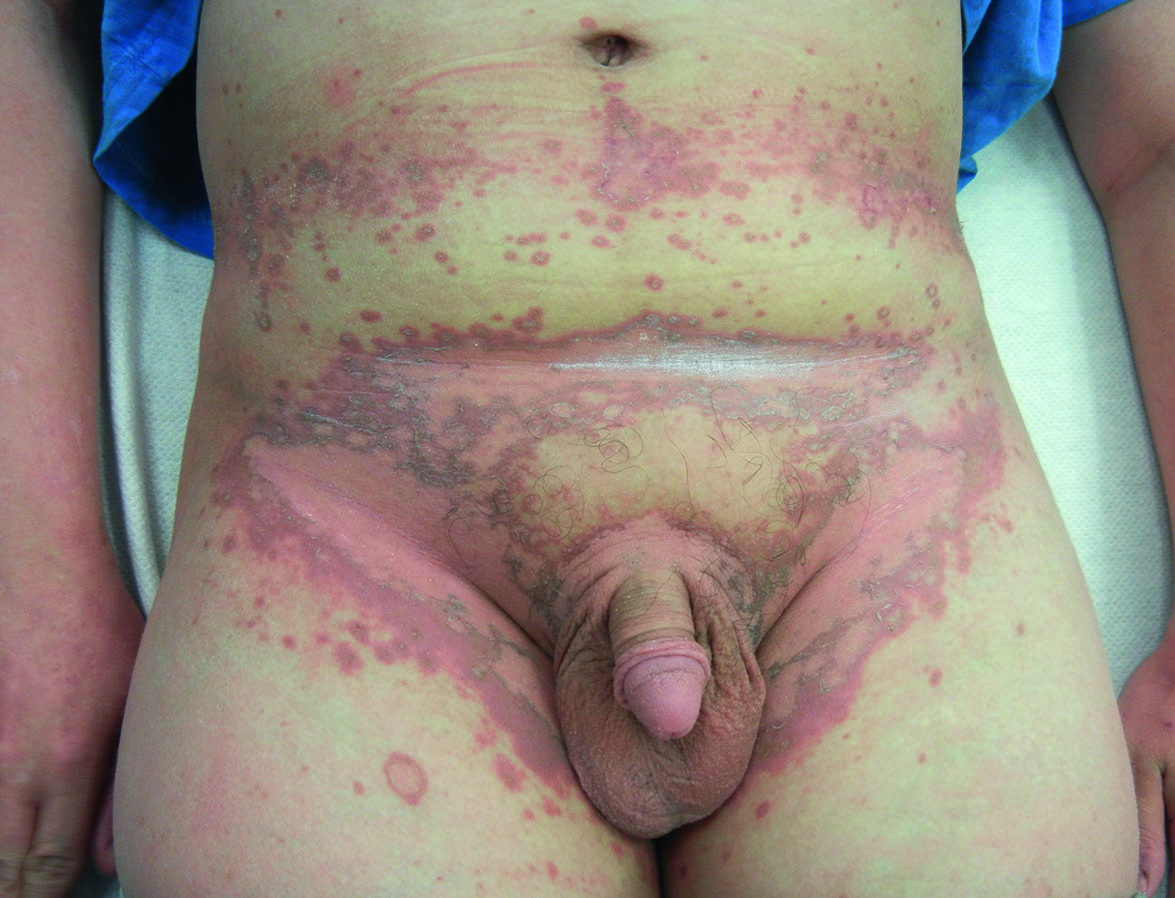
Fig. 21.17 Toxic erythema of chemotherapy. Symmetric involvement of inter- triginous zones and the scrotum. There is central desquamation and some of the lesions have a dusky color. The patient was receiving fludarabine plus intra- venous busulfan. Courtesy Leonard Kristal, MD.
Fig.21.17s.473
Fig. 21.18 Toxic erythema of chemotherapy. Use of a number of terms (especially those based on histologic findings), including palmoplantar erythrodysesthesia, eccrine squamous syringometaplasia and epidermal dysmaturation, has created some confusion for clinicians. There is considerable overlap in the appearance of the symmetric erythematous to dusky patches which can develop edema, erosions, desquamation or purpura, whether they favor acral sites, intertriginous zones, or the elbows and knees. “Toxic erythema of chemotherapy” has been suggested as an encompassing term that allows simplification. In addition, there is no need to implicate additional diagnoses when lesions are not limited to the hands and feet. Insets: Erythema of the ears due to cytarabine (cytosine arabinoside), sometimes referred to as “Ara-C ears”; the petechiae are due to thrombocytopenia. Dusky edematous plaques of the palm, some of which have developed sterile bullae. Courtesy Jean L. Bolognia, MD and Boni Elewski, MD.
Fig.21.18 As.474
Fig. 21.18 Toxic erythema of chemotherapy. Use of a number of terms (especially those based on histologic findings), including palmoplantar erythrodysesthesia, eccrine squamous syringometaplasia and epidermal dysmaturation, has created some confusion for clinicians. There is considerable overlap in the appearance of the symmetric erythematous to dusky patches which can develop edema, erosions, desquamation or purpura, whether they favor acral sites, intertriginous zones, or the elbows and knees. “Toxic erythema of chemotherapy” has been suggested as an encompassing term that allows simplification. In addition, there is no need to implicate additional diagnoses when lesions are not limited to the hands and feet. Insets: Erythema of the ears due to cytarabine (cytosine arabinoside), sometimes referred to as “Ara-C ears”; the petechiae are due to thrombocytopenia. Dusky edematous plaques of the palm, some of which have developed sterile bullae. Courtesy Jean L. Bolognia, MD and Boni Elewski, MD.
Fig.21.18 Bs.474
(morbilliform) eruption (Fig. 21.19)
Fig.21.19s.477
Fig. 21.20 Spectrum of cutaneous reactions to immune checkpoint inhibitors (immune-related adverse events). A SJS/TEN overlap due to ipilimumab. B Lichenoid dermatitis of the palms in a patient receiving pembrolizumab for metastatic colon cancer. C Vitiligo-like leukoderma in a patient with metastatic melanoma receiving nivolumab. D Widespread eruption of erythematous papules due to ipilimumab; many of the lesions are crusted. A, Courtesy Marianna Freudzon, MD; B, Courtesy Jonathan Leventhal, MD. C, Courtesy Jean L. Bolognia, MD; D, Courtesy Miriam Totonchy, MD.
Fig.21.20 As.478
Fig. 21.20 Spectrum of cutaneous reactions to immune checkpoint inhibitors (immune-related adverse events). A SJS/TEN overlap due to ipilimumab. B Lichenoid dermatitis of the palms in a patient receiving pembrolizumab for metastatic colon cancer. C Vitiligo-like leukoderma in a patient with metastatic melanoma receiving nivolumab. D Widespread eruption of erythematous papules due to ipilimumab; many of the lesions are crusted. A, Courtesy Marianna Freudzon, MD; B, Courtesy Jonathan Leventhal, MD. C, Courtesy Jean L. Bolognia, MD; D, Courtesy Miriam Totonchy, MD.
Fig.21.20 Bs.478
Fig. 21.20 Spectrum of cutaneous reactions to immune checkpoint inhibitors (immune-related adverse events). A SJS/TEN overlap due to ipilimumab. B Lichenoid dermatitis of the palms in a patient receiving pembrolizumab for metastatic colon cancer. C Vitiligo-like leukoderma in a patient with metastatic melanoma receiving nivolumab. D Widespread eruption of erythematous papules due to ipilimumab; many of the lesions are crusted. A, Courtesy Marianna Freudzon, MD; B, Courtesy Jonathan Leventhal, MD. C, Courtesy Jean L. Bolognia, MD; D, Courtesy Miriam Totonchy, MD.
Fig.21.20 Cs.478
With the introduction of EGFR and MEK inhibitors (Fig. 21.21A), there has been an increase in drug-induced follicular eruptions, inasmuch as papulopustular eruptions can occur in up to 80% of patients receiving these medications, in particular 1st and 2nd gener- ation EGFR inhibitors (see Table 21.16). Lesions often appear within a few weeks of administration but may not develop until several months later. Areas rich in sebaceous glands, in particular the central face, scalp and trunk, are most commonly affected (Fig. 21.21B,C). Symptoms include stinging, pruritus, and pain. Although the initial pustules are sterile, secondary infection by Staphylococcus aureus, herpes simplex virus, and dermatophytes may occur as well as an increased density of Demodex folliculorum. Late-onset papulopustular acneiform eruptions that favor the lower extremities may appear months into therapy as can non-follicular purpuric papulopustular eruptions.
Fig.21.21s.478
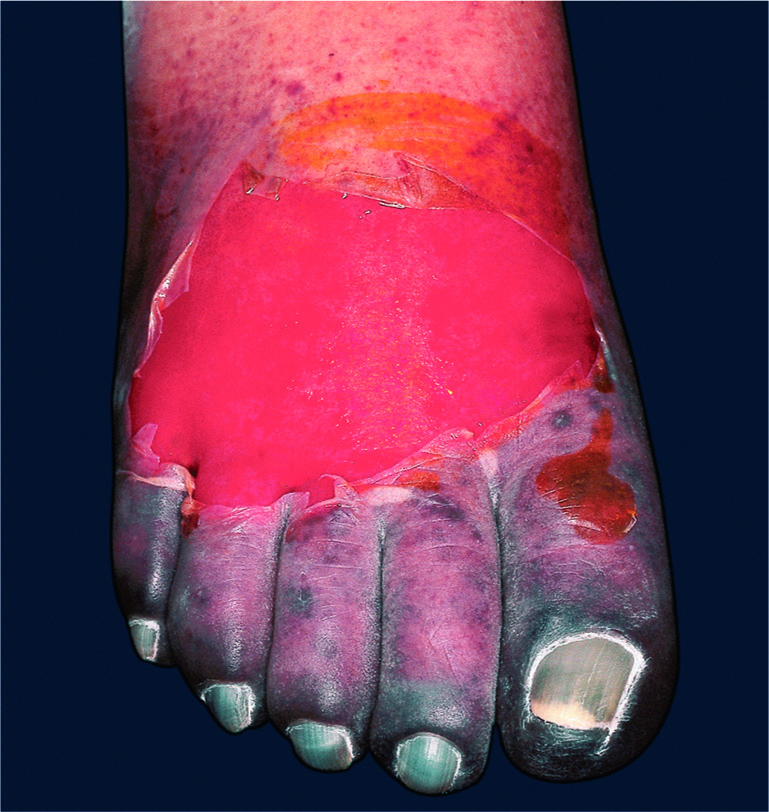
Fig. 21.22 Heparin- induced thrombocyto- penia (HIT) syndrome. A Ischemia and necrosis of the foot. B Petechiae due to thrombocytopenia and an irregular area of cutaneous necrosis due to thrombosis. A, Courtesy Kalman Watsky, MD; B, Courtesy Jean L. Bolognia, MD.
Fig.21.22s.480
Fig. 21.23 Cutaneous discoloration due to amiodarone. A Gray–violet discolor- ation of the face. Note sparing of the lower eyelid. B Biopsy specimens demon- strate yellow–brown granules within dermal macrophages. A, Courtesy Jean L. Bolognia, MD; B, Courtesy Luis Requena, MD.
Fig.21.23 As.481
Fig. 21.23 Cutaneous discoloration due to amiodarone. A Gray–violet discolor- ation of the face. Note sparing of the lower eyelid. B Biopsy specimens demon- strate yellow–brown granules within dermal macrophages. A, Courtesy Jean L. Bolognia, MD; B, Courtesy Luis Requena, MD.
Fig.21.23 Bs.481
Fig. 21.24 Psoriasiform eruption due to TNF inhibitor. Sterile pustulosis of the plantar surface developed in this patient with rheumatoid arthritis who had received infliximab for the previous 5 years. There was no reduction in immuno- suppression prior to the onset of the psoriasiform eruption. Courtesy Chris Bunick, MD.
Fig.21.24s.481
Fig. 21.25 Local reactions to vitamin K injections. A This patient was origi- nally diagnosed as having erythema multiforme. B Large pink–violet plaque with areas of hemorrhage in an infant. B, Courtesy Julie V. Schaffer, MD.
Fig.21.25s.483