Bolognia 5e·Dermatoloji Çalışma Paneli
Ch 24

Kütanöz Vaskülit

Vol 1 · sayfa 418 · §4
📖 Özet🃏 Flashcard Quiz🖼 Atlas
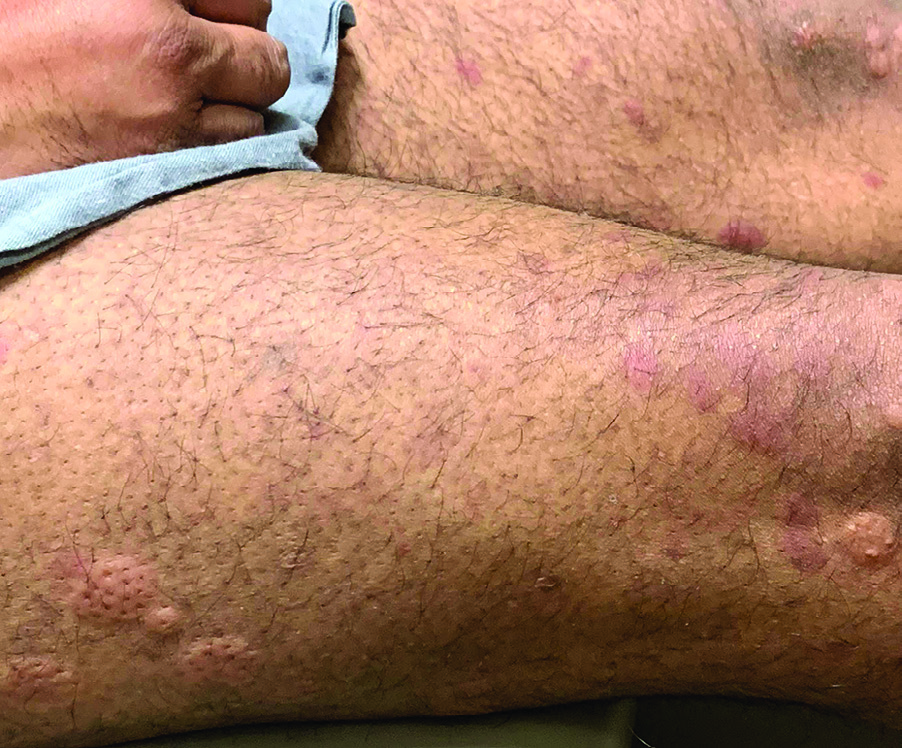
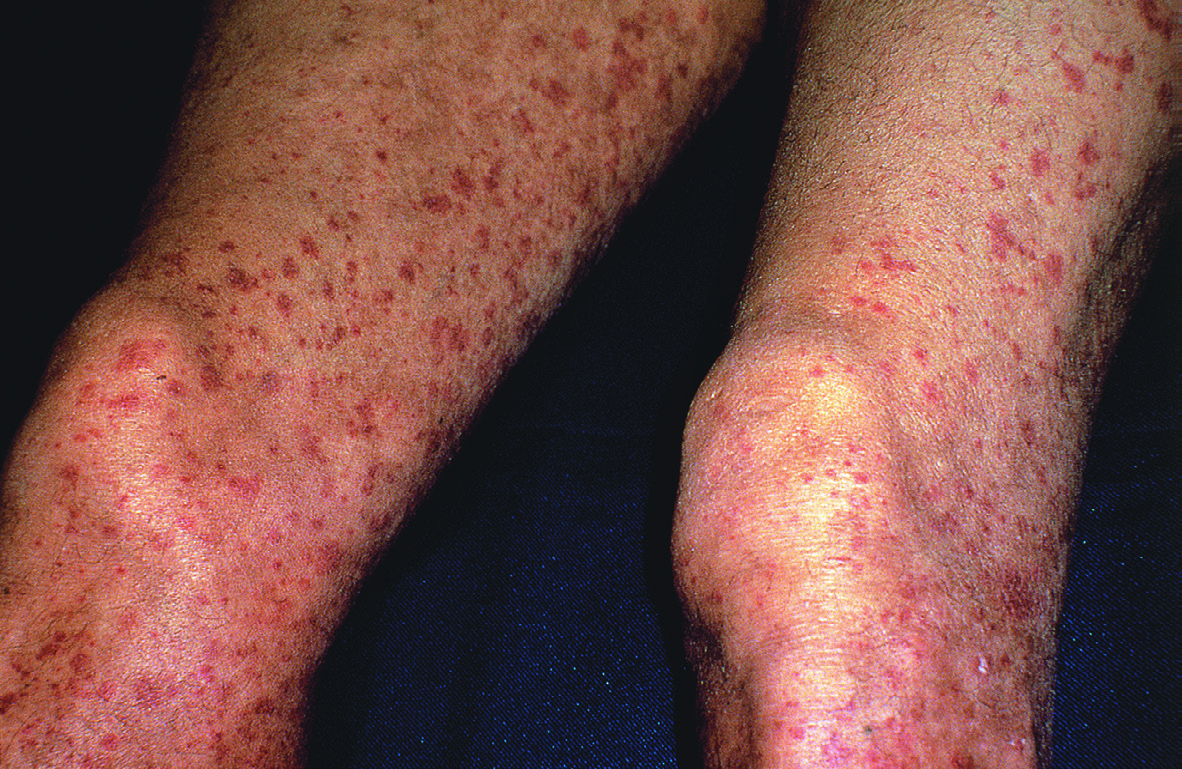
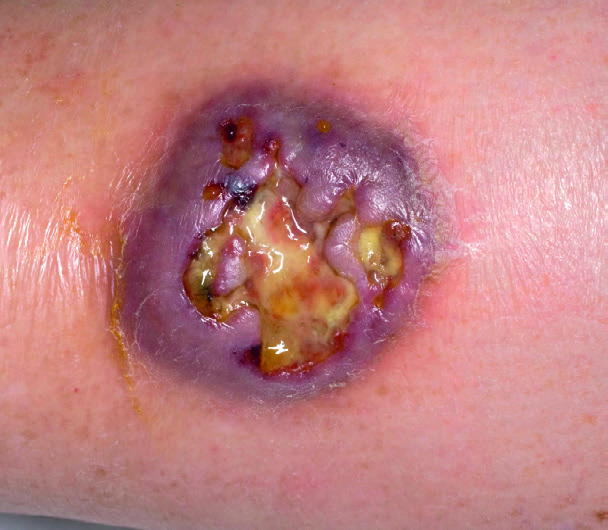
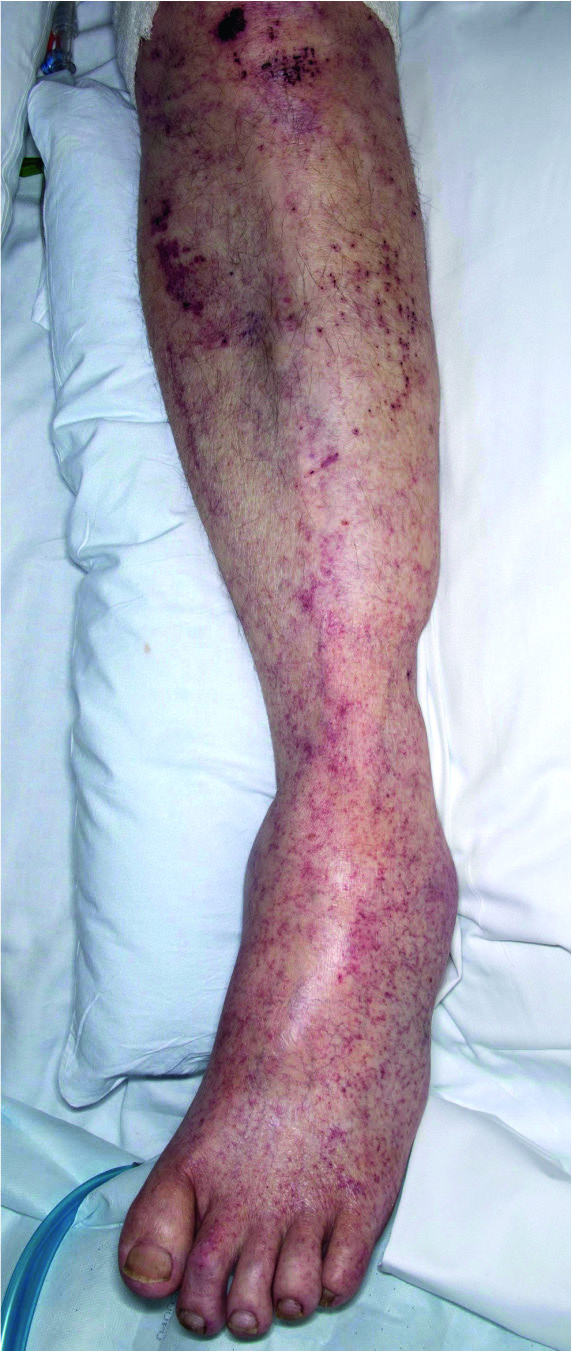
Fig. 24.2 Cutaneous small vessel vasculitis. A Early lesions may be erythematous rather than purpuric. B With time, the inflammatory lesions can no longer be blanched due to hemorrhage within the dermis. C, D Classic presentation of circular purpuric macules and papules on the distal lower extremity that have become coalescent; note the purple color. E Central necrosis with formation of hemorrhagic crusts within circular lesions. B, Courtesy Kalman Watsky, MD; D, Courtesy Lorenzo Cerroni, MD; E, Courtesy Frank Samarin, MD.
Fig.24.2 As.536
Fig. 24.2 Cutaneous small vessel vasculitis. A Early lesions may be erythematous rather than purpuric. B With time, the inflammatory lesions can no longer be blanched due to hemorrhage within the dermis. C, D Classic presentation of circular purpuric macules and papules on the distal lower extremity that have become coalescent; note the purple color. E Central necrosis with formation of hemorrhagic crusts within circular lesions. B, Courtesy Kalman Watsky, MD; D, Courtesy Lorenzo Cerroni, MD; E, Courtesy Frank Samarin, MD.
Fig.24.2 Bs.536
Fig. 24.2 Cutaneous small vessel vasculitis. A Early lesions may be erythematous rather than purpuric. B With time, the inflammatory lesions can no longer be blanched due to hemorrhage within the dermis. C, D Classic presentation of circular purpuric macules and papules on the distal lower extremity that have become coalescent; note the purple color. E Central necrosis with formation of hemorrhagic crusts within circular lesions. B, Courtesy Kalman Watsky, MD; D, Courtesy Lorenzo Cerroni, MD; E, Courtesy Frank Samarin, MD.
Fig.24.2 Cs.536
Fig. 24.2 Cutaneous small vessel vasculitis. A Early lesions may be erythematous rather than purpuric. B With time, the inflammatory lesions can no longer be blanched due to hemorrhage within the dermis. C, D Classic presentation of circular purpuric macules and papules on the distal lower extremity that have become coalescent; note the purple color. E Central necrosis with formation of hemorrhagic crusts within circular lesions. B, Courtesy Kalman Watsky, MD; D, Courtesy Lorenzo Cerroni, MD; E, Courtesy Frank Samarin, MD.
Fig.24.2 Ds.536
Fig. 24.3 Clinical variants of cutaneous small vessel vasculitis. A Targetoid appearance that can resemble erythema multiforme. B Hemorrhagic vesicles in addition to palpable purpura. C Hemorrhagic crusts in an annular configuration. D Lesions involving the upper extremities. E Purpuric macules and papules with areas of confluence that resemble a purpuric morbilliform drug eruption. F Coalescence of palpable purpura as well as edema and an ulcer with a thick black eschar; petechiae are also present and in the instep resemble pinpricks. B, Courtesy Kalman Watsky, MD; D, Courtesy Lindy Fox, MD, and Kanade Shinkai MD; E, Courtesy David A. Wetter, MD; F, Courtesy Jean L. Bolognia, MD.
Fig.24.3 As.537
Fig. 24.3 Clinical variants of cutaneous small vessel vasculitis. A Targetoid appearance that can resemble erythema multiforme. B Hemorrhagic vesicles in addition to palpable purpura. C Hemorrhagic crusts in an annular configuration. D Lesions involving the upper extremities. E Purpuric macules and papules with areas of confluence that resemble a purpuric morbilliform drug eruption. F Coalescence of palpable purpura as well as edema and an ulcer with a thick black eschar; petechiae are also present and in the instep resemble pinpricks. B, Courtesy Kalman Watsky, MD; D, Courtesy Lindy Fox, MD, and Kanade Shinkai MD; E, Courtesy David A. Wetter, MD; F, Courtesy Jean L. Bolognia, MD.
Fig.24.3 Bs.537
Fig. 24.3 Clinical variants of cutaneous small vessel vasculitis. A Targetoid appearance that can resemble erythema multiforme. B Hemorrhagic vesicles in addition to palpable purpura. C Hemorrhagic crusts in an annular configuration. D Lesions involving the upper extremities. E Purpuric macules and papules with areas of confluence that resemble a purpuric morbilliform drug eruption. F Coalescence of palpable purpura as well as edema and an ulcer with a thick black eschar; petechiae are also present and in the instep resemble pinpricks. B, Courtesy Kalman Watsky, MD; D, Courtesy Lindy Fox, MD, and Kanade Shinkai MD; E, Courtesy David A. Wetter, MD; F, Courtesy Jean L. Bolognia, MD.
Fig.24.3 Cs.537
Fig. 24.3 Clinical variants of cutaneous small vessel vasculitis. A Targetoid appearance that can resemble erythema multiforme. B Hemorrhagic vesicles in addition to palpable purpura. C Hemorrhagic crusts in an annular configuration. D Lesions involving the upper extremities. E Purpuric macules and papules with areas of confluence that resemble a purpuric morbilliform drug eruption. F Coalescence of palpable purpura as well as edema and an ulcer with a thick black eschar; petechiae are also present and in the instep resemble pinpricks. B, Courtesy Kalman Watsky, MD; D, Courtesy Lindy Fox, MD, and Kanade Shinkai MD; E, Courtesy David A. Wetter, MD; F, Courtesy Jean L. Bolognia, MD.
Fig.24.3 Ds.537
Fig. 24.3 Clinical variants of cutaneous small vessel vasculitis. A Targetoid appearance that can resemble erythema multiforme. B Hemorrhagic vesicles in addition to palpable purpura. C Hemorrhagic crusts in an annular configuration. D Lesions involving the upper extremities. E Purpuric macules and papules with areas of confluence that resemble a purpuric morbilliform drug eruption. F Coalescence of palpable purpura as well as edema and an ulcer with a thick black eschar; petechiae are also present and in the instep resemble pinpricks. B, Courtesy Kalman Watsky, MD; D, Courtesy Lindy Fox, MD, and Kanade Shinkai MD; E, Courtesy David A. Wetter, MD; F, Courtesy Jean L. Bolognia, MD.
Fig.24.3 Es.537
Fig. 24.3 Clinical variants of cutaneous small vessel vasculitis. A Targetoid appearance that can resemble erythema multiforme. B Hemorrhagic vesicles in addition to palpable purpura. C Hemorrhagic crusts in an annular configuration. D Lesions involving the upper extremities. E Purpuric macules and papules with areas of confluence that resemble a purpuric morbilliform drug eruption. F Coalescence of palpable purpura as well as edema and an ulcer with a thick black eschar; petechiae are also present and in the instep resemble pinpricks. B, Courtesy Kalman Watsky, MD; D, Courtesy Lindy Fox, MD, and Kanade Shinkai MD; E, Courtesy David A. Wetter, MD; F, Courtesy Jean L. Bolognia, MD.
Fig.24.3 Fs.537
Fig. 24.5 Etiologies of cutaneous small vessel vasculitis (CSVV). *CSVV was idiopathic in 76% of cases in a population-based study from Olmsted County, Minnesota4.
Fig.24.5s.541
Fig. 24.6 Cutaneous small vessel vasculitis associated with systemic disorders. The underlying diseases were Sjögren syndrome (A), rheumatoid arthritis (B), relapsing polychondritis with myelodysplasia (C), and endocarditis due to Streptococcus mitis (D). Note the Koebner phenomenon in A and rheumatoid nodules in B. Cutaneous vasculitis in association with relapsing polychondritis and myelodysplasia points to a likely diagnosis of VEXAS syndrome. C, Courtesy Jean L. Bolognia, MD; D, Courtesy David A. Wetter, MD.
Fig.24.6 As.541
Fig. 24.6 Cutaneous small vessel vasculitis associated with systemic disorders. The underlying diseases were Sjögren syndrome (A), rheumatoid arthritis (B), relapsing polychondritis with myelodysplasia (C), and endocarditis due to Streptococcus mitis (D). Note the Koebner phenomenon in A and rheumatoid nodules in B. Cutaneous vasculitis in association with relapsing polychondritis and myelodysplasia points to a likely diagnosis of VEXAS syndrome. C, Courtesy Jean L. Bolognia, MD; D, Courtesy David A. Wetter, MD.
Fig.24.6 Bs.541
Fig. 24.6 Cutaneous small vessel vasculitis associated with systemic disorders. The underlying diseases were Sjögren syndrome (A), rheumatoid arthritis (B), relapsing polychondritis with myelodysplasia (C), and endocarditis due to Streptococcus mitis (D). Note the Koebner phenomenon in A and rheumatoid nodules in B. Cutaneous vasculitis in association with relapsing polychondritis and myelodysplasia points to a likely diagnosis of VEXAS syndrome. C, Courtesy Jean L. Bolognia, MD; D, Courtesy David A. Wetter, MD.
Fig.24.6 Cs.541
Fig. 24.9 Acute hemorrhagic edema of infancy. A, B Multiple edematous erythematous plaques on the face and extremities of a toddler. Some of the lesions have begun to become dusky. Courtesy Ilona J. Frieden, MD.
Fig.24.9 As.545
Fig. 24.9 Acute hemorrhagic edema of infancy. A, B Multiple edematous erythematous plaques on the face and extremities of a toddler. Some of the lesions have begun to become dusky. Courtesy Ilona J. Frieden, MD.
Fig.24.9 Bs.545
Fig. 24.10 Urticarial vasculitis. A Urticarial papules and purpuric macules in a patient with hypocomplementemic urticarial vasculitis. B Arcuate, dull violet plaques of the lower extremities. B, Courtesy David A. Wetter, MD.
Fig.24.10 As.545
Fig. 24.10 Urticarial vasculitis. A Urticarial papules and purpuric macules in a patient with hypocomplementemic urticarial vasculitis. B Arcuate, dull violet plaques of the lower extremities. B, Courtesy David A. Wetter, MD.
Fig.24.10 Bs.545
Fig. 24.13 Granuloma faciale. A Single light brown plaque of the lateral malar cheek. B Single red–brown papule of the nose. Clues to the diagnosis include prominent follicular openings and a lack of secondary changes such as scale. C Less commonly, patients present with multiple lesions. A, Courtesy Department of Dermatology, Medical University of Graz; B, Courtesy Cloyce L. Stetson, MD; C, Courtesy Jeffrey P. Callen, MD.
Fig.24.13 As.548
Fig. 24.13 Granuloma faciale. A Single light brown plaque of the lateral malar cheek. B Single red–brown papule of the nose. Clues to the diagnosis include prominent follicular openings and a lack of secondary changes such as scale. C Less commonly, patients present with multiple lesions. A, Courtesy Department of Dermatology, Medical University of Graz; B, Courtesy Cloyce L. Stetson, MD; C, Courtesy Jeffrey P. Callen, MD.
Fig.24.13 Bs.548
Fig. 24.13 Granuloma faciale. A Single light brown plaque of the lateral malar cheek. B Single red–brown papule of the nose. Clues to the diagnosis include prominent follicular openings and a lack of secondary changes such as scale. C Less commonly, patients present with multiple lesions. A, Courtesy Department of Dermatology, Medical University of Graz; B, Courtesy Cloyce L. Stetson, MD; C, Courtesy Jeffrey P. Callen, MD.
Fig.24.13 Cs.548
Fig. 24.13 Granuloma faciale. A Single light brown plaque of the lateral malar cheek. B Single red–brown papule of the nose. Clues to the diagnosis include prominent follicular openings and a lack of secondary changes such as scale. C Less commonly, patients present with multiple lesions. A, Courtesy Department of Dermatology, Medical University of Graz; B, Courtesy Cloyce L. Stetson, MD; C, Courtesy Jeffrey P. Callen, MD.
Fig.24.13 Ds.548
Fig. 24.13 Granuloma faciale. A Single light brown plaque of the lateral malar cheek. B Single red–brown papule of the nose. Clues to the diagnosis include prominent follicular openings and a lack of secondary changes such as scale. C Less commonly, patients present with multiple lesions. A, Courtesy Department of Dermatology, Medical University of Graz; B, Courtesy Cloyce L. Stetson, MD; C, Courtesy Jeffrey P. Callen, MD.
Fig.24.13 Es.548
Fig. 24.13 Granuloma faciale. A Single light brown plaque of the lateral malar cheek. B Single red–brown papule of the nose. Clues to the diagnosis include prominent follicular openings and a lack of secondary changes such as scale. C Less commonly, patients present with multiple lesions. A, Courtesy Department of Dermatology, Medical University of Graz; B, Courtesy Cloyce L. Stetson, MD; C, Courtesy Jeffrey P. Callen, MD.
Fig.24.13 Fs.548
Fig. 24.13 Granuloma faciale. A Single light brown plaque of the lateral malar cheek. B Single red–brown papule of the nose. Clues to the diagnosis include prominent follicular openings and a lack of secondary changes such as scale. C Less commonly, patients present with multiple lesions. A, Courtesy Department of Dermatology, Medical University of Graz; B, Courtesy Cloyce L. Stetson, MD; C, Courtesy Jeffrey P. Callen, MD.
Fig.24.13 Gs.548
Fig. 24.15 Cryoglobulinemic vasculitis. A Palpable purpura of the lower extremities. B Purpuric papules and retiform plaques with central necrosis and ulceration in a patient with type II cryoglobulinemia secondary to hepatitis C viral infection. These cutaneous manifestations reflect a “mixed” pattern of both small and medium-sized vessel vasculitis. The patient also had an elevated rheumatoid factor, decreased C4, and an IgM monoclonal gammopathy. B, Courtesy David A. Wetter MD.
Fig.24.15 As.550
Fig. 24.15 Cryoglobulinemic vasculitis. A Palpable purpura of the lower extremities. B Purpuric papules and retiform plaques with central necrosis and ulceration in a patient with type II cryoglobulinemia secondary to hepatitis C viral infection. These cutaneous manifestations reflect a “mixed” pattern of both small and medium-sized vessel vasculitis. The patient also had an elevated rheumatoid factor, decreased C4, and an IgM monoclonal gammopathy. B, Courtesy David A. Wetter MD.
Fig.24.15 Bs.550
Fig. 24.17 Granulomatosis with polyangiitis. A Ulceration on the leg, which may be misdiagnosed as pyoderma gangrenosum. B Ulceration of the tongue. C Subungual digital infarcts. D Purpuric macules and papules with central crusts due to small vessel vasculitis (leukocytoclastic vasculitis). E Papules and papulonodules with central scale-crust on the elbow (also referred to as Churg–Strauss nodules). F Friable papules of the gingivae (“strawberry gums”). A, Courtesy David A. Wetter MD; E, Courtesy Jeffrey Gelhausen, MD and Nan Ring, MD.
Fig.24.17 As.553
Fig. 24.17 Granulomatosis with polyangiitis. A Ulceration on the leg, which may be misdiagnosed as pyoderma gangrenosum. B Ulceration of the tongue. C Subungual digital infarcts. D Purpuric macules and papules with central crusts due to small vessel vasculitis (leukocytoclastic vasculitis). E Papules and papulonodules with central scale-crust on the elbow (also referred to as Churg–Strauss nodules). F Friable papules of the gingivae (“strawberry gums”). A, Courtesy David A. Wetter MD; E, Courtesy Jeffrey Gelhausen, MD and Nan Ring, MD.
Fig.24.17 Bs.553
Fig. 24.17 Granulomatosis with polyangiitis. A Ulceration on the leg, which may be misdiagnosed as pyoderma gangrenosum. B Ulceration of the tongue. C Subungual digital infarcts. D Purpuric macules and papules with central crusts due to small vessel vasculitis (leukocytoclastic vasculitis). E Papules and papulonodules with central scale-crust on the elbow (also referred to as Churg–Strauss nodules). F Friable papules of the gingivae (“strawberry gums”). A, Courtesy David A. Wetter MD; E, Courtesy Jeffrey Gelhausen, MD and Nan Ring, MD.
Fig.24.17 Cs.553
Fig. 24.17 Granulomatosis with polyangiitis. A Ulceration on the leg, which may be misdiagnosed as pyoderma gangrenosum. B Ulceration of the tongue. C Subungual digital infarcts. D Purpuric macules and papules with central crusts due to small vessel vasculitis (leukocytoclastic vasculitis). E Papules and papulonodules with central scale-crust on the elbow (also referred to as Churg–Strauss nodules). F Friable papules of the gingivae (“strawberry gums”). A, Courtesy David A. Wetter MD; E, Courtesy Jeffrey Gelhausen, MD and Nan Ring, MD.
Fig.24.17 Ds.553
Fig. 24.17 Granulomatosis with polyangiitis. A Ulceration on the leg, which may be misdiagnosed as pyoderma gangrenosum. B Ulceration of the tongue. C Subungual digital infarcts. D Purpuric macules and papules with central crusts due to small vessel vasculitis (leukocytoclastic vasculitis). E Papules and papulonodules with central scale-crust on the elbow (also referred to as Churg–Strauss nodules). F Friable papules of the gingivae (“strawberry gums”). A, Courtesy David A. Wetter MD; E, Courtesy Jeffrey Gelhausen, MD and Nan Ring, MD.
Fig.24.17 Es.553
Fig. 24.17 Granulomatosis with polyangiitis. A Ulceration on the leg, which may be misdiagnosed as pyoderma gangrenosum. B Ulceration of the tongue. C Subungual digital infarcts. D Purpuric macules and papules with central crusts due to small vessel vasculitis (leukocytoclastic vasculitis). E Papules and papulonodules with central scale-crust on the elbow (also referred to as Churg–Strauss nodules). F Friable papules of the gingivae (“strawberry gums”). A, Courtesy David A. Wetter MD; E, Courtesy Jeffrey Gelhausen, MD and Nan Ring, MD.
Fig.24.17 Fs.553
Fig. 24.18 Microscopic polyangiitis. A Petechiae and purpuric macules on the lower extremity; some of the lesions have central hemorrhagic crusts. Histologically, leukocytoclastic vasculitis was seen. B Petechiae and multiple purpuric macules with central necrosis on the plantar surface. A, Courtesy David A. Wetter, MD; B, Courtesy Cara Whitney Hannon, MD and Robert Swerlick, MD.
Fig.24.18 As.556
Fig. 24.18 Microscopic polyangiitis. A Petechiae and purpuric macules on the lower extremity; some of the lesions have central hemorrhagic crusts. Histologically, leukocytoclastic vasculitis was seen. B Petechiae and multiple purpuric macules with central necrosis on the plantar surface. A, Courtesy David A. Wetter, MD; B, Courtesy Cara Whitney Hannon, MD and Robert Swerlick, MD.
Fig.24.18 Bs.556
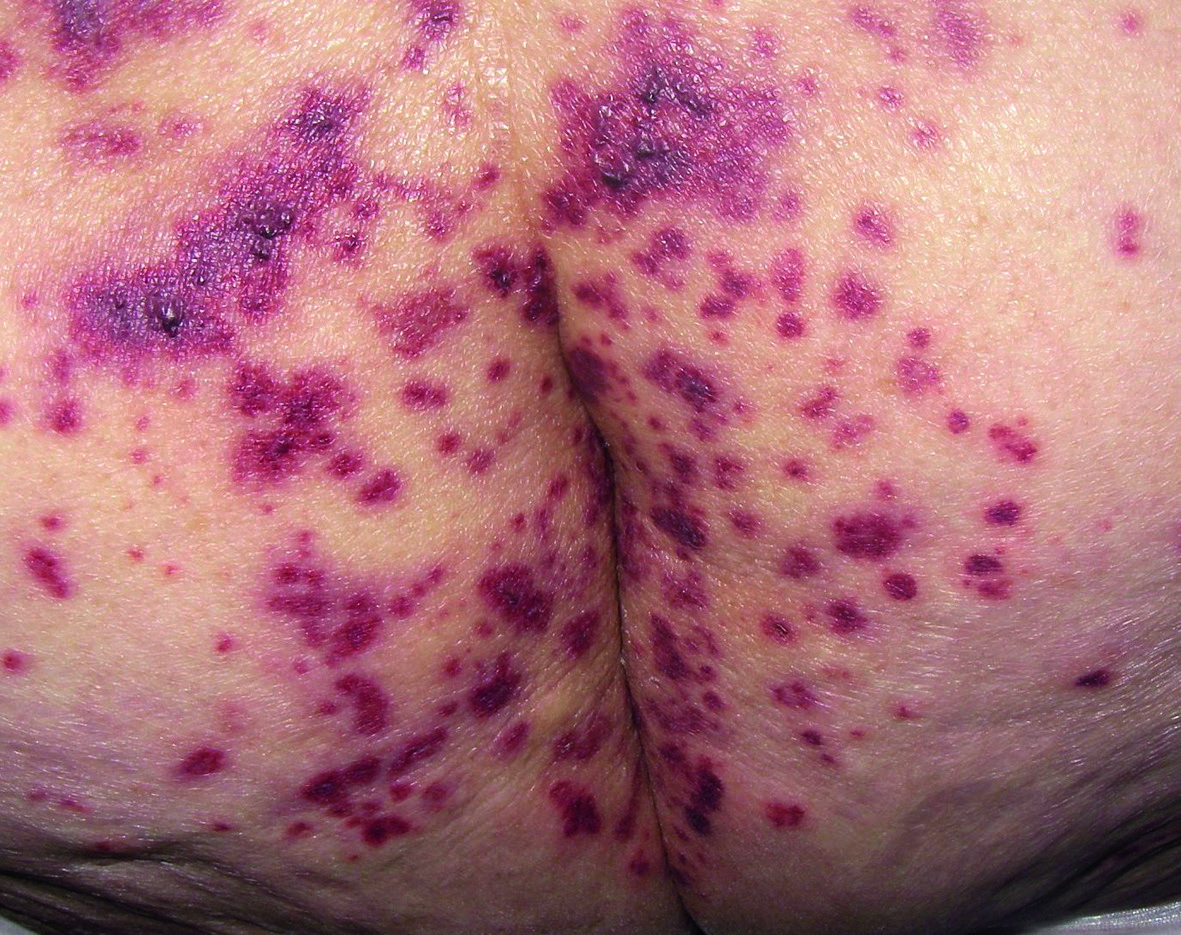
Fig. 24.20 Eosinophilic granulomatosis with polyangiitis (Churg– Strauss syndrome). A Purpuric macules and papules on the buttocks due to small vessel vascu- litis (leukocytoclastic vascu- litis). B Purpuric dermal plaques on the palm that histologically demon- strated vasculitis of a small muscular artery. C Crusted, firm papules on the elbow (Churg–Strauss nodules; palisaded neutrophilic and granulomatous dermatitis). D A few scattered purpuric papules, some of which have central pinpoint crusts, on the ankles. A, B, Courtesy Lindy Fox, MD and Kanade Shinkai, MD; C, Courtesy Kalman Watsky, MD.
Fig.24.20 As.558
Fig. 24.20 Eosinophilic granulomatosis with polyangiitis (Churg– Strauss syndrome). A Purpuric macules and papules on the buttocks due to small vessel vascu- litis (leukocytoclastic vascu- litis). B Purpuric dermal plaques on the palm that histologically demon- strated vasculitis of a small muscular artery. C Crusted, firm papules on the elbow (Churg–Strauss nodules; palisaded neutrophilic and granulomatous dermatitis). D A few scattered purpuric papules, some of which have central pinpoint crusts, on the ankles. A, B, Courtesy Lindy Fox, MD and Kanade Shinkai, MD; C, Courtesy Kalman Watsky, MD.
Fig.24.20 Bs.558
Fig. 24.21 Polyarteritis nodosa (PAN). A Retiform purpura of the dorsal foot in a patient with systemic PAN. B Livedo racemosa and subcutaneous nodules of the lower extremities in a patient with cutaneous PAN. C Livedo reticularis of the lower extremities and abdomen in an adolescent with cutaneous PAN. A, Courtesy Lindy Fox, MD and Kanade Shinkai, MD; B, Courtesy David A. Wetter, MD; C, Courtesy Julie V. Schaffer, MD.
Fig.24.21 As.560
Fig. 24.21 Polyarteritis nodosa (PAN). A Retiform purpura of the dorsal foot in a patient with systemic PAN. B Livedo racemosa and subcutaneous nodules of the lower extremities in a patient with cutaneous PAN. C Livedo reticularis of the lower extremities and abdomen in an adolescent with cutaneous PAN. A, Courtesy Lindy Fox, MD and Kanade Shinkai, MD; B, Courtesy David A. Wetter, MD; C, Courtesy Julie V. Schaffer, MD.
Fig.24.21 Bs.560
Fig. 24.21 Polyarteritis nodosa (PAN). A Retiform purpura of the dorsal foot in a patient with systemic PAN. B Livedo racemosa and subcutaneous nodules of the lower extremities in a patient with cutaneous PAN. C Livedo reticularis of the lower extremities and abdomen in an adolescent with cutaneous PAN. A, Courtesy Lindy Fox, MD and Kanade Shinkai, MD; B, Courtesy David A. Wetter, MD; C, Courtesy Julie V. Schaffer, MD.
Fig.24.21 Cs.560
Fig. 24.21 Polyarteritis nodosa (PAN). A Retiform purpura of the dorsal foot in a patient with systemic PAN. B Livedo racemosa and subcutaneous nodules of the lower extremities in a patient with cutaneous PAN. C Livedo reticularis of the lower extremities and abdomen in an adolescent with cutaneous PAN. A, Courtesy Lindy Fox, MD and Kanade Shinkai, MD; B, Courtesy David A. Wetter, MD; C, Courtesy Julie V. Schaffer, MD.
Fig.24.21 Ds.560
Fig. 24.21 Polyarteritis nodosa (PAN). A Retiform purpura of the dorsal foot in a patient with systemic PAN. B Livedo racemosa and subcutaneous nodules of the lower extremities in a patient with cutaneous PAN. C Livedo reticularis of the lower extremities and abdomen in an adolescent with cutaneous PAN. A, Courtesy Lindy Fox, MD and Kanade Shinkai, MD; B, Courtesy David A. Wetter, MD; C, Courtesy Julie V. Schaffer, MD.
Fig.24.21 Es.560
Fig. 24.22 Cutaneous polyarteritis nodosa (cutaneous arteritis) – histopatho- logic features. Vasculitis of a medium-sized vessel situated deep in the dermis. Neutrophils, neutrophilic debris, and fibrin within the arteriolar wall are seen. Courtesy Lorenzo Cerroni, MD.
Fig.24.22s.560
Fig. 24.23 Temporal arteritis. Two ulcerations of the scalp in association with alopecia and scarring in an elderly patient. Courtesy Steve Feldman, MD.
Fig.24.23s.561