Bolognia 5e·Dermatoloji Çalışma Paneli
Ch 25

Nötrofilik Dermatozlar

Vol 1 · sayfa 450 · §4
📖 Özet🃏 Flashcard Quiz🖼 Atlas
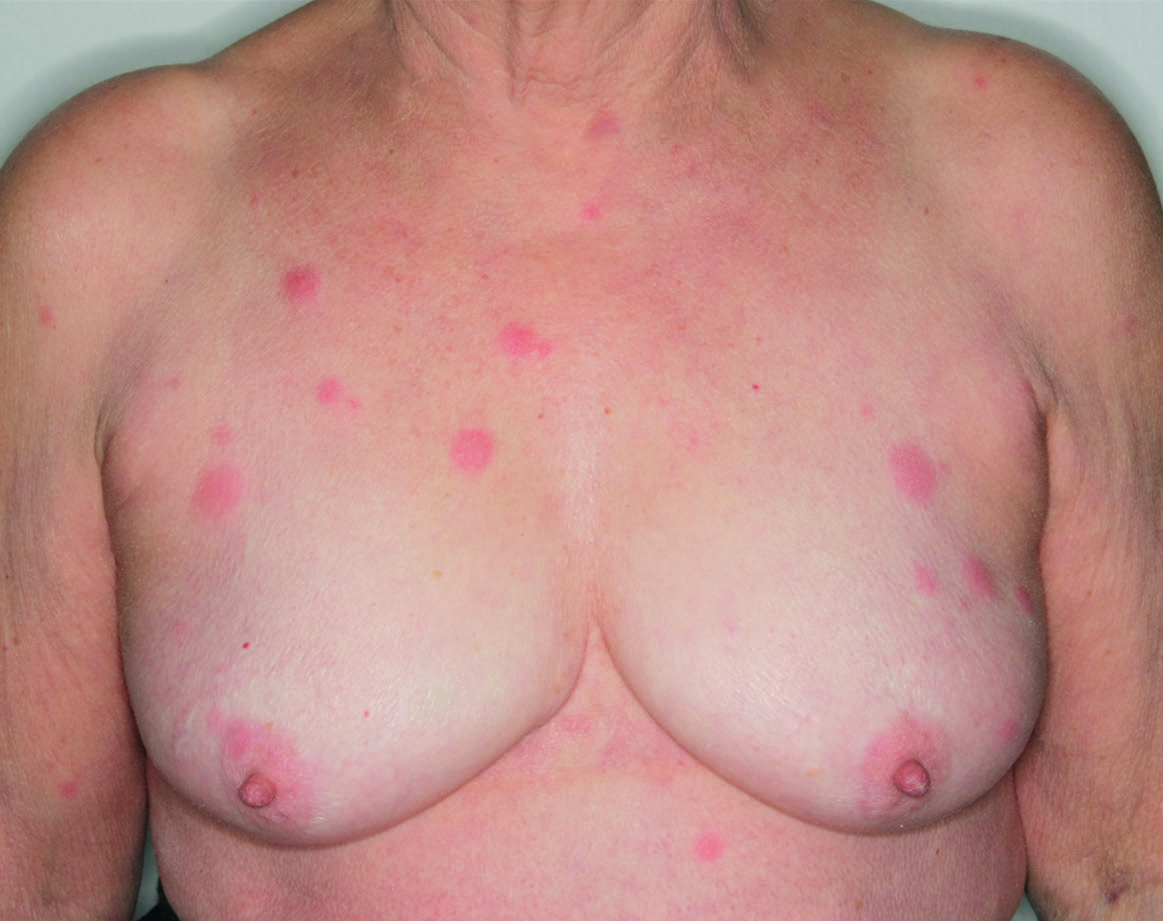
Fig. 25.2 Sweet syndrome. A Scattered edematous pink papules and plaques on the chest. B The edema can be quite marked as seen in these lesions on the upper back. B, Courtesy Kalman Watsky, MD.
Fig.25.2 As.574
Fig. 25.2 Sweet syndrome. A Scattered edematous pink papules and plaques on the chest. B The edema can be quite marked as seen in these lesions on the upper back. B, Courtesy Kalman Watsky, MD.
Fig.25.2 Bs.574
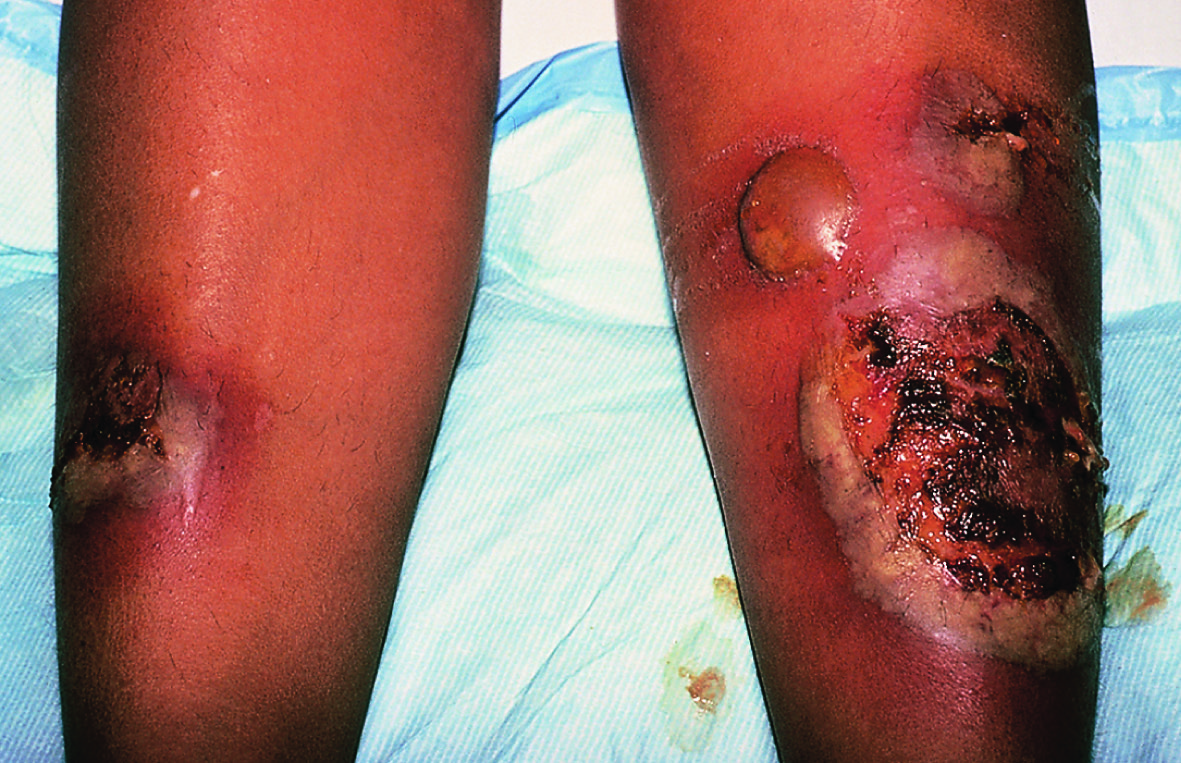
Fig. 25.3 Sweet syndrome. A The periocular lesion demonstrates how some lesions can mimic cellulitis (pseudocellulitis). This patient also had neutrophilic esophageal ulcerations and subsequently developed colon cancer. B The plaques can have a pseudomammillated appearance due to the associated edema. C Hemorrhagic crusts may develop within the papules and plaques and in patients with acute leukemia and/or neutropenia, infectious etiologies are often the initial clinical diagnosis. C, Courtesy Kalman Watsky, MD.
Fig.25.3 As.575
Fig. 25.3 Sweet syndrome. A The periocular lesion demonstrates how some lesions can mimic cellulitis (pseudocellulitis). This patient also had neutrophilic esophageal ulcerations and subsequently developed colon cancer. B The plaques can have a pseudomammillated appearance due to the associated edema. C Hemorrhagic crusts may develop within the papules and plaques and in patients with acute leukemia and/or neutropenia, infectious etiologies are often the initial clinical diagnosis. C, Courtesy Kalman Watsky, MD.
Fig.25.3 Bs.575
Fig. 25.3 Sweet syndrome. A The periocular lesion demonstrates how some lesions can mimic cellulitis (pseudocellulitis). This patient also had neutrophilic esophageal ulcerations and subsequently developed colon cancer. B The plaques can have a pseudomammillated appearance due to the associated edema. C Hemorrhagic crusts may develop within the papules and plaques and in patients with acute leukemia and/or neutropenia, infectious etiologies are often the initial clinical diagnosis. C, Courtesy Kalman Watsky, MD.
Fig.25.3 Cs.575
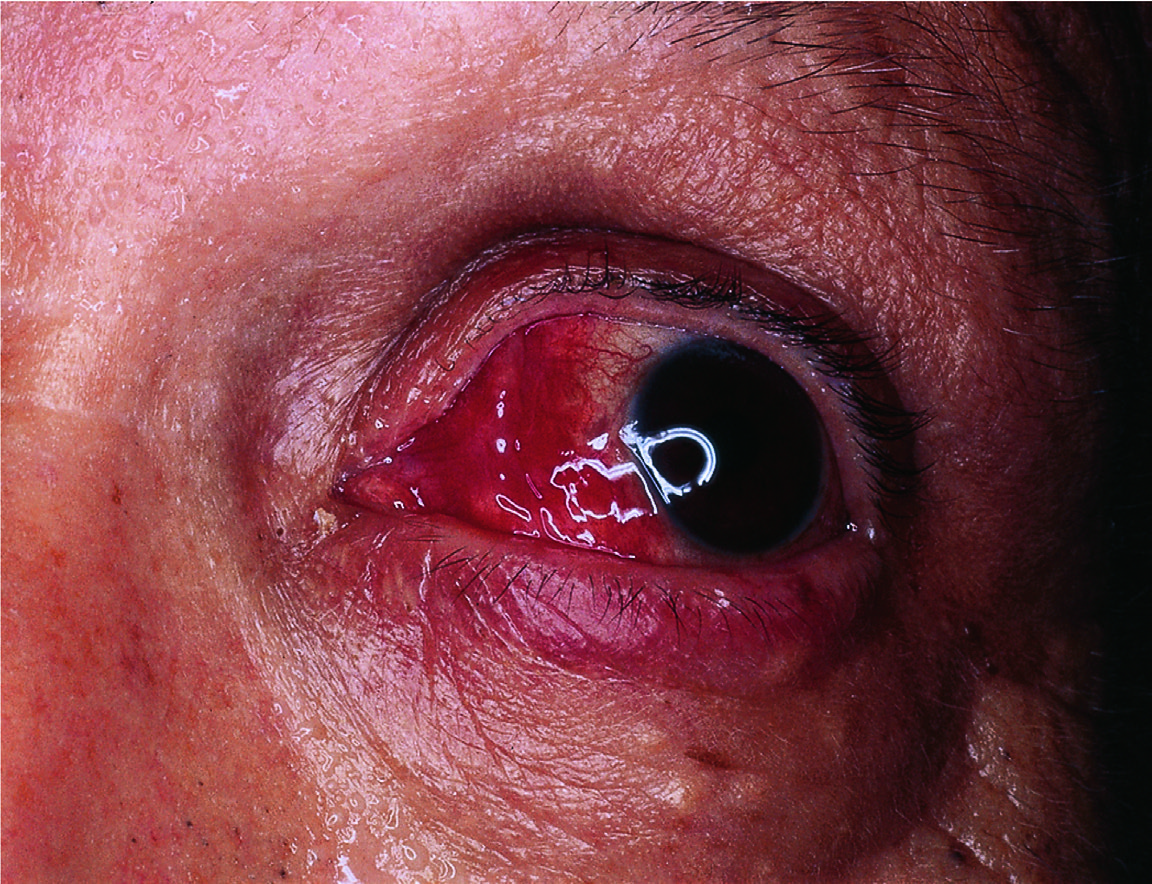
Fig. 25.4 Sweet syndrome – ocular involvement. Obvious erythema and hemorrhage involving the sclera and conjunctiva. Courtesy Kalman Watsky, MD.
Fig.25.4s.575
Fig. 25.7 Neutrophilic dermatosis of the dorsal hands. A Clinically and histologically, there is overlap with Sweet syndrome and bullous pyoderma gangrenosum. B More extensive necrotizing disease can be confused with an infectious process such as necrotizing cellulitis or necrotizing fasciitis.
Fig.25.7 As.577
Fig. 25.7 Neutrophilic dermatosis of the dorsal hands. A Clinically and histologically, there is overlap with Sweet syndrome and bullous pyoderma gangrenosum. B More extensive necrotizing disease can be confused with an infectious process such as necrotizing cellulitis or necrotizing fasciitis.
Fig.25.7 Bs.577
Fig. 25.9 Variants of pyoderma gangrenosum. A Pyostomatitis vegetans in a patient with ulcerative colitis. B Vegetative form following trauma to the skin. Courtesy Samuel L. Moschella, MD.
Fig.25.9 As.579
Fig. 25.9 Variants of pyoderma gangrenosum. A Pyostomatitis vegetans in a patient with ulcerative colitis. B Vegetative form following trauma to the skin. Courtesy Samuel L. Moschella, MD.
Fig.25.9 Bs.579
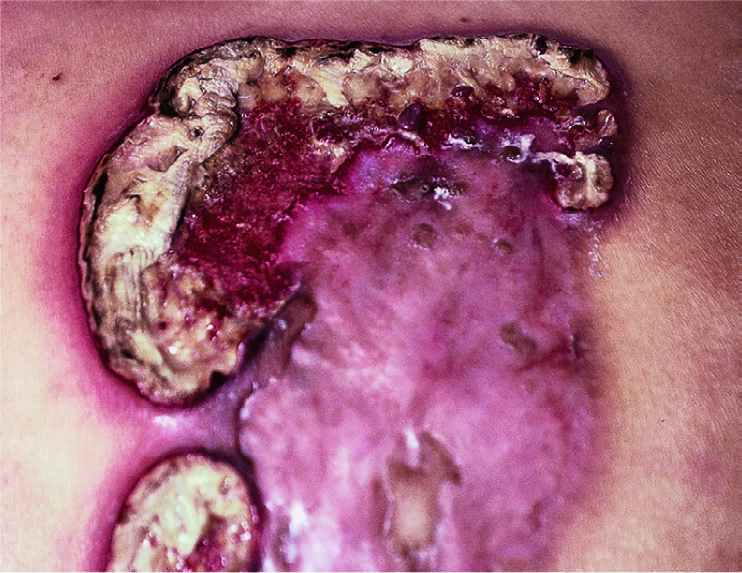
Fig. 25.10 Pyoderma gangrenosum (PG) – clinical presentations. A, B Typical (classic) form in which the ulcer has an undermined and overhanging violet– gray edge as well as a surrounding violaceous border. C Grouped sterile pustular nodules. D Central ulceration surrounded by inflammatory papules and pustules. E Deeper ulcer with vegetative and pustular base. F Centrally, there is healing with cribriform (sievelike) scarring.
Fig.25.10 As.579
Fig. 25.10 Pyoderma gangrenosum (PG) – clinical presentations. A, B Typical (classic) form in which the ulcer has an undermined and overhanging violet– gray edge as well as a surrounding violaceous border. C Grouped sterile pustular nodules. D Central ulceration surrounded by inflammatory papules and pustules. E Deeper ulcer with vegetative and pustular base. F Centrally, there is healing with cribriform (sievelike) scarring.
Fig.25.10 Bs.579
Fig. 25.10 Pyoderma gangrenosum (PG) – clinical presentations. A, B Typical (classic) form in which the ulcer has an undermined and overhanging violet– gray edge as well as a surrounding violaceous border. C Grouped sterile pustular nodules. D Central ulceration surrounded by inflammatory papules and pustules. E Deeper ulcer with vegetative and pustular base. F Centrally, there is healing with cribriform (sievelike) scarring.
Fig.25.10 Cs.579
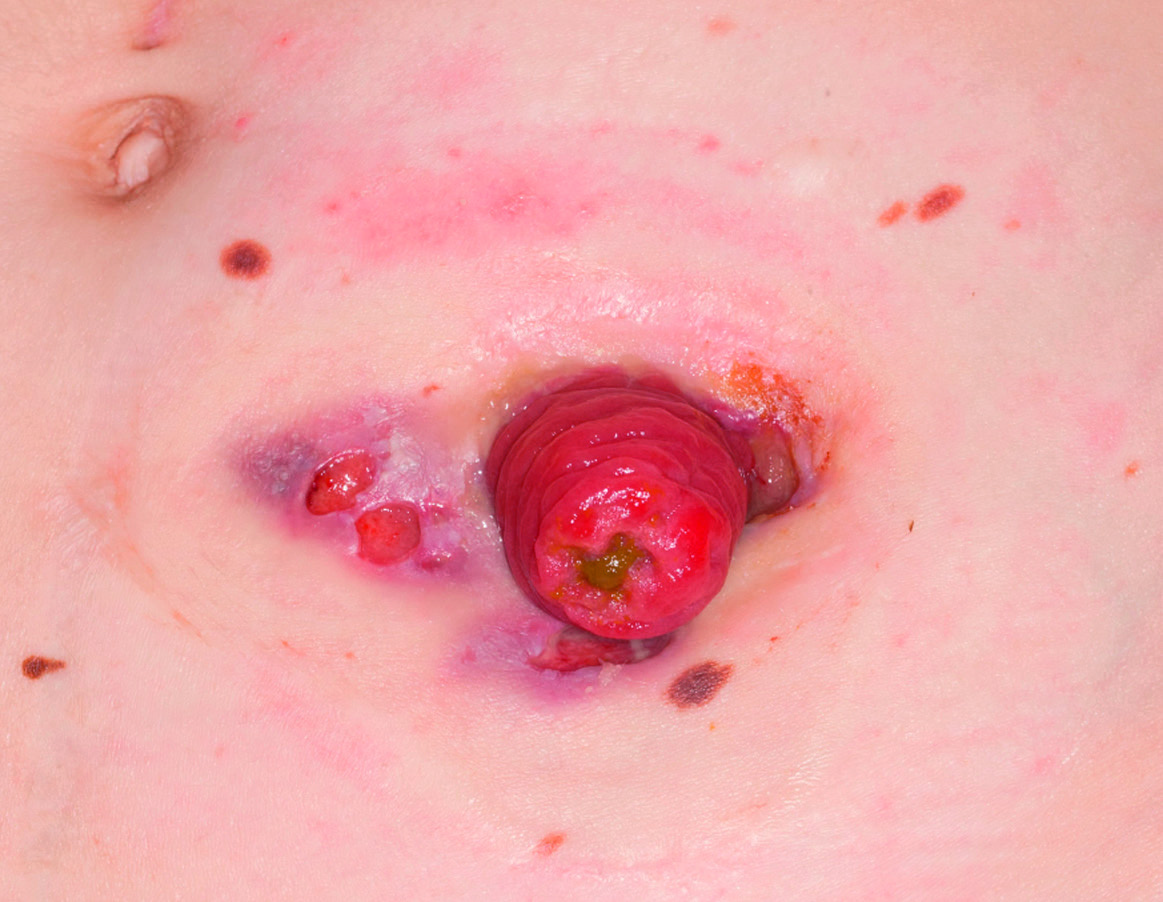
Fig. 25.11 Peristomal and postsurgical pyoderma gangrenosum (PG). A Several ulcers surround an ileostomy in a patient who had a total proctocolectomy performed because of refractory chronic ulcerative colitis. B Multiple ulcerations of the breasts following breast reduction. Because the original diagnosis postoperatively was soft tissue infection, multiple debridements had been performed and systemic antibiotics administered.
Fig.25.11 As.580
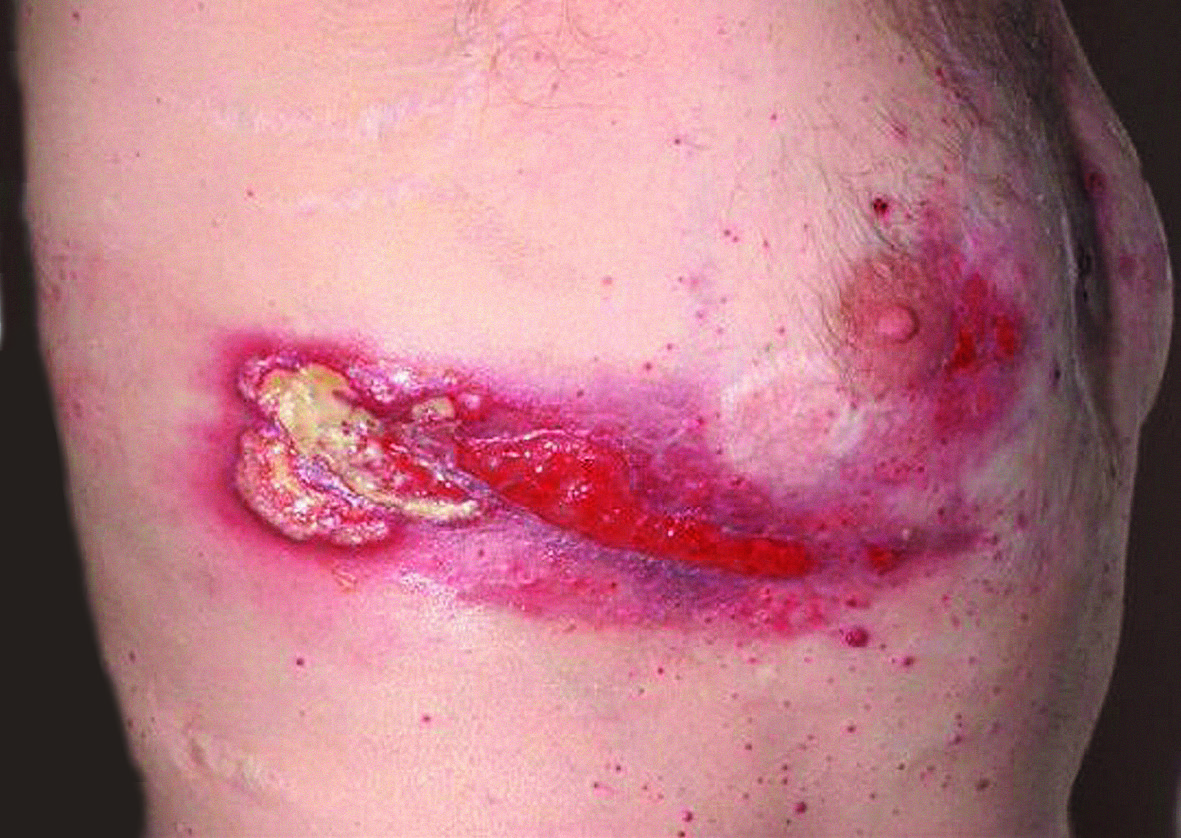
Fig. 25.11 Peristomal and postsurgical pyoderma gangrenosum (PG). A Several ulcers surround an ileostomy in a patient who had a total proctocolectomy performed because of refractory chronic ulcerative colitis. B Multiple ulcerations of the breasts following breast reduction. Because the original diagnosis postoperatively was soft tissue infection, multiple debridements had been performed and systemic antibiotics administered.
Fig.25.11 Bs.580
Fig. 25.12 The earliest clinical lesion in pyoderma gangrenosum is a pustule with an inflammatory base. This patient had Crohn disease.
Fig.25.12s.580
Fig. 25.13 Pyoderma gangrenosum in a patient with PAPA syndrome. Individuals with this monogenic autoinflammatory disorder have pyogenic sterile arthritis, pyoderma gangrenosum and acne. Courtesy Maria Chanco Turner, MD.
Fig.25.13s.580
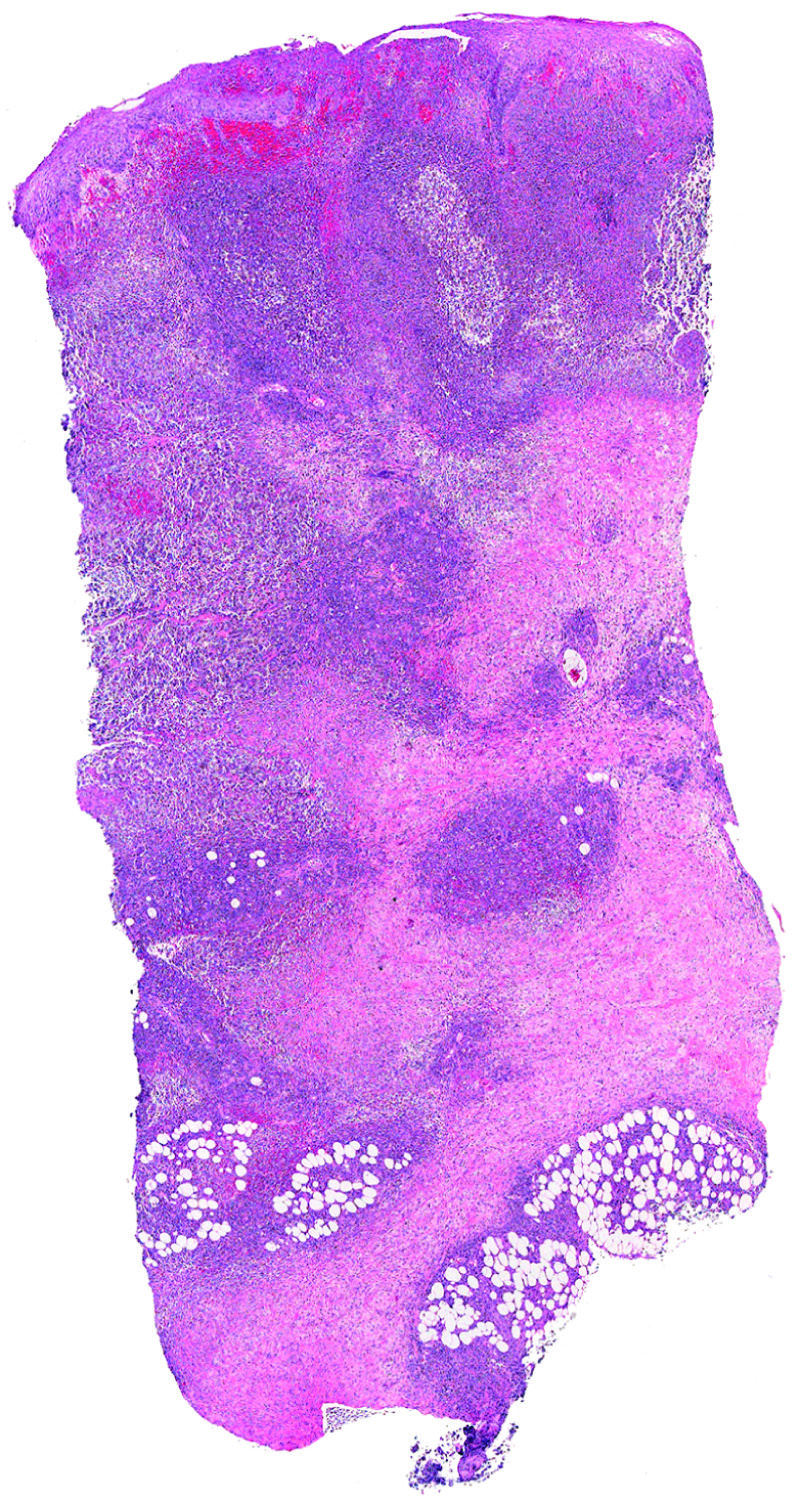
Fig. 25.14 Pyoderma gangrenosum. In expanding untreated lesions, a diffuse infiltrate of neutrophils (inset) is present at the edge of an ulceration. Courtesy Lorenzo Cerroni, MD.
Fig.25.14s.581
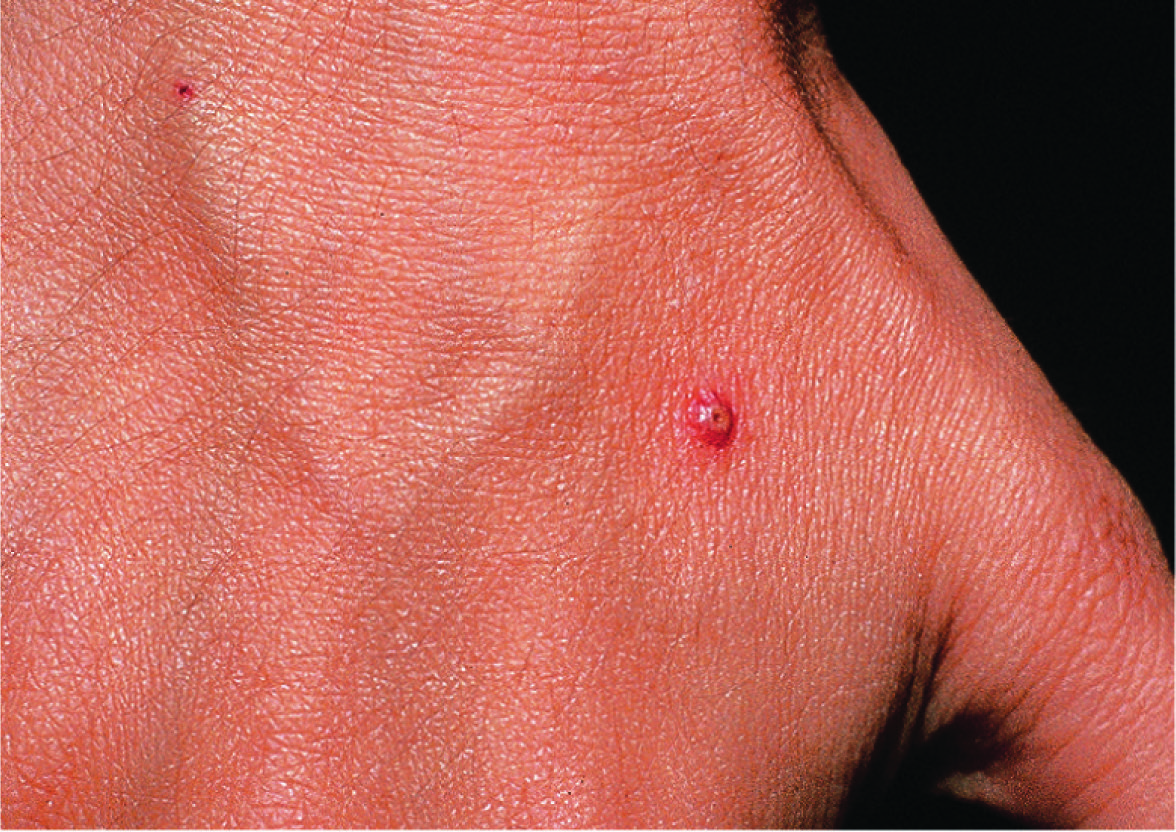
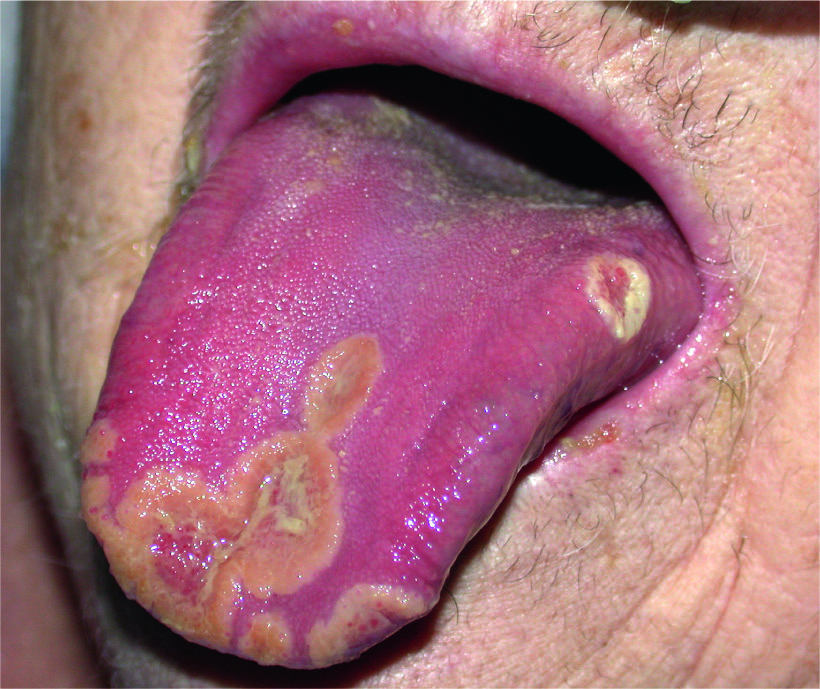
Fig. 25.15 Behçet disease – mucocutaneous lesions. A, B Oral aphthosis involving the tongue and lip; the ulcerations can be deep. These ulcers may be diagnosed as infectious (e. g. due to herpes simplex virus) or neoplastic rather than inflammatory. C Aphthae of the vulva and inguinal region. D Pathergy – a papulopustule appeared at the site of insertion of an intravenous catheter.
Fig.25.15 As.584
Fig. 25.15 Behçet disease – mucocutaneous lesions. A, B Oral aphthosis involving the tongue and lip; the ulcerations can be deep. These ulcers may be diagnosed as infectious (e. g. due to herpes simplex virus) or neoplastic rather than inflammatory. C Aphthae of the vulva and inguinal region. D Pathergy – a papulopustule appeared at the site of insertion of an intravenous catheter.
Fig.25.15 Bs.584
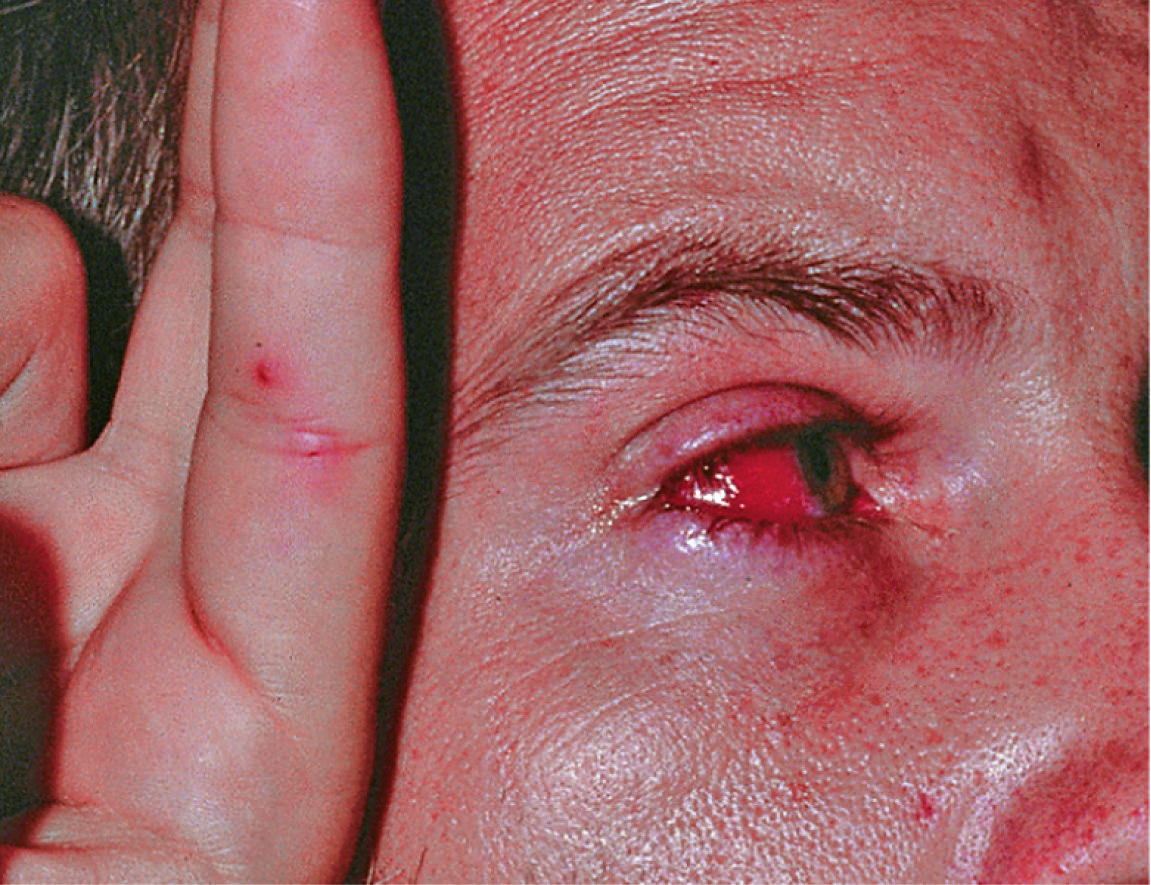
Fig. 25.16 Behçet disease – systemic involvement. Iritis and cutaneous pustular vasculitis. Courtesy Samuel L. Moschella, MD.
Fig.25.16s.585
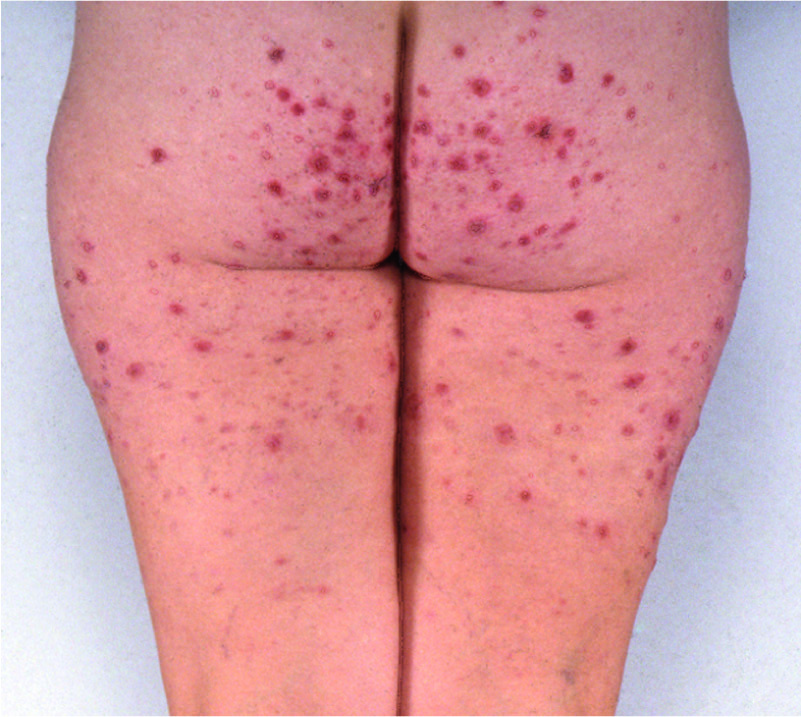
Fig. 25.17 Bowel-associated dermatosis–arthritis syndrome. A, B Papules and papulopustules can be erythematous or violaceous and purpuric. The number of lesions varies from a few to many.
Fig.25.17 As.588
Fig. 25.17 Bowel-associated dermatosis–arthritis syndrome. A, B Papules and papulopustules can be erythematous or violaceous and purpuric. The number of lesions varies from a few to many.
Fig.25.17 Bs.588