Bolognia 5e·Dermatoloji Çalışma Paneli
Ch 29

Pemfigus

Vol 1 · sayfa 501 · §5
📖 Özet🃏 Flashcard Quiz🖼 Atlas
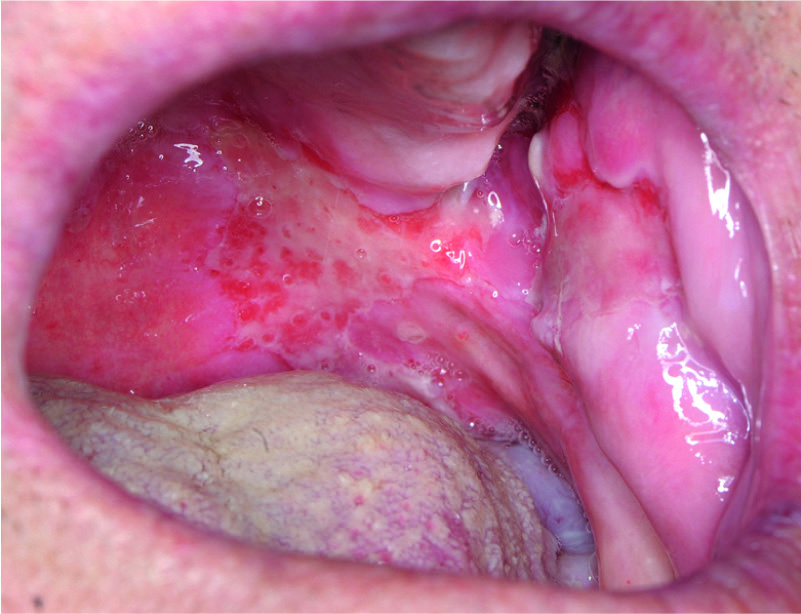
Fig. 29.5 Pemphigus vulgaris – oral involvement. Essentially all patients develop painful oral mucosal erosions. The most common sites are the buccal (A) and palatine mucosae, but lesions can also develop on the gingivae (B) and tongue (C). A, Courtesy Lorenzo Cerroni, MD; B,C, Courtesy Jeffrey P. Callen, MD.
Fig.29.5s.643
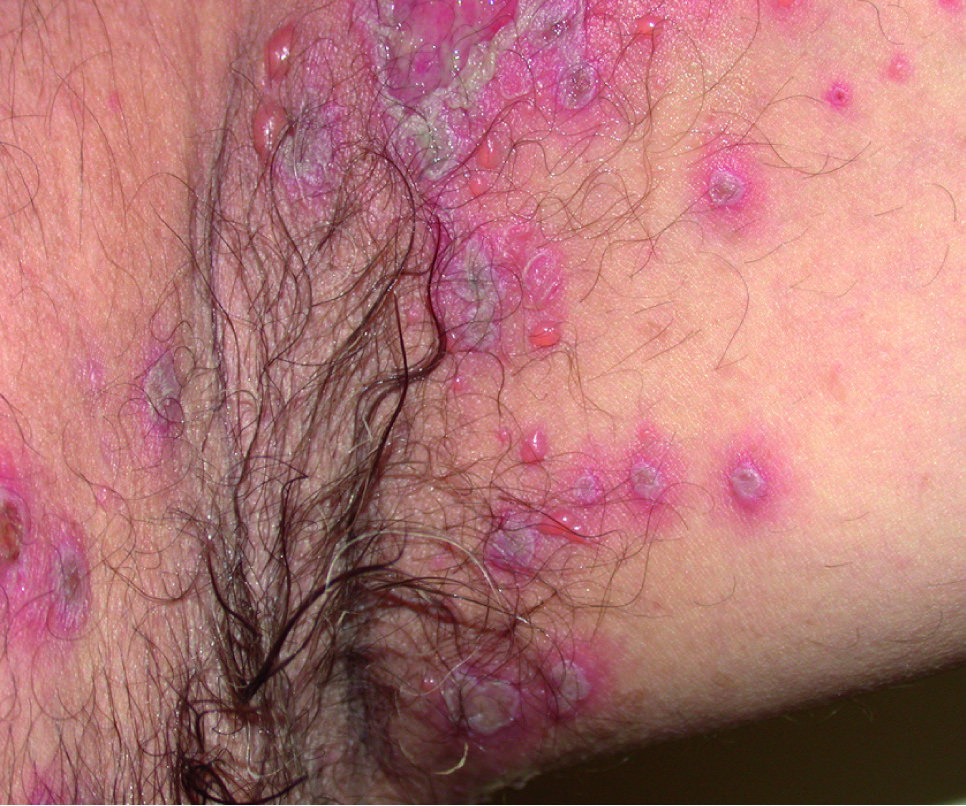
Fig. 29.6 Pemphigus vulgaris – cutaneous involvement. A Flaccid blisters and an erosion due to rupture of a bulla. B, C Multiple erosions and hemorrhagic crusts of the back that can become extensive. Secondary bacterial infections are a potential complication. D A vegetative response can occasionally be seen in chronic recalcitrant lesions; the patient has a Cushingoid appearance due to use of chronic systemic corticosteroids. E The dyshidrosiform variant is uncommon. A, D, Courtesy Luis Requena, MD; B, C, Courtesy Lorenzo Cerroni, MD; E, Courtesy Louis A. Fragola, Jr, MD.
Fig.29.6 As.644
Fig. 29.6 Pemphigus vulgaris – cutaneous involvement. A Flaccid blisters and an erosion due to rupture of a bulla. B, C Multiple erosions and hemorrhagic crusts of the back that can become extensive. Secondary bacterial infections are a potential complication. D A vegetative response can occasionally be seen in chronic recalcitrant lesions; the patient has a Cushingoid appearance due to use of chronic systemic corticosteroids. E The dyshidrosiform variant is uncommon. A, D, Courtesy Luis Requena, MD; B, C, Courtesy Lorenzo Cerroni, MD; E, Courtesy Louis A. Fragola, Jr, MD.
Fig.29.6 Bs.644
Fig. 29.6 Pemphigus vulgaris – cutaneous involvement. A Flaccid blisters and an erosion due to rupture of a bulla. B, C Multiple erosions and hemorrhagic crusts of the back that can become extensive. Secondary bacterial infections are a potential complication. D A vegetative response can occasionally be seen in chronic recalcitrant lesions; the patient has a Cushingoid appearance due to use of chronic systemic corticosteroids. E The dyshidrosiform variant is uncommon. A, D, Courtesy Luis Requena, MD; B, C, Courtesy Lorenzo Cerroni, MD; E, Courtesy Louis A. Fragola, Jr, MD.
Fig.29.6 Cs.644
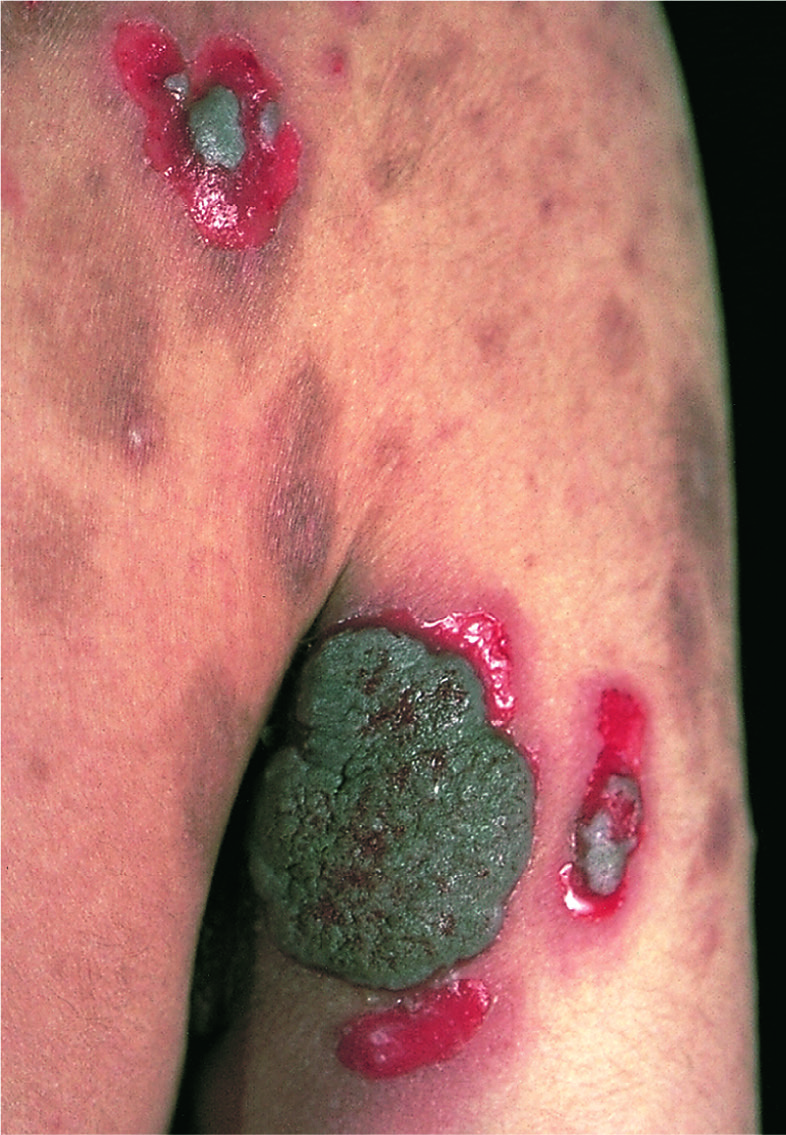
Fig. 29.7 Pemphigus vegetans. Large, thick, vegetating, papillomatous plaques arising in conjunction with erosions. Healed lesions have residual postinflammatory hyperpigmentation.
Fig.29.7s.644
Fig. 29.8 Pemphigus foliaceus. A, B Multiple superficial erosions arising on an erythematous base on the trunk, a common site of involvement. Larger erosions as well as the characteristic scale-crusts are seen in B. C Thicker scale-crusts in addition to large erosions and one flaccid vesicle with seropurulent fluid where pus has settled in the lower half due to gravity similar to hypopyon (“half-half” blisters) (arrowhead). D As the disease progresses, the lesions become confluent, but because the vesicles are fragile and rupture easily, only erosions with scale-crust are observed. E The scales have been likened to cornflakes. A, Courtesy Edward Cowen, MD; C, Courtesy Kalman Watsky, MD.
Fig.29.8 As.645
Fig. 29.8 Pemphigus foliaceus. A, B Multiple superficial erosions arising on an erythematous base on the trunk, a common site of involvement. Larger erosions as well as the characteristic scale-crusts are seen in B. C Thicker scale-crusts in addition to large erosions and one flaccid vesicle with seropurulent fluid where pus has settled in the lower half due to gravity similar to hypopyon (“half-half” blisters) (arrowhead). D As the disease progresses, the lesions become confluent, but because the vesicles are fragile and rupture easily, only erosions with scale-crust are observed. E The scales have been likened to cornflakes. A, Courtesy Edward Cowen, MD; C, Courtesy Kalman Watsky, MD.
Fig.29.8 Bs.645
Fig. 29.8 Pemphigus foliaceus. A, B Multiple superficial erosions arising on an erythematous base on the trunk, a common site of involvement. Larger erosions as well as the characteristic scale-crusts are seen in B. C Thicker scale-crusts in addition to large erosions and one flaccid vesicle with seropurulent fluid where pus has settled in the lower half due to gravity similar to hypopyon (“half-half” blisters) (arrowhead). D As the disease progresses, the lesions become confluent, but because the vesicles are fragile and rupture easily, only erosions with scale-crust are observed. E The scales have been likened to cornflakes. A, Courtesy Edward Cowen, MD; C, Courtesy Kalman Watsky, MD.
Fig.29.8 Cs.645
Fig. 29.8 Pemphigus foliaceus. A, B Multiple superficial erosions arising on an erythematous base on the trunk, a common site of involvement. Larger erosions as well as the characteristic scale-crusts are seen in B. C Thicker scale-crusts in addition to large erosions and one flaccid vesicle with seropurulent fluid where pus has settled in the lower half due to gravity similar to hypopyon (“half-half” blisters) (arrowhead). D As the disease progresses, the lesions become confluent, but because the vesicles are fragile and rupture easily, only erosions with scale-crust are observed. E The scales have been likened to cornflakes. A, Courtesy Edward Cowen, MD; C, Courtesy Kalman Watsky, MD.
Fig.29.8 Ds.645
Fig. 29.8 Pemphigus foliaceus. A, B Multiple superficial erosions arising on an erythematous base on the trunk, a common site of involvement. Larger erosions as well as the characteristic scale-crusts are seen in B. C Thicker scale-crusts in addition to large erosions and one flaccid vesicle with seropurulent fluid where pus has settled in the lower half due to gravity similar to hypopyon (“half-half” blisters) (arrowhead). D As the disease progresses, the lesions become confluent, but because the vesicles are fragile and rupture easily, only erosions with scale-crust are observed. E The scales have been likened to cornflakes. A, Courtesy Edward Cowen, MD; C, Courtesy Kalman Watsky, MD.
Fig.29.8 Es.645
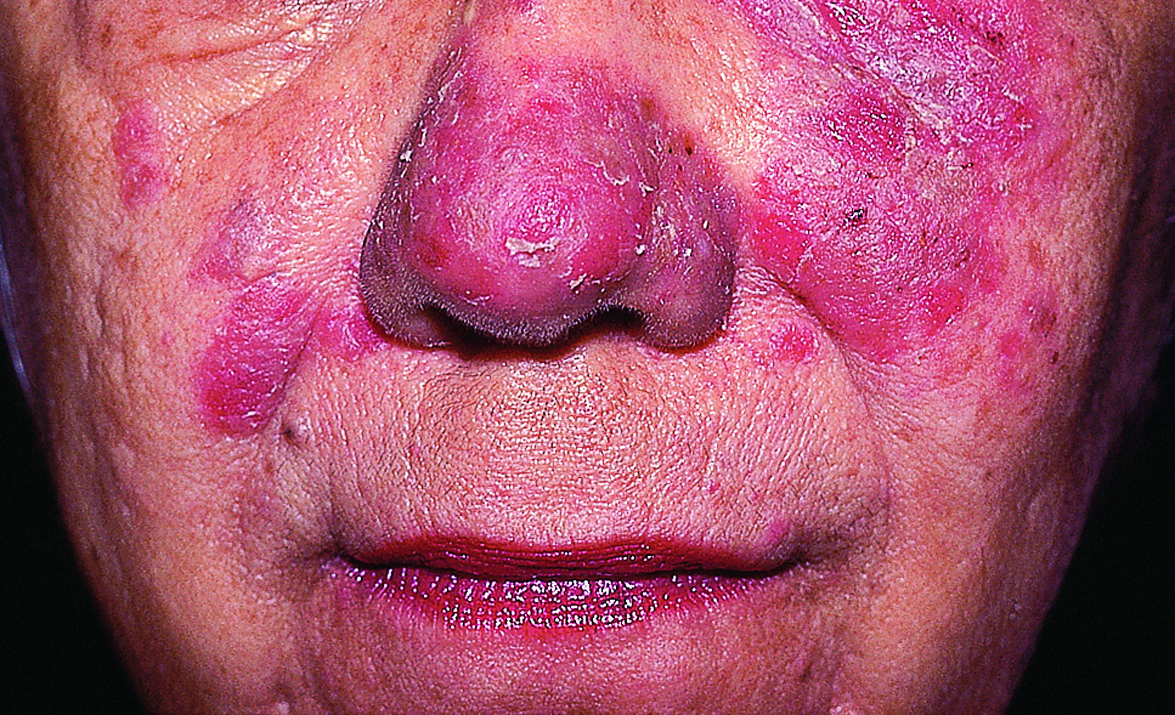
Fig. 29.9 Pemphigus erythematosus. Erythematous plaques with scale-crust and erosions on the nose and malar area of the face. Courtesy Ronald P. Rapini, MD.
Fig.29.9s.645
Fig. 29.10 Paraneoplastic pemphigus. A The characteristic clinical feature is severe intractable stomatitis with multiple erosions; there may be a resemblance to erosive oral lichen planus. B The erosions, along with hemorrhagic crusts, can extend onto the vermilion lip and involve the nasal mucosa. C Papulosquamous lichenoid lesions, reflecting an interface dermatitis, can also be present. A, Courtesy Luis Requena, MD; C, Courtesy Jennie Clarke, MD.
Fig.29.10s.646
Fig. 29.11 IgA pemphigus – subcorneal pustular dermatosis (SPD) type. A Numerous superficial pustules arising within areas of erythema; these pustules rupture easily. The desquamation has a figurate configuration and overall there is a resemblance to pustular psoriasis. B Pustules tend to coalesce to form an annular or figurate pattern with crusts present centrally. Note the accumulation of the pustular component in the dependent portion of the vesiculopustule. A, Courtesy Luis Requena, MD.
Fig.29.11 As.647
Fig. 29.11 IgA pemphigus – subcorneal pustular dermatosis (SPD) type. A Numerous superficial pustules arising within areas of erythema; these pustules rupture easily. The desquamation has a figurate configuration and overall there is a resemblance to pustular psoriasis. B Pustules tend to coalesce to form an annular or figurate pattern with crusts present centrally. Note the accumulation of the pustular component in the dependent portion of the vesiculopustule. A, Courtesy Luis Requena, MD.
Fig.29.11 Bs.647