Bolognia 5e·Dermatoloji Çalışma Paneli
Ch 30

Pemfigoid Grubu

Vol 1 · sayfa 517 · §5
📖 Özet🃏 Flashcard Quiz🖼 Atlas
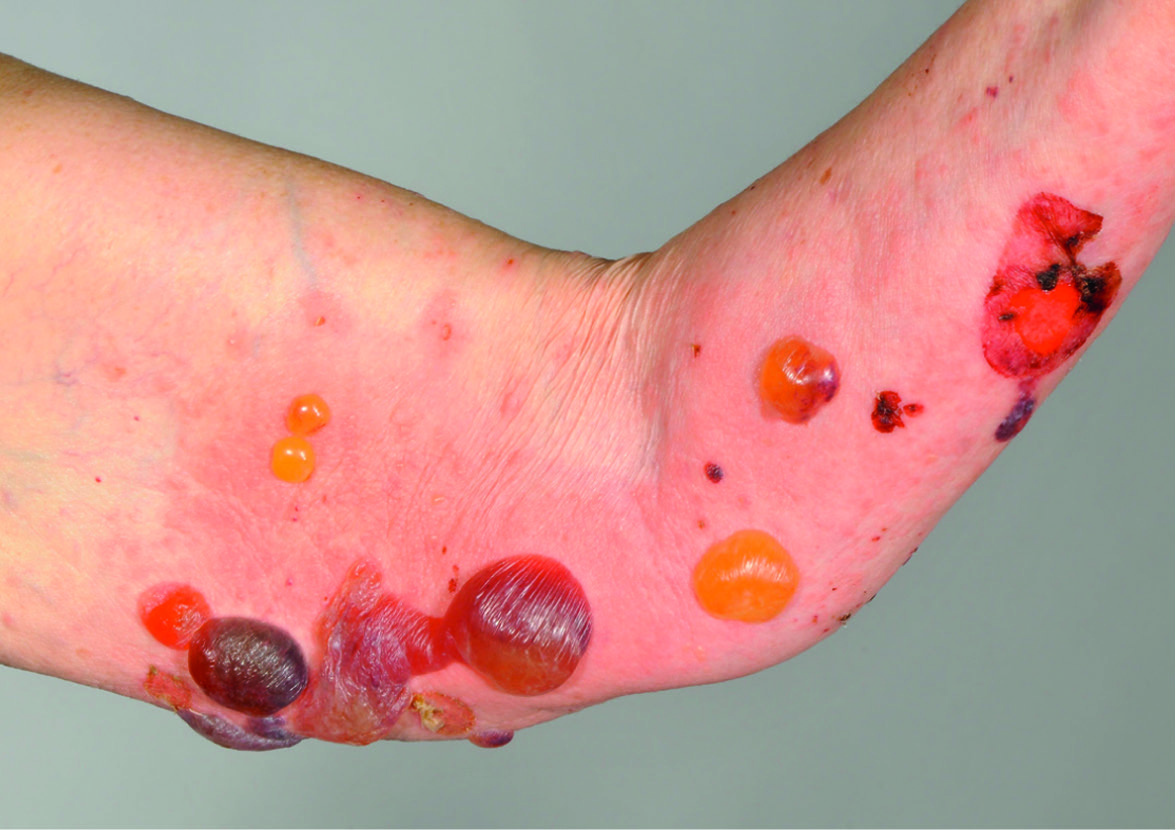
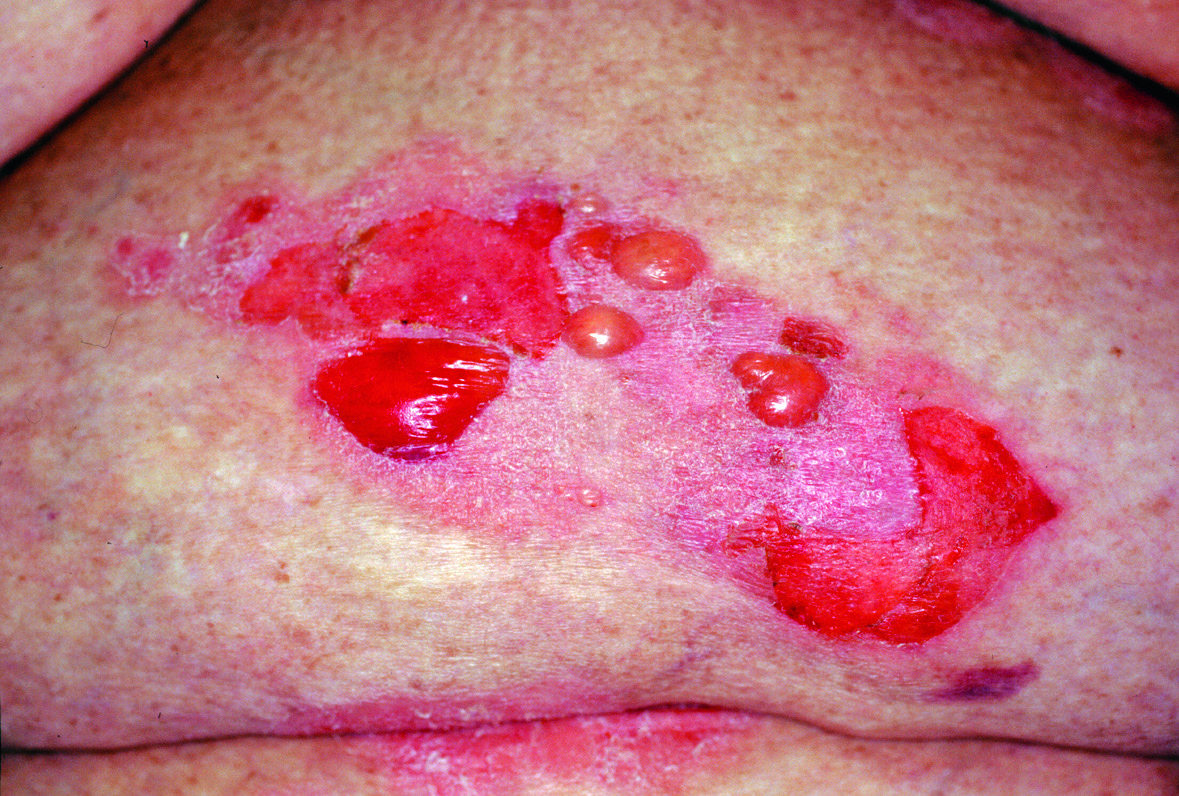
Fig. 30.2 Bullous pemphigoid – classic presentation. A–C Tense vesicles and bullae vary in size from a few mm to several cm in diameter and can arise within normal-appearing skin, areas of erythema, or urticarial plaques. The blister fluid may be serous or hemorrhagic. The flexor aspect of the extremities is a common site of involvement. As the bullae age, they become flaccid and rupture, leaving erosions and serous or hemorrhagic crusts. Biopsies of vesiculobullae for routine histology should be obtained from the edge of a fresh tense blister. Jeffrey Callen, MD.
Fig.30.2 As.658
Fig. 30.2 Bullous pemphigoid – classic presentation. A–C Tense vesicles and bullae vary in size from a few mm to several cm in diameter and can arise within normal-appearing skin, areas of erythema, or urticarial plaques. The blister fluid may be serous or hemorrhagic. The flexor aspect of the extremities is a common site of involvement. As the bullae age, they become flaccid and rupture, leaving erosions and serous or hemorrhagic crusts. Biopsies of vesiculobullae for routine histology should be obtained from the edge of a fresh tense blister. Jeffrey Callen, MD.
Fig.30.2 Bs.658
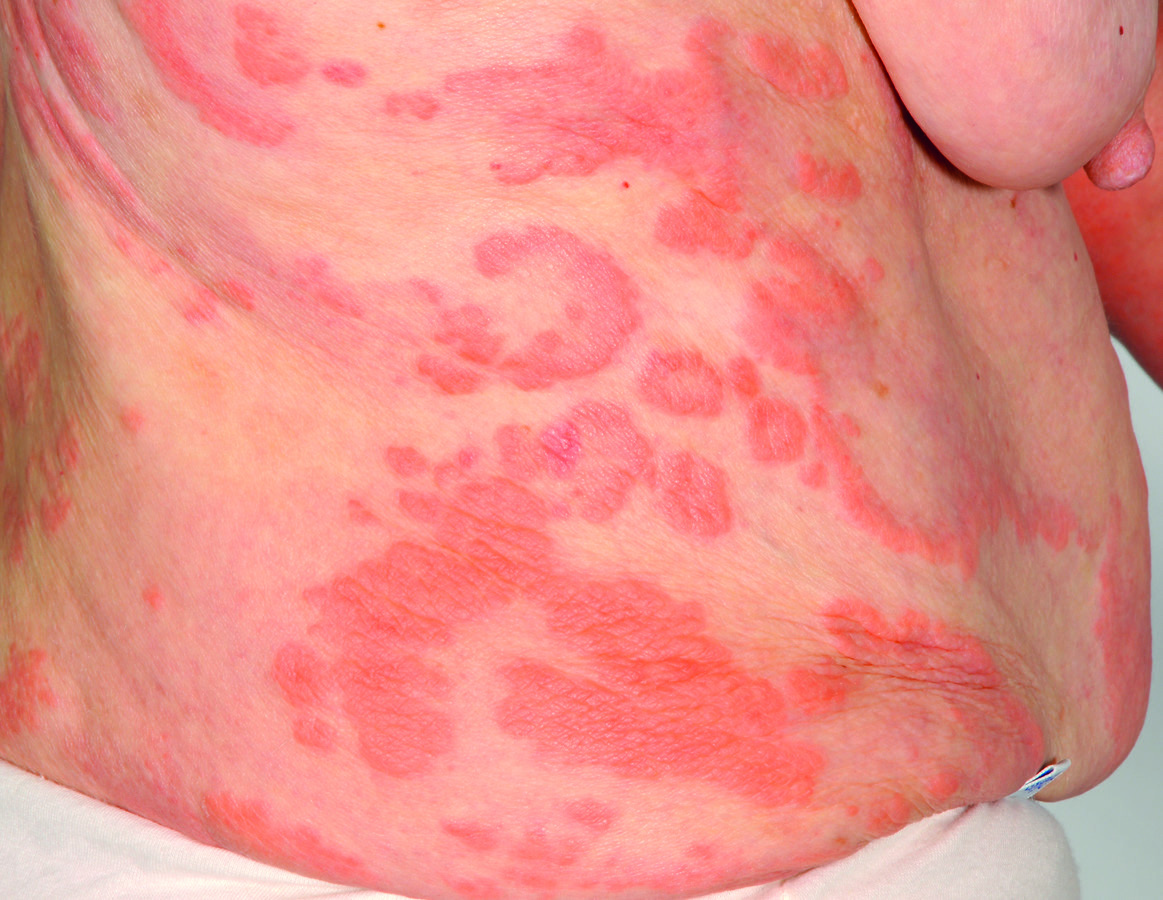
Fig. 30.3 Bullous pemphigoid – urticarial presentation. Multiple, firm annular, arciform and polycyclic urticarial plaques. Note the absence of bullae.
Fig.30.3s.659
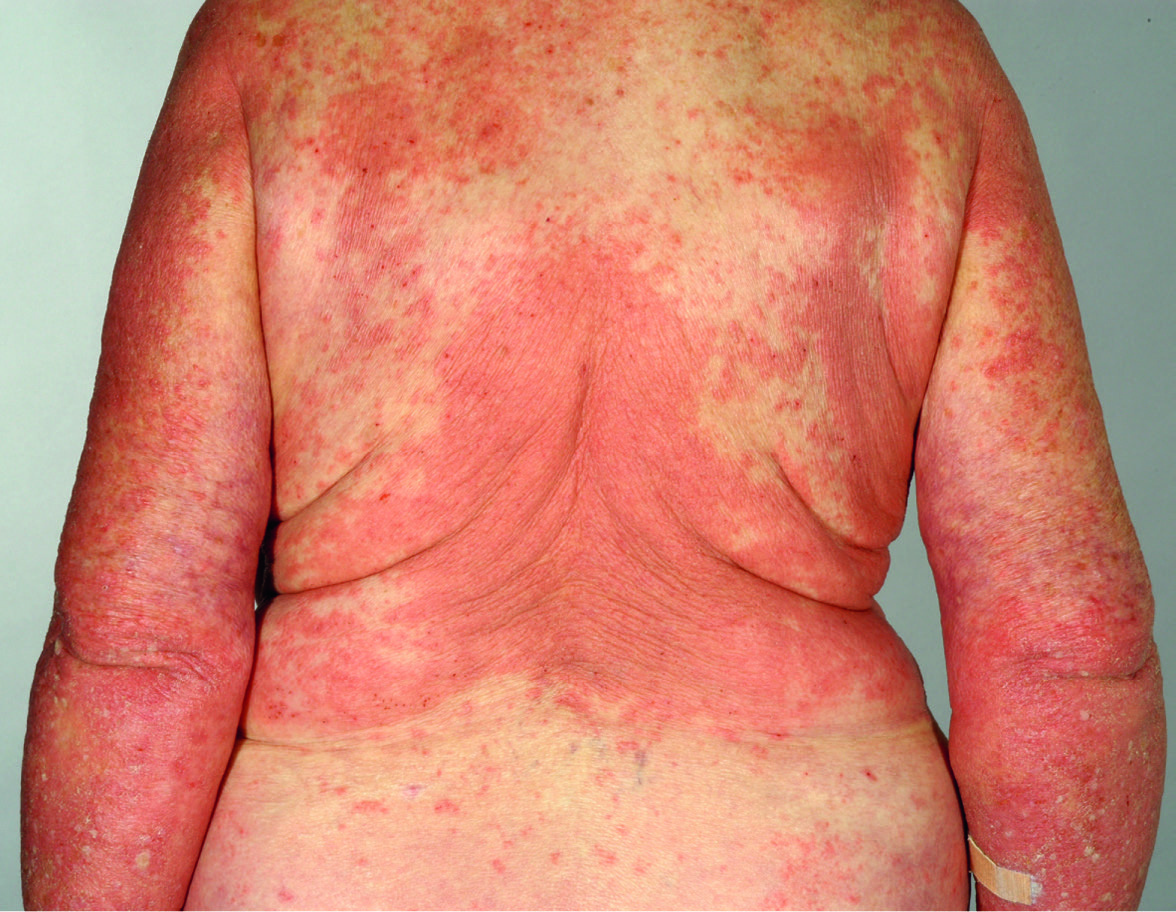
Fig. 30.4 Bullous pemphigoid – eczematous presentation. Large pink eczematous plaques on the trunk and upper extremities.
Fig.30.4s.659
Fig. 30.5 Bullous pemphigoid – nonspecific lesions due to pruritus. Multiple excoriations and nonspecific lesions of prurigo simplex are present. Bullous pemphigoid is in the differential diagnosis of chronic pruritus associated with secondary excoriations.
Fig.30.5s.659
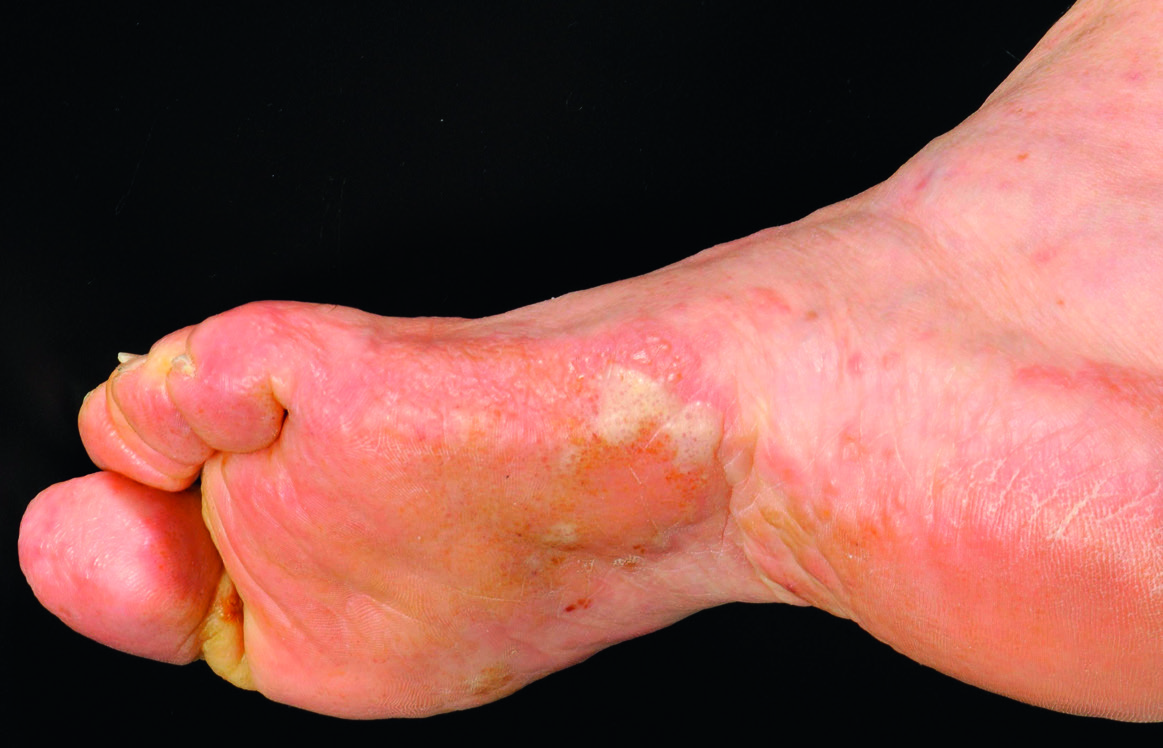
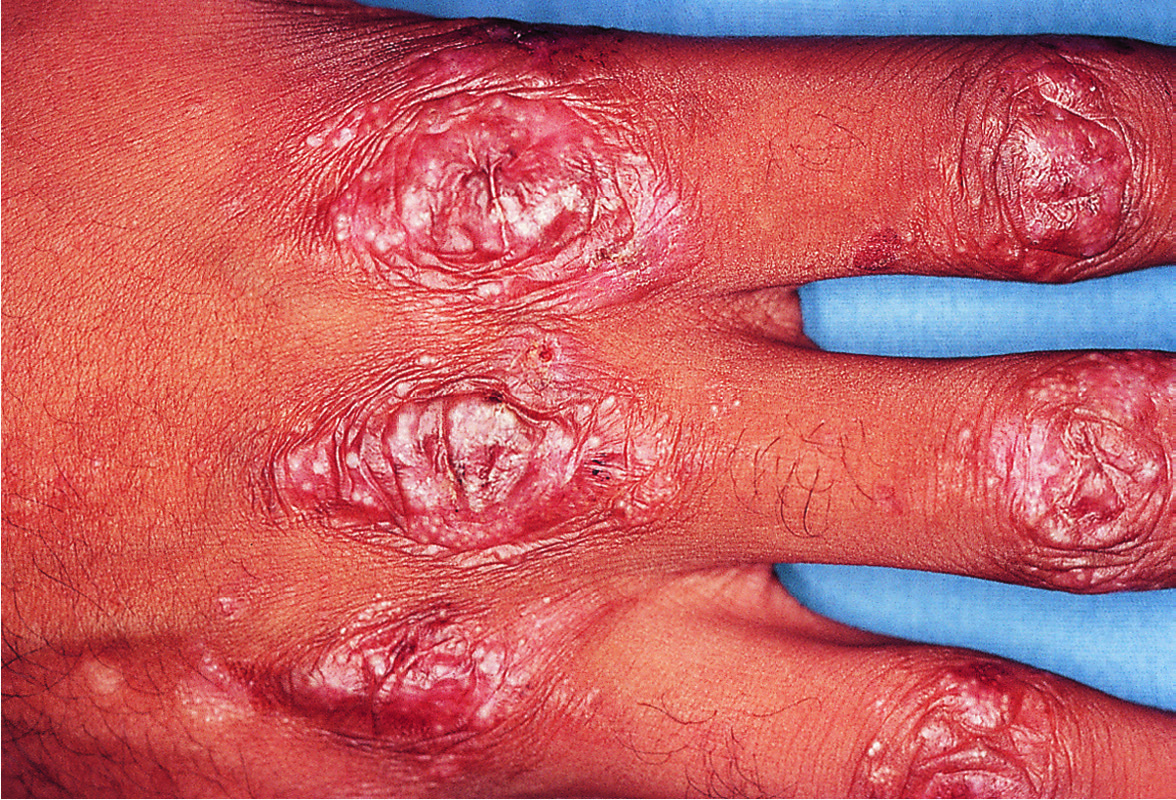
Fig. 30.6 Bullous pemphigoid – uncommon clinical variants. A, B In dyshidrosiform pemphigoid, clusters of vesicles and bullae appear on acral skin and can resemble dyshidrotic eczema or pompholyx. C In pemphigoid vegetans, vegetating plaques can develop in major body folds, including the inguinal crease. D Toxic epidermal necrolysis-like lesions with large erosions.
Fig.30.6s.660
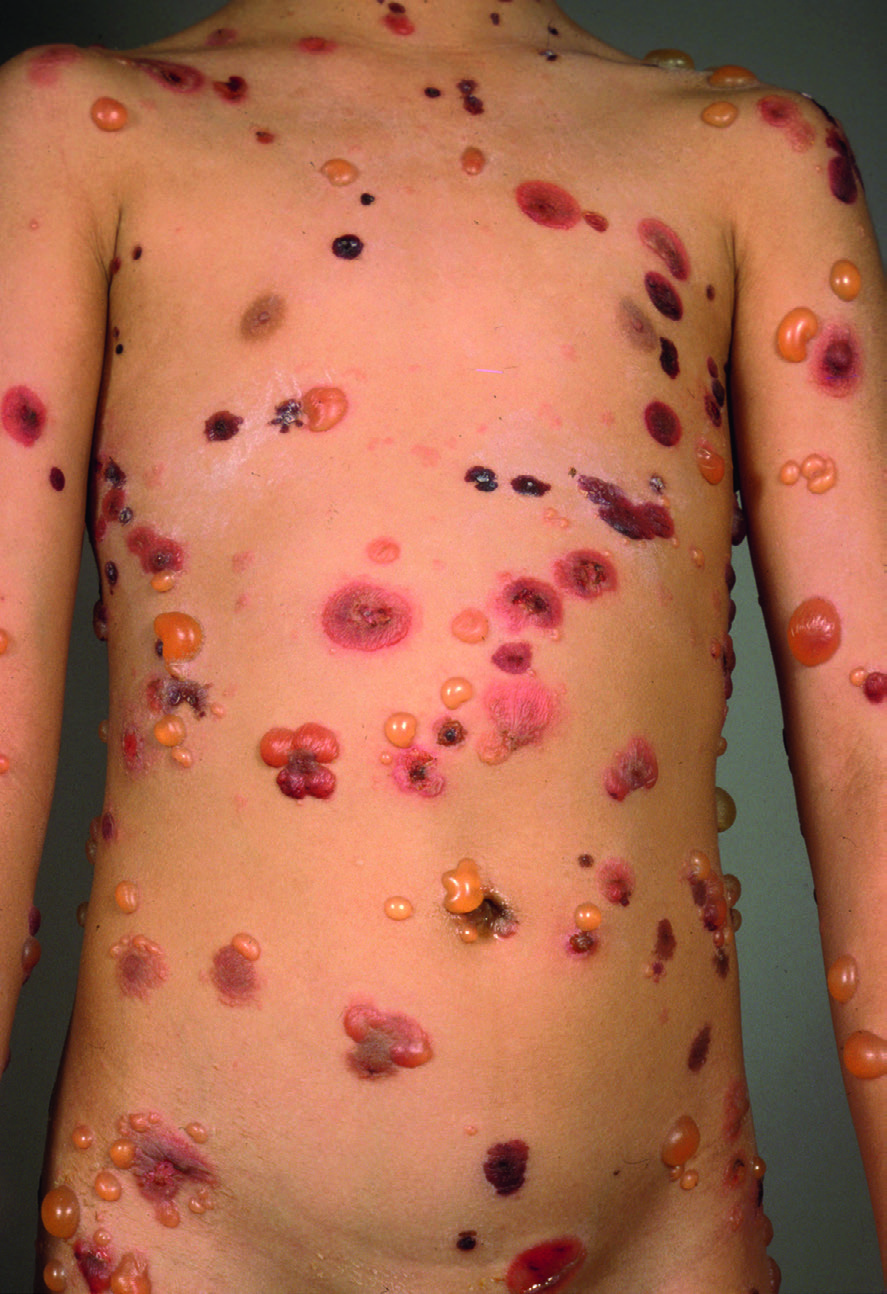
Fig. 30.7 Childhood bullous pemphigoid. A Generalized tense bullae and circular crusted erosions. B Tense vesicles and bullae in an annular or figurate array at the edge of expanding lesions, a presentation that might be diagnosed clinically as linear IgA bullous dermatosis. C A predominance of acral involvement is often seen in infants. B, C, Courtesy Julie V. Schaffer, MD.
Fig.30.7 As.661
Fig. 30.7 Childhood bullous pemphigoid. A Generalized tense bullae and circular crusted erosions. B Tense vesicles and bullae in an annular or figurate array at the edge of expanding lesions, a presentation that might be diagnosed clinically as linear IgA bullous dermatosis. C A predominance of acral involvement is often seen in infants. B, C, Courtesy Julie V. Schaffer, MD.
Fig.30.7 Bs.661
Fig. 30.8 Bullous pemphigoid localized to a psoriatic plaque. No obvious trigger was detected, as the patient was not receiving phototherapy. Courtesy Jean L. Bolognia, MD.
Fig.30.8s.661
Fig. 30.9 Drug-induced bullous pemphigoid. A Scattered pruritic urticarial papules and plaques, some of which have a central hemorrhagic crust, in a patient receiving nivolumab, an anti-PD-1 antibody. B Dull violet-brown plaques with a thin inflammatory figurate border and crusting in a patient receiving furosemide. A, Courtesy Edward Cowen, MD; B, Courtesy Jeff Gehlhausen, MD, PhD.
Fig.30.9 As.662
Fig. 30.9 Drug-induced bullous pemphigoid. A Scattered pruritic urticarial papules and plaques, some of which have a central hemorrhagic crust, in a patient receiving nivolumab, an anti-PD-1 antibody. B Dull violet-brown plaques with a thin inflammatory figurate border and crusting in a patient receiving furosemide. A, Courtesy Edward Cowen, MD; B, Courtesy Jeff Gehlhausen, MD, PhD.
Fig.30.9 Bs.662
Fig. 30.9 Drug-induced bullous pemphigoid. A Scattered pruritic urticarial papules and plaques, some of which have a central hemorrhagic crust, in a patient receiving nivolumab, an anti-PD-1 antibody. B Dull violet-brown plaques with a thin inflammatory figurate border and crusting in a patient receiving furosemide. A, Courtesy Edward Cowen, MD; B, Courtesy Jeff Gehlhausen, MD, PhD.
Fig.30.9 Cs.662
infiltrate (Fig. 30.11). Conventional electron microscopy studies have shown that subepidermal blister formation usually occurs at the level of the lamina lucida.
Fig.30.11s.660
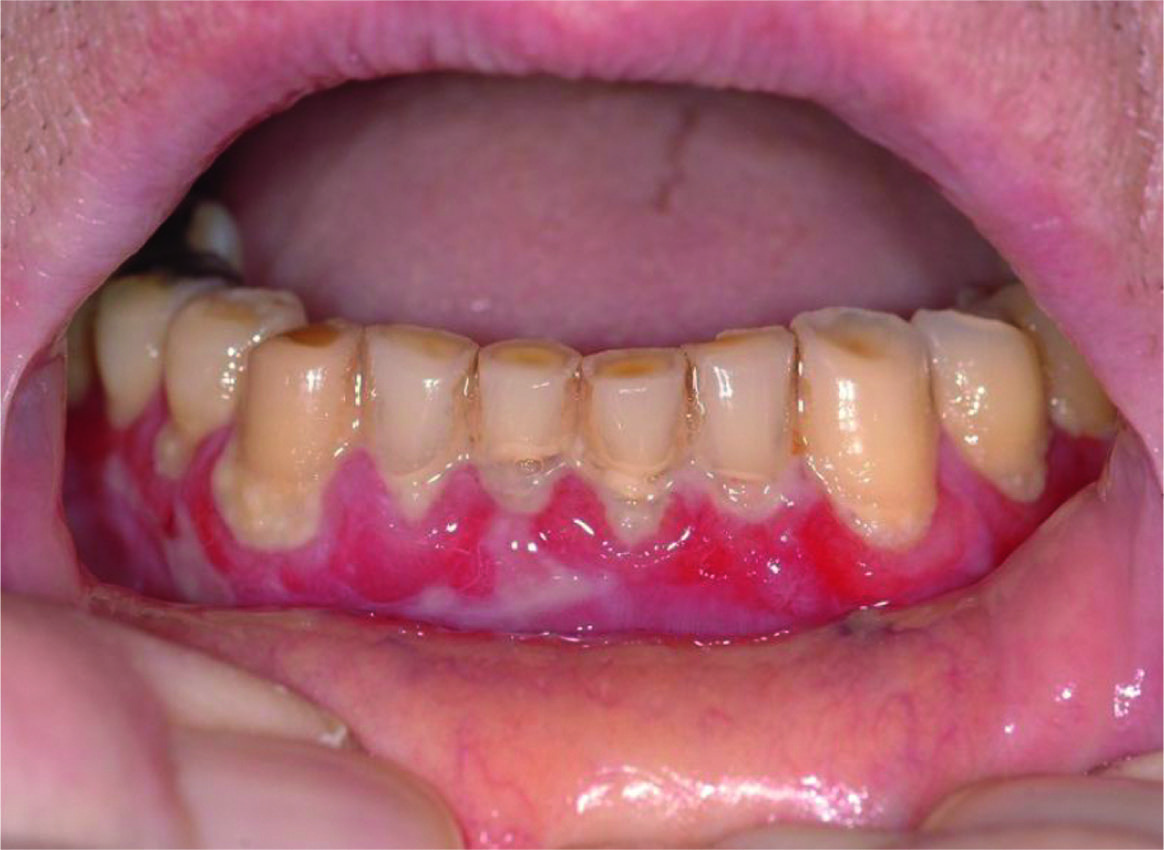
Fig. 30.14 Mucous membrane pemphigoid. A Desquamative gingivitis with erythema and erosions of the gingival margins. Note the sloughing of the mucosa with shaggy margins. B Chronic erosions on the hard palate with irregular borders. Sloughing of mucosa is seen superiorly.
Fig.30.14 As.666
Fig. 30.14 Mucous membrane pemphigoid. A Desquamative gingivitis with erythema and erosions of the gingival margins. Note the sloughing of the mucosa with shaggy margins. B Chronic erosions on the hard palate with irregular borders. Sloughing of mucosa is seen superiorly.
Fig.30.14 Bs.666
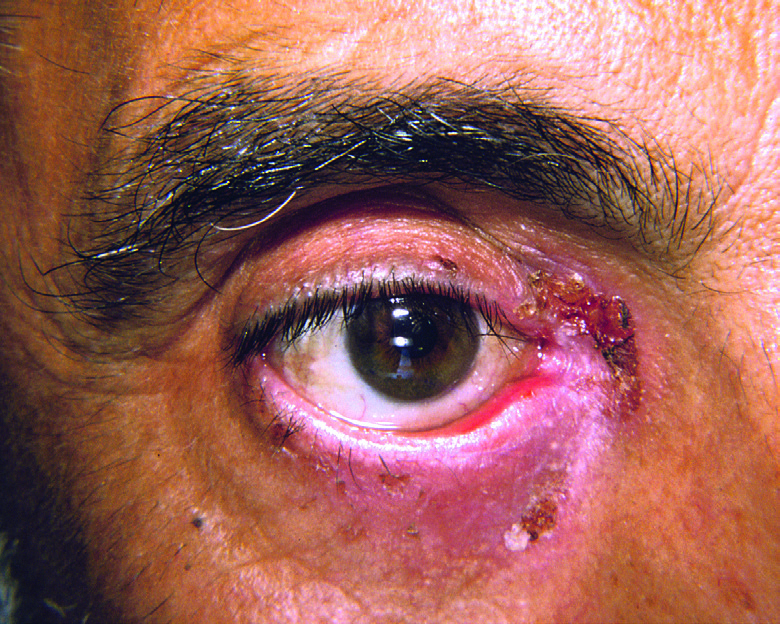
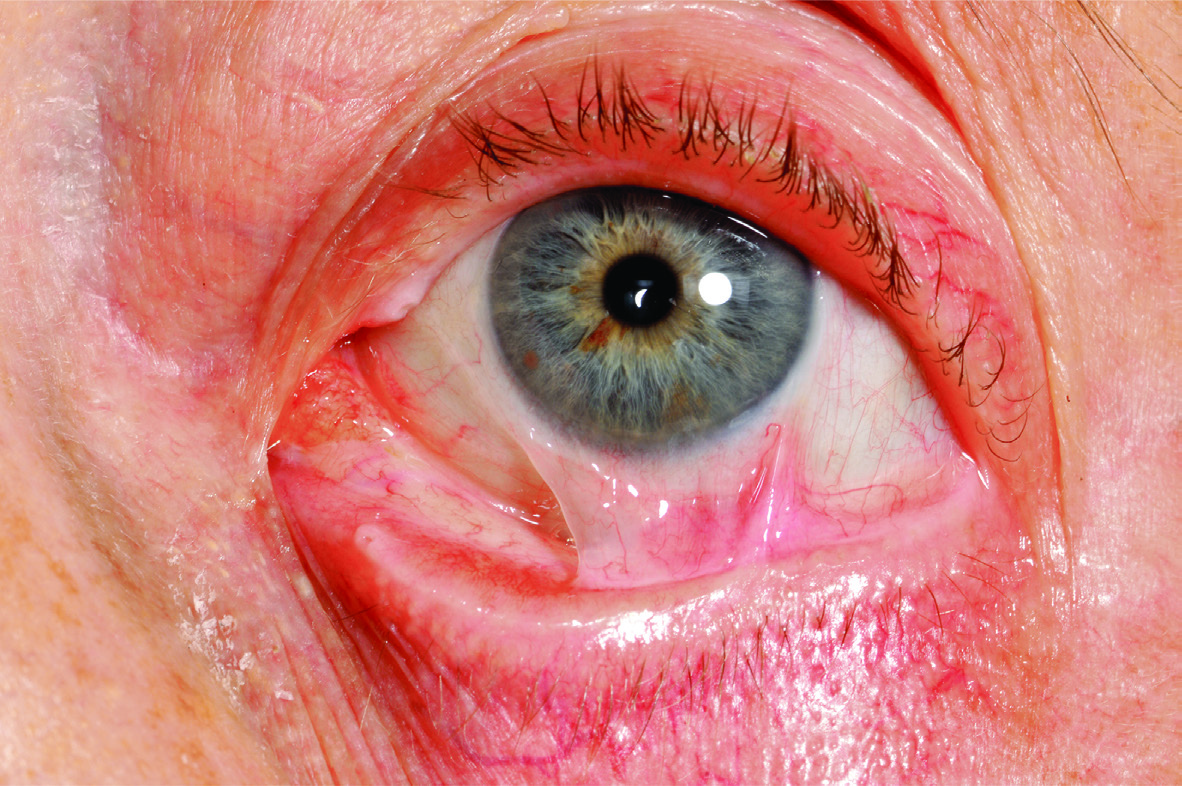
Fig. 30.15 Ocular involvement in mucous membrane pemphigoid. A Erosion and erythema of the lower medial eyelid margin plus scale-crust of the inner canthus and lower eyelid. B Three months later, ectropion and thickening of the lower eyelid in addition to erosions. C Six months later, smaller erosions but scarring and milia formation. D Seven years later, further scarring with significant shortening of the inferior fornix due to symblepharon. Courtesy Louis A. Fragola, Jr, MD.
Fig.30.15 As.667
Fig. 30.15 Ocular involvement in mucous membrane pemphigoid. A Erosion and erythema of the lower medial eyelid margin plus scale-crust of the inner canthus and lower eyelid. B Three months later, ectropion and thickening of the lower eyelid in addition to erosions. C Six months later, smaller erosions but scarring and milia formation. D Seven years later, further scarring with significant shortening of the inferior fornix due to symblepharon. Courtesy Louis A. Fragola, Jr, MD.
Fig.30.15 Bs.667
Fig. 30.16 Mucous membrane pemphigoid. Typical ocular involvement as manifested by fibrous tracts, representing partial or incomplete symblepharon.
Fig.30.16s.667
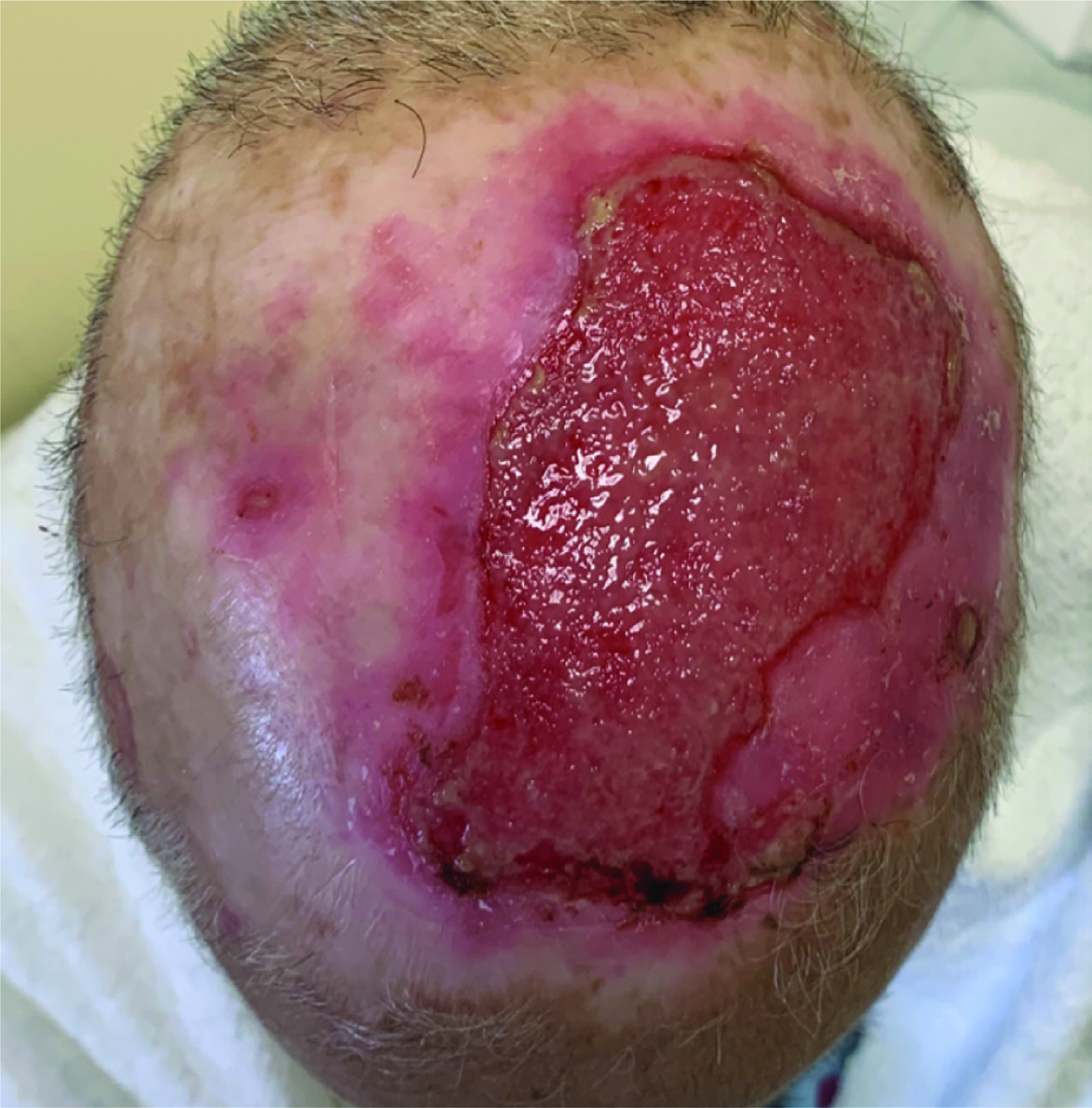
Fig. 30.17 Mucous membrane pemphigoid – Brunsting–Perry variant. A Crusted erosion on the lower cheek within an oval area of inflammation and scar. B Mild involvement of the scalp with scarring and atrophy resulting in limited alopecia. C Severe involvement of the scalp with an ulceration within a large area of scarring alopecia. B, Courtesy Karynne O. Duncan, MD; C, Courtesy Michael Gowen, MD.
Fig.30.17s.668
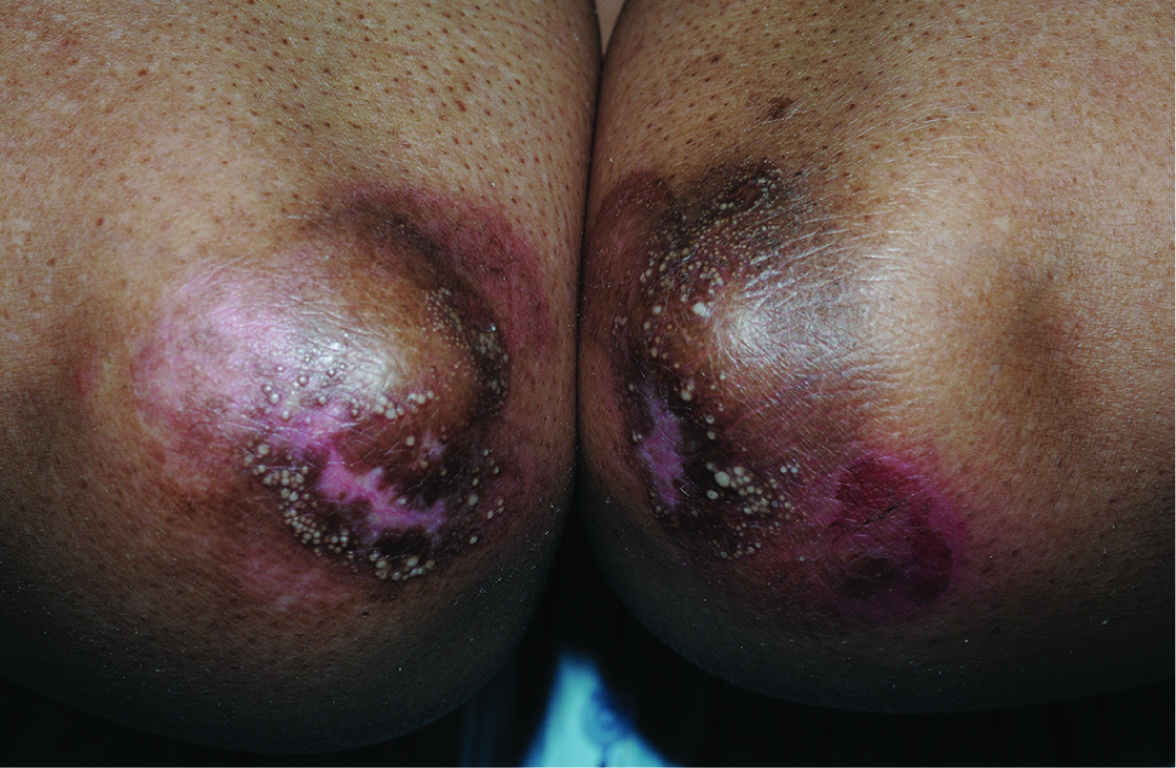
Fig. 30.19 Epidermolysis bullosa aquisita – inflammatory presentation. Widespread erythematous plaques, some of which have erosions and hemorrhagic crusts. Although there is accentuation on the elbows, the differential diagnosis would include bullous pemphigoid. Courtesy Lorenzo Cerroni, MD.
Fig.30.19 As.670
Fig. 30.19 Epidermolysis bullosa aquisita – inflammatory presentation. Widespread erythematous plaques, some of which have erosions and hemorrhagic crusts. Although there is accentuation on the elbows, the differential diagnosis would include bullous pemphigoid. Courtesy Lorenzo Cerroni, MD.
Fig.30.19 Bs.670
Fig. 30.20 Epidermolysis bullosa acquisita – oral involvement. Multiple erosions of the palate reminiscent of mucous membrane (cicatricial) pemphigoid. Courtesy C. Prost, MD.
Fig.30.20 As.670
Fig. 30.20 Epidermolysis bullosa acquisita – oral involvement. Multiple erosions of the palate reminiscent of mucous membrane (cicatricial) pemphigoid. Courtesy C. Prost, MD.
Fig.30.20 Bs.670