Bolognia 5e·Dermatoloji Çalışma Paneli
Ch 37

Rozasea ve Bağlı Bozukluklar

Vol 1 · sayfa 610 · §6
📖 Özet🃏 Flashcard Quiz🖼 Atlas
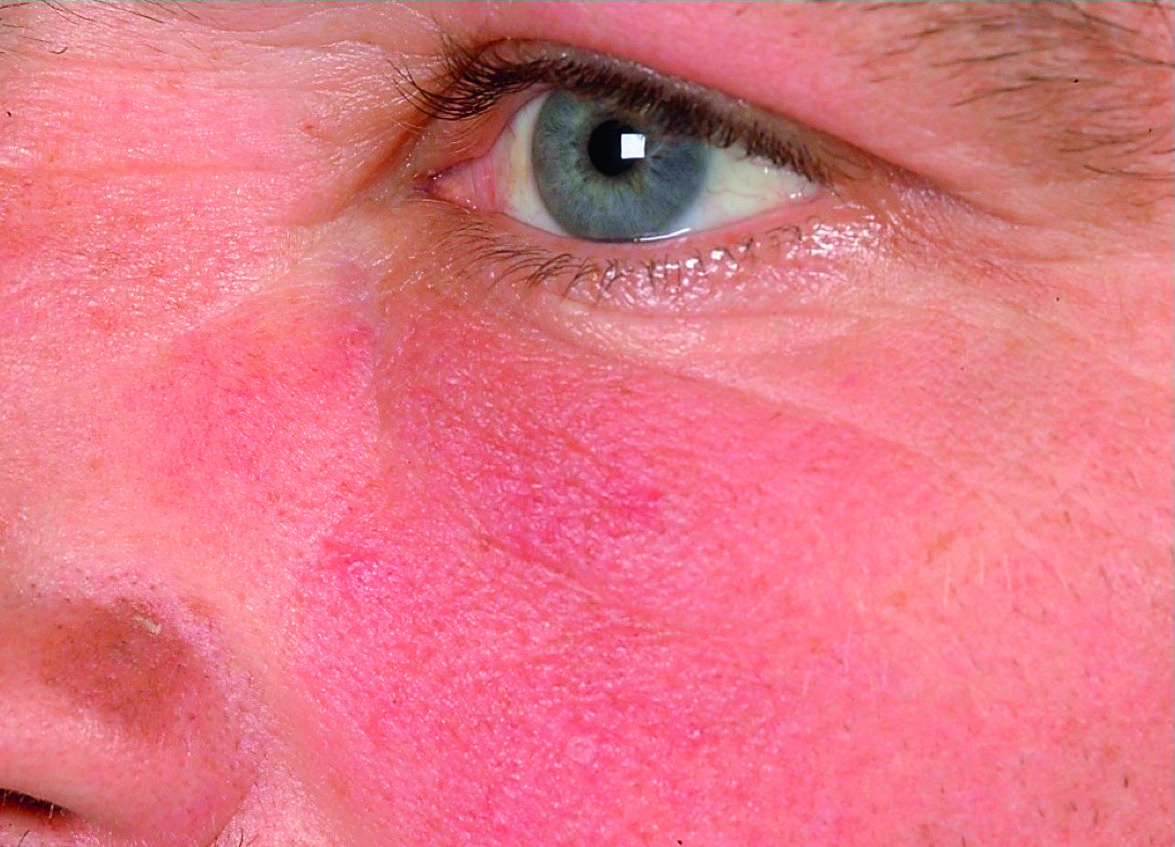
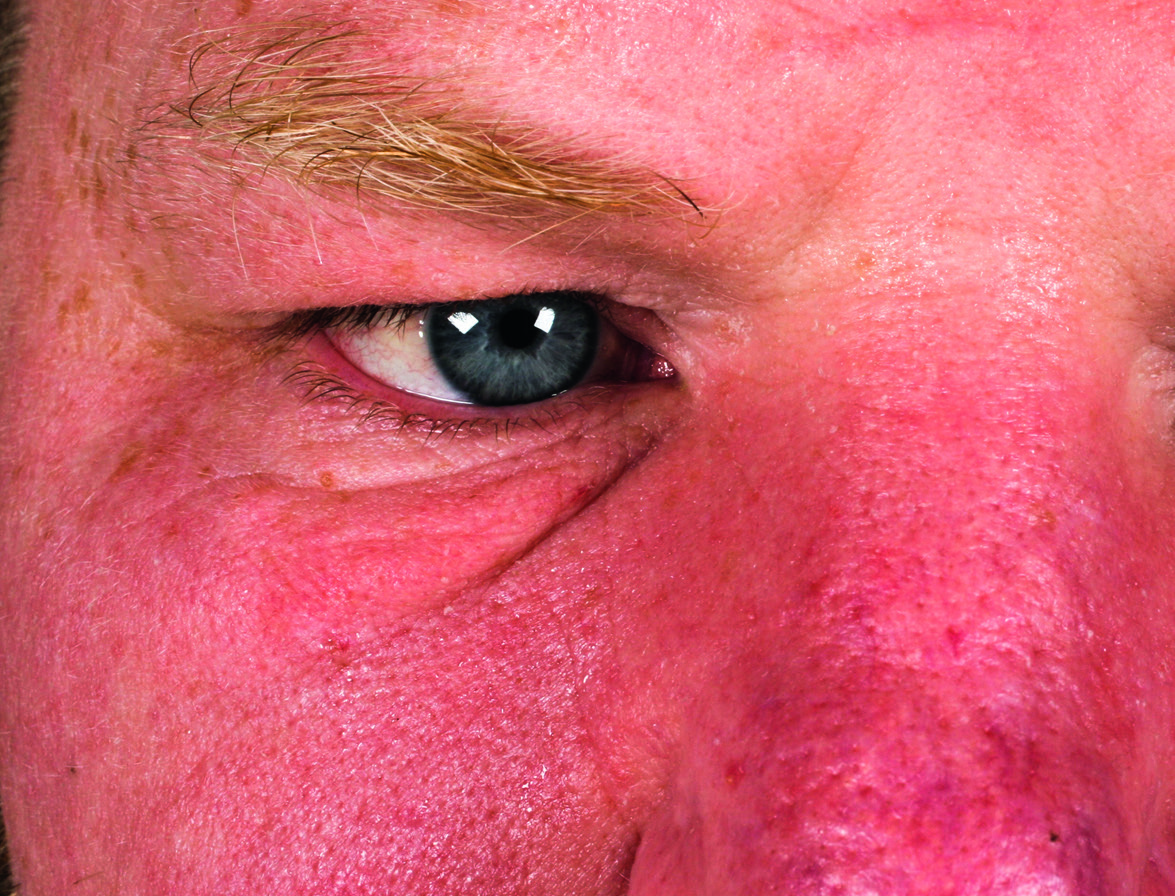
Fig. 37.2 Fixed facial erythema due to rosacea. There was greater involvement of the medial cheek. Courtesy Frank C. Powell, MD.
Fig.37.2s.769
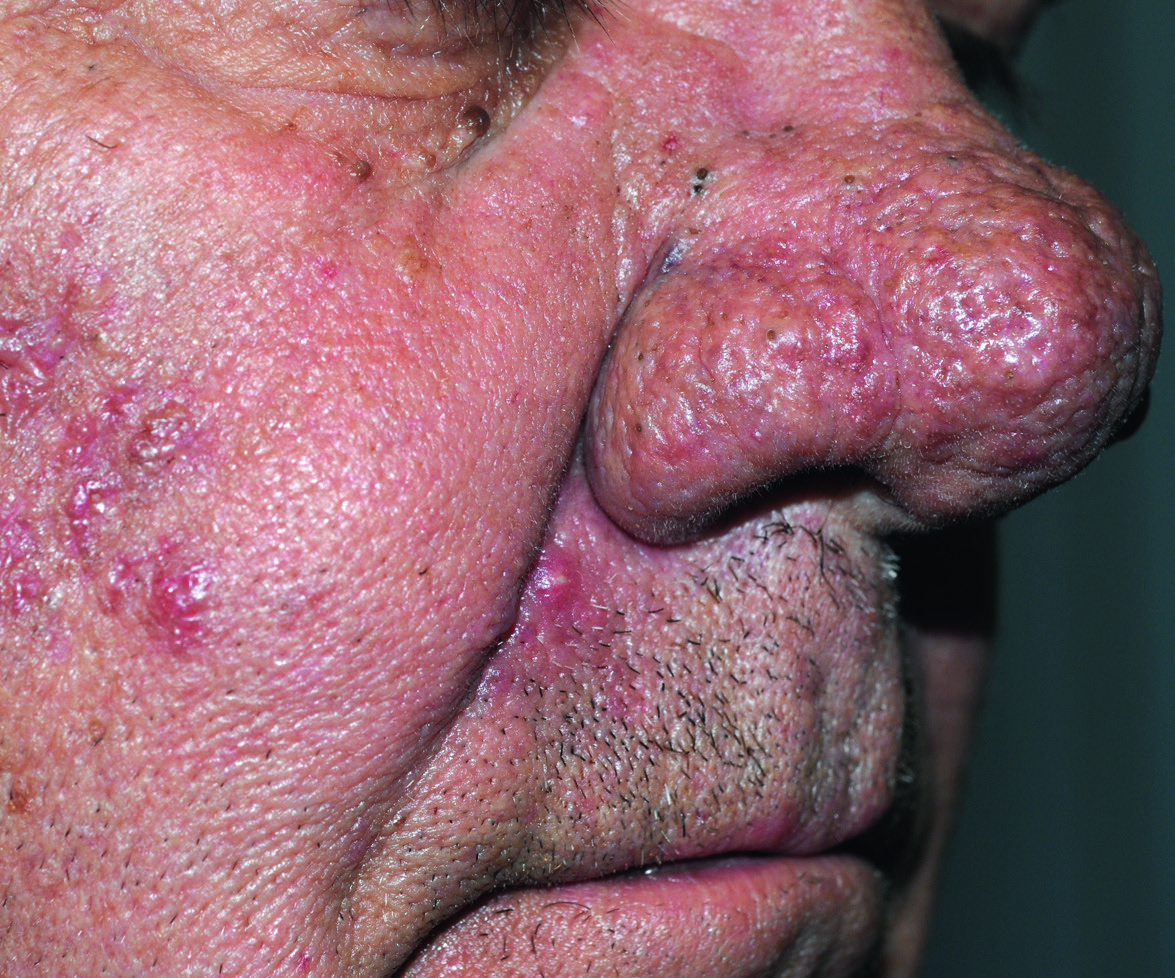
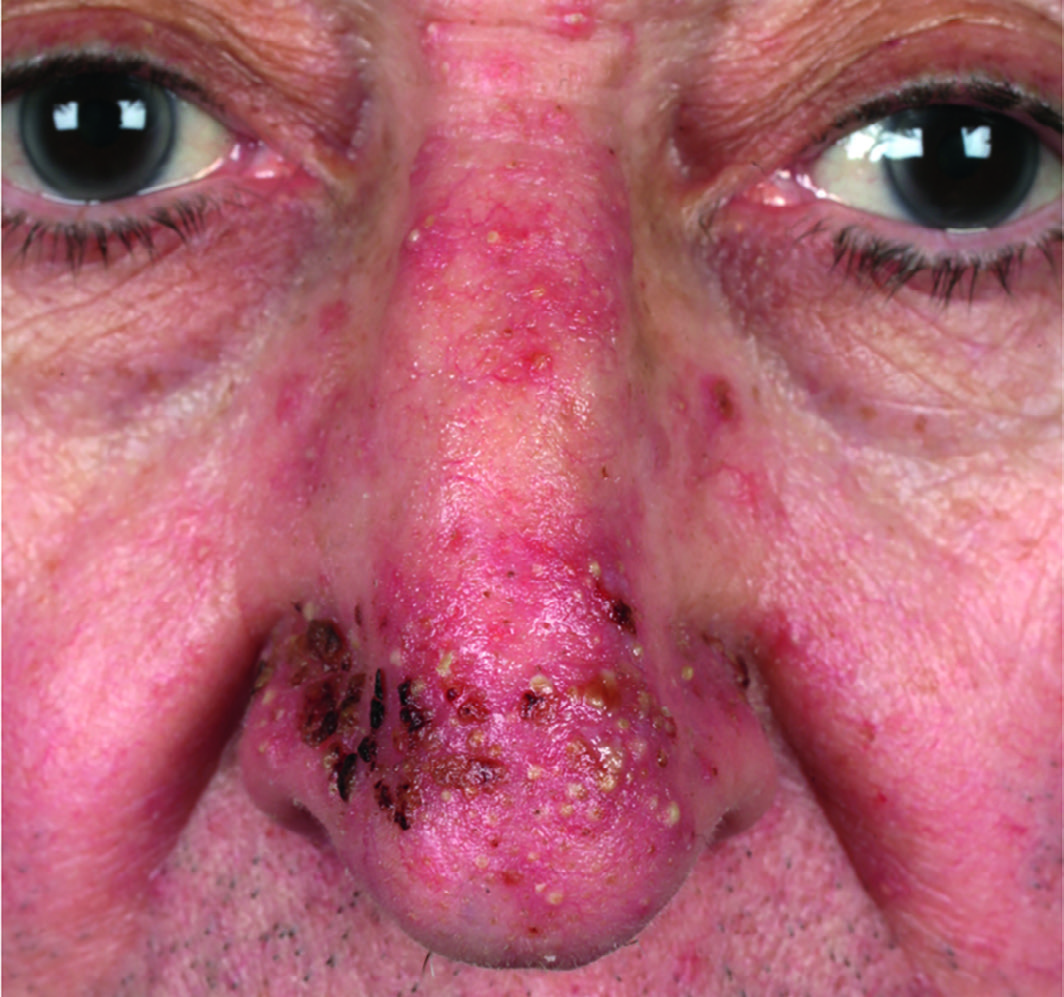
Fig. 37.3 Rhinophyma. Hypertrophy of sebaceous glands and connective tissue as well as patulous follicles are seen. The changes are more prominent in the mid to lower nose. In addition, there is evidence of papulopustular rosacea. Courtesy Kalman Watsky, MD.
Fig.37.3s.770
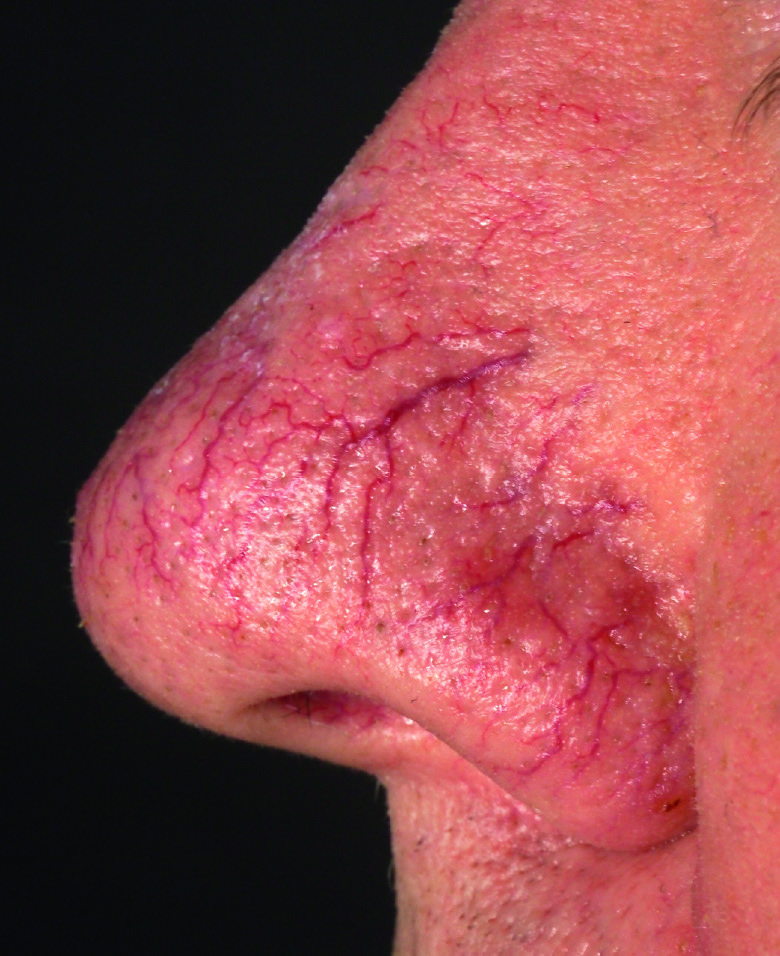
Fig. 37.4 Tortuous, telangiectatic vessels on the distal aspect of the nose contribute to its hyperemic appearance. This hyperemia may predispose to the subse- quent hypertrophic changes of rhinophyma. Note the early sign of patulous follicles (“dilated pores”). Courtesy Frank C. Powell, MD.
Fig.37.4s.770
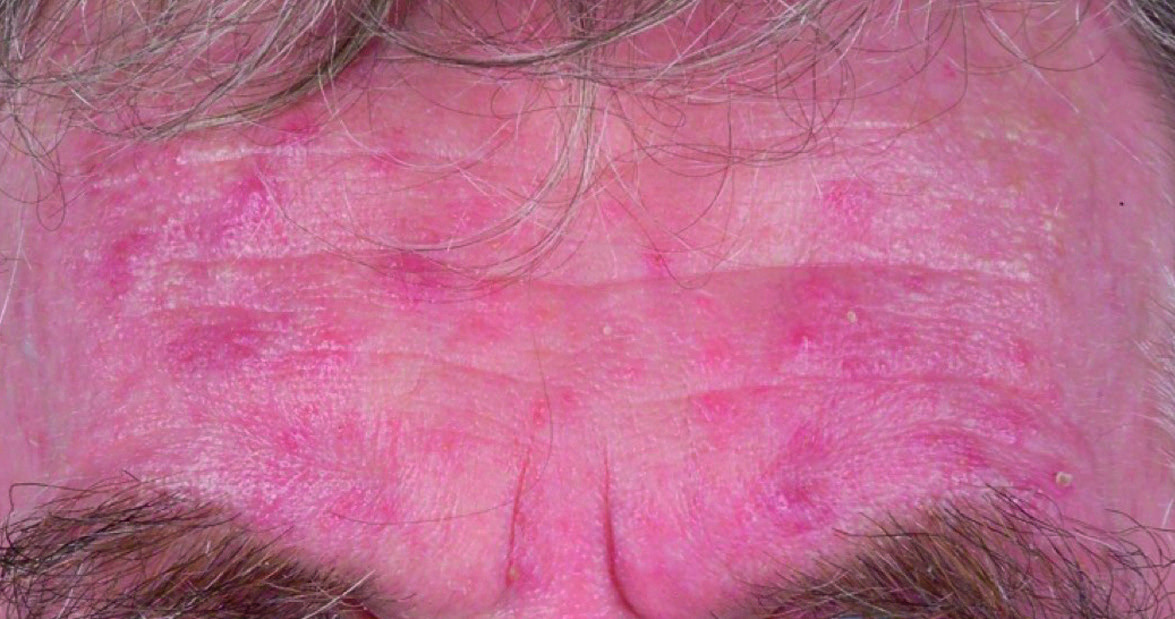
Fig. 37.5 Moderate papulopustular rosacea of the forehead. Note the super- ficial nature of the inflammatory lesions. Courtesy Frank C. Powell, MD.
Fig.37.5s.770
Fig. 37.6 Papulopustular rosacea – spectrum of severity in different skin phototypes. A Mild disease with scattered lesions on the cheek. B Moderate disease with increased number of lesions and areas of background erythema. C Severe disease with characteristic centrofacial distribution. Note the associated xerotic scale. A, B, Courtesy Kalman Watsky, MD.
Fig.37.6 As.771
Fig. 37.6 Papulopustular rosacea – spectrum of severity in different skin phototypes. A Mild disease with scattered lesions on the cheek. B Moderate disease with increased number of lesions and areas of background erythema. C Severe disease with characteristic centrofacial distribution. Note the associated xerotic scale. A, B, Courtesy Kalman Watsky, MD.
Fig.37.6 Bs.771
Fig. 37.6 Papulopustular rosacea – spectrum of severity in different skin phototypes. A Mild disease with scattered lesions on the cheek. B Moderate disease with increased number of lesions and areas of background erythema. C Severe disease with characteristic centrofacial distribution. Note the associated xerotic scale. A, B, Courtesy Kalman Watsky, MD.
Fig.37.6 Cs.771
Fig. 37.7 Rosacea dermatitis. When there is more severe disease, scaling and superficial crusting may be seen as on the cheek of this woman. Courtesy Kalman Watsky, MD.
Fig.37.7s.771
Fig. 37.8 Inflammatory rosacea with edematous changes. An intensely erythematous plaque is present on the medial aspect of the cheek. This may improve once the underlying inflammation is treated appropriately. Courtesy Frank C. Powell, MD.
Fig.37.8s.771
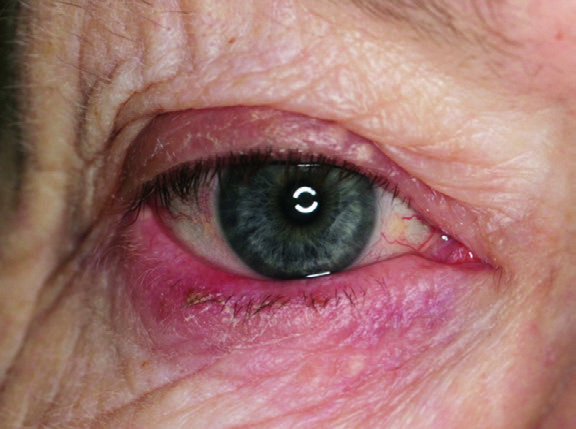
Fig. 37.9 Ocular rosacea. A Tiny concretions of keratin (conical dandruff) are visible at the bases of some of the eyelashes of the lower eyelid. There is also evidence of blepharitis of the lower eyelid and conjunctival injection. B Erythema of the mucosal portion of the lower eyelid and ectropion. C Marked injection of the conjunctivae, leading to the appearance of red eyes. Ectropion is also present. A, Courtesy Frank C. Powell, MD.
Fig.37.9 As.772
Fig. 37.9 Ocular rosacea. A Tiny concretions of keratin (conical dandruff) are visible at the bases of some of the eyelashes of the lower eyelid. There is also evidence of blepharitis of the lower eyelid and conjunctival injection. B Erythema of the mucosal portion of the lower eyelid and ectropion. C Marked injection of the conjunctivae, leading to the appearance of red eyes. Ectropion is also present. A, Courtesy Frank C. Powell, MD.
Fig.37.9 Bs.772
Fig. 37.9 Ocular rosacea. A Tiny concretions of keratin (conical dandruff) are visible at the bases of some of the eyelashes of the lower eyelid. There is also evidence of blepharitis of the lower eyelid and conjunctival injection. B Erythema of the mucosal portion of the lower eyelid and ectropion. C Marked injection of the conjunctivae, leading to the appearance of red eyes. Ectropion is also present. A, Courtesy Frank C. Powell, MD.
Fig.37.9 Cs.772
Fig. 37.10 Granulomatous rosacea, lupus miliaris dissemi- natus faciei variant. Monomorphous, discrete skin-colored to brown papules scattered on the face that are more persistent than the lesions of papulopustular rosacea. Histologically, granulomas with central caseation necrosis were observed, which led to the diagnosis of lupus miliaris disseminatus faciei.
Fig.37.10s.772
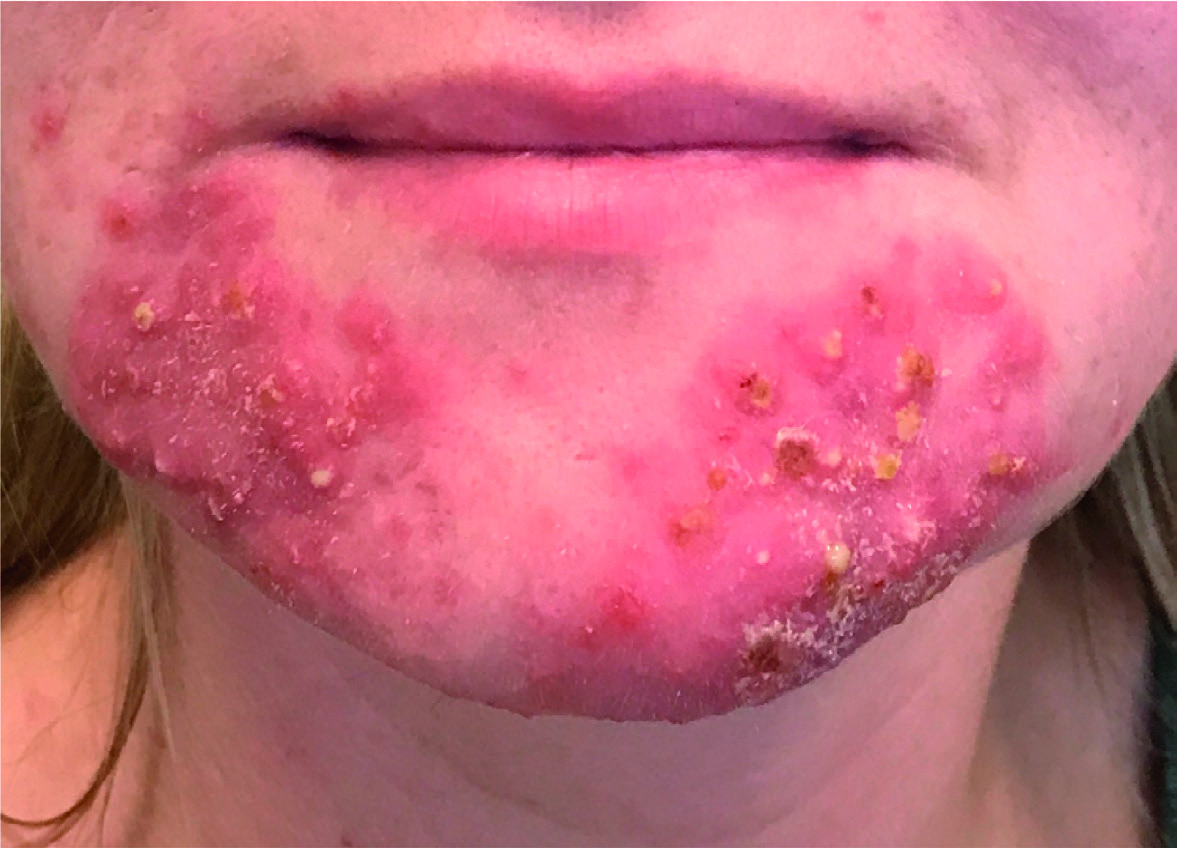
Fig. 37.12 Rosacea fulminans (pyoderma faciale). Sudden onset of tender plaques on the chin studded with pustules. The patient was pregnant and had no history of rosacea or acne vulgaris.
Fig.37.12 As.776
Fig. 37.12 Rosacea fulminans (pyoderma faciale). Sudden onset of tender plaques on the chin studded with pustules. The patient was pregnant and had no history of rosacea or acne vulgaris.
Fig.37.12 Bs.776
Fig. 37.12 Rosacea fulminans (pyoderma faciale). Sudden onset of tender plaques on the chin studded with pustules. The patient was pregnant and had no history of rosacea or acne vulgaris.
Fig.37.12 Cs.776
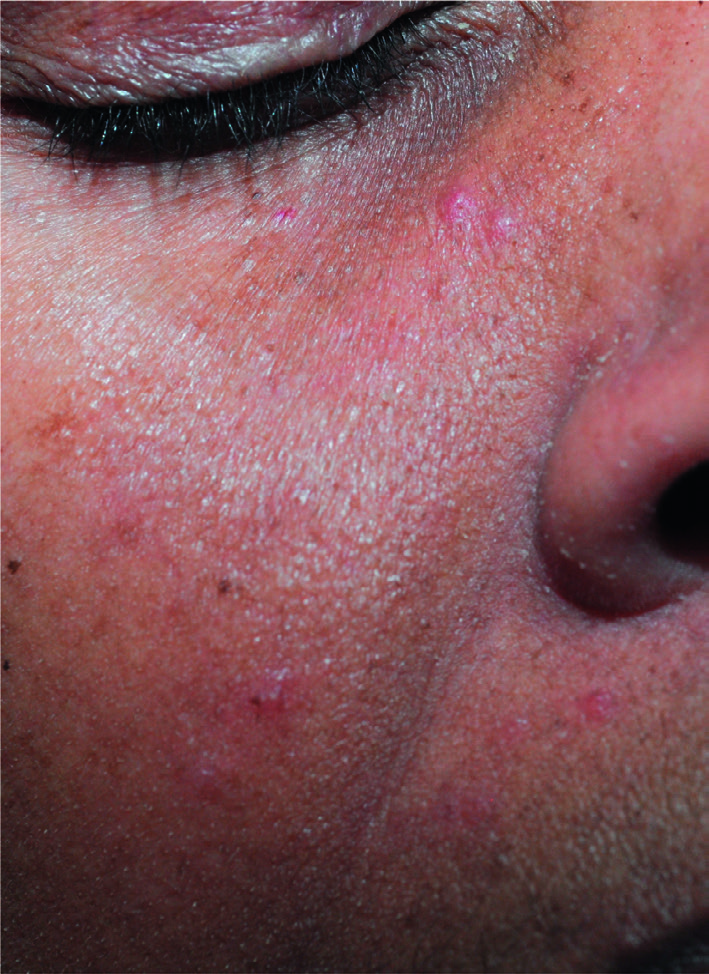
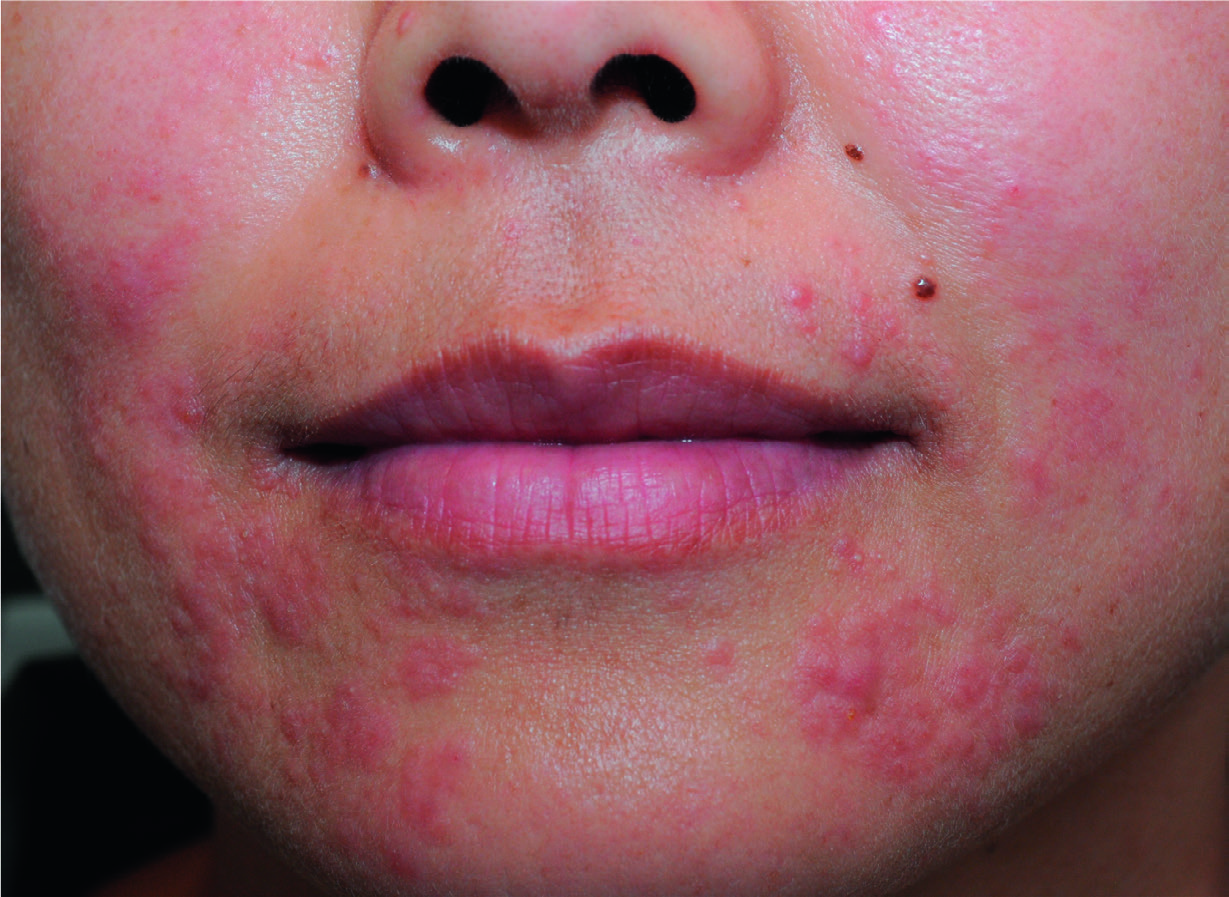
Fig. 37.13 Periorificial dermatitis (often referred to as perioral dermatitis). A–C Pink papules, patches, and thin plaques as well as pinpoint super- ficial pustules around orifices, i.e. in a perioral, perinasal, and/or periorbital distribution pattern. In contrast to papulopustular rosacea, the papules are classically at the same stage of evolution. D Close-up of the characteristic pinpoint pustules (arrows). E Granulomatous periori- ficial disease in a child with monomorphous pink papules that have become confluent around the mouth. The eruption, which had previously worsened upon treatment with topical and oral corti- costeroids, resolved with a 6-week course of azithromycin. A, Courtesy Frank C. Powell, MD; B–D, Courtesy Kalman Watsky, MD; E, Courtesy Julie V. Schaffer, MD.
Fig.37.13 As.776
Fig. 37.13 Periorificial dermatitis (often referred to as perioral dermatitis). A–C Pink papules, patches, and thin plaques as well as pinpoint super- ficial pustules around orifices, i.e. in a perioral, perinasal, and/or periorbital distribution pattern. In contrast to papulopustular rosacea, the papules are classically at the same stage of evolution. D Close-up of the characteristic pinpoint pustules (arrows). E Granulomatous periori- ficial disease in a child with monomorphous pink papules that have become confluent around the mouth. The eruption, which had previously worsened upon treatment with topical and oral corti- costeroids, resolved with a 6-week course of azithromycin. A, Courtesy Frank C. Powell, MD; B–D, Courtesy Kalman Watsky, MD; E, Courtesy Julie V. Schaffer, MD.
Fig.37.13 Bs.776
Fig. 37.13 Periorificial dermatitis (often referred to as perioral dermatitis). A–C Pink papules, patches, and thin plaques as well as pinpoint super- ficial pustules around orifices, i.e. in a perioral, perinasal, and/or periorbital distribution pattern. In contrast to papulopustular rosacea, the papules are classically at the same stage of evolution. D Close-up of the characteristic pinpoint pustules (arrows). E Granulomatous periori- ficial disease in a child with monomorphous pink papules that have become confluent around the mouth. The eruption, which had previously worsened upon treatment with topical and oral corti- costeroids, resolved with a 6-week course of azithromycin. A, Courtesy Frank C. Powell, MD; B–D, Courtesy Kalman Watsky, MD; E, Courtesy Julie V. Schaffer, MD.
Fig.37.13 Cs.776
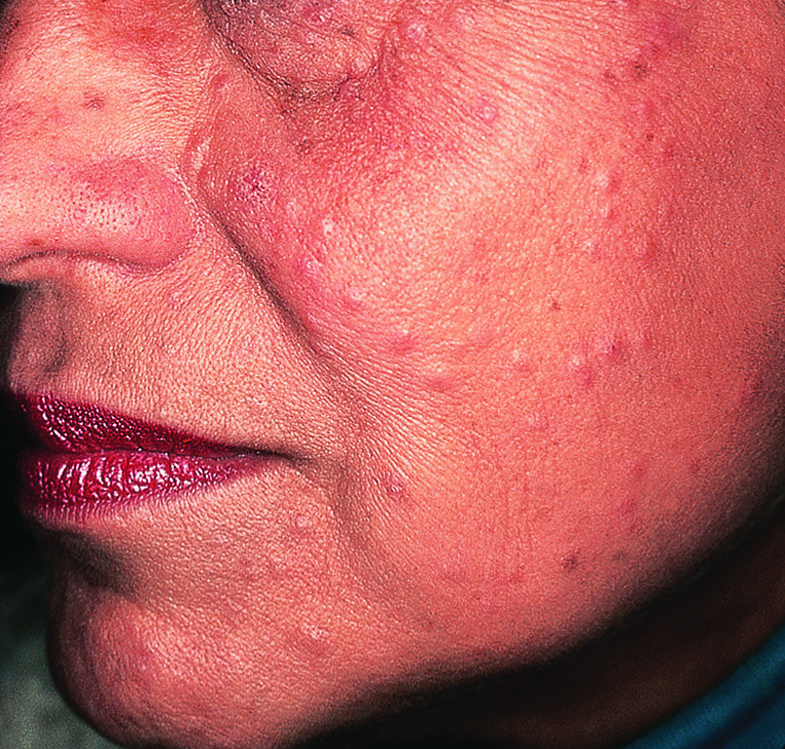
Fig. 37.14 Steroid rosacea. A Milder disease in an adult with scattered erythematous papules and papulopustules of the central face. B Severe disease in a child with confluence of erythematous papulopustules. A, Courtesy Kalman Watsky, MD.
Fig.37.14 As.777
Fig. 37.14 Steroid rosacea. A Milder disease in an adult with scattered erythematous papules and papulopustules of the central face. B Severe disease in a child with confluence of erythematous papulopustules. A, Courtesy Kalman Watsky, MD.
Fig.37.14 Bs.777
Fig. 37.15 Papulopustular eruption due to an epidermal growth factor receptor (EGFR) inhibitor. There is a resemblance to rosacea but the onset is more abrupt. Courtesy Frank C. Powell, MD.
Fig.37.15s.777
Fig. 37.16 Morbihan disease. Erythematous, firm, non-pitting, asymptomatic swelling of the upper midface. Areas of greatest involvement can acquire a “peau d’orange” appearance. Courtesy Frank C. Powell, MD.
Fig.37.16s.777