Bolognia 5e·Dermatoloji Çalışma Paneli
Ch 71

Tırnak Hastalıkları

Vol 1 · sayfa 1214 · §11
📖 Özet🃏 Flashcard Quiz🖼 Atlas
repeated damage (Fig. 71.3). Most commonly, Beau’s lines are caused by mechanical trauma (e.g. manicures, onychotillomania) or dermatologic disease of the proximal nail fold (e.g. eczema, chronic paronychia). The presence of Beau’s lines at the same level in all nails suggests a systemic cause (e.g. severe or febrile illness, cytotoxic drugs, erythroderma).
Fig.71.3 As.1472
Fig. 71.3 Beau’s lines. Multiple transverse depressions due to repeated traumatic insults to the proximal nail matrix from aggressive manicures. The depressions are more evident in the central portion of the nail plate.
Fig.71.3 Bs.1473
Fig. 71.4 Onychomadesis of the fingernails following hand-foot-and-mouth disease due to coxsackievirus A6 infection.
Fig.71.4s.1473
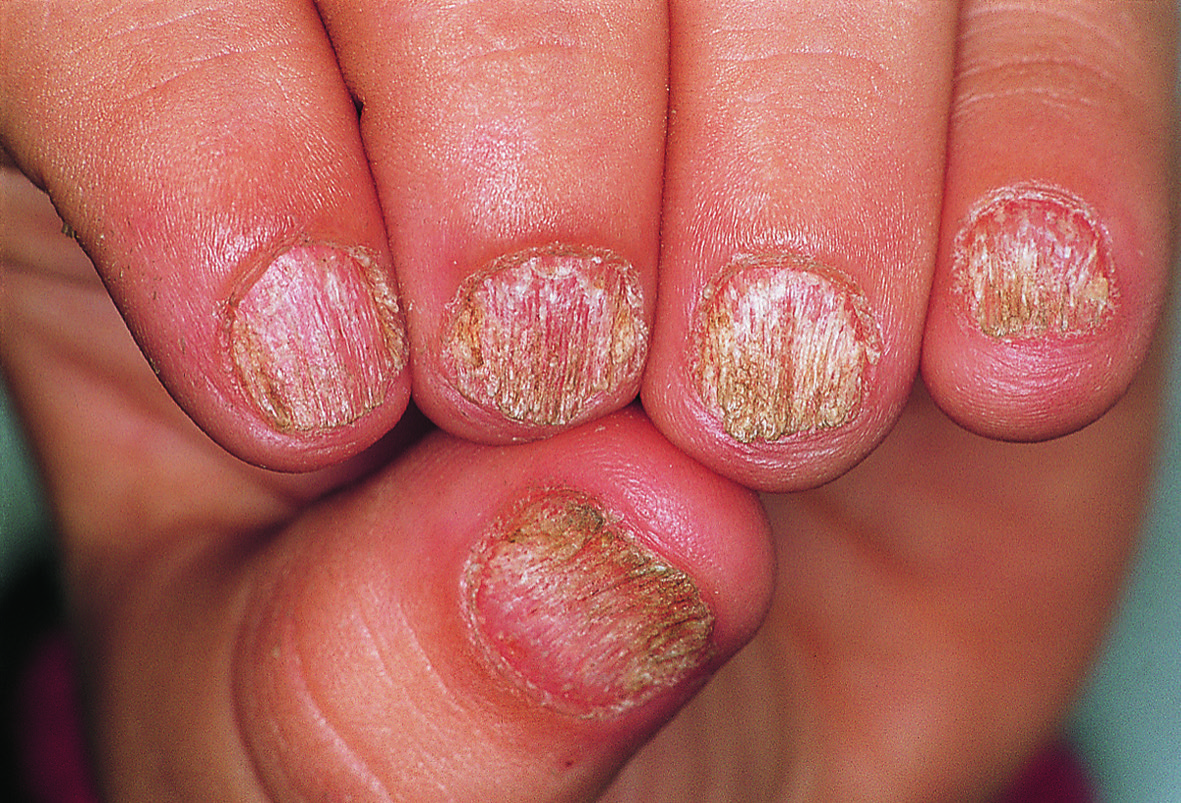
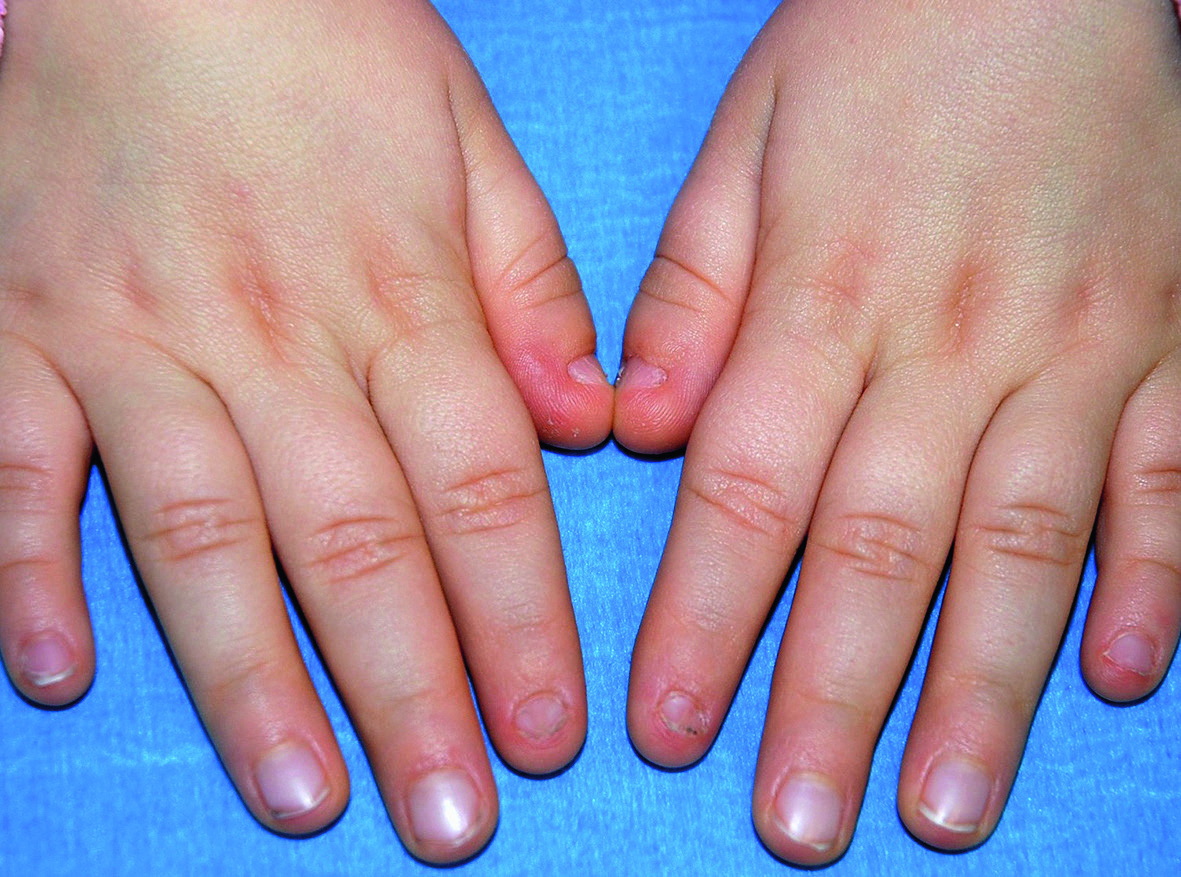
Fig. 71.5 Trachyonychia (twenty-nail dystrophy). The nails appear to be sandpapered in a longitudinal direction.
Fig.71.5s.1473
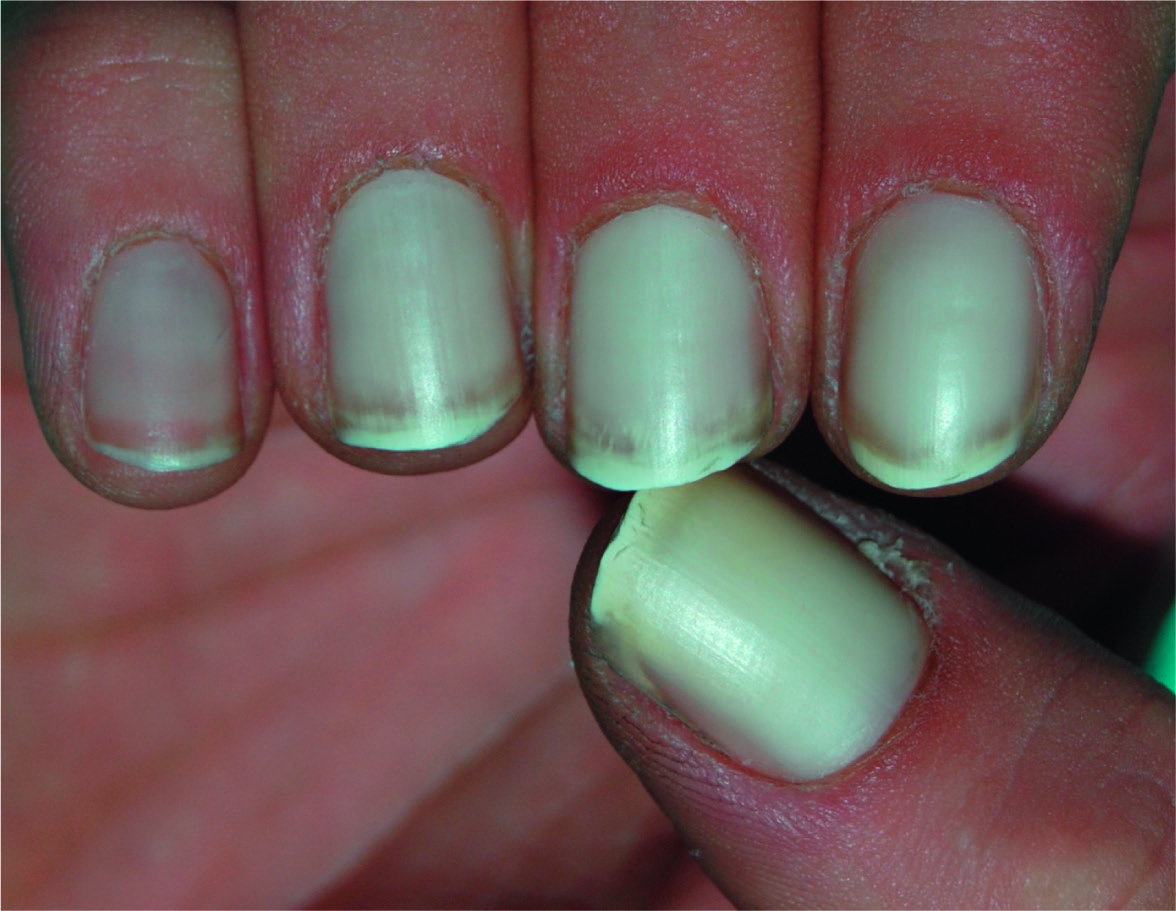
Fig. 71.6 True leukonychia – diffuse variant. The nail plate is completely or almost completely opaque and white. It may be inherited due to mutations in PLCD1, GJA1 (also keratoderma and hypotrichosis), or GJB2 (also deafness, keratoderma and knuckle pads); the latter two genes encode connexins 43 and 26, respectively.
Fig.71.6s.1474
Fig. 71.8 Longitudinal melanonychia due to a congenital melanocytic nevus of the nail matrix. A The pigmentation involves approximately 75% of the nail plate and the color varies from light brown to black. B The biopsy specimen shows nests of melanocytes within the basal layer and lower portion of the nail matrix epithelium. The cleft (*) represents an artifact.
Fig.71.8 As.1476
Fig. 71.8 Longitudinal melanonychia due to a congenital melanocytic nevus of the nail matrix. A The pigmentation involves approximately 75% of the nail plate and the color varies from light brown to black. B The biopsy specimen shows nests of melanocytes within the basal layer and lower portion of the nail matrix epithelium. The cleft (*) represents an artifact.
Fig.71.8 Bs.1476
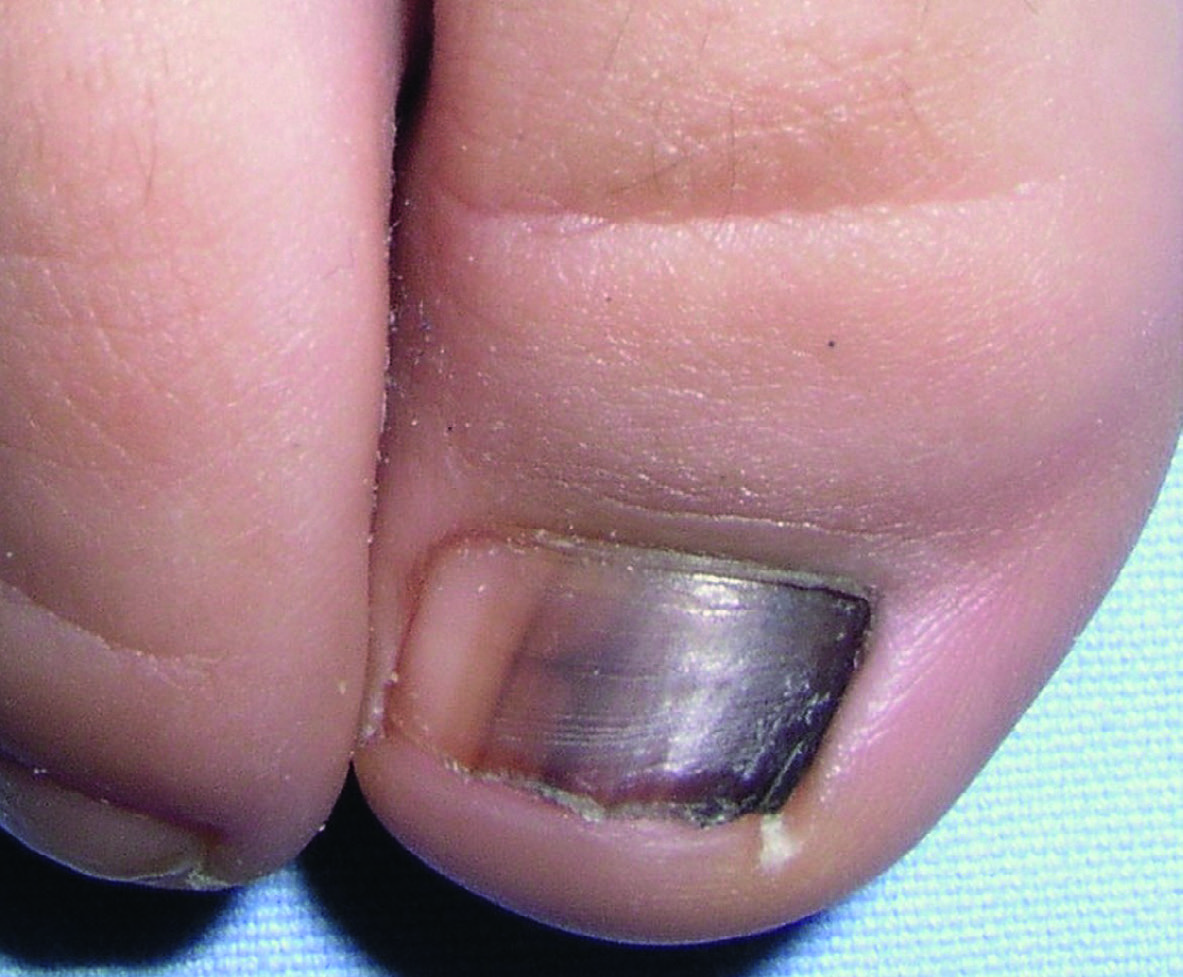
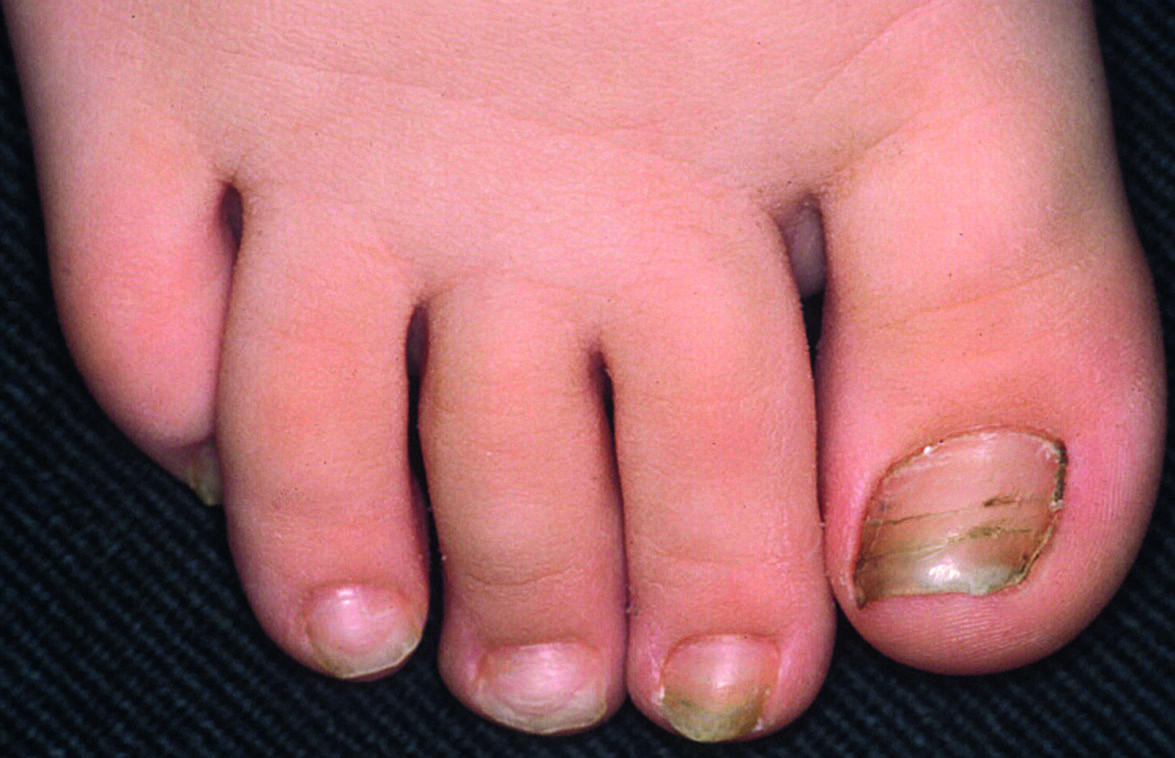
Fig. 71.10 Congenital malalignment of the great toenails. The longitudinal axis of the nail plate is deviated laterally. Note the Beau’s lines and initial lateral ingrowing of the nail plate.
Fig.71.10s.1477
Fig. 71.11 Nail hypoplasia in nail–patella syndrome. There is hypoplasia of the nails of the first and second digits. This gradient of severity of nail involvement is characteristic. Note the triangular lunulae of the third and fourth fingernails.
Fig.71.11s.1478
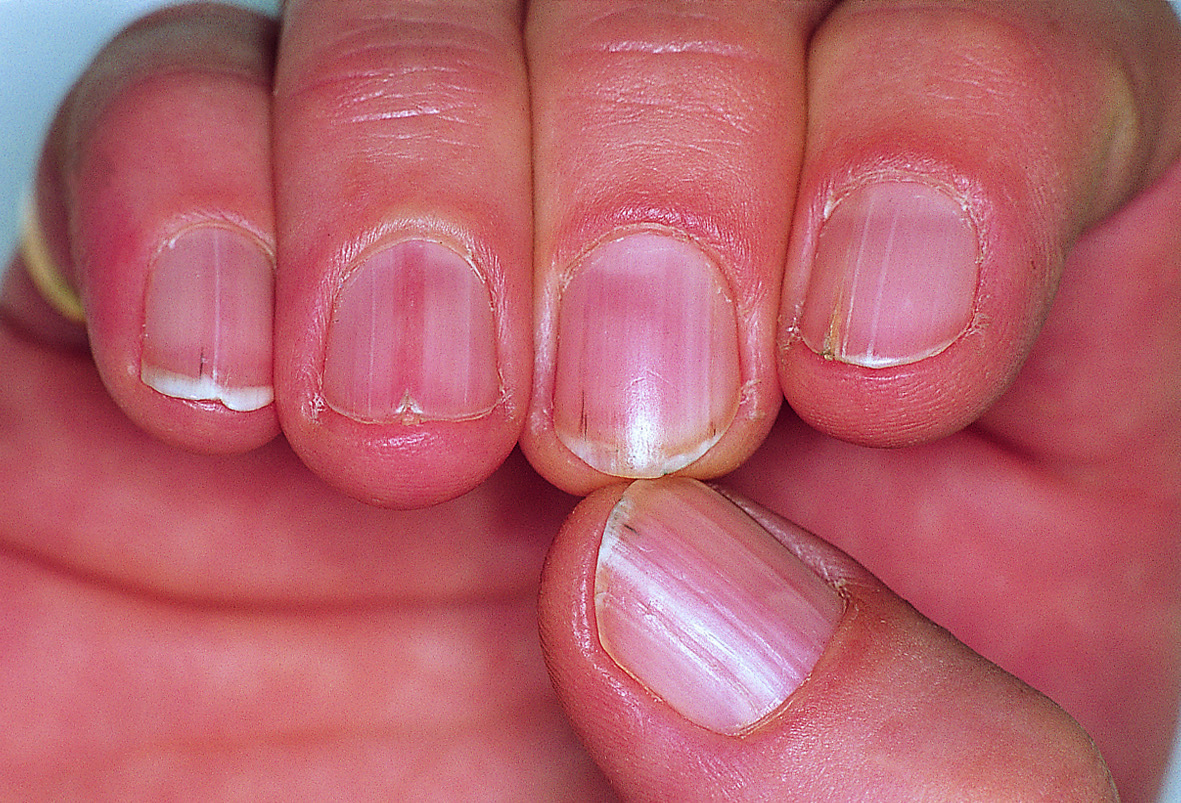
Fig. 71.12 Darier disease. Longitudinal red and white streaks, fissuring, and V-shaped notching of the distal margin accompanied by focal subungual hyperkeratosis.
Fig.71.12s.1478
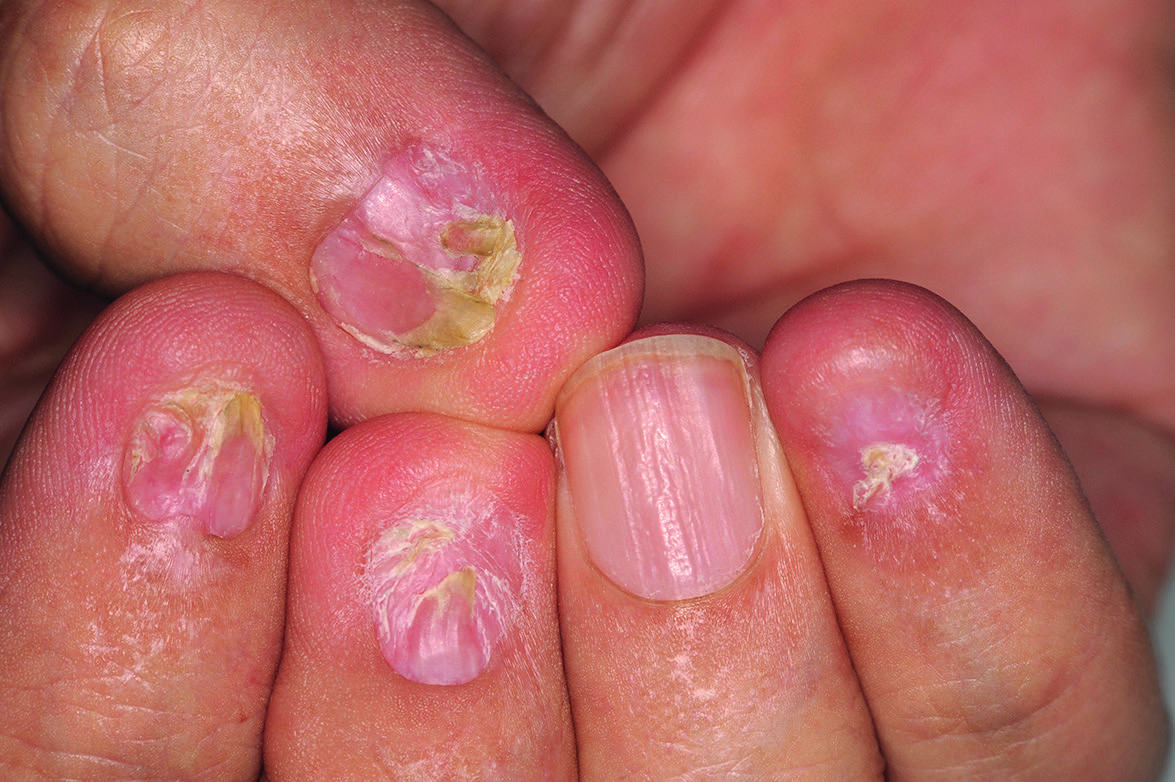
Fig. 71.13 Nail psoriasis. The nails show “oil drop” changes (salmon patches) and onycholysis with an erythematous border.
Fig.71.13s.1479
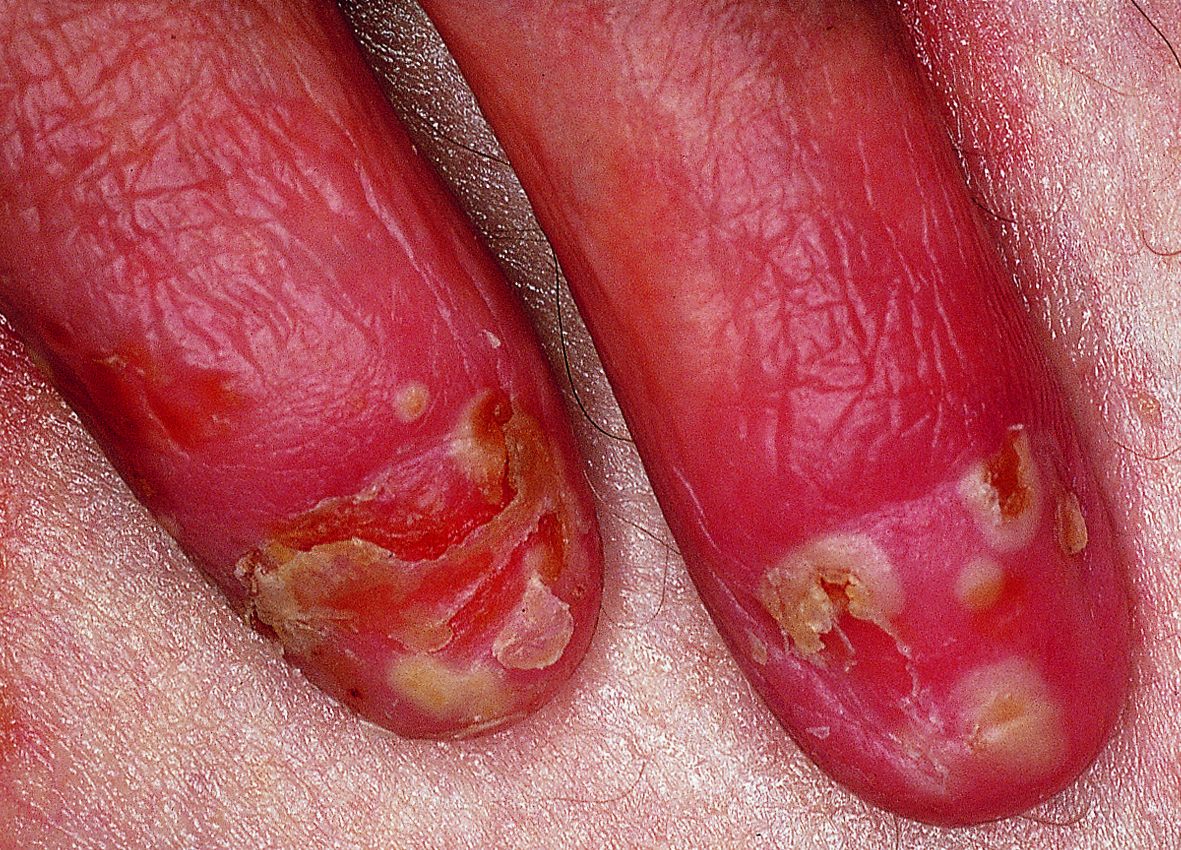
Fig. 71.14 Acrodermatitis continua of Hallopeau. Recurrent pustular eruption of the nail bed and distal finger.
Fig.71.14s.1479
Fig. 71.15 Nail lichen planus. Note the nail thinning, atrophy, and dorsal pterygium. The index finger has an “angel’s wings” deformity.
Fig.71.15s.1480
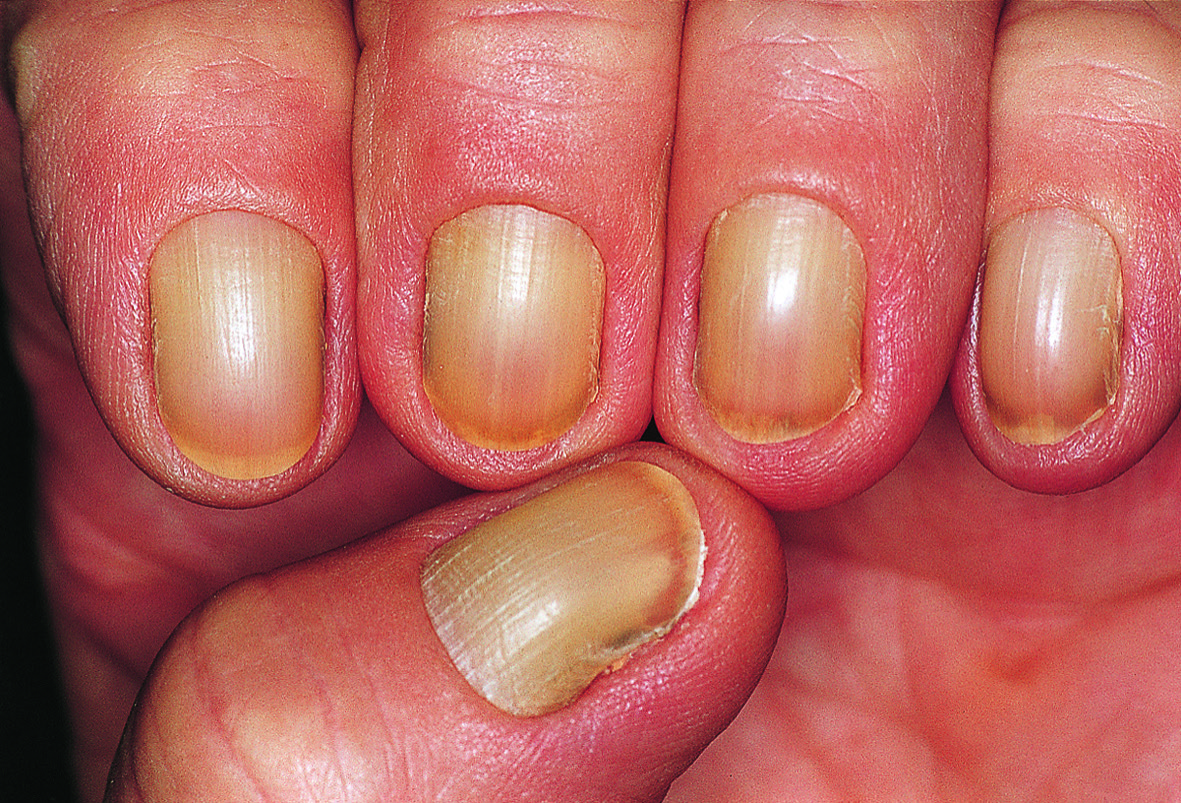
Fig. 71.16 Yellow nail syndrome. Note the overcurvature of the nail, both transversely and longitudinally, and loss of the cuticle, in addition to the yellow discoloration.
Fig.71.16s.1481
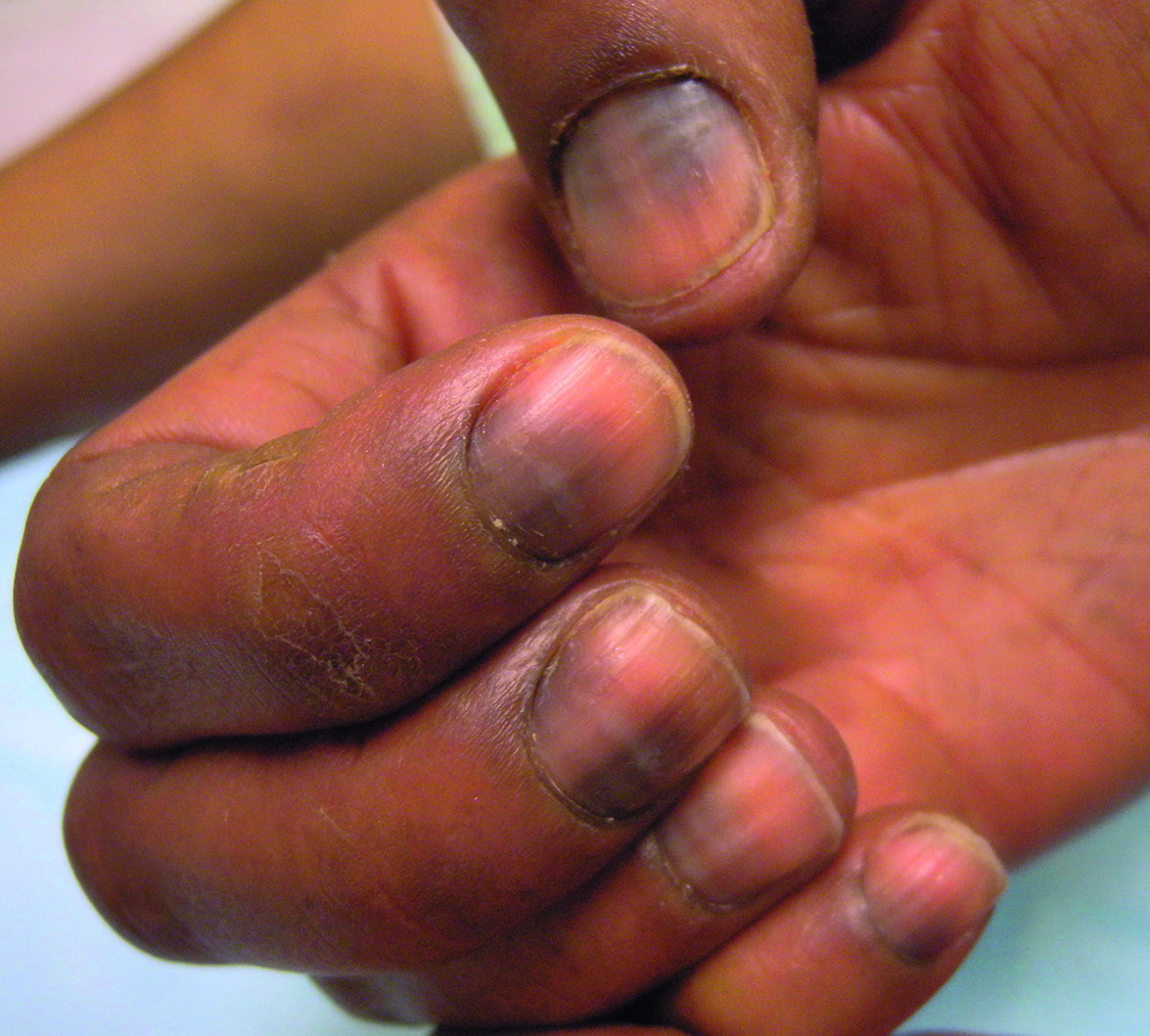
Fig. 71.17 Muehrcke’s nails in a patient undergoing chemotherapy. There are multiple parallel transverse white bands that will fade with pressure (apparent leukonychia). Note the associated melanonychia.
Fig.71.17s.1481
Fig. 71.18 Multiple periungual pyogenic granulomas in a patient taking indinavir.
Fig.71.18s.1482
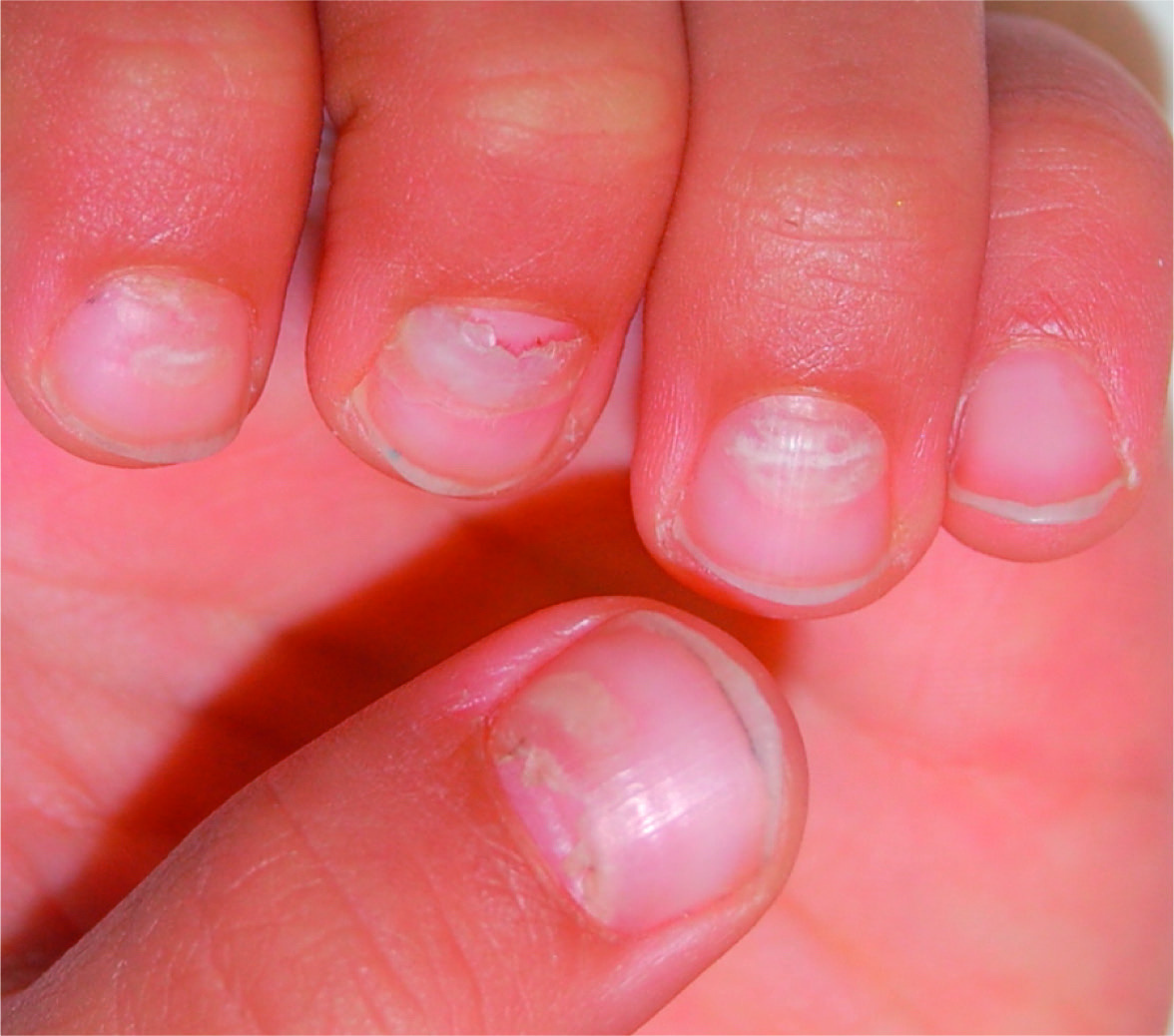
Fig. 71.19 Keratin degranulation of the fingernails due to prolonged wearing of nail lacquer. The distal nail plate is opaque and fragile due to multiple small areas of breakage on its surface.
Fig.71.19s.1483
Fig. 71.20 Habit-tic deformity (A) and median canaliform dystrophy of Heller (B). A The multiple midline Beau’s lines resemble a washboard. B A central longi- tudinal split with an inverted fir tree pattern. In both, deposits of exogenous pigments can be seen.
Fig.71.20 As.1484
Fig. 71.20 Habit-tic deformity (A) and median canaliform dystrophy of Heller (B). A The multiple midline Beau’s lines resemble a washboard. B A central longi- tudinal split with an inverted fir tree pattern. In both, deposits of exogenous pigments can be seen.
Fig.71.20 Bs.1484
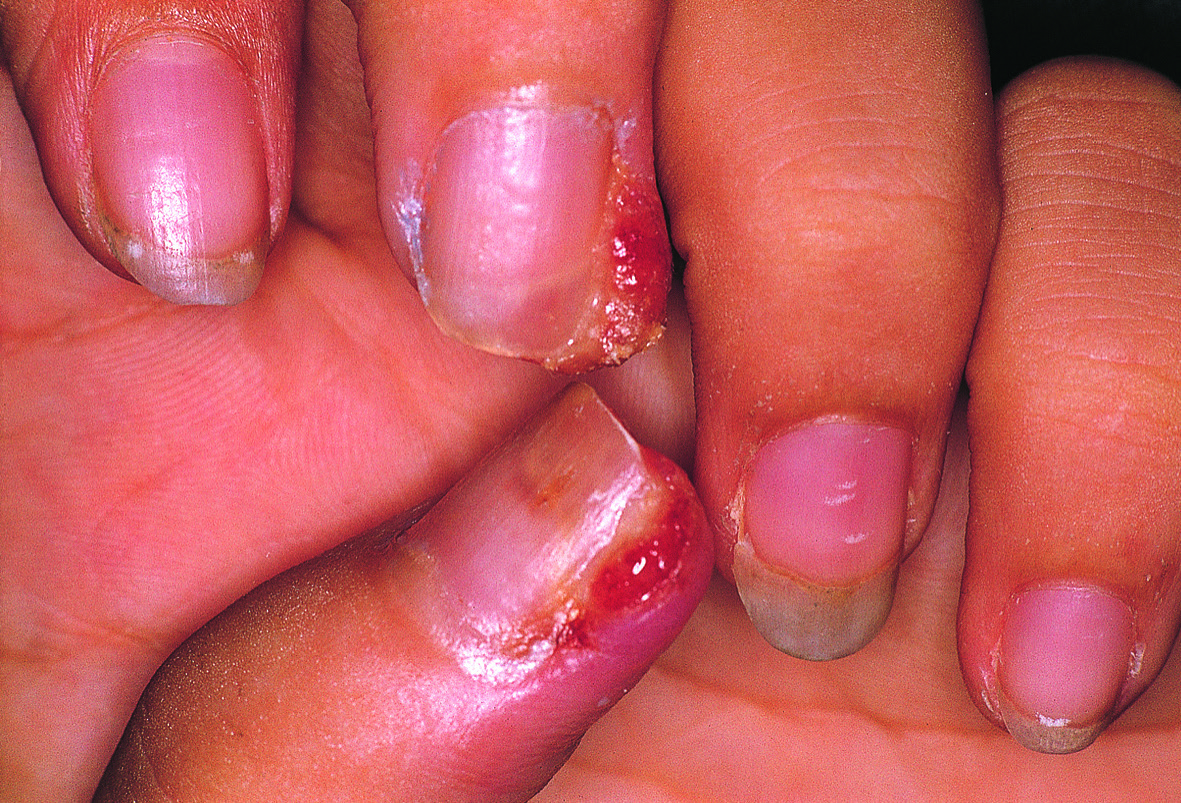
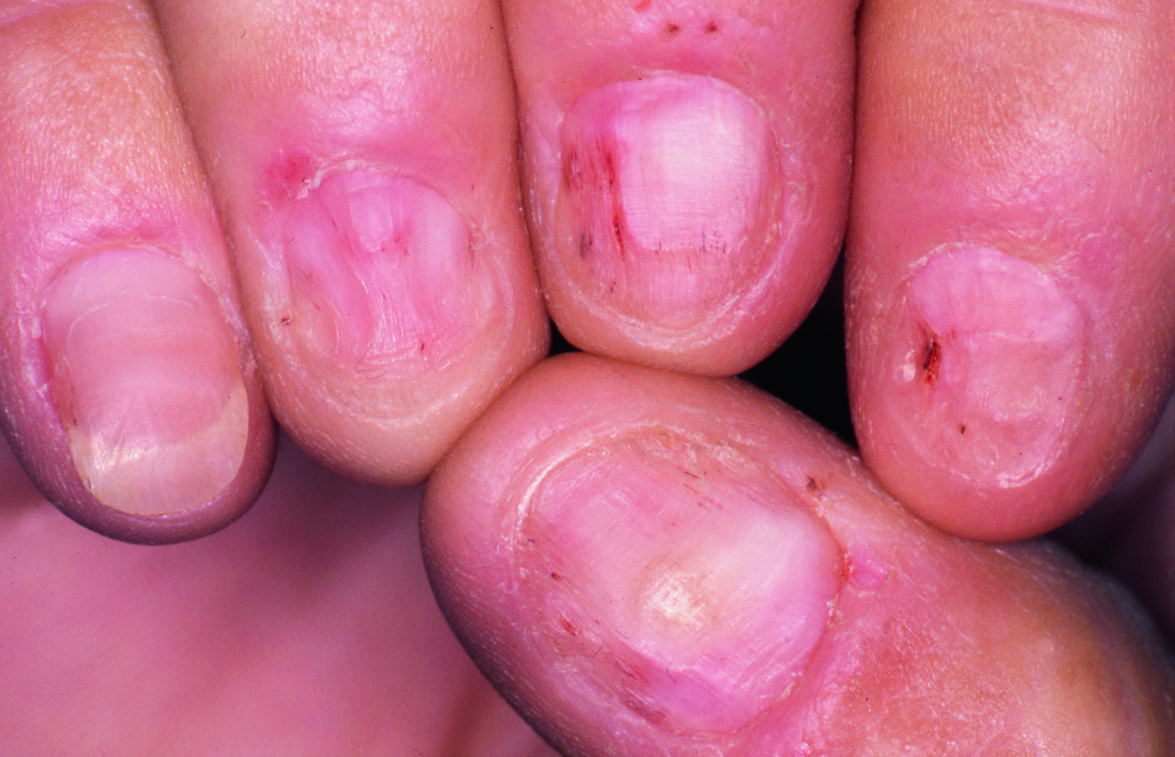
Fig. 71.21 Onychotillomania. In four of the nails, the nail plate is damaged or absent. The hemorrhagic crusts on the nail bed and proximal nail fold serve as a clue to the diagnosis.
Fig.71.21s.1484
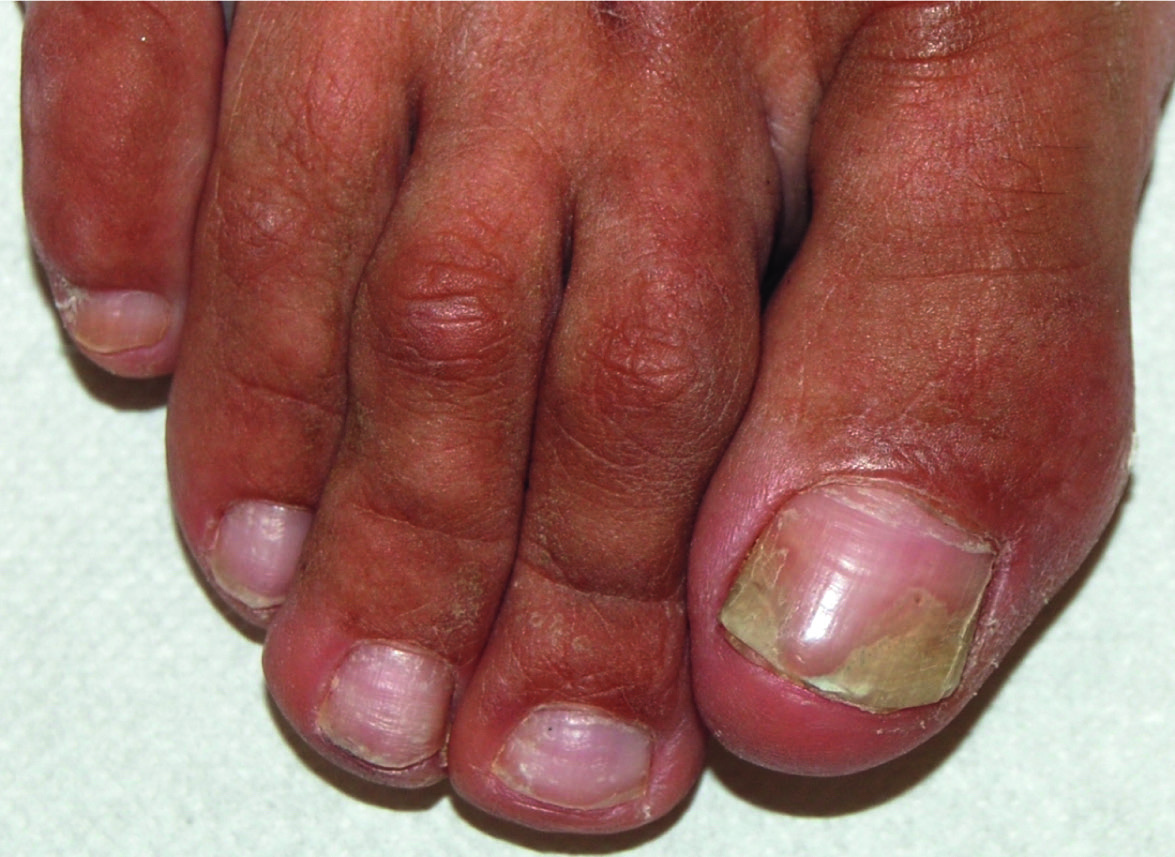
Fig. 71.22 Traumatic onycholysis of the nail of the first toe. Age-related lateral deviation of the hallux (hallux valgus) plays a role. Although the two entities can coexist, it is often misdiagnosed as lateral onychomycosis.
Fig.71.22s.1485
Fig. 71.23 Subungual exostosis. A Skin-colored subungual nodule elevating the nail plate. B Radiograph of the digit demonstrating the subungual bony proliferation.
Fig.71.23 As.1486
Fig. 71.23 Subungual exostosis. A Skin-colored subungual nodule elevating the nail plate. B Radiograph of the digit demonstrating the subungual bony proliferation.
Fig.71.23 Bs.1486
Fig. 71.24 Myxoid cyst. The longitudinal nail groove is a result of the compression of the nail matrix by the cyst.
Fig.71.24 As.1486
Fig. 71.24 Myxoid cyst. The longitudinal nail groove is a result of the compression of the nail matrix by the cyst.
Fig.71.24 Bs.1486
Fig. 71.25 Onychomatricoma of the left third fingernail. A longitudinal, thickened yellowish band is seen extending from the cuticle to the distal nail plate. Proximal splinter hemorrhages are also visible. Onychoscopy of the distal nail plate reveals the diagnostic finding of localized nail thickening with a honeycomb appearance (inset).
Fig.71.25 As.1486
Fig. 71.25 Onychomatricoma of the left third fingernail. A longitudinal, thickened yellowish band is seen extending from the cuticle to the distal nail plate. Proximal splinter hemorrhages are also visible. Onychoscopy of the distal nail plate reveals the diagnostic finding of localized nail thickening with a honeycomb appearance (inset).
Fig.71.25 Bs.1486
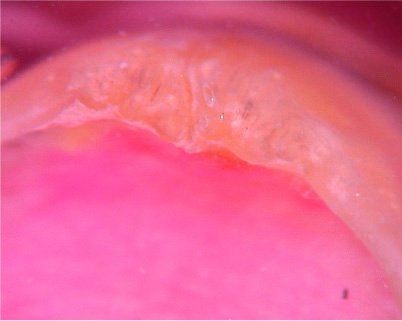
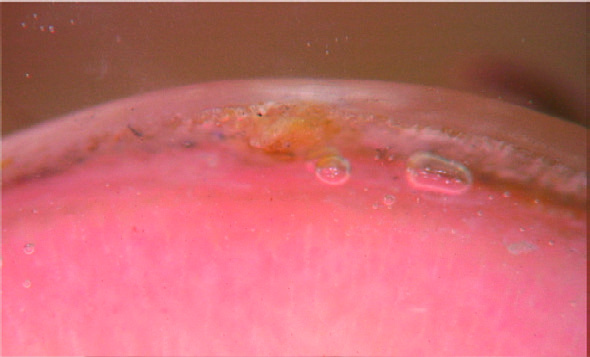
Fig. 71.26 Onychopapilloma of the left first fingernail. A thin longitudinal band of erythronychia is seen extending from the lunula. Onychoscopy reveals the crescent-shaped proximal origin of the erythronychia (lower inset) and a small subungual mass can be appreciated on the free edge of the nail (upper inset).
Fig.71.26 As.1486
Fig. 71.26 Onychopapilloma of the left first fingernail. A thin longitudinal band of erythronychia is seen extending from the lunula. Onychoscopy reveals the crescent-shaped proximal origin of the erythronychia (lower inset) and a small subungual mass can be appreciated on the free edge of the nail (upper inset).
Fig.71.26 Bs.1486
Fig. 71.27 Bowen disease. The lateral portion of the nail plate is absent. The nail bed shows hyperkeratosis with scaling and fissuring of the epithelium.
Fig.71.27s.1487
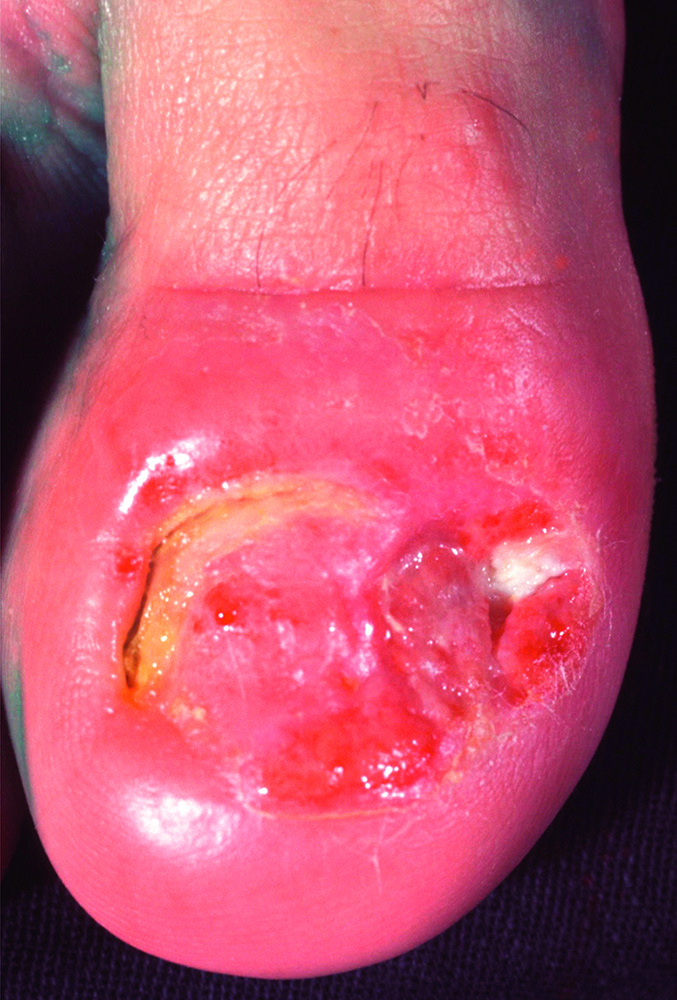
Fig. 71.28 Amelanotic melanoma. Note the diffuse nail destruction and ulcer- ation as well as swelling of the proximal nail fold. The tumor can resemble granulation tissue. Courtesy Lorenzo Cerroni, MD.
Fig.71.28s.1487