Bolognia 5e·Dermatoloji Çalışma Paneli
Ch 74

Bakteriyel Hastalıklar

Vol 2 · sayfa 1273 · §12
📖 Özet🃏 Flashcard Quiz🖼 Atlas
Fig. 74.3 Furuncles secondary to methicillin-resistant Staphylococcus aureus. Fluctuant erythematous nodules with a central pustule on the ankle (A) and finger (B). A, Courtesy Julie V. Schaffer, MD; B, Courtesy Frank Samarin, MD.
Fig.74.3 As.1548
Fig. 74.3 Furuncles secondary to methicillin-resistant Staphylococcus aureus. Fluctuant erythematous nodules with a central pustule on the ankle (A) and finger (B). A, Courtesy Julie V. Schaffer, MD; B, Courtesy Frank Samarin, MD.
Fig.74.3 Bs.1548
Fig. 74.5 Blistering distal dactylitis. Large vesiculopustule due to infection with group A Streptococcus. Courtesy Julie V. Schaffer, MD.
Fig.74.5s.1549
Fig. 74.6 Ecthyma. Ulceration with hemorrhagic crust on the wrist (A) and leg (B) due to infection with group A streptococci. A, Courtesy Kalman Watsky, MD; B, Courtesy Michal Kidacki, MD, PhD.
Fig.74.6 As.1550
Fig. 74.6 Ecthyma. Ulceration with hemorrhagic crust on the wrist (A) and leg (B) due to infection with group A streptococci. A, Courtesy Kalman Watsky, MD; B, Courtesy Michal Kidacki, MD, PhD.
Fig.74.6 Bs.1550
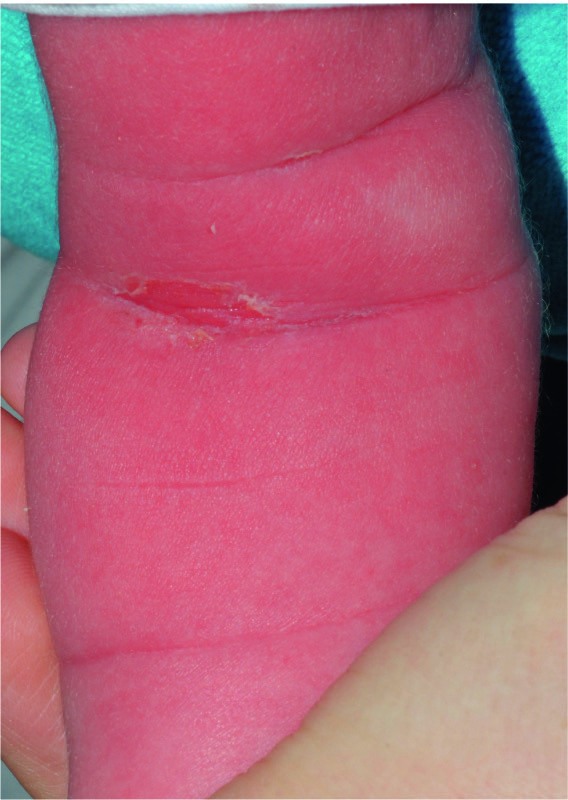
Fig. 74.7 Staphylococcal scalded skin syndrome. A Diffuse erythema with an early superficial erosion in the antecubital fossa. B More extensive involvement on the neck with a wrinkled appearance of the erythematous skin in addition to peeling and multiple erosions. Courtesy Julie V. Schaffer, MD.
Fig.74.7 As.1550
Fig. 74.7 Staphylococcal scalded skin syndrome. A Diffuse erythema with an early superficial erosion in the antecubital fossa. B More extensive involvement on the neck with a wrinkled appearance of the erythematous skin in addition to peeling and multiple erosions. Courtesy Julie V. Schaffer, MD.
Fig.74.7 Bs.1550
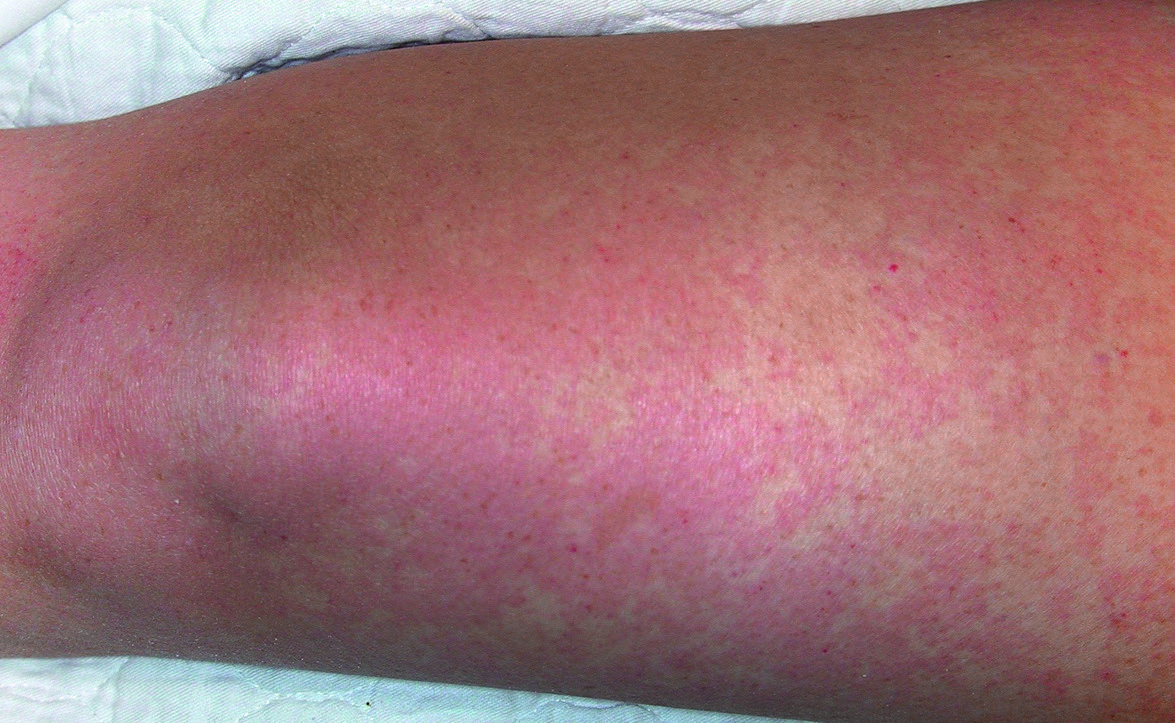
Fig. 74.8 Toxic shock syndrome due to Staphylococcus aureus infection. A Blotchy erythema is evident on the thigh. B Hyperemia of the conjunctiva is seen.
Fig.74.8 As.1552
Fig. 74.8 Toxic shock syndrome due to Staphylococcus aureus infection. A Blotchy erythema is evident on the thigh. B Hyperemia of the conjunctiva is seen.
Fig.74.8 Bs.1552
Fig. 74.9 Desquamation of the foot following scarlet fever. Courtesy Eugene Mirrer, MD.
Fig.74.9s.1553
Fig. 74.11 Cutaneous strepto- coccal infections. A, B Sharply demarcated erythema on the upper arm and chest (A) and buttocks (B) in two patients with erysipelas. C Streptococcal intertrigo presenting as a sharply demarcated, bright pink, moist plaque in the axilla of an infant. D Bright red erythema extending from the anal verge in a young boy with streptococcal perianal disease. A, Courtesy Lorenzo Cerroni, MD; B, Courtesy Mary Stone, MD; C, D, Courtesy Julie V. Schaffer, MD.
Fig.74.11 As.1554
Fig. 74.11 Cutaneous strepto- coccal infections. A, B Sharply demarcated erythema on the upper arm and chest (A) and buttocks (B) in two patients with erysipelas. C Streptococcal intertrigo presenting as a sharply demarcated, bright pink, moist plaque in the axilla of an infant. D Bright red erythema extending from the anal verge in a young boy with streptococcal perianal disease. A, Courtesy Lorenzo Cerroni, MD; B, Courtesy Mary Stone, MD; C, D, Courtesy Julie V. Schaffer, MD.
Fig.74.11 Bs.1554
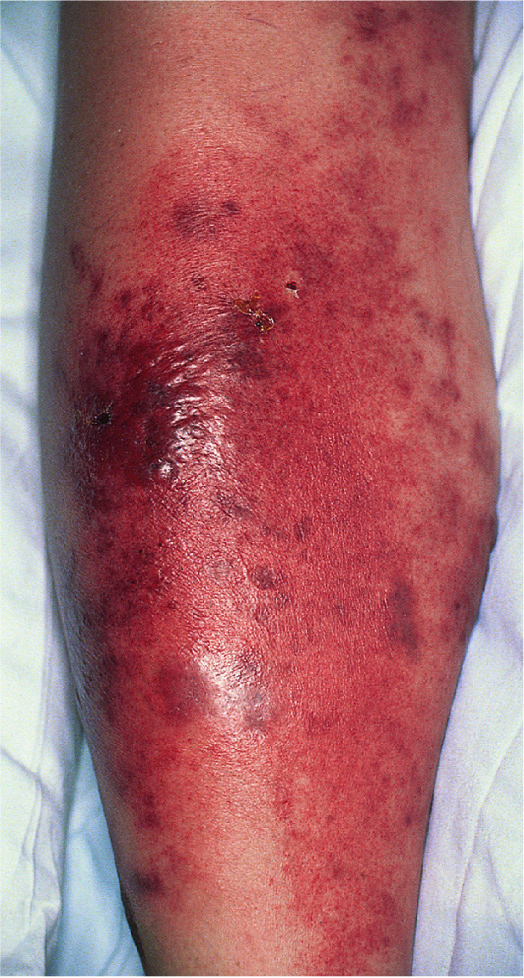
Fig. 74.12 Bullous and necrotizing cellulitis. A Extensive soft tissue infection of the lower extremity due to group A streptococcal infection. B Edema and confluent bullae. C Multiple areas of necrotic crusting and focal purulence due to streptococcal cellulitis.
Fig.74.12 As.1556
Fig. 74.12 Bullous and necrotizing cellulitis. A Extensive soft tissue infection of the lower extremity due to group A streptococcal infection. B Edema and confluent bullae. C Multiple areas of necrotic crusting and focal purulence due to streptococcal cellulitis.
Fig.74.12 Bs.1556
Fig. 74.12 Bullous and necrotizing cellulitis. A Extensive soft tissue infection of the lower extremity due to group A streptococcal infection. B Edema and confluent bullae. C Multiple areas of necrotic crusting and focal purulence due to streptococcal cellulitis.
Fig.74.12 Cs.1556
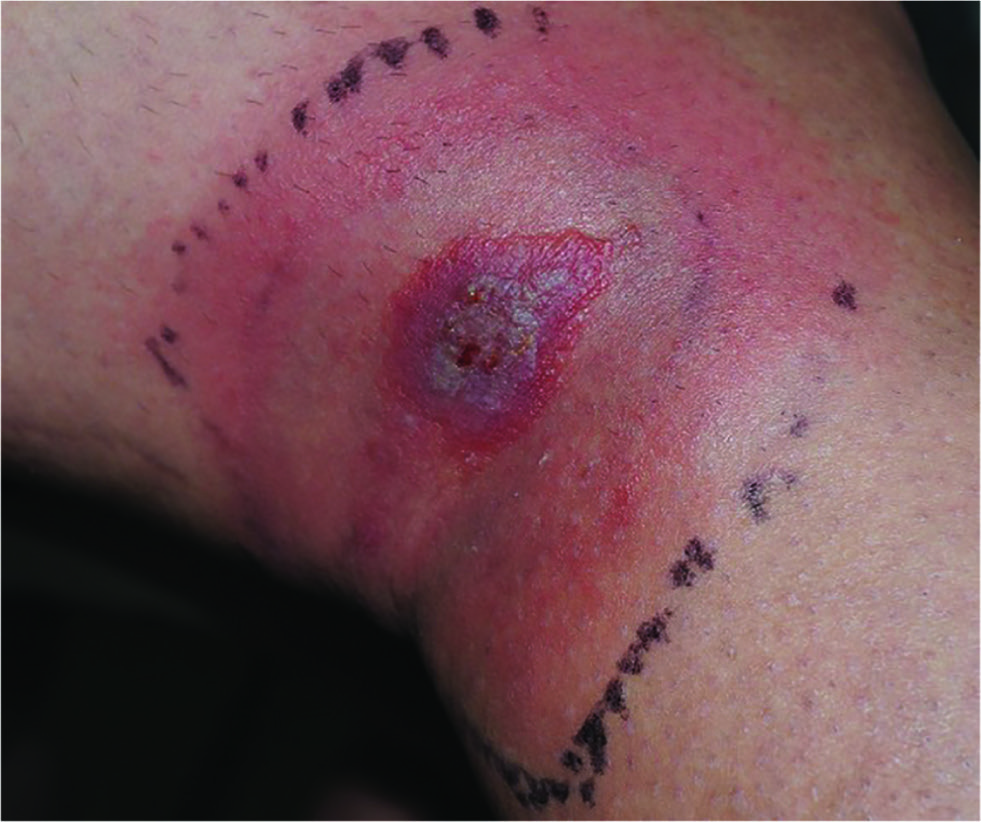
Fig. 74.15 Pseudocellulitis – clinical examples. A Erythema migrans with erosion following rupture of a central bulla. Inking of the skin reflects initial diagnosis of cellu- litis. B Extravasation reaction following infusion of docetaxel. C Excessive limb swelling (ELS) following injection of multiple vaccines. This reaction does not preclude future immunizations. D Acute gout with abrupt onset of severe pain, warmth and erythema of the left great toe with difficulty in weight bearing. E Acute inflammatory edema with erythematous, edematous plaque sparing the inguinal fold. A, Courtesy Kalman Watsky, MD; B, Courtesy Edward Cowen, MD; C, D, Courtesy Karynne O. Duncan, MD.
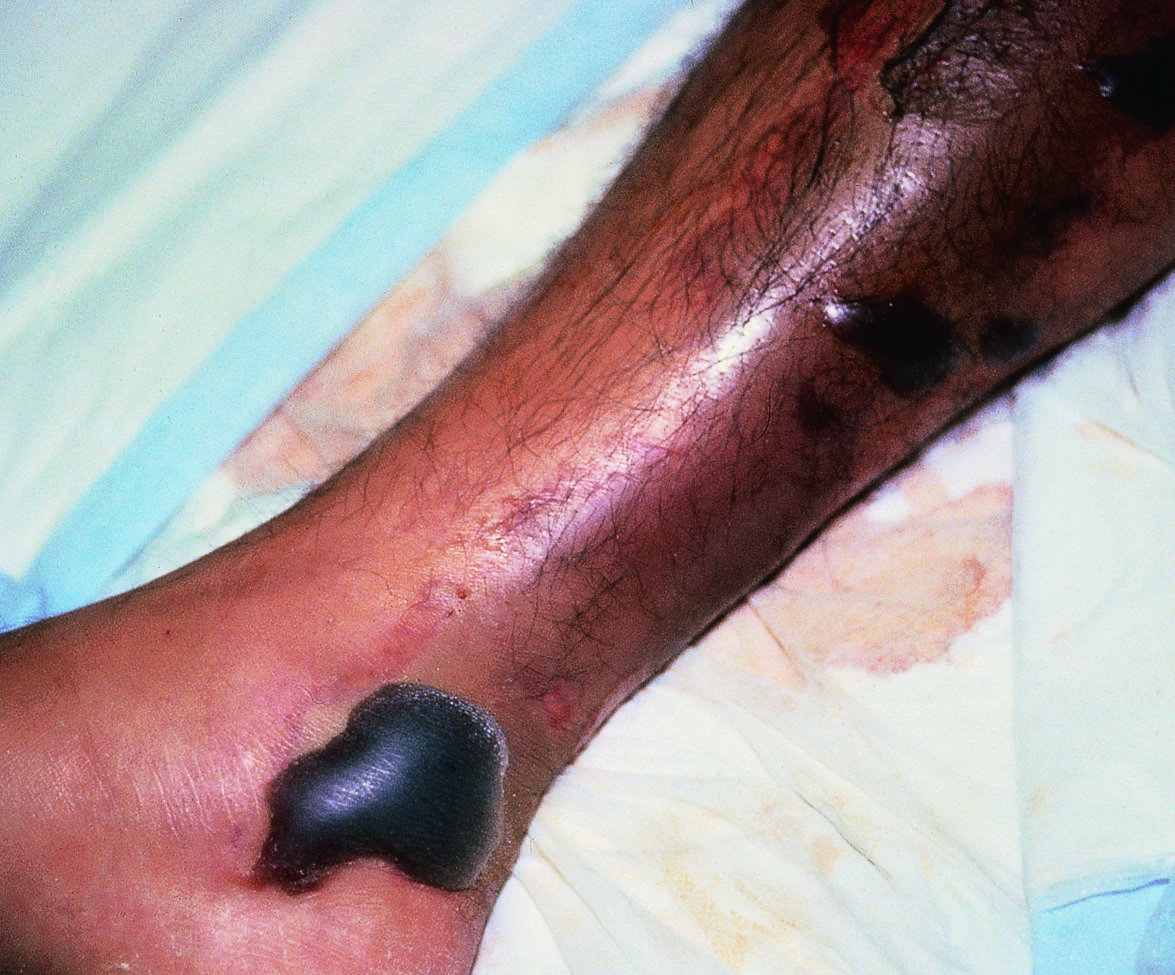
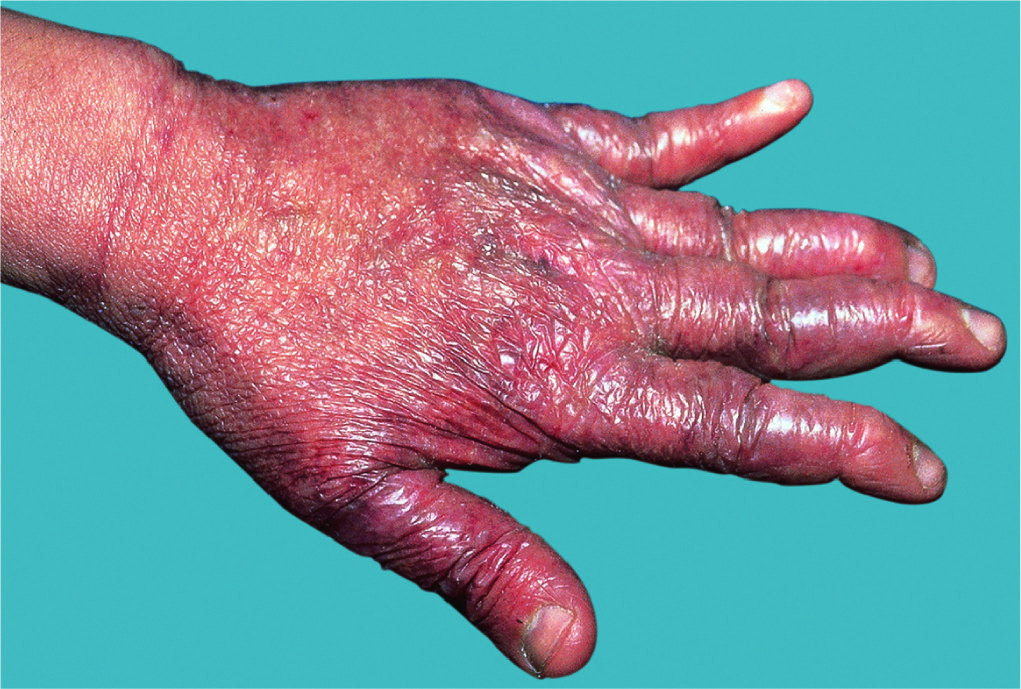
Fig.74.15 As.1557
Fig. 74.15 Pseudocellulitis – clinical examples. A Erythema migrans with erosion following rupture of a central bulla. Inking of the skin reflects initial diagnosis of cellu- litis. B Extravasation reaction following infusion of docetaxel. C Excessive limb swelling (ELS) following injection of multiple vaccines. This reaction does not preclude future immunizations. D Acute gout with abrupt onset of severe pain, warmth and erythema of the left great toe with difficulty in weight bearing. E Acute inflammatory edema with erythematous, edematous plaque sparing the inguinal fold. A, Courtesy Kalman Watsky, MD; B, Courtesy Edward Cowen, MD; C, D, Courtesy Karynne O. Duncan, MD.
Fig.74.15 Bs.1557
Fig. 74.15 Pseudocellulitis – clinical examples. A Erythema migrans with erosion following rupture of a central bulla. Inking of the skin reflects initial diagnosis of cellu- litis. B Extravasation reaction following infusion of docetaxel. C Excessive limb swelling (ELS) following injection of multiple vaccines. This reaction does not preclude future immunizations. D Acute gout with abrupt onset of severe pain, warmth and erythema of the left great toe with difficulty in weight bearing. E Acute inflammatory edema with erythematous, edematous plaque sparing the inguinal fold. A, Courtesy Kalman Watsky, MD; B, Courtesy Edward Cowen, MD; C, D, Courtesy Karynne O. Duncan, MD.
Fig.74.15 Cs.1557
Fig. 74.15 Pseudocellulitis – clinical examples. A Erythema migrans with erosion following rupture of a central bulla. Inking of the skin reflects initial diagnosis of cellu- litis. B Extravasation reaction following infusion of docetaxel. C Excessive limb swelling (ELS) following injection of multiple vaccines. This reaction does not preclude future immunizations. D Acute gout with abrupt onset of severe pain, warmth and erythema of the left great toe with difficulty in weight bearing. E Acute inflammatory edema with erythematous, edematous plaque sparing the inguinal fold. A, Courtesy Kalman Watsky, MD; B, Courtesy Edward Cowen, MD; C, D, Courtesy Karynne O. Duncan, MD.
Fig.74.15 Ds.1557
Fig. 74.15 Pseudocellulitis – clinical examples. A Erythema migrans with erosion following rupture of a central bulla. Inking of the skin reflects initial diagnosis of cellu- litis. B Extravasation reaction following infusion of docetaxel. C Excessive limb swelling (ELS) following injection of multiple vaccines. This reaction does not preclude future immunizations. D Acute gout with abrupt onset of severe pain, warmth and erythema of the left great toe with difficulty in weight bearing. E Acute inflammatory edema with erythematous, edematous plaque sparing the inguinal fold. A, Courtesy Kalman Watsky, MD; B, Courtesy Edward Cowen, MD; C, D, Courtesy Karynne O. Duncan, MD.
Fig.74.15 Es.1557
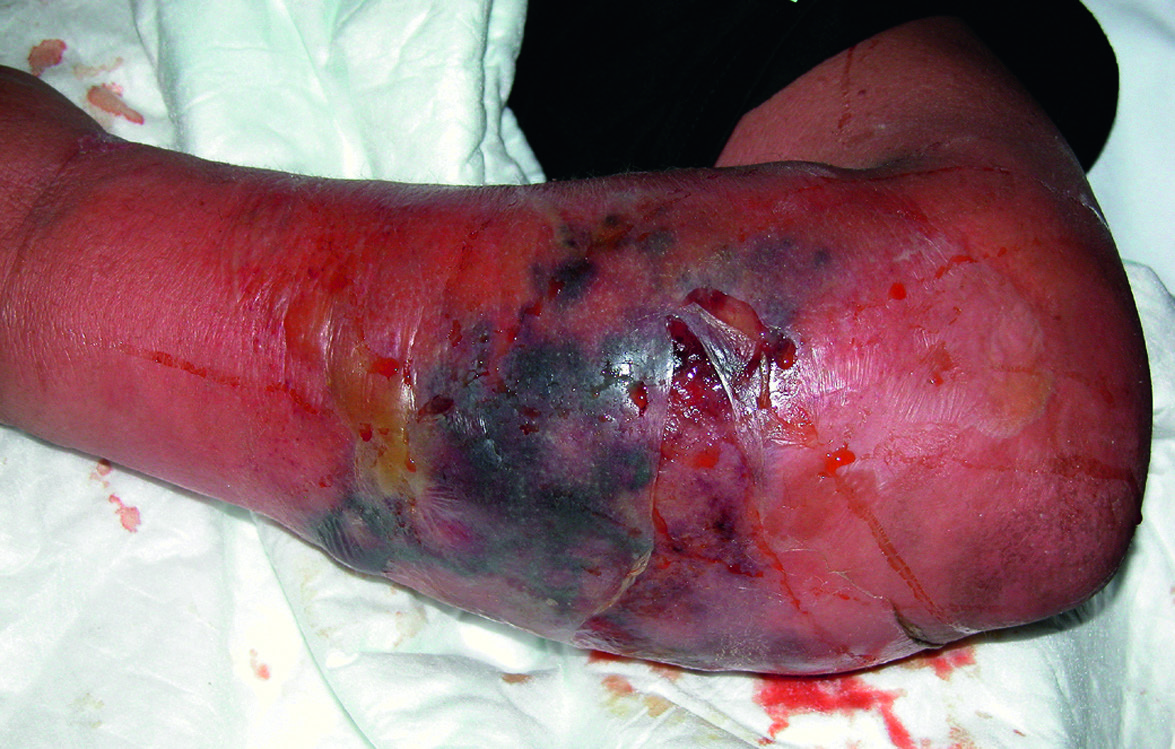
Fig. 74.17 Necrotizing fasciitis. Tense, woody edema of the forearm with purple–gray areas of necrosis and bullae with watery discharge. Intravenous drug use was a predisposing factor. Courtesy Luis Requena, MD.
Fig.74.17s.1559
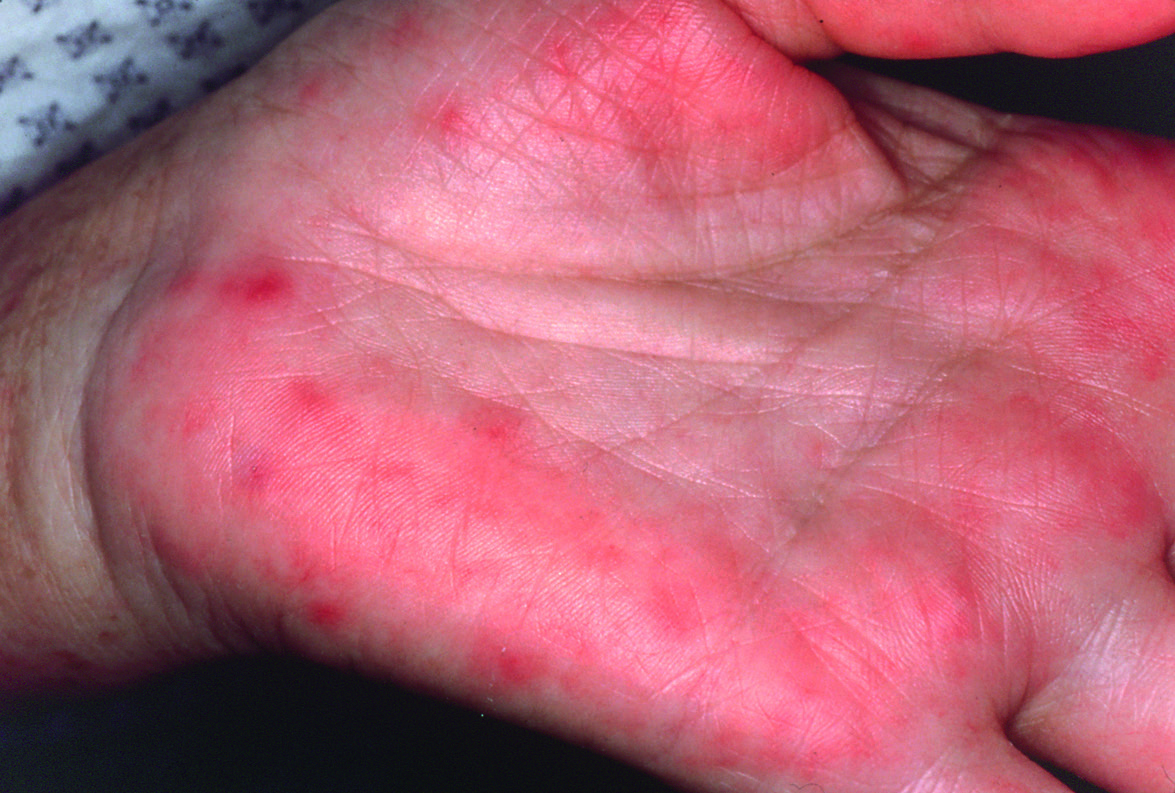
Fig. 74.19 Palmar lesions due to staphylococcal endocarditis.
Fig.74.19s.1560
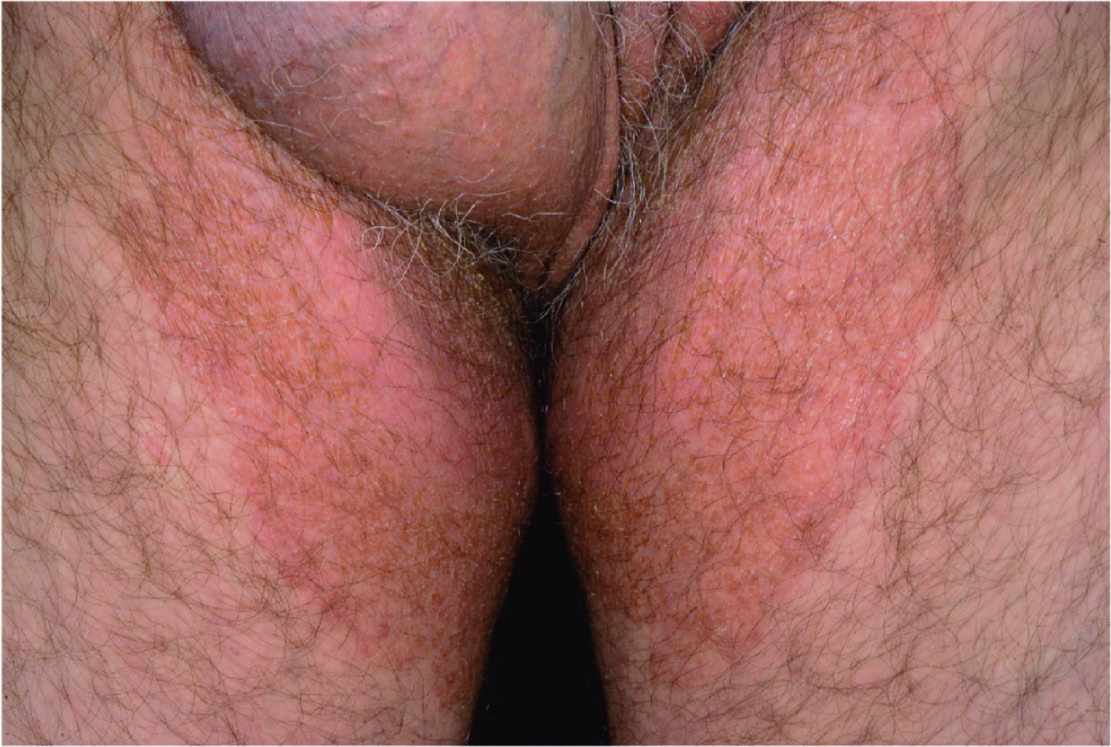
Fig. 74.20 Erythrasma. A Pink to brown scaly patches on the upper inner thighs. B Coral-red fluorescence upon illumi- nation with a Wood’s lamp. C Hyperpigmented plaques in the inguinal and periumbilical areas. D Well-demarcated, scaly, hyper- pigmented plaque of disciform erythrasma. A, B, Courtesy Louis A. Fragola, Jr, MD.
Fig.74.20 As.1561
Fig. 74.20 Erythrasma. A Pink to brown scaly patches on the upper inner thighs. B Coral-red fluorescence upon illumi- nation with a Wood’s lamp. C Hyperpigmented plaques in the inguinal and periumbilical areas. D Well-demarcated, scaly, hyper- pigmented plaque of disciform erythrasma. A, B, Courtesy Louis A. Fragola, Jr, MD.
Fig.74.20 Bs.1561
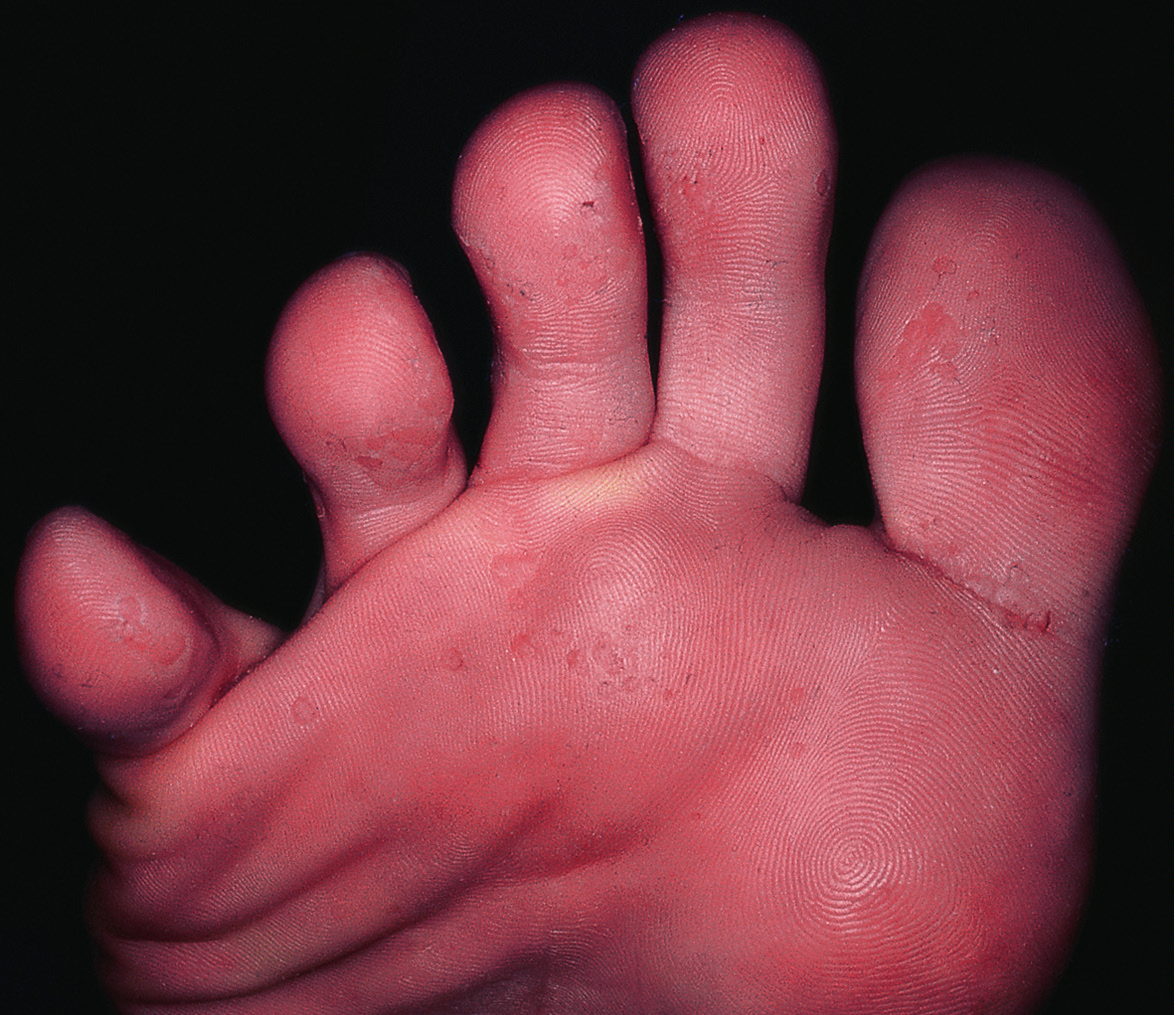
Fig. 74.21 Pitted keratolysis of the plantar surface of the foot. Multiple small (A) and larger coalescing (B) craters with decreased stratum corneum that favor pressure points on the plantar surface. Courtesy Kalman Watsky, MD.
Fig.74.21 As.1562
Fig. 74.21 Pitted keratolysis of the plantar surface of the foot. Multiple small (A) and larger coalescing (B) craters with decreased stratum corneum that favor pressure points on the plantar surface. Courtesy Kalman Watsky, MD.
Fig.74.21 Bs.1562
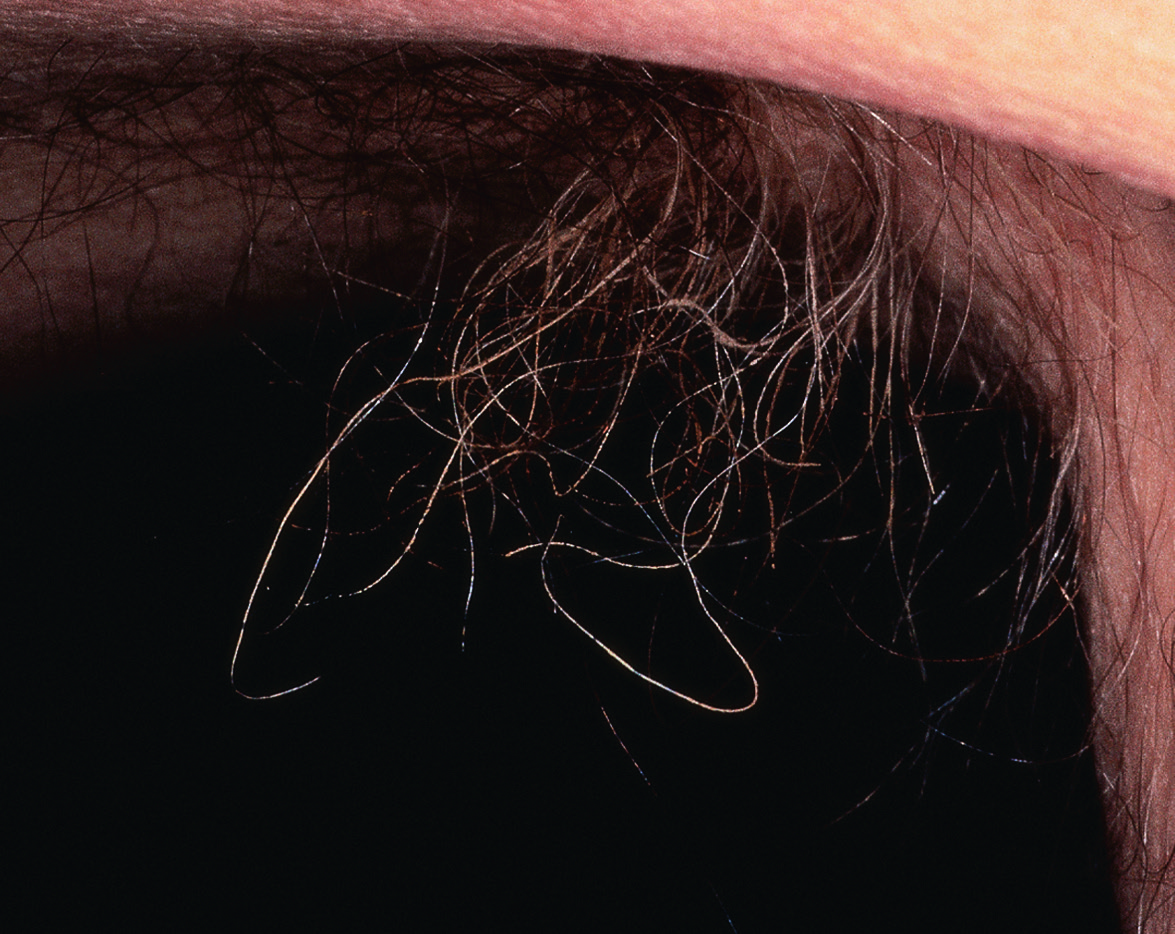
Fig. 74.22 Trichomycosis axillaris. Cylindrical sheaths and beading of the axillary hairs. A yellow color is seen most commonly.
Fig.74.22s.1562
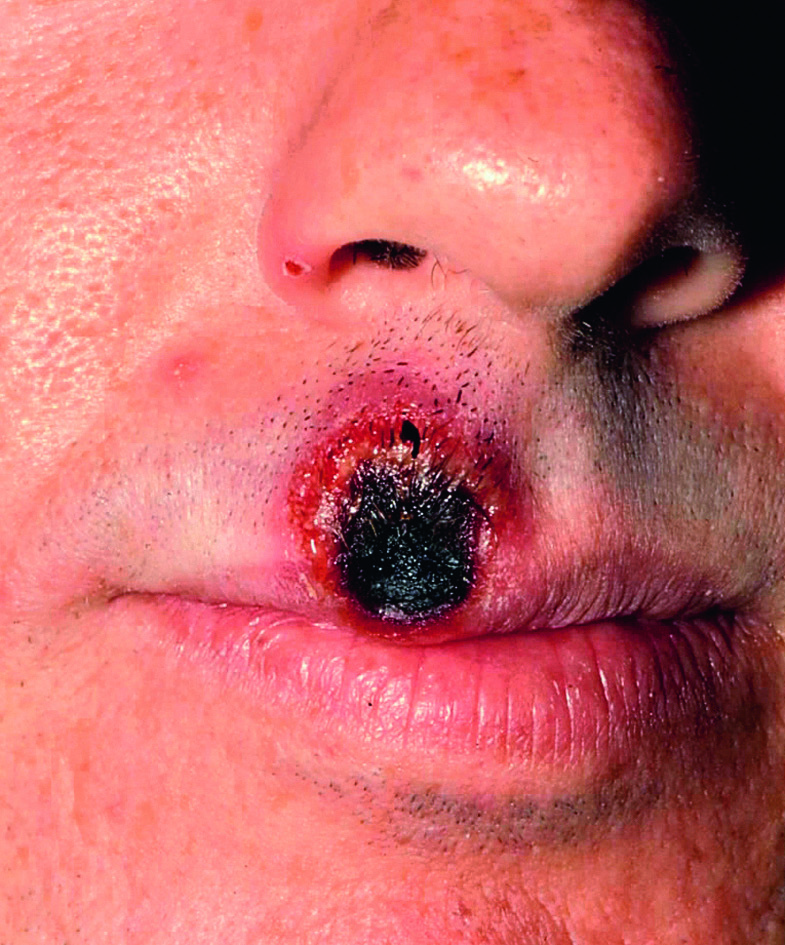
Fig. 74.23 Ecthyma diphthericum. Punched-out ulcer with a black eschar on the upper lip. Courtesy Joyce Rico, MD.
Fig.74.23s.1562
Fig. 74.24 Erysipeloid. Erythema and edema with vesicle formation on the hand and fifth digit.
Fig.74.24s.1564
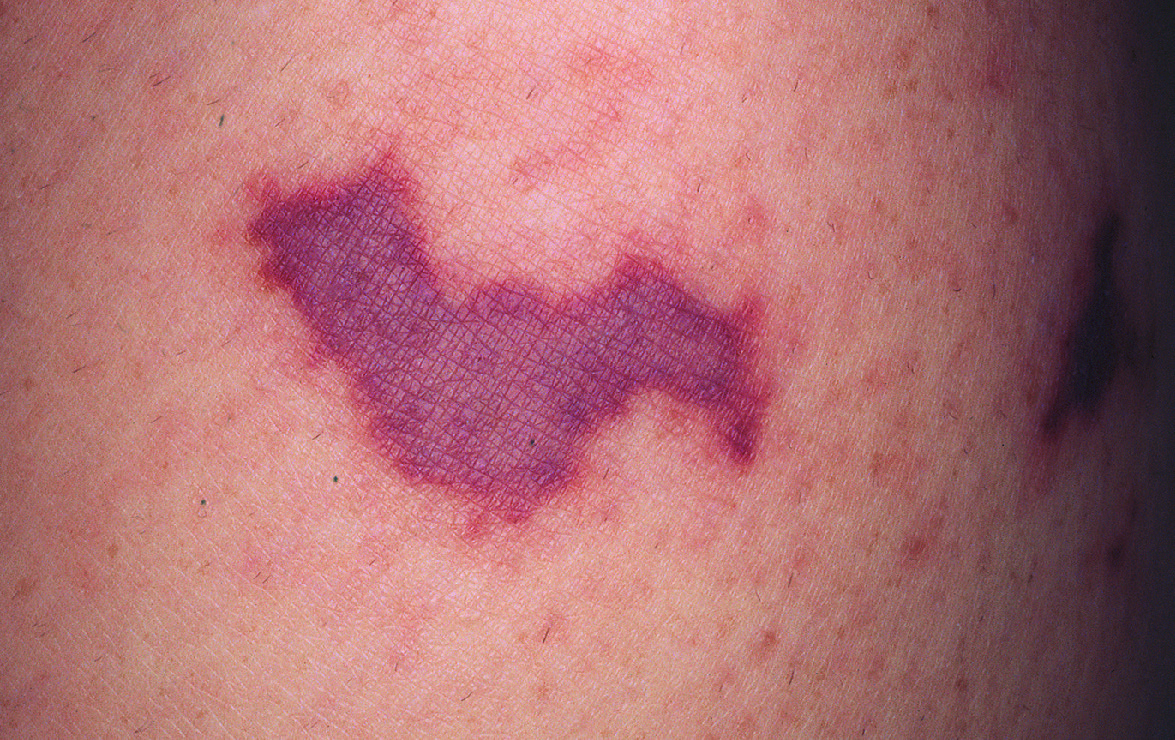
Fig. 74.25 Acute meningococcemia. Purpura with irregular outline and central gunmetal gray color. Courtesy Kalman Watsky, MD.
Fig.74.25s.1565
Fig. 74.26 Green nail syndrome. Blue–green discoloration of the nail due to pyocyanin produced by Pseudomonas aeruginosa. Note the associated onycholysis. Courtesy Julie V. Schaffer, MD.
Fig.74.26s.1566
Fig. 74.27 Superficial infection of the skin with Pseudomonas. Note the macer- ation, erosions, and moth-eaten appearance of the skin. Courtesy Kalman Watsky, MD.
Fig.74.27s.1566
Fig. 74.28 Pseudomonas hot-foot syndrome. Tender erythematous nodules on the heel. Courtesy Justin J. Green, MD.
Fig.74.28s.1567
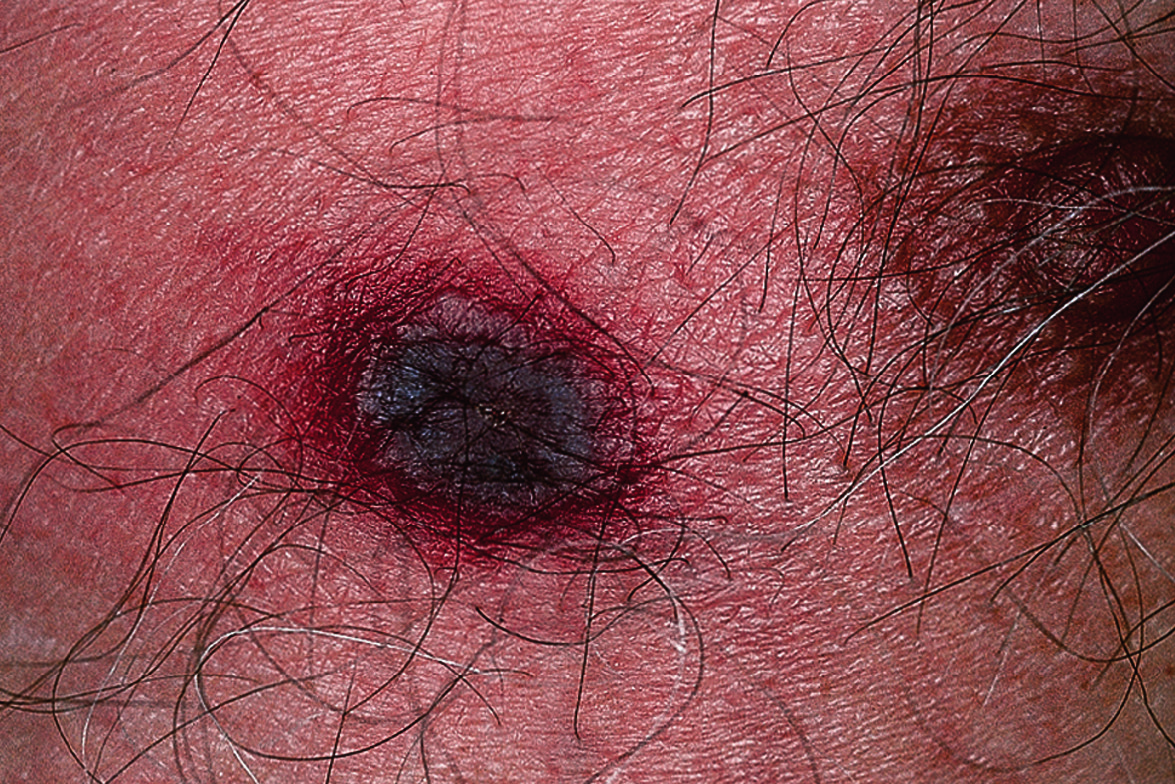
Fig. 74.29 Ecthyma gangrenosum. Embolic lesion of Pseudomonas aeruginosa on the chest. Note the necrotic center and inflammatory border.
Fig.74.29s.1567
Fig. 74.30 Bacillary angiomatosis. A Bright red nodule and papule on the forehead. B Histologically, a dermal proliferation of vessels with plump endothelial cells is evident and scattered neutrophils are present in the accom- panying infiltrate. Bacilli (in this case Bartonella henselae) are identified with the Warthin–Starry stain (inset). B, Courtesy James Patterson, MD.
Fig.74.30 As.1571
Fig. 74.30 Bacillary angiomatosis. A Bright red nodule and papule on the forehead. B Histologically, a dermal proliferation of vessels with plump endothelial cells is evident and scattered neutrophils are present in the accom- panying infiltrate. Bacilli (in this case Bartonella henselae) are identified with the Warthin–Starry stain (inset). B, Courtesy James Patterson, MD.
Fig.74.30 Bs.1571
Fig. 74.31 Clinical manifestations of brucellosis. With permission from Slack MPE. Gram-negative coccobacilli. In: Armstrong D, Powderly WG (eds). Infectious Diseases. Edinburgh: Mosby, 2004.
Fig.74.31s.1571
Fig. 74.34 Hemorrhagic bullae of the leg secondary to Vibrio vulnificus infection.
Fig.74.34s.1575
Fig. 74.35 Acrodermatitis chronica atrophicans. The acral skin is atrophic, shiny, and wrinkled, with prominent superficial veins.
Fig.74.35s.1576
Fig. 74.36 Cutaneous yaws on the knee of an adolescent from Indonesia. Courtesy Peter Ehrnstrom, MD.
Fig.74.36s.1576
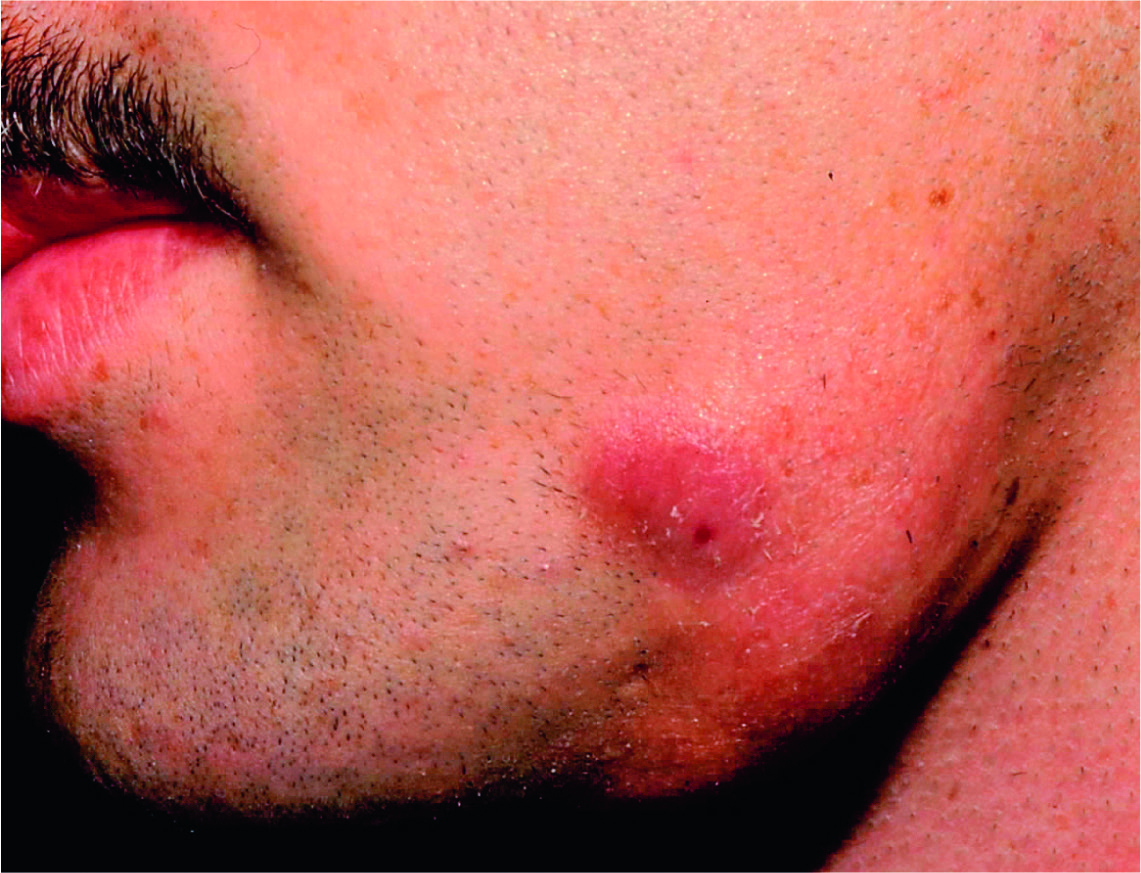
Fig. 74.37 Cervicofacial actinomycosis or “lumpy jaw”. Soft tissue swelling and draining erythematous nodules are seen. The discharge contained sulfur granules. Courtesy Joyce Rico, MD.
Fig.74.37s.1577