Bolognia 5e·Dermatoloji Çalışma Paneli
Ch 79

İnsan Papillomavirüsleri (HPV)

Vol 2 · sayfa 1394 · §12
📖 Özet🃏 Flashcard Quiz🖼 Atlas
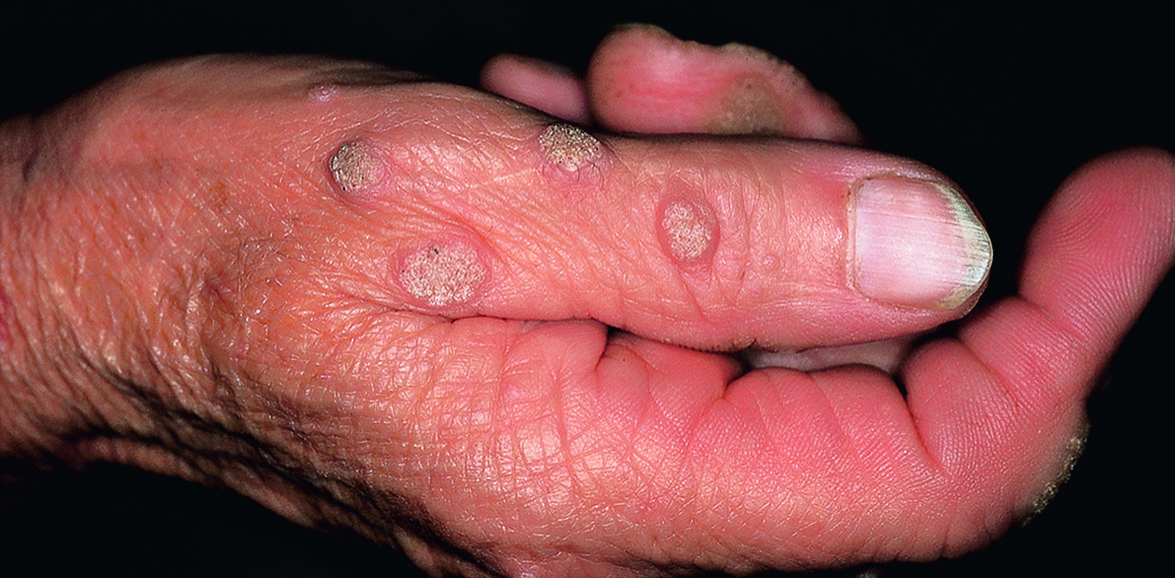
Fig. 79.4 Verrucae vulgares (common warts). Courtesy A. Geusau, MD.
Fig.79.4 As.1696
Fig. 79.4 Verrucae vulgares (common warts). Courtesy A. Geusau, MD.
Fig.79.4 Bs.1696
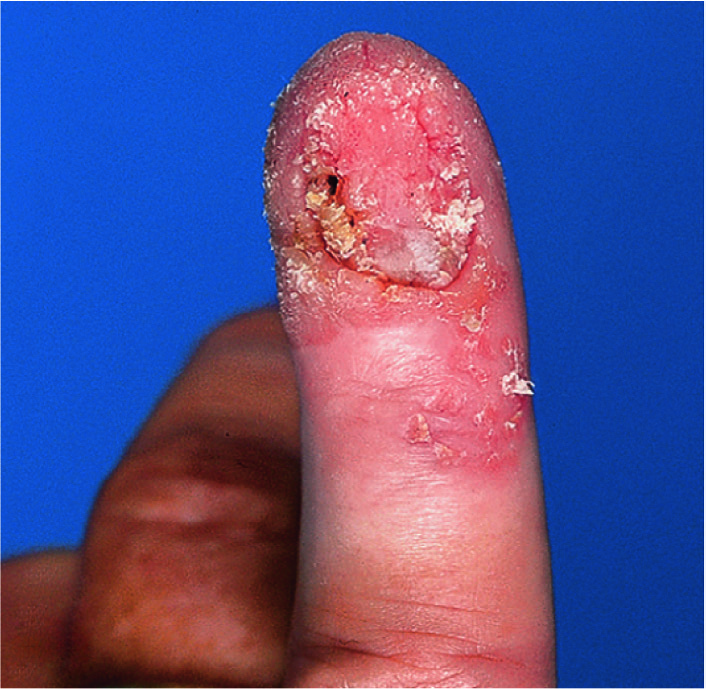
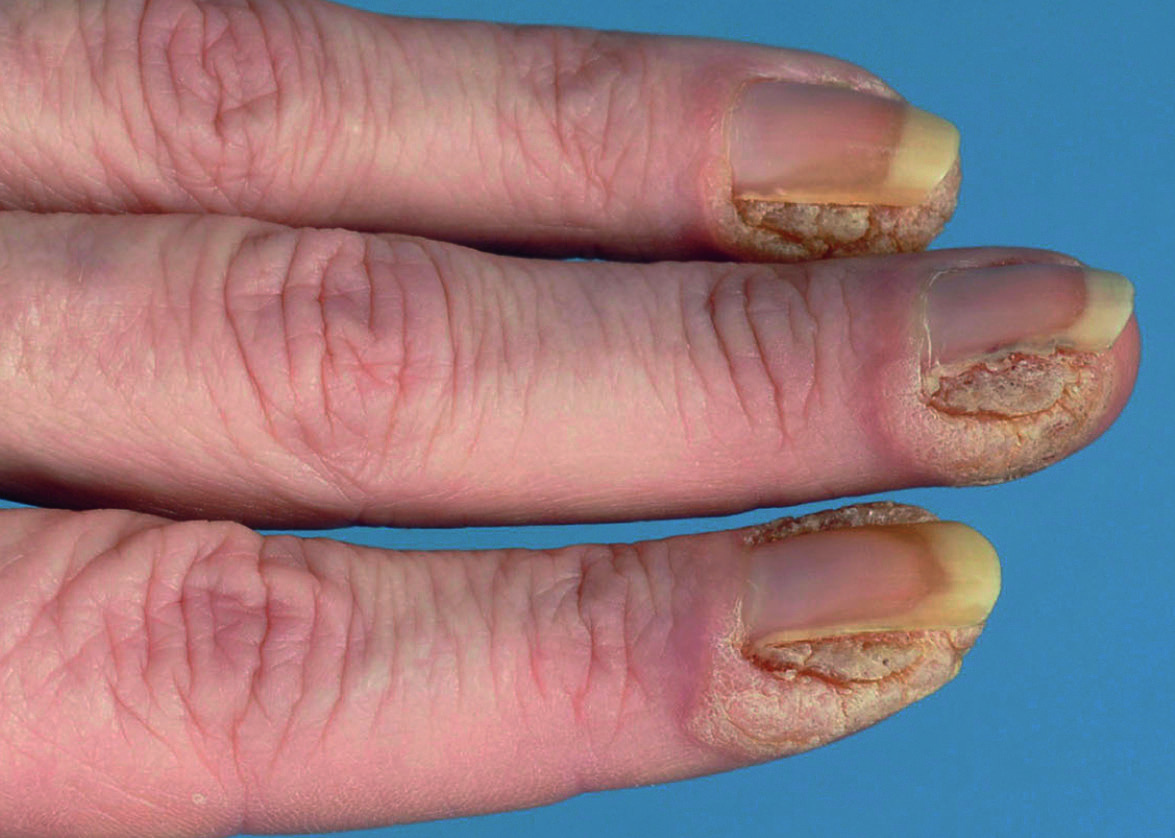
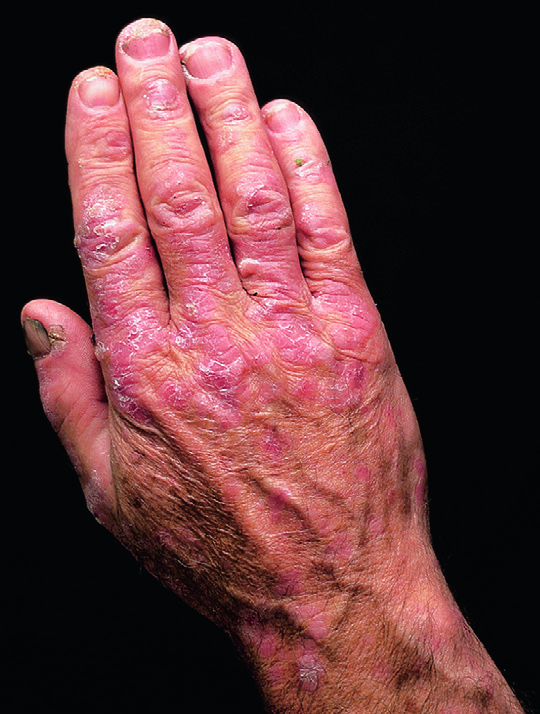
Fig. 79.5 Periungual common warts. Destruction of the nail matrix and bed can lead to partial (A) or complete (B) absence of the nail plate. Bowen disease may be considered in the differential diagnosis, especially for a single, recalcitrant digital wart.
Fig.79.5s.1696
Fig. 79.6 Verrucae plantares (plantar warts). The photo was taken after shaving of the hyperkeratotic surface; the black dots represent hemorrhage into the stratum corneum.
Fig.79.6s.1696
Fig. 79.7 Multiple filiform warts on the lower face.
Fig.79.7s.1697
Fig. 79.8 Myrmecial wart. The wart at the base of the distal phalanx of the hallux is painful due to deep endophytic growth; in addition, there are confluent plaques of superficial warts (mosaic warts).
Fig.79.8s.1697
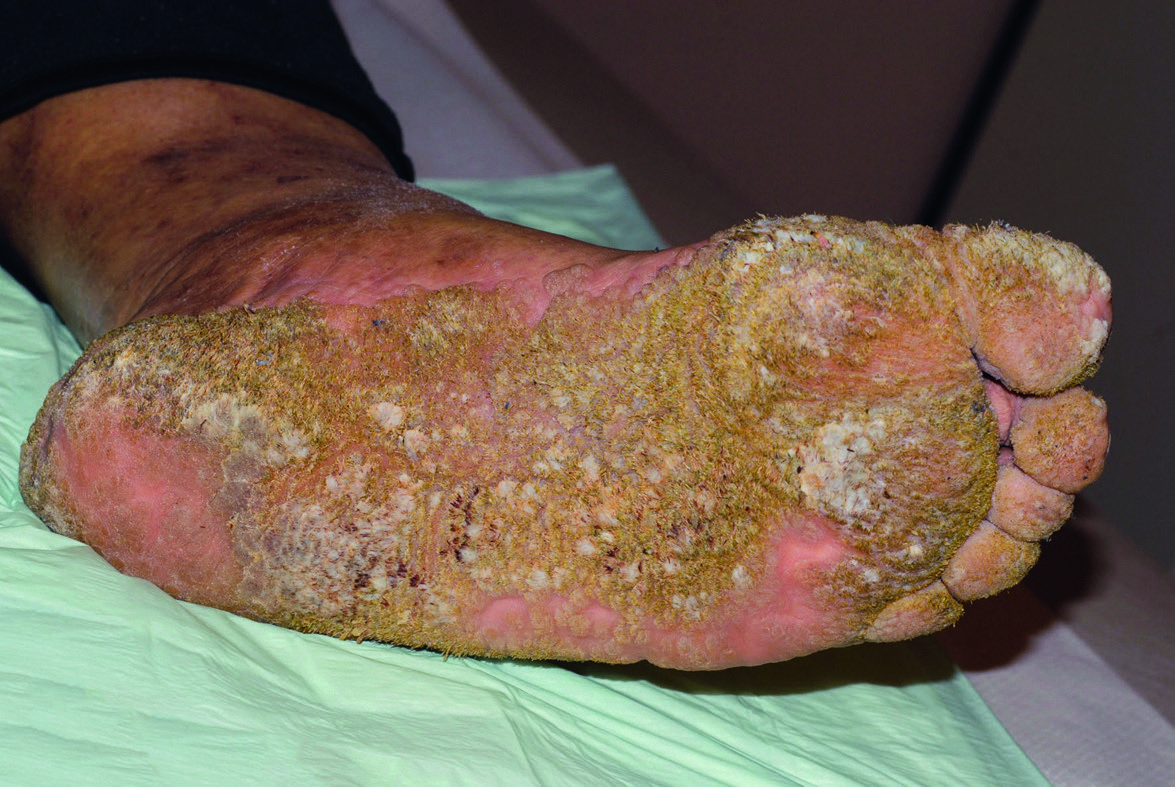
Fig. 79.9 Extensive and chronic verrucosis of the soles in a patient with hepatic cirrhosis due to alcoholism. HPV-27 DNA was isolated from the lesions.
Fig.79.9s.1697
Fig. 79.10 Verrucae planae (flat warts). Multiple skin-colored or pink (A, B) to brown (C) smooth-surfaced, flat-topped papules. (D) Thin pink papules and plaques that are well demarcated and have more scale than the patients in A-C. These lesions are typically caused by HPV-3 or -10. B, Courtesy Kalman Watsky, MD; C, Courtesy Julie V. Schaffer, MD.
Fig.79.10 As.1698
Fig. 79.10 Verrucae planae (flat warts). Multiple skin-colored or pink (A, B) to brown (C) smooth-surfaced, flat-topped papules. (D) Thin pink papules and plaques that are well demarcated and have more scale than the patients in A-C. These lesions are typically caused by HPV-3 or -10. B, Courtesy Kalman Watsky, MD; C, Courtesy Julie V. Schaffer, MD.
Fig.79.10 Bs.1698
Fig. 79.10 Verrucae planae (flat warts). Multiple skin-colored or pink (A, B) to brown (C) smooth-surfaced, flat-topped papules. (D) Thin pink papules and plaques that are well demarcated and have more scale than the patients in A-C. These lesions are typically caused by HPV-3 or -10. B, Courtesy Kalman Watsky, MD; C, Courtesy Julie V. Schaffer, MD.
Fig.79.10 Cs.1698
Fig. 79.11 Epidermodysplasia verruciformis (EV). A Confluent scaly papules and plaques resembling flat warts. B Numerous hypopigmented and light pink, flat-topped papules, some of which are in a linear array, in acquired HIV-associated EV. B, Courtesy Ncoza Dlova, MD.
Fig.79.11 As.1698
Fig. 79.11 Epidermodysplasia verruciformis (EV). A Confluent scaly papules and plaques resembling flat warts. B Numerous hypopigmented and light pink, flat-topped papules, some of which are in a linear array, in acquired HIV-associated EV. B, Courtesy Ncoza Dlova, MD.
Fig.79.11 Bs.1698
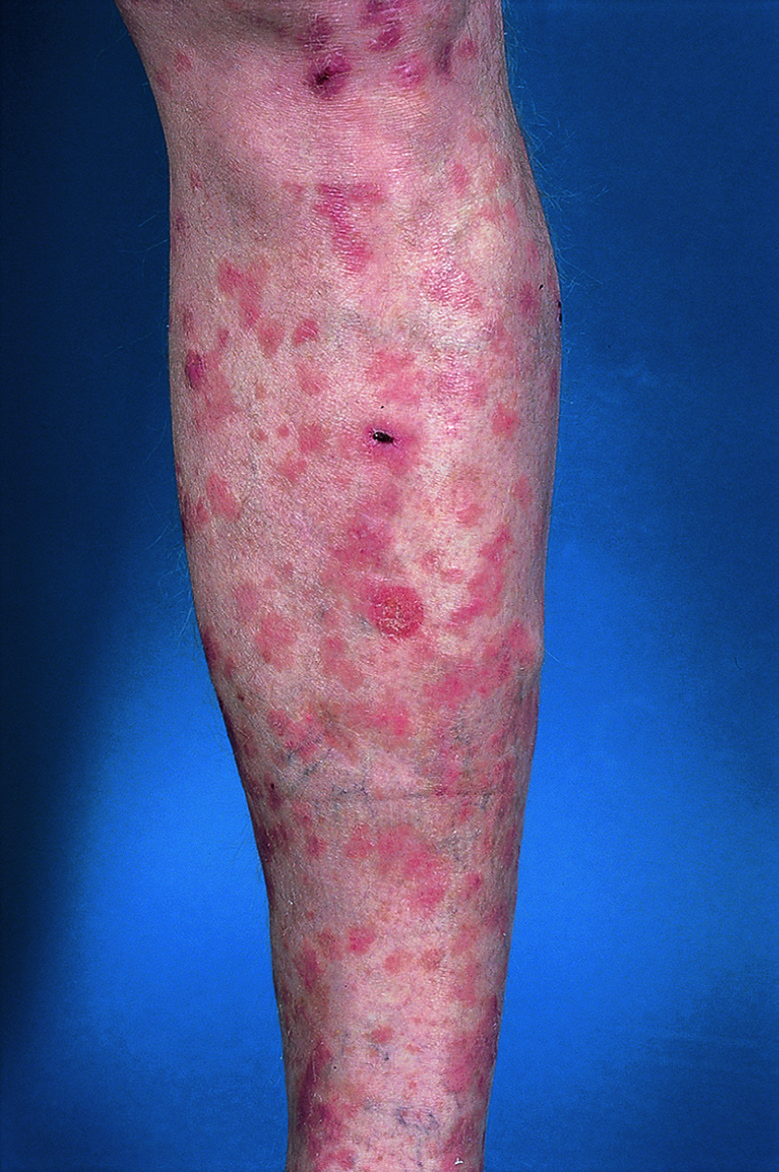
Fig. 79.12 Epidermodysplasia verruciformis. Generalized erythem- atous macules and plaques are seen in the same patient as shown in Fig. 79.11A. Lesions tested positive for HPV-8 and -36.
Fig.79.12s.1698
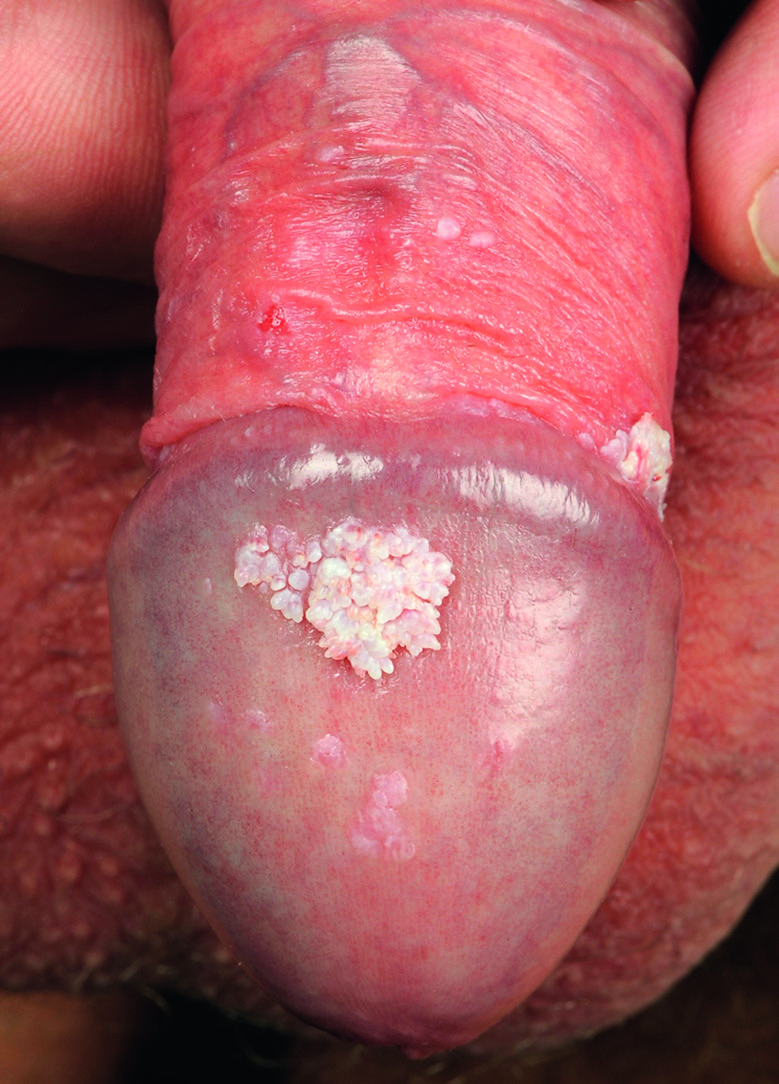
Fig. 79.13 Condylomata acuminata. Verrucous lesions on the glans and in the sulcus, with a few small papules on the shaft of the penis and distal glans. Note the acuminate topog- raphy, i.e. the tapering to a point. Courtesy Lorenzo Cerroni, MD.
Fig.79.13 As.1699
Fig. 79.13 Condylomata acuminata. Verrucous lesions on the glans and in the sulcus, with a few small papules on the shaft of the penis and distal glans. Note the acuminate topog- raphy, i.e. the tapering to a point. Courtesy Lorenzo Cerroni, MD.
Fig.79.13 Bs.1699
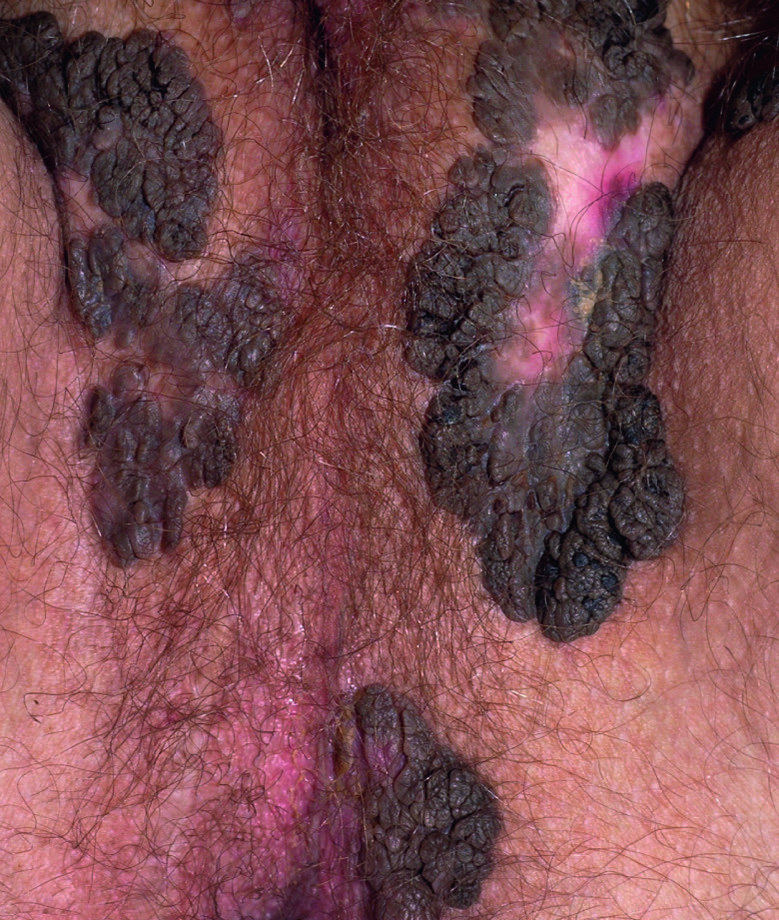
Fig. 79.14 Condylomata acuminata. A Confluent lesions forming hyper- pigmented plaques in the perineal region and along the inguinal fold. A depigmented scar is seen at the site of prior treatment with liquid nitrogen. B Large, exophytic, broad-based or pedunculated papil- lomas in a healthy 15-year-old boy. The differential diagnosis includes Buschke- Löwenstein tumor.
Fig.79.14s.1699
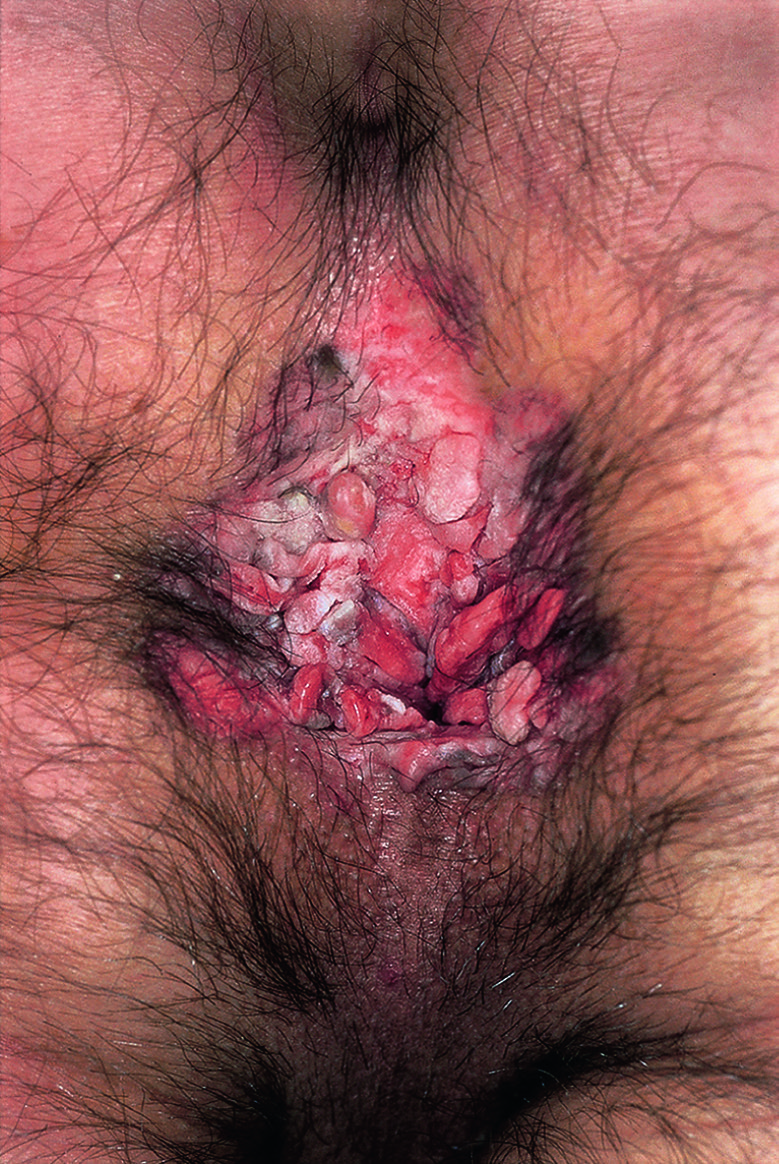
Fig. 79.16 Bowenoid papulosis of the anus positive for high-risk mucosal HPV in a man who had sex with men. Histology revealed high- grade anal intraepithelial neoplasia (AIN), not invasive SCC. However, continued monitoring is indicated.
Fig.79.16s.1699
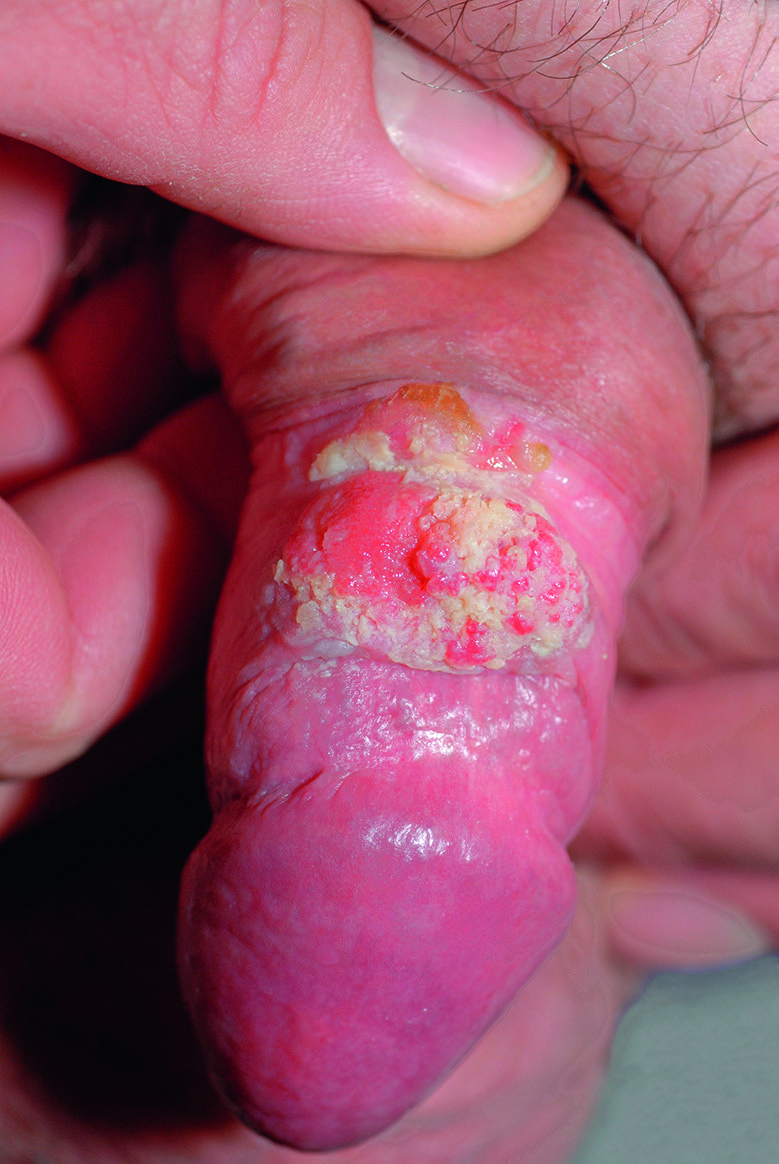
Fig. 79.17 Erythroplasia of Queyrat. A well-demarcated velvety plaque of the prepuce positive for high-risk HPV; histology revealed high-grade penile intra­ epithelial neoplasia (PIN).
Fig.79.17 As.1700
Fig. 79.17 Erythroplasia of Queyrat. A well-demarcated velvety plaque of the prepuce positive for high-risk HPV; histology revealed high-grade penile intra­ epithelial neoplasia (PIN).
Fig.79.17 Bs.1700
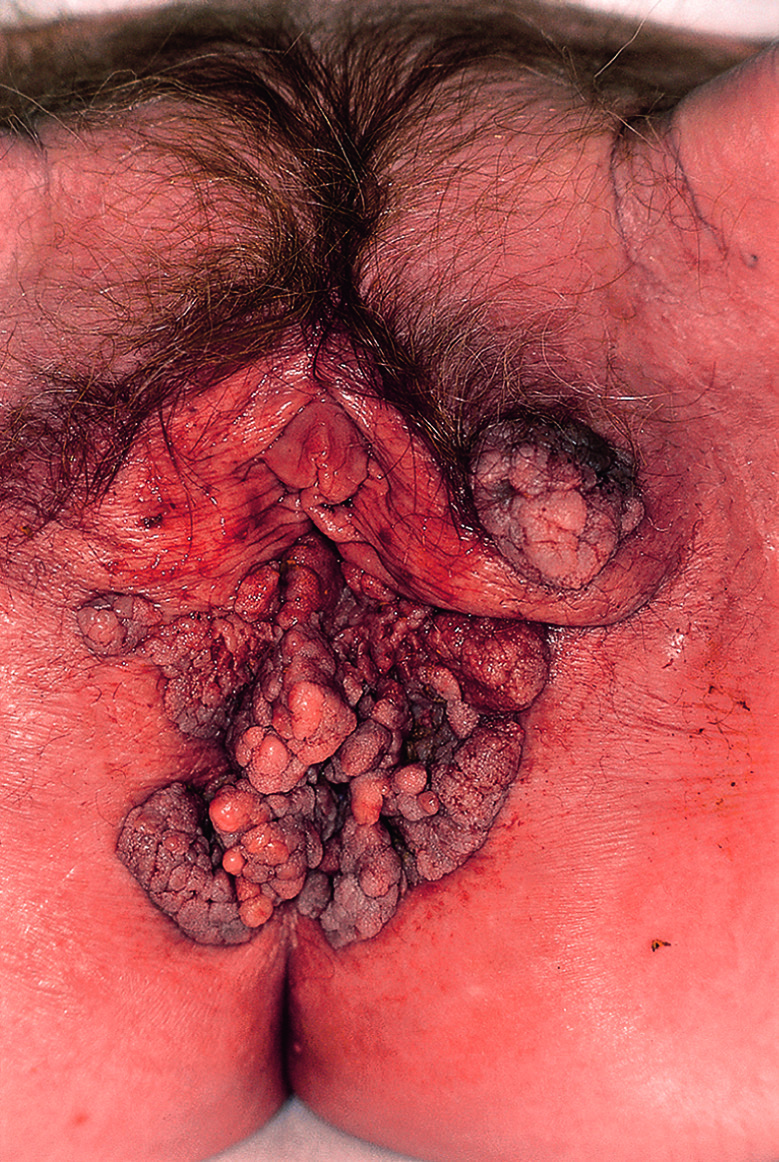
Fig. 79.18 Giant condy- lomata acuminata (Buschke–Löwenstein tumor). Cauliflower-like, deeply infiltrating giant condylomata acuminata in an older woman.
Fig.79.18s.1700
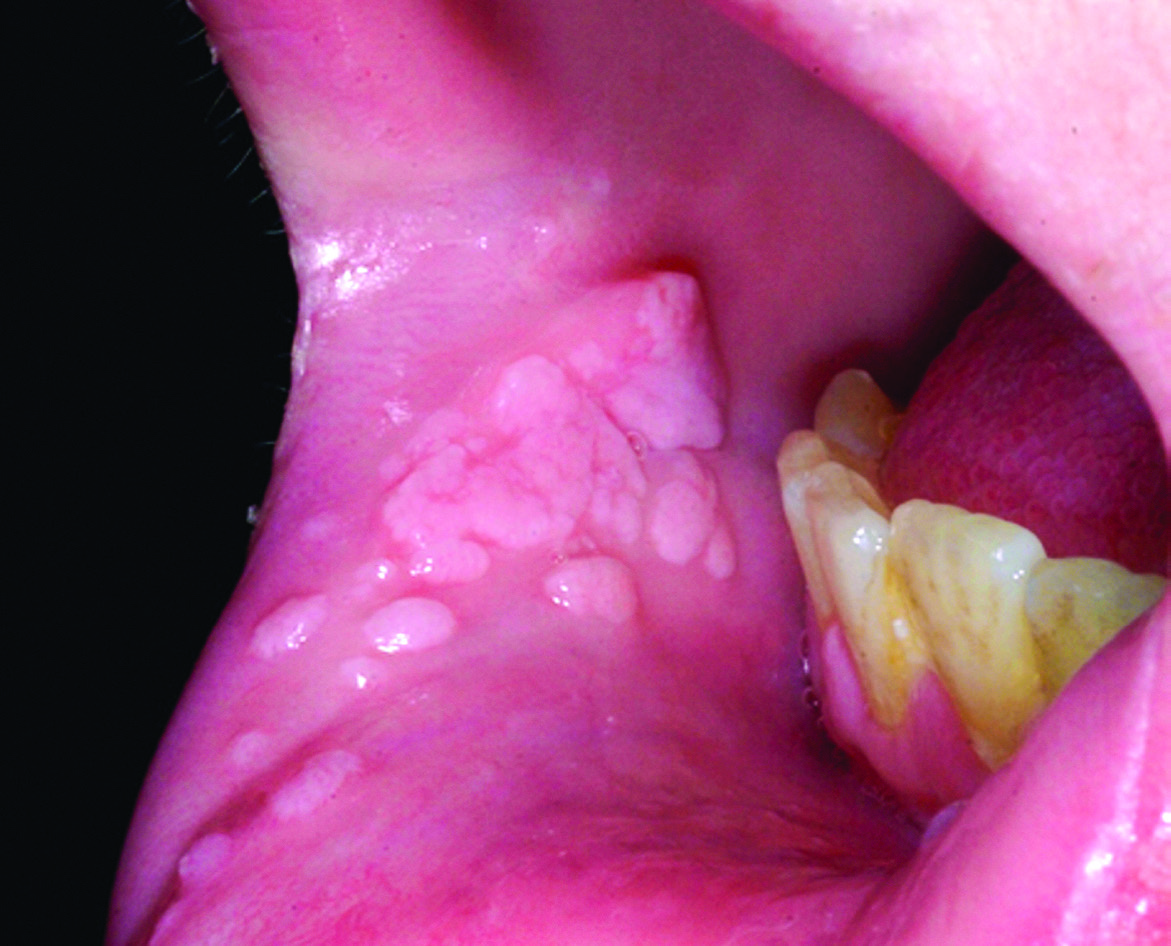
Fig. 79.20 Oral warts. Papillomas of the labial mucosa in a 6-year-old child.
Fig.79.20s.1700
Fig. 79.21 Verruca vulgaris – histopatho- logic features. Note the characteristic features of “church spire” papil- lomatosis heaped with ortho- and parakeratosis, acanthosis, hypergranu- losis, and koilocytosis. Courtesy R. Tyler, MD.
Fig.79.21 As.1701
Fig. 79.21 Verruca vulgaris – histopatho- logic features. Note the characteristic features of “church spire” papil- lomatosis heaped with ortho- and parakeratosis, acanthosis, hypergranu- losis, and koilocytosis. Courtesy R. Tyler, MD.
Fig.79.21 Bs.1701
Fig. 79.24 Invasive squamous cell carcinoma of the penis. It developed over more than a decade from a papular lesion of the prepuce. HPV-16 and -51 DNAs were detected by RT-PCR.
Fig.79.24s.1703
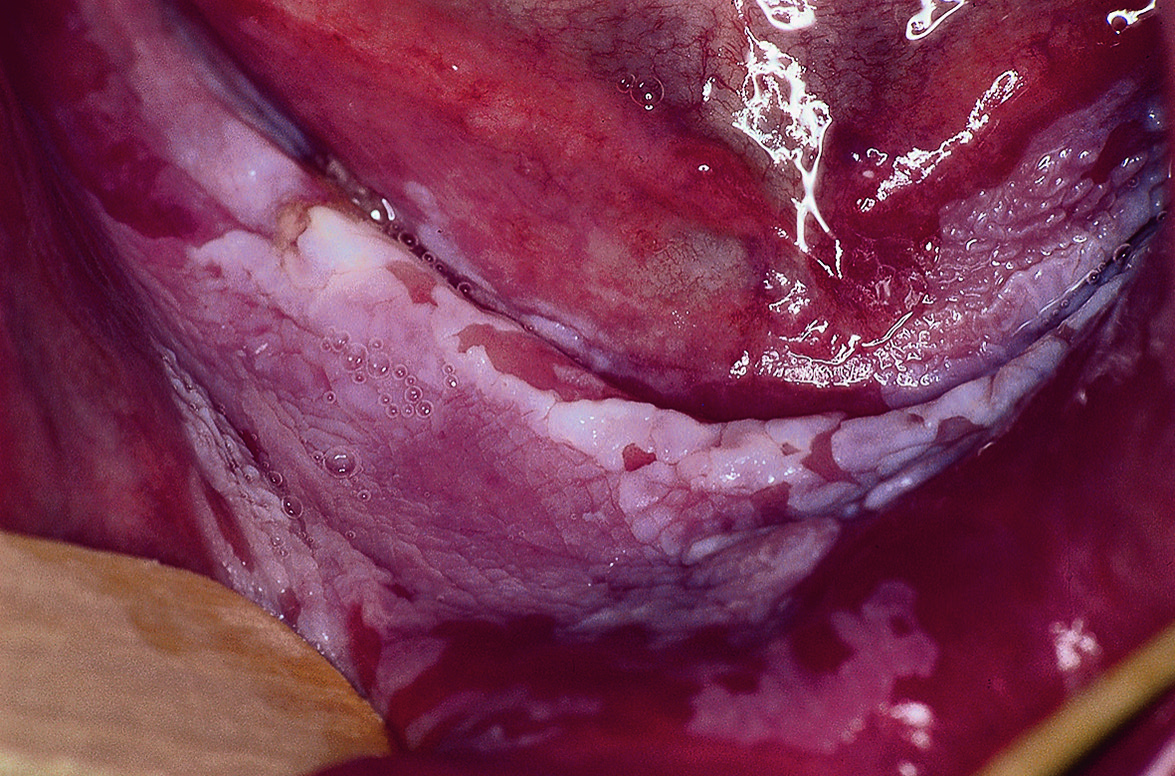
Fig. 79.25 Proliferative verrucous leukoplakia of the oral cavity. The lesions have focally progressed to invasive squamous cell carcinoma; HPV DNA was not detectable by PCR.
Fig.79.25s.1703