Bolognia 5e·Dermatoloji Çalışma Paneli
Ch 80

İnsan Herpesvirüsleri (HSV/VZV)

Vol 2 · sayfa 1412 · §12
📖 Özet🃏 Flashcard Quiz🖼 Atlas
Fig. 80.1 Orolabial herpes simplex virus (HSV) infections. A Primary herpes gingivostomatitis due to HSV-1 in a child. Note the coalescing lesions with scalloped borders. B Primary versus non-primary initial HSV-2 infection in a teenager. There are grouped vesicles on an erythem- atous base; note the scalloped borders. C Recurrent herpes labialis (cold sore, fever blister). D Extensive HSV gingivostomatitis in a woman who was not immunosuppressed. A, Courtesy Julie V. Schaffer, MD; B, Courtesy Jean L. Bolognia, MD; D, Courtesy Kalman Watsky, MD.
Fig.80.1 As.1716
Fig. 80.1 Orolabial herpes simplex virus (HSV) infections. A Primary herpes gingivostomatitis due to HSV-1 in a child. Note the coalescing lesions with scalloped borders. B Primary versus non-primary initial HSV-2 infection in a teenager. There are grouped vesicles on an erythem- atous base; note the scalloped borders. C Recurrent herpes labialis (cold sore, fever blister). D Extensive HSV gingivostomatitis in a woman who was not immunosuppressed. A, Courtesy Julie V. Schaffer, MD; B, Courtesy Jean L. Bolognia, MD; D, Courtesy Kalman Watsky, MD.
Fig.80.1 Bs.1716
Fig. 80.2 Recurrent herpes simplex virus type 1 infection on the cheek. Occasionally, such lesions are mis­diagnosed as cellu- litis or bullous impetigo. Courtesy Kalman Watsky, MD.
Fig.80.2s.1716
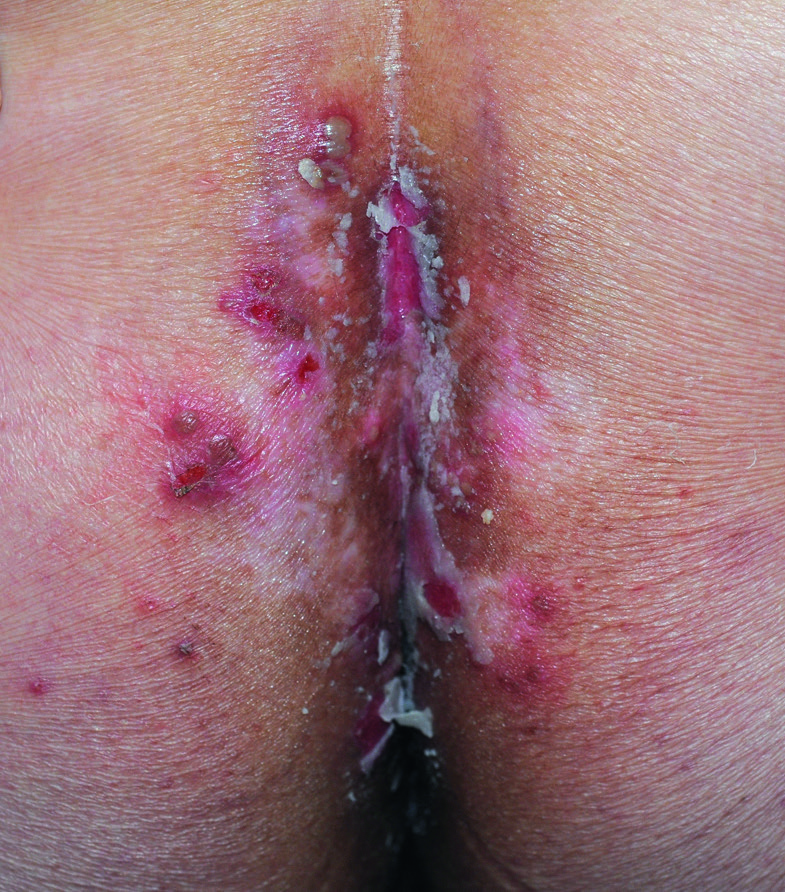
Fig. 80.3 Primary genital herpes. Grouped vesicles and erosions in the gluteal cleft. Courtesy Kalman Watsky, MD.
Fig.80.3s.1716
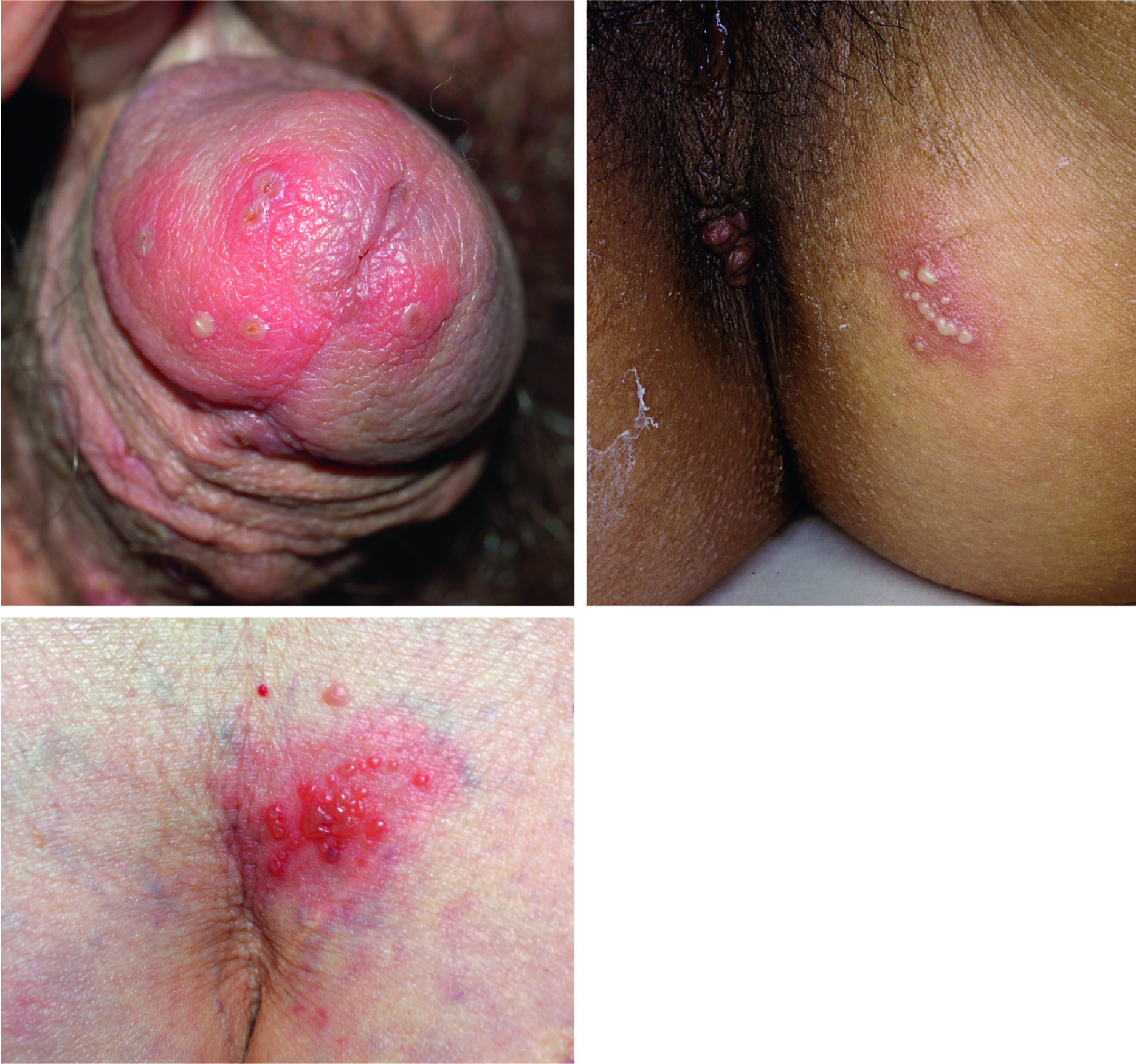
Fig. 80.4 Recurrent genital herpes. A–C Intact grouped vesicles and/or vesiculopustules with an erythem- atous base on the penis (A), medial buttock (B), and above the gluteal cleft (C). The buttocks represent a common location in women. D Ulcers with subtly scalloped borders on the penis. A, C, Courtesy Kalman Watsky, MD; B, Courtesy Louis A. Fragola, Jr, MD; D, Courtesy Edward Cowen, MD.
Fig.80.4s.1717
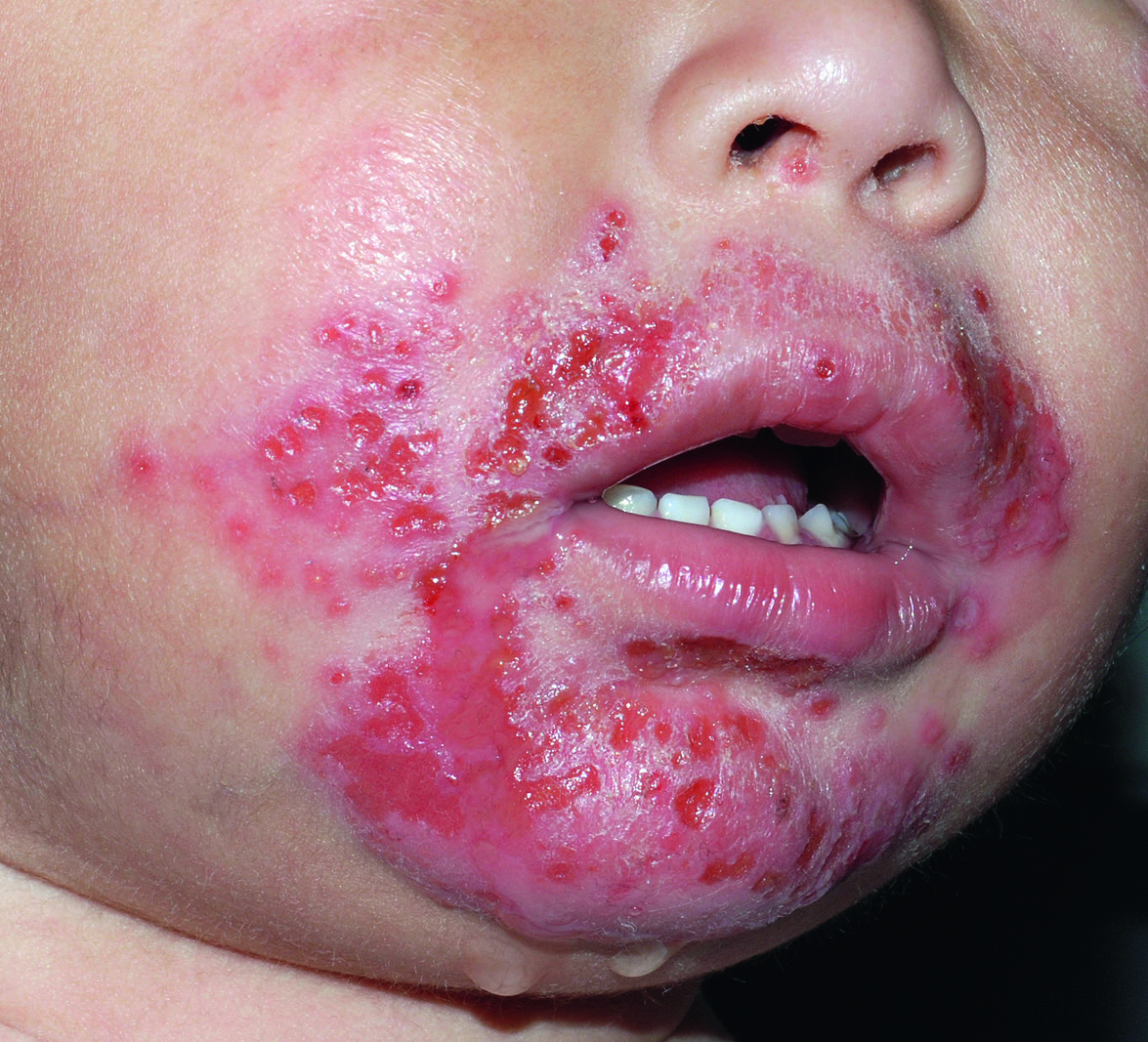
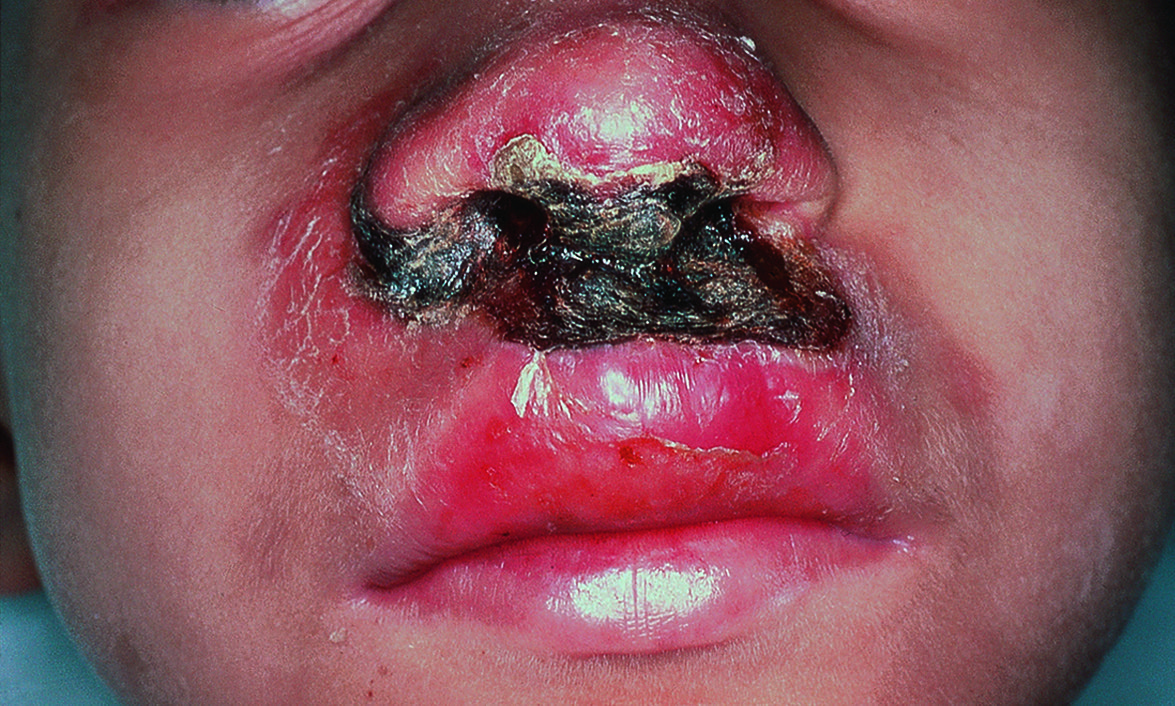
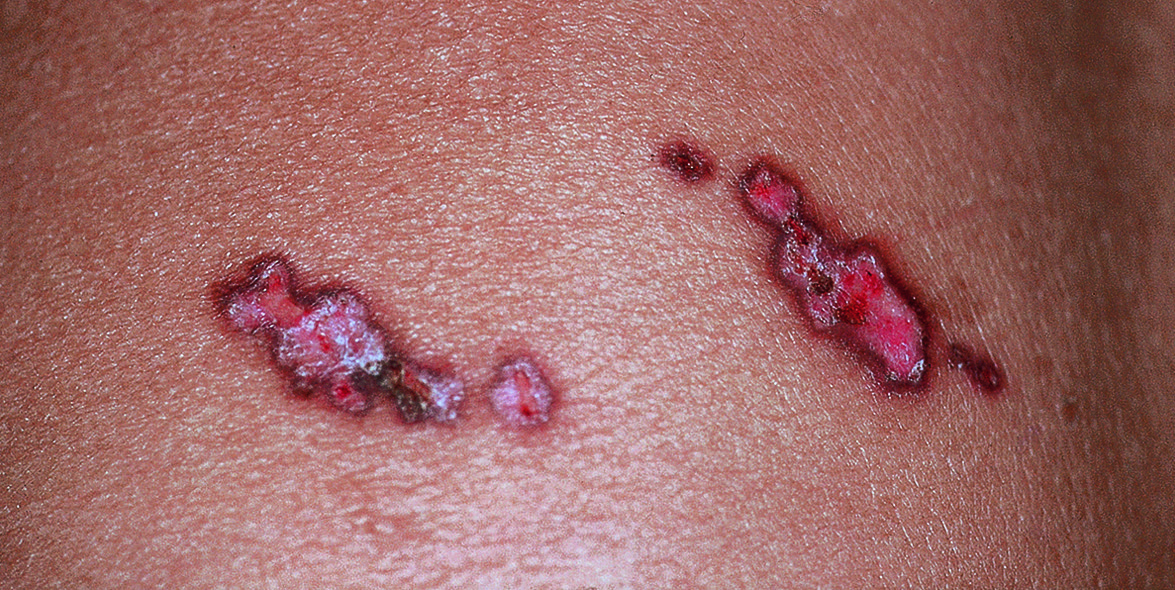
Fig. 80.5 Eczema herpeticum. A Monomorphic, punched-out erosions with a scalloped border in this infant with a history of facial atopic dermatitis. B Monomorphic, small hemorrhagic crusts and erosions coalescing in the popliteal fossae, an area of pre-existing atopic dermatitis. A, Courtesy Julie V. Schaffer, MD; B, Courtesy Kalman Watsky, MD.
Fig.80.5 As.1719
Fig. 80.5 Eczema herpeticum. A Monomorphic, punched-out erosions with a scalloped border in this infant with a history of facial atopic dermatitis. B Monomorphic, small hemorrhagic crusts and erosions coalescing in the popliteal fossae, an area of pre-existing atopic dermatitis. A, Courtesy Julie V. Schaffer, MD; B, Courtesy Kalman Watsky, MD.
Fig.80.5 Bs.1719
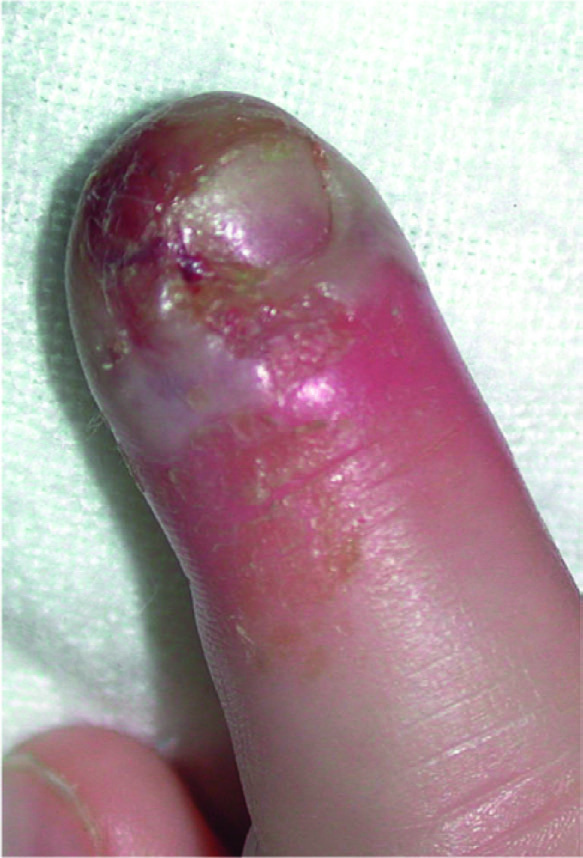
Fig. 80.6 Herpetic whitlow. A Coalescing vesicles and erosions on the distal finger of a child. B An edematous erythematous plaque with relatively subtle central vesicle formation on the thumb of a child. C Grouped vesicles on the toe of an adult. Herpetic whitlow is sometimes misdiagnosed as cellulitis or blistering distal dactylitis, or, depending on the distribution, paronychia. C, Courtesy Louis A. Fragola, Jr, MD.
Fig.80.6 As.1719
Fig. 80.6 Herpetic whitlow. A Coalescing vesicles and erosions on the distal finger of a child. B An edematous erythematous plaque with relatively subtle central vesicle formation on the thumb of a child. C Grouped vesicles on the toe of an adult. Herpetic whitlow is sometimes misdiagnosed as cellulitis or blistering distal dactylitis, or, depending on the distribution, paronychia. C, Courtesy Louis A. Fragola, Jr, MD.
Fig.80.6 Bs.1719
Fig. 80.6 Herpetic whitlow. A Coalescing vesicles and erosions on the distal finger of a child. B An edematous erythematous plaque with relatively subtle central vesicle formation on the thumb of a child. C Grouped vesicles on the toe of an adult. Herpetic whitlow is sometimes misdiagnosed as cellulitis or blistering distal dactylitis, or, depending on the distribution, paronychia. C, Courtesy Louis A. Fragola, Jr, MD.
Fig.80.6 Cs.1719
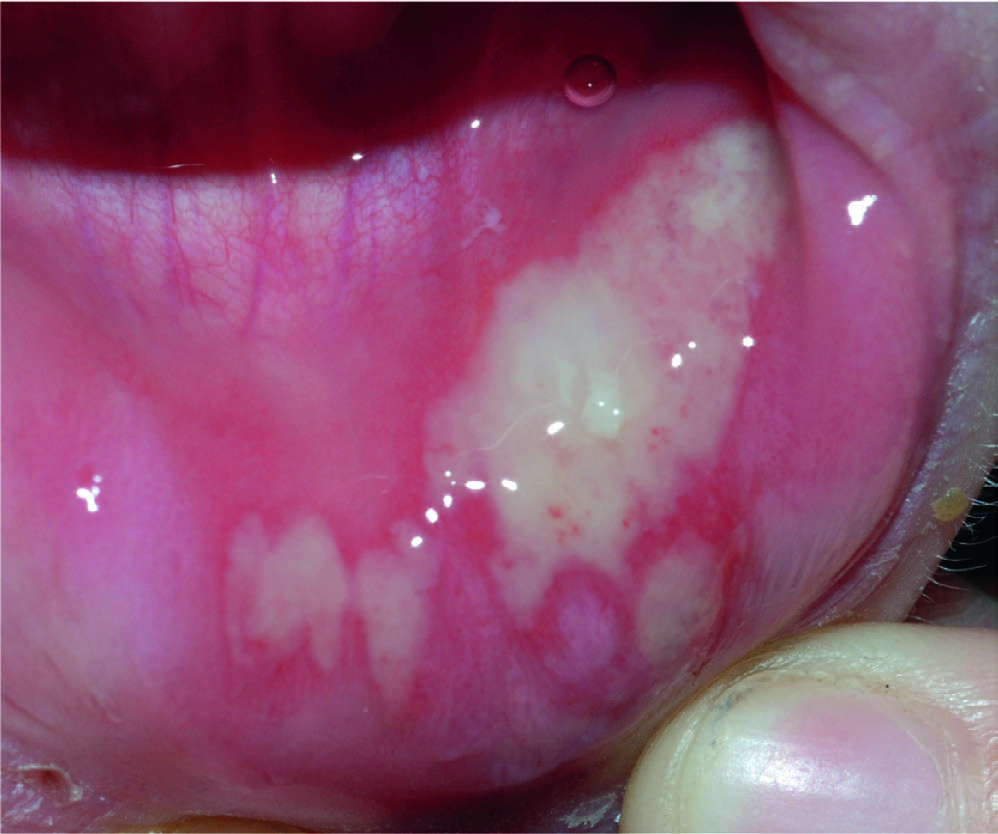
Fig. 80.8 Herpes simplex virus infec- tions in immunocom- promised hosts. A, B Enlarging ulcerations in a child with acute lymphocytic leukemia who was presumed to have a Rhizopus infection (A) and in a young man with AIDS (B). C Coalescence of eroded, yellow–white papules and plaques on the tongue.
Fig.80.8 As.1720
Fig. 80.8 Herpes simplex virus infec- tions in immunocom- promised hosts. A, B Enlarging ulcerations in a child with acute lymphocytic leukemia who was presumed to have a Rhizopus infection (A) and in a young man with AIDS (B). C Coalescence of eroded, yellow–white papules and plaques on the tongue.
Fig.80.8 Bs.1720
Fig. 80.8 Herpes simplex virus infec- tions in immunocom- promised hosts. A, B Enlarging ulcerations in a child with acute lymphocytic leukemia who was presumed to have a Rhizopus infection (A) and in a young man with AIDS (B). C Coalescence of eroded, yellow–white papules and plaques on the tongue.
Fig.80.8 Cs.1720
Fig. 80.8 Herpes simplex virus infec- tions in immunocom- promised hosts. A, B Enlarging ulcerations in a child with acute lymphocytic leukemia who was presumed to have a Rhizopus infection (A) and in a young man with AIDS (B). C Coalescence of eroded, yellow–white papules and plaques on the tongue.
Fig.80.8 Ds.1720
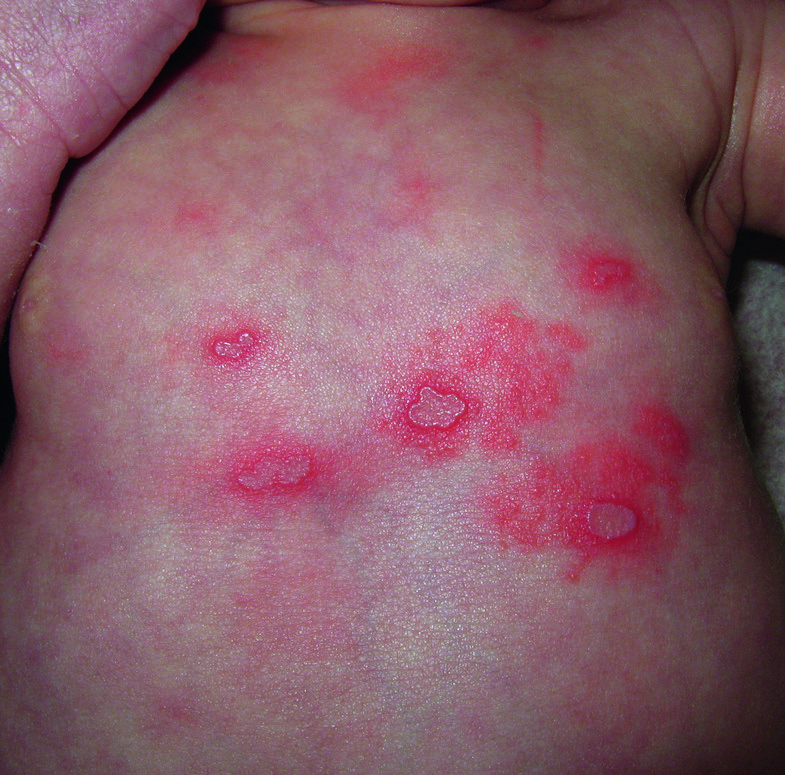
Fig. 80.9 Neonatal herpes. Grouped papulovesicles with an erythematous base on the chest. Note the scalloped borders in areas of coalescence. Courtesy Frank Samarin, MD.
Fig.80.9 As.1721
Fig. 80.9 Neonatal herpes. Grouped papulovesicles with an erythematous base on the chest. Note the scalloped borders in areas of coalescence. Courtesy Frank Samarin, MD.
Fig.80.9 Bs.1721
Fig. 80.10 Tzanck smear. Note the multinucleated epithelial giant cells from a patient with herpes simplex viral infection. Courtesy Louis A. Fragola, Jr, MD.
Fig.80.10 As.1721
Fig. 80.10 Tzanck smear. Note the multinucleated epithelial giant cells from a patient with herpes simplex viral infection. Courtesy Louis A. Fragola, Jr, MD.
Fig.80.10 Bs.1721
Fig. 80.12 Varicella. A–C Lesions in different stages of evolution, including vesicles, pustules, and hemorrhagic crusts. Vesicles often develop central umbilication. D Oral lesions can also occur (arrow). A, B, Courtesy Robert Hartman, MD; C, Courtesy Julie V. Schaffer, MD; D, Courtesy Judit Stenn, MD.
Fig.80.12s.1723
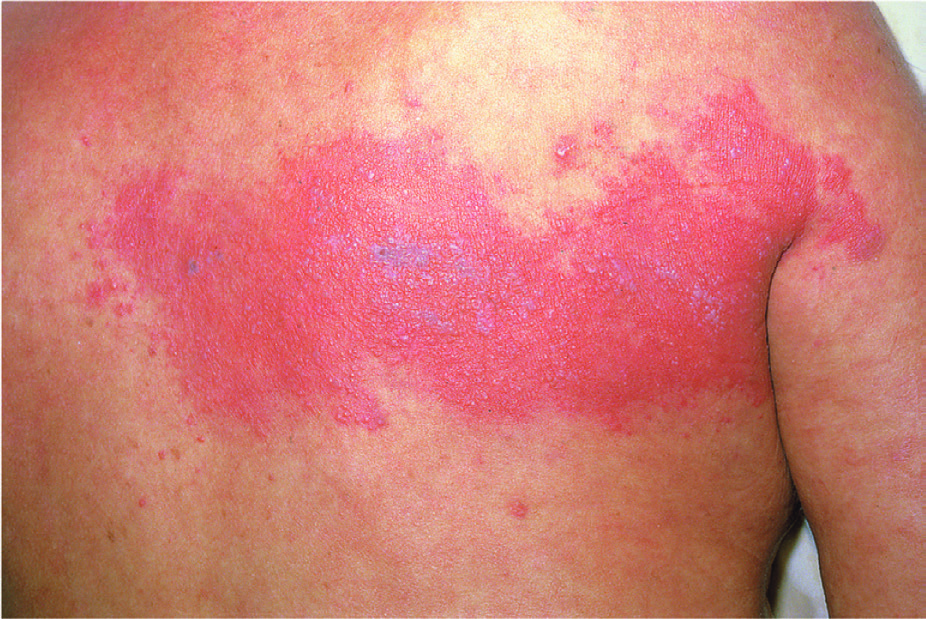
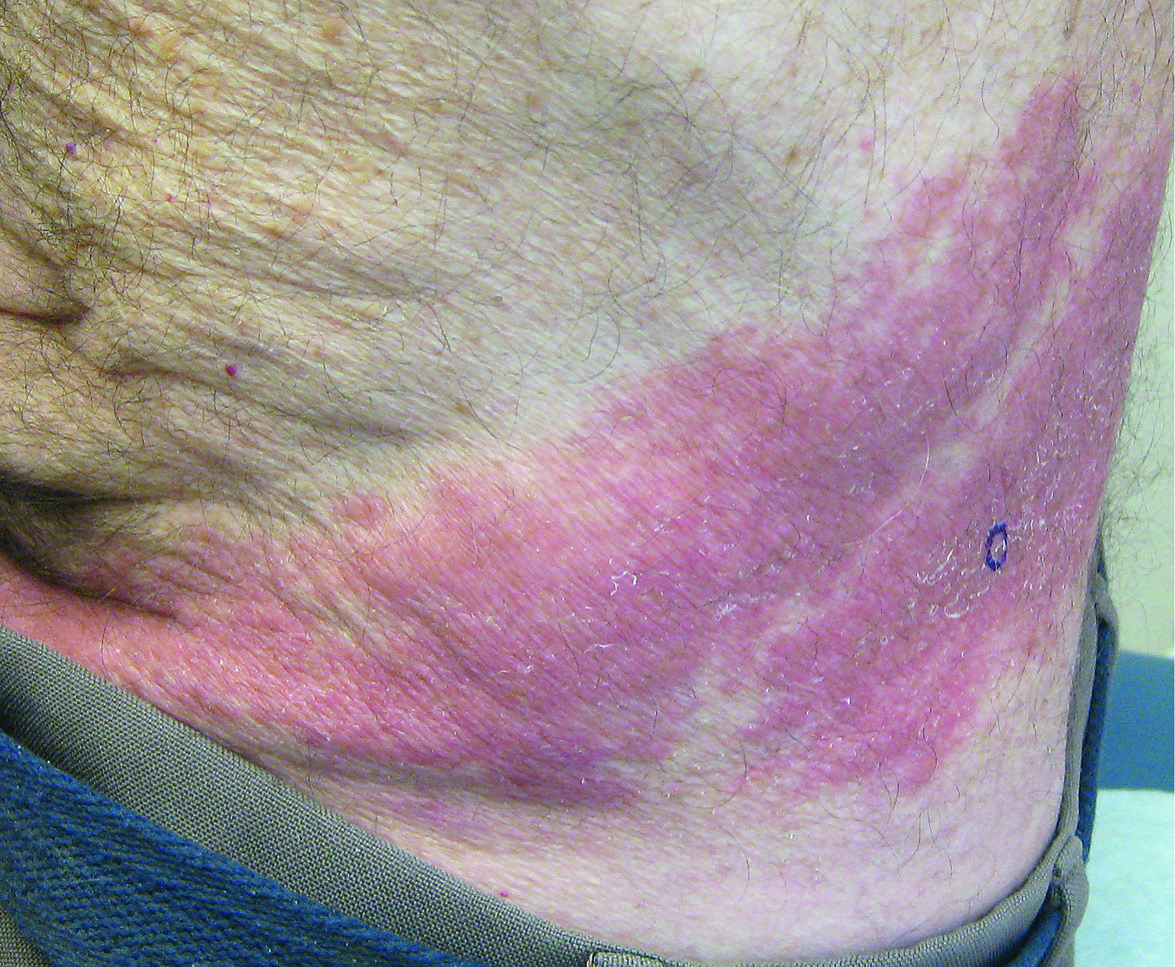
Fig. 80.14 Herpes zoster. A–C Erythematous, edematous plaques with early vesicle formation. Note the perifollicular accentuation (B). D, E Later stages of evolution with prominent pustule formation (D) and a dusky purple color associated with older vesicles (E). F Bullous variant on the flexor arm. B, Courtesy Jean L. Bolognia, MD; D, Courtesy Louis A. Fragola, Jr, MD.
Fig.80.14 As.1725
Fig. 80.14 Herpes zoster. A–C Erythematous, edematous plaques with early vesicle formation. Note the perifollicular accentuation (B). D, E Later stages of evolution with prominent pustule formation (D) and a dusky purple color associated with older vesicles (E). F Bullous variant on the flexor arm. B, Courtesy Jean L. Bolognia, MD; D, Courtesy Louis A. Fragola, Jr, MD.
Fig.80.14 Bs.1725
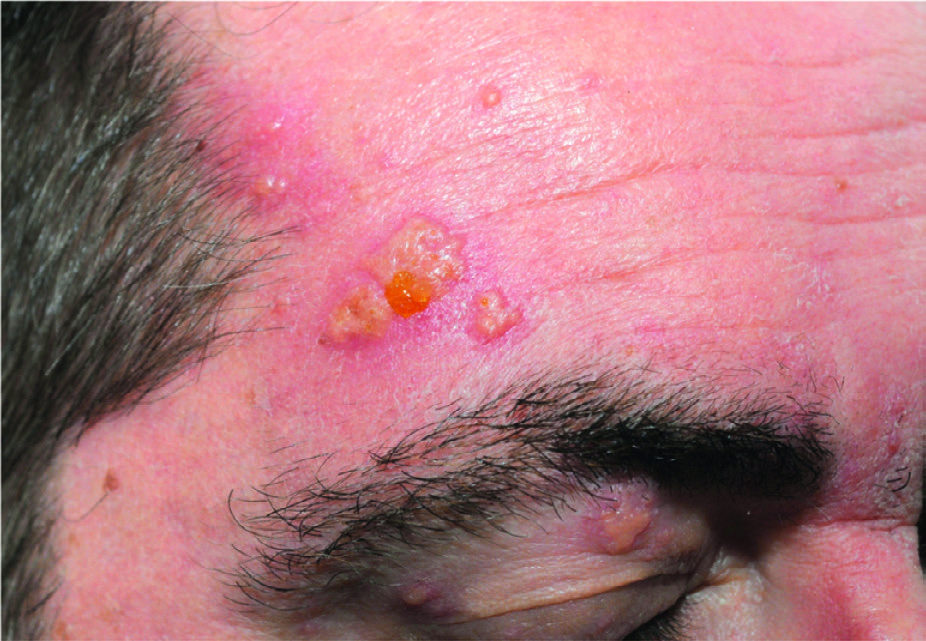
Fig. 80.15 Facial herpes zoster. A Clustered vesicles in a linear array within the distribution of V1. B In the distribution of V3, grouped pustules on the left side of the chin and hemorrhagic crusting of the lower lip, with one lesion extending past the midline. This could be mistaken for an acneiform eruption or impetigo. C In the same patient, erosions are present on the left side of the tongue. The anterior two-thirds of the tongue is innervated by the facial nerve (VII; taste) as well as V3 (sensory); see Table 80.6 for details of Ramsay Hunt syndrome. D Focal hemor- rhagic crusting with scalloped borders arising in an erythematous patch on the forehead within the V1 distribution. Note the periorbital edema. Courtesy Kalman Watsky, MD.
Fig.80.15 As.1726
Fig. 80.15 Facial herpes zoster. A Clustered vesicles in a linear array within the distribution of V1. B In the distribution of V3, grouped pustules on the left side of the chin and hemorrhagic crusting of the lower lip, with one lesion extending past the midline. This could be mistaken for an acneiform eruption or impetigo. C In the same patient, erosions are present on the left side of the tongue. The anterior two-thirds of the tongue is innervated by the facial nerve (VII; taste) as well as V3 (sensory); see Table 80.6 for details of Ramsay Hunt syndrome. D Focal hemor- rhagic crusting with scalloped borders arising in an erythematous patch on the forehead within the V1 distribution. Note the periorbital edema. Courtesy Kalman Watsky, MD.
Fig.80.15 Bs.1726
Fig. 80.15 Facial herpes zoster. A Clustered vesicles in a linear array within the distribution of V1. B In the distribution of V3, grouped pustules on the left side of the chin and hemorrhagic crusting of the lower lip, with one lesion extending past the midline. This could be mistaken for an acneiform eruption or impetigo. C In the same patient, erosions are present on the left side of the tongue. The anterior two-thirds of the tongue is innervated by the facial nerve (VII; taste) as well as V3 (sensory); see Table 80.6 for details of Ramsay Hunt syndrome. D Focal hemor- rhagic crusting with scalloped borders arising in an erythematous patch on the forehead within the V1 distribution. Note the periorbital edema. Courtesy Kalman Watsky, MD.
Fig.80.15 Cs.1726
Fig. 80.15 Facial herpes zoster. A Clustered vesicles in a linear array within the distribution of V1. B In the distribution of V3, grouped pustules on the left side of the chin and hemorrhagic crusting of the lower lip, with one lesion extending past the midline. This could be mistaken for an acneiform eruption or impetigo. C In the same patient, erosions are present on the left side of the tongue. The anterior two-thirds of the tongue is innervated by the facial nerve (VII; taste) as well as V3 (sensory); see Table 80.6 for details of Ramsay Hunt syndrome. D Focal hemor- rhagic crusting with scalloped borders arising in an erythematous patch on the forehead within the V1 distribution. Note the periorbital edema. Courtesy Kalman Watsky, MD.
Fig.80.15 Ds.1726
Fig. 80.16 Granulomatous dermatitis in the site of previous herpes zoster. Pink papules and plaques developed several weeks after an episode of herpes zoster in the same dermatomes. A sharp midline demarcation was observed on the back. Histologically, a granulomatous dermatitis was present within the dermis and focally a perineural distribution pattern was seen. Courtesy Rebecca Vaughn, MD.
Fig.80.16 As.1727
Fig. 80.16 Granulomatous dermatitis in the site of previous herpes zoster. Pink papules and plaques developed several weeks after an episode of herpes zoster in the same dermatomes. A sharp midline demarcation was observed on the back. Histologically, a granulomatous dermatitis was present within the dermis and focally a perineural distribution pattern was seen. Courtesy Rebecca Vaughn, MD.
Fig.80.16 Bs.1727
Fig. 80.17 Chronic verrucous zoster in an HIV-infected patient.
Fig.80.17s.1727
Fig. 80.18 Disseminated varicella zoster viral infection. A Multiple violet–black papules on the feet. B Widely distributed necrotizing vesicles and bullae, some of which have formed large clusters, in a patient with lymphoma. Patients with disseminated cutaneous skin lesions should be evaluated for possible visceral involvement (e.g. hepatic, pulmonary, CNS), especially if they are immunocom- promised. B, Courtesy Edward Cowen, MD.
Fig.80.18 As.1727
Fig. 80.18 Disseminated varicella zoster viral infection. A Multiple violet–black papules on the feet. B Widely distributed necrotizing vesicles and bullae, some of which have formed large clusters, in a patient with lymphoma. Patients with disseminated cutaneous skin lesions should be evaluated for possible visceral involvement (e.g. hepatic, pulmonary, CNS), especially if they are immunocom- promised. B, Courtesy Edward Cowen, MD.
Fig.80.18 Bs.1727
Fig. 80.19 Herpes zoster following varicella vaccination. This healthy 3-year-old boy developed an eruption of erythematous papulovesicles in the C5 and C6 dermatomes of the right arm. He had received the varicella vaccine in the right shoulder at age 12 months, and several erythematous, edematous papulonodules had appeared in the region of the injection 2 weeks later. Courtesy Julie V. Schaffer, MD.
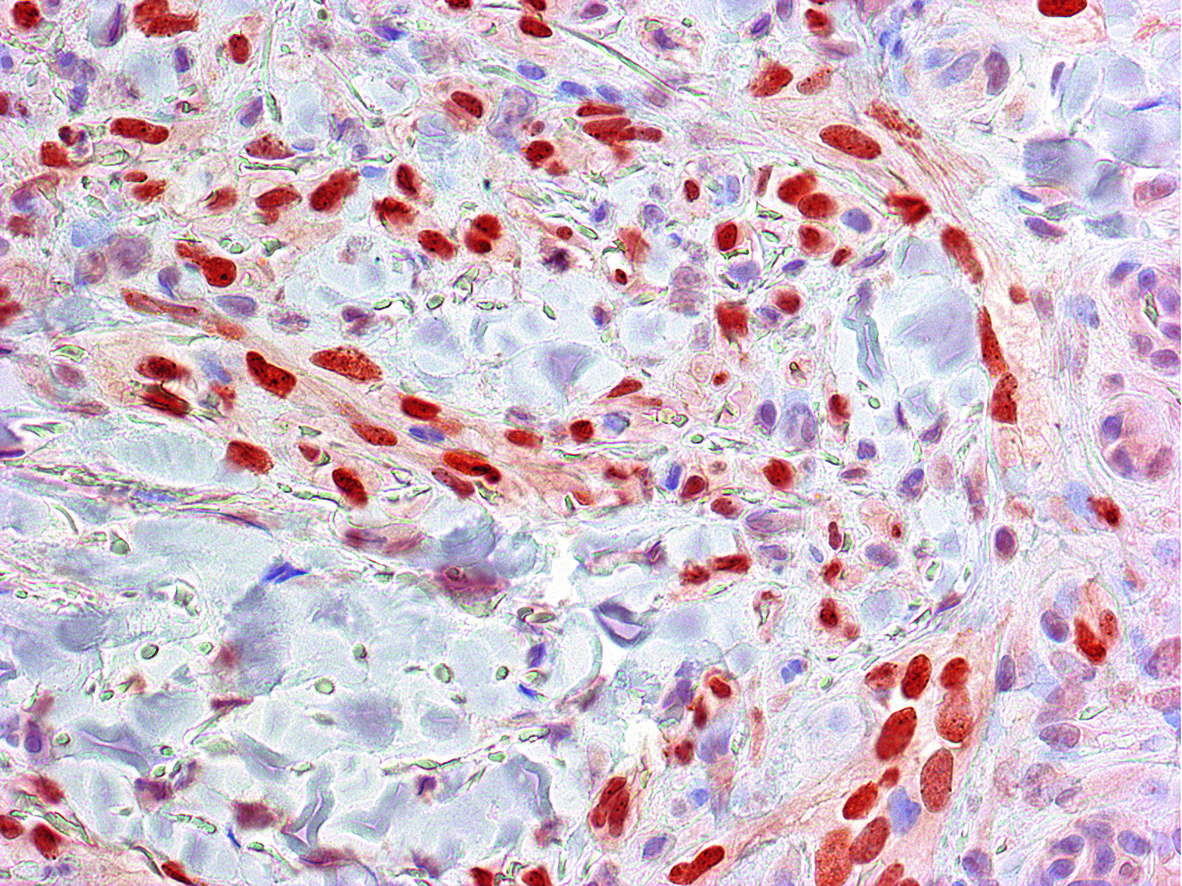
Fig.80.19 As.1728
Fig. 80.19 Herpes zoster following varicella vaccination. This healthy 3-year-old boy developed an eruption of erythematous papulovesicles in the C5 and C6 dermatomes of the right arm. He had received the varicella vaccine in the right shoulder at age 12 months, and several erythematous, edematous papulonodules had appeared in the region of the injection 2 weeks later. Courtesy Julie V. Schaffer, MD.
Fig.80.19 Bs.1728
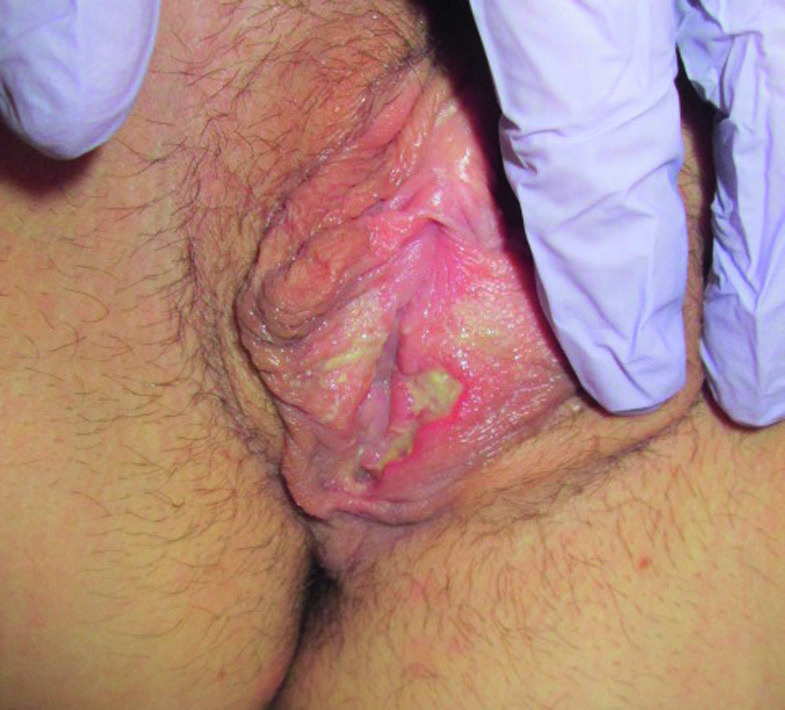
Fig. 80.20 Reactive non-sexually related acute genital ulcer- ation associated with primary EBV infection. EBV-related genital ulcers, which are most common in adolescent girls, are often misdiag- nosed as genital herpes simplex infection and in some patients represent a variant of aphthosis (see Table 80.8).
Fig.80.20s.1729
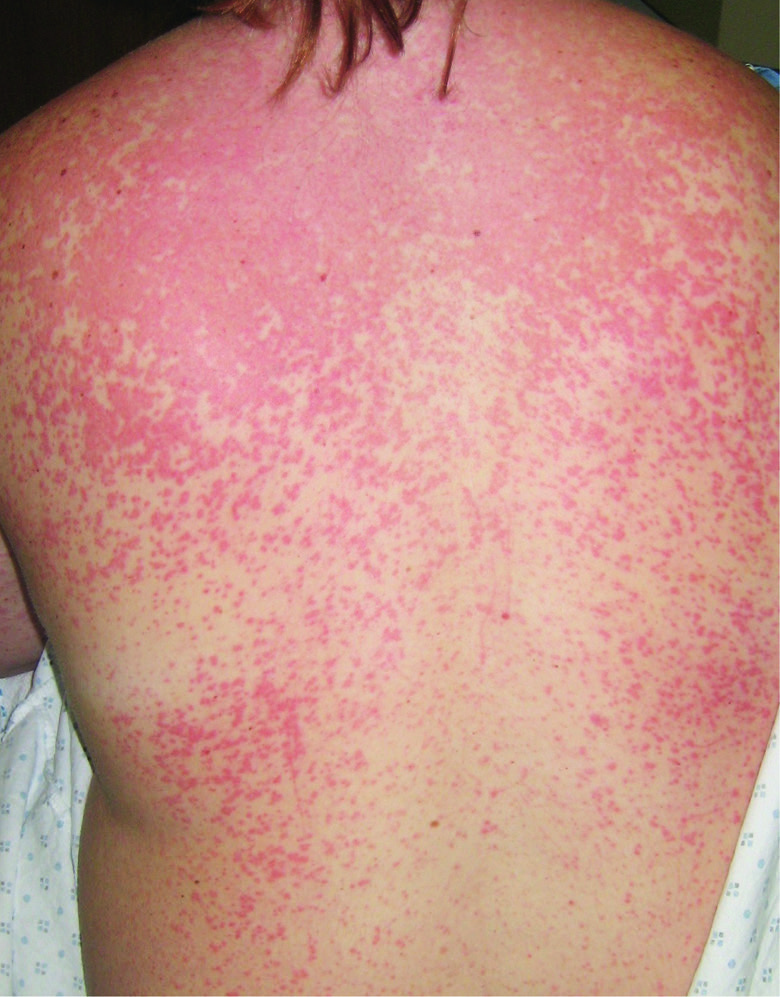
Fig. 80.21 Ampicillin- induced eruption in a patient with infec- tious mononucleosis due to EBV infection. Erythematous macules and papules have become confluent on the upper trunk.
Fig.80.21s.1729
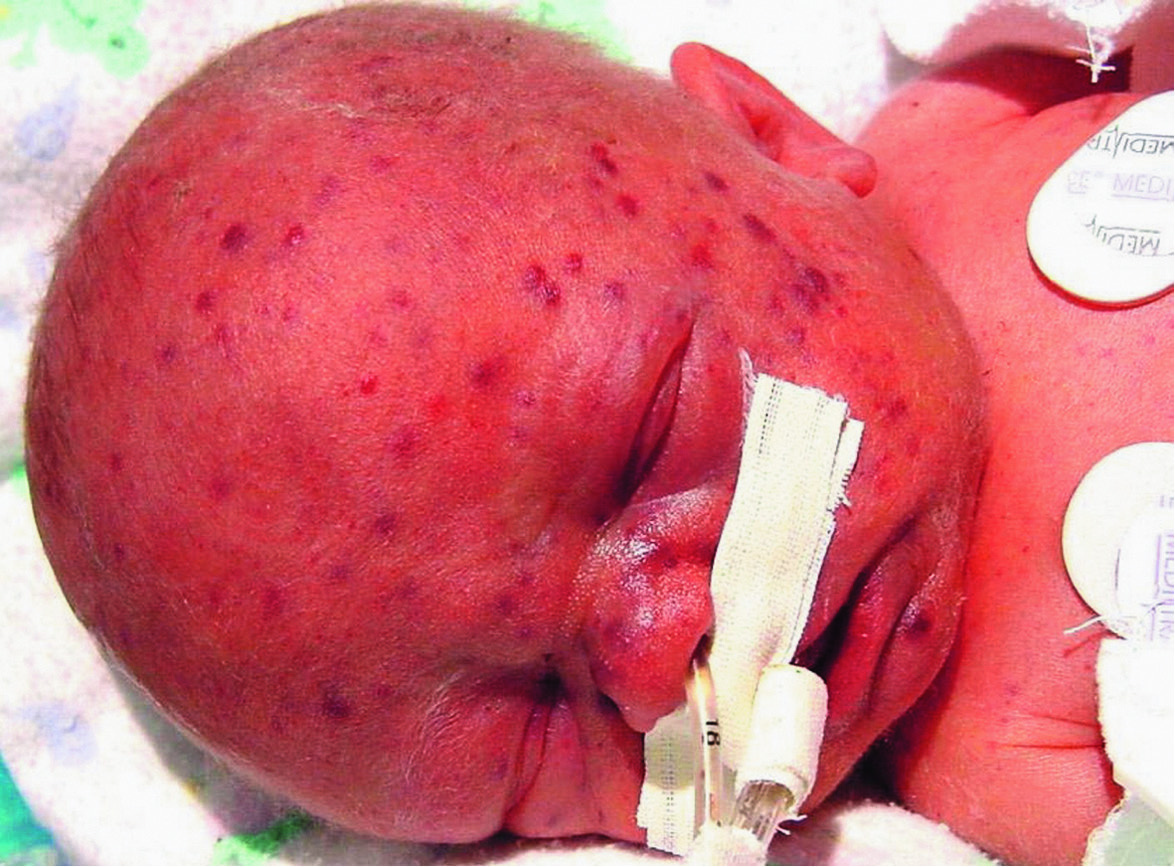
Fig. 80.22 TORCH syndrome due to cytomegalovirus. Multiple purpuric papules of dermal hematopoiesis. Courtesy Mary S. Stone, MD.
Fig.80.22s.1731
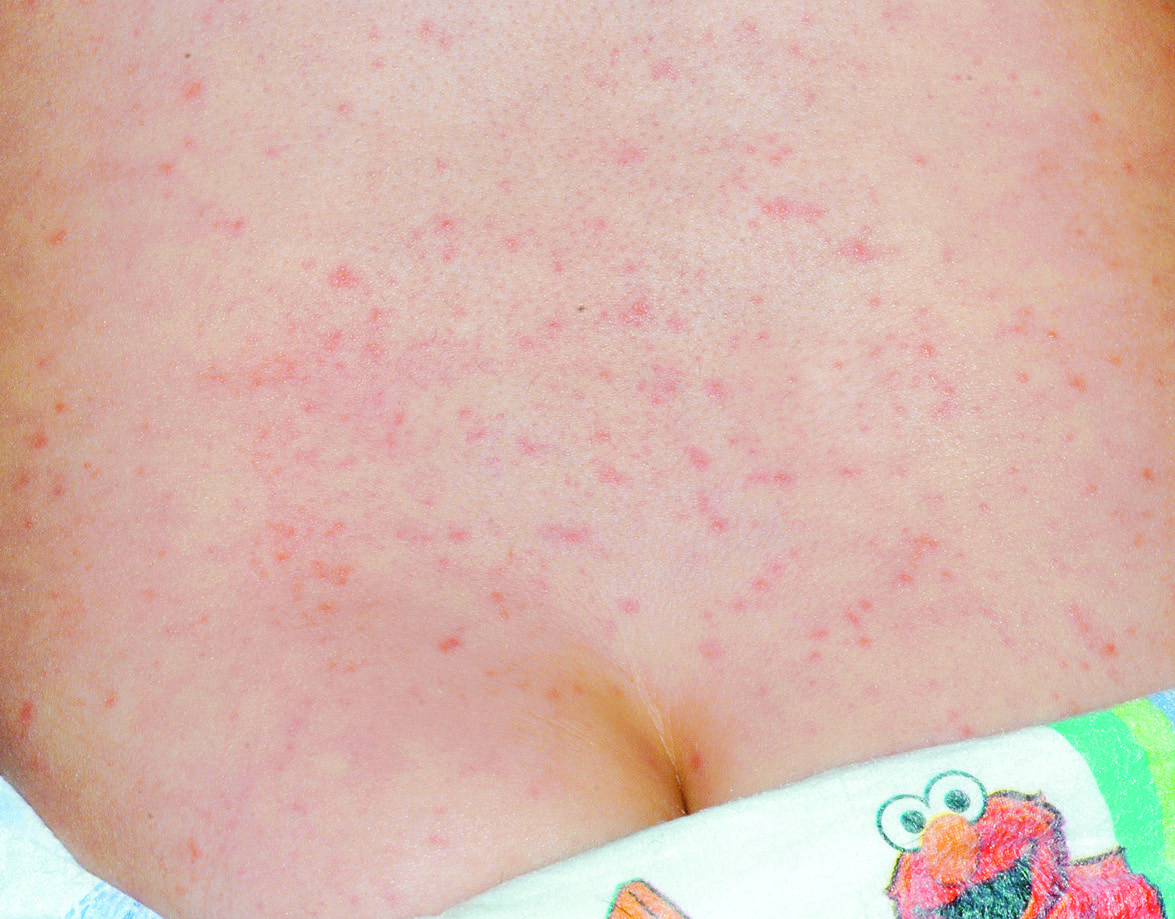
Fig. 80.24 Exanthem subitum (roseola infantum). Small pink–red macules and papules developed on the trunk and neck of this 9-month-old boy during defer- vescence of a high fever that had lasted for 5 days. Courtesy Julie V. Schaffer, MD.
Fig.80.24s.1733
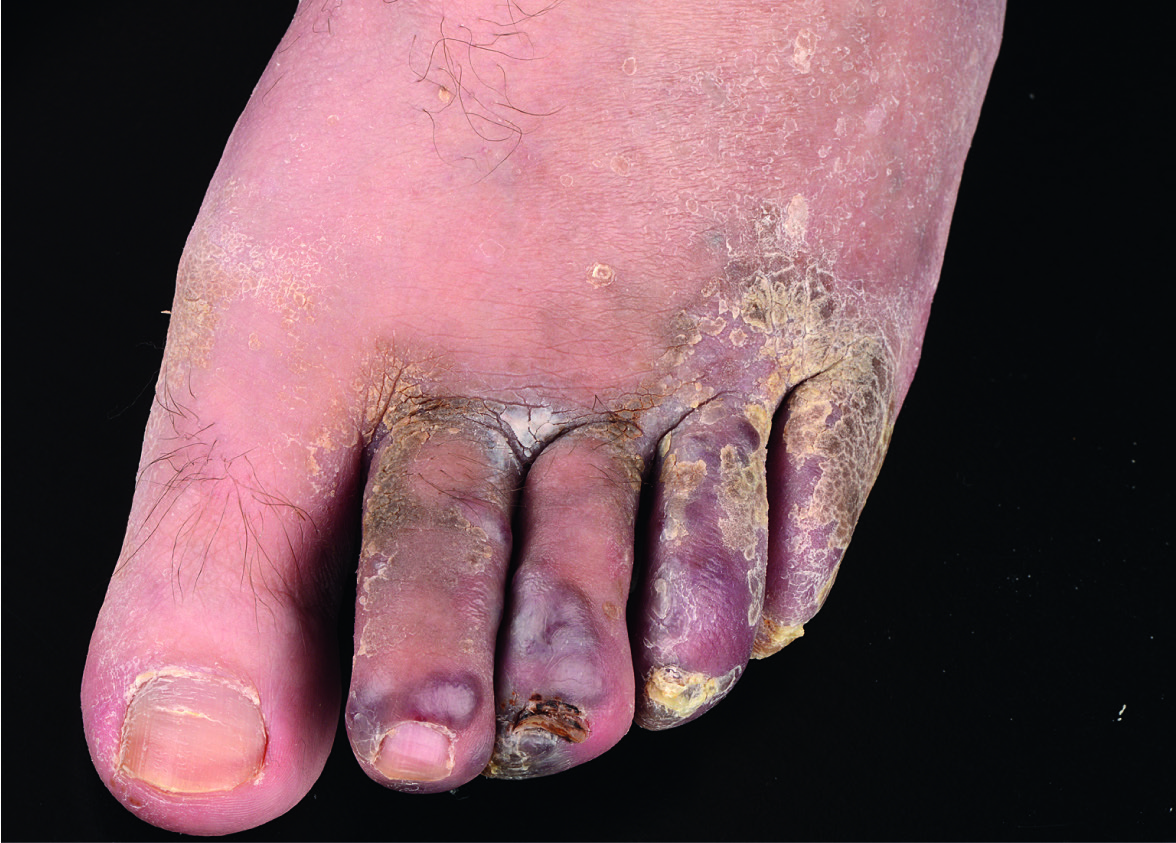
Fig. 80.25 Classic Kaposi sarcoma. Red–violet plaques on the toes with associated hyperkeratosis. Courtesy Lorenzo Cerroni, MD.
Fig.80.25s.1735
Fig. 80.26 Kaposi sarcoma. Immunohistochemical staining utilizing antibodies against a latency-associated nuclear antigen (LANA-1) demonstrates the presence of HHV-8. Courtesy Shawn Cowper, MD.
Fig.80.26s.1735